Tag: Nonfiction

  • education is not a status symbol

    Education is not a prerogative of the fortunate who have been born into comfortably well-to-do socioeconomic families or, if deprived, sponsored by goodwill fairylike patrons for splendidly expensive private higher education. It is not a status symbol to distinguish the fortunate from the melee in ostentations display of their supposedly high intelligence, dazzling scholastic aptitude, and a means to continue such expensive education as a symbol of confidence, competence, and cleverness.

    But Joshua Angrist, an Israeli-American Nobel laureate in Economics of the year 2021, doesn’t think that way, not least because those who enter expensive elite schools are already brighter than their ordinary or troubled peers. The Nobel-Prized theory of education in the context of the selective admission process has become a concrete, incorruptible credo for the elite academic institutions and enflamed the already swelled up egos of the diploma holders doing well in their lives. When I read about him from today’s newspaper, I had to re-read his saying that “the reason graduates of those schools tend to do well has more to do with selective admission than education.” I understand his intention to demystify social legend that an Ivy-league diploma will guarantee you lifelong flowery roads to financial security and commensurate social status. However, it has more to do with his defense of continuous selective criteria to muster a pool of academically, and usually economically affluent, prospective students than anything else. What he argues is, “Don’t mess with the elite schools’ admission processing, for they select only the smartest ones!” Therefore, his argument calls for changing social agendas for changing such selective admissions to improve public education.

    Angrist himself is a product of privileged education that some people wear like fancy hats on their pointed heads. He went to Oberlin College for BA and Princeton University for MA, Ph D. He teaches at Harvard University, which has become the infallibly supreme Ivory Tower in the States and most East Asian countries. Based upon Angrist’s focus on causality and effects on social impacts, it will be natural for him to defend the selective admission process, and I say go for it.

    But it irks me to read from the Nobel laureate that supreme education is not for everybody. Since Angrist prides himself in employing real-world empirical evidence in his theory, does he marginalize those who have ambitions and aspirations to receive such quality education but are disadvantaged of the opportunities to learn the skills apt for demonstrating their minds? What about them, and how can he help them to access such opportunities? He’s not a social worker, which I don’t think he will not be pleased to be associated with even, but as an intellectual, he has a social responsibility to answer such vital issues. And if this unequal distribution of privileged educational opportunities is not worth studying, I wonder if those Nobel Prize panels thought his opuses deserve such international recognition. After all, Economics always comes last in the Nobel Prizes, with its being on the criteria most recently in the late sixties mainly begetting Americans.
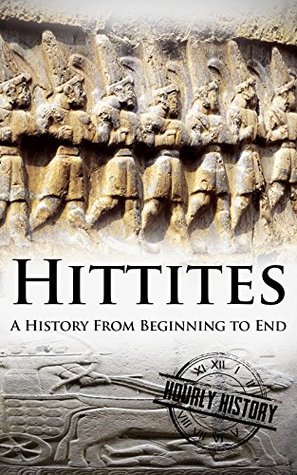
  • ‘Hittites: A History From Beginning to End’ by Hourly History – book review

    Hittites: A History From Beginning to End by Hourly History
    My rating: 5 of 5 stars

    The name Uriah always fascinated me from British Rock band Uriah Heep to the biblical Uriah, whose beautiful wife led him ultimately to death, willy-nilly, by King David infatuated with her sensuousness. When I learned that the ancestor of Uriahs was the founder of the Hittites race, being the great-grandson of Noah, the biblical patriarch, I had a Eureka moment. Consequently, I picked up this concise but comprehensive book on the Hittites to know a little more about the people whose founder had the great name.

    Before the splendor of ancient Greek contributions to our human cultural progress as a collective enterprise, there was the forgotten but enduring legacy of the Hittites, the mysterious Indo-European trailblazers of civilizations at the crossroads of the East and the West in the vast plain of modern-day Turkey. The Hittites were an integral people to solve the mystery of mythological and biblical events anchored in the real world, thus dissolving fact and legend into one another like a genie from an empire that vanished into the dunes of time and comes alive in the calling. The calling of these mysteriously vanished people came first from British Reverends Archibald Henry Sayce and William Wright in the early 19th century. They discovered the artifacts and sites of the Hittites. Their discovery led to more remarkable discoveries. During the middle Bronze age and Iron age, the Hittites were the first to utilize iron from the region of present Armenia to craft tools and weapons. Also, the Hittites were deft at commerce, developing the city of Carchemish as an ancient mercantile hubbub in which they imported products from Phoenicia and exported them to Assyria (the North) and Babylon (the South) in Mesopotamia. In this fabulous ancient city, Israelites of the Old Testament acted as intermediaries in trade between Egyptians for exporting horses and chariots and the Hittites for importing them.

    Like all those famous entertainers who sparkled then lost the lusters, the Hittites as a collective empire fell from splendor gradually by outside forces: some pointed the fingers at the Sea People, while the others blamed a certain barbarous Kaska people. But, perhaps, such clandestine ending of the Hittites is what makes them formidably alluring and mysteriously fascinating, blurring the boundary of fact and legend. Suppose you are keen on the history of ancient civilizations other than Greece and Egypt. In that case, this elegant primer for the history of the Hittites will equip you with fundamental knowledge enough to whet your craving for more and more profound knowledge about the Hittites.


    View all my reviews

  • 2021 Nobel Prize in Literature goes to Abdulrazak Gurnah

    The great writers are capable of metamorphosis and travel across a gulf of time and a hiatus of cultures and continents because their narratives speak to the sentiments and reason common to all humankind. Enter Abdulrazak Gurnah, this year’s Nobel Prize laureate in Literature, in this celestial constellation of great writers. The following is what I think about Gurnah based on reading his interview with today’s Reuter.

    Gurnah, born in Zanzibar (now part of Tanzania) in 1948, went to England in the 1960s as a refugee fleeing from the political turmoil and social unrest of his native country. Then began his migrant’s song composed of multiple strands of his experience, thoughts, and feelings that became polyphonic acapella in variant notes and rhythms. Unlike many other laureates of prestigious literary awards or esteemed recognition, Gurnah is a champion of underdogs who were not expensively educated in private institutions and, above all, who were not born into the surroundings of English as mother tongue. Working at the places where his privileged literary peers would not think of, Gurnah wrote in English as Second Language as his Lingua Franca literary tool. The result is his enchantment of readers to a fantastic maze of his inner world. His narratives become Ariadne’s thread that guides his readers to the world that seems so unfamiliar yet oddly universal.

    Gurnah seems to be the kind of writer I sincerely respect and dare to emulate who have lived among ordinary people like a sun in evening declination with the soft but radiant scarlet hues covering the earth, reflecting its magnificent face in shining waters. I am delighted to confirm that you don’t have to be born into a culture that speaks English if you want to become a good English writer. It is not about the Perfect mastery of language but about articulating thoughts to become a great writer. Although the media emphasizes Gurnah’s being the second black African author to have won the award since Nigerian Wole Soyinka in 1986, I don’t think it’s about his race that draws attention to his books. His being a writer supersedes his race because writers are different kinds of the race with a unique eye to look at the world and show it to readers, standing together in the collegiality of human spirits.

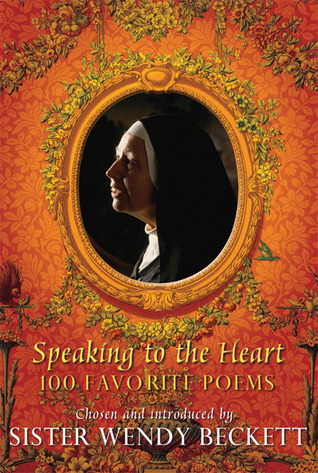
  • Sister Wendy’s lovely ‘Speaking to the Heart: 100 Favorite Poems’ – book review

    Speaking to the Heart: 100 Favorite Poems by Wendy Beckett
    My rating: 5 of 5 stars

    Sister Wendy was an erudite and delightful cloistered art historian in a veil who knew that Poetry is a song of the heart from a mind spring of sense and sensitivity, not to be burdened with a weight of reason. The result is a lovely apple-picking of her favorite poems in her pretty poetic orchard to share the beauty with the universal reader whose heart intoxicated and the spirit exalted in ethereal ecstasy. Her selection of poems manifests the finer tissues of her heart and the higher octaves of her spirit. Reading the entire book creates empathy for the sensitive minds of the poets so physically poignant that the reader senses the pain and the longing of the poets vis-à-vis.

    Sister Wendy, also known for her long-time BBC documentaries on the history of art, speaks her heart through the poems of her choice colored in the spectrums of human emotions, ranging from longing to wonder, hope to sorrow, and anger to love. Even the subject of Faith becomes alluring due to Sister Wendy’s magical transformation of the matter into fairy-like ideation with sensually diaphanous wings as pagan as could be. Her interpretations speak on the poet’s behalf as an individual soul at the utter solitude, not as a literary artificer whose achievement merits the name in the canon of literature. In doing so, Sister Wendy brings out the poet’s true sentiment under a forage of words and shines her mystic perspectives on the poet’s reading in a splendid but straightforward way.

    The reader will find famous, not-so-famous, and obscure poems from Elizabethan England to 20th century America in this lovely book. Sister Wendy is both discriminating, and non-discriminating in the human emotions poured into the world of poetry. She is discriminating in the sense that she has a “Third Eye” that sees the poet’s soul and understands the sentiment nuanced in the poem, including wrath and despair, poisons to the mind. Non-discriminating in a way, she values poems spirited in the heroic but straightforward endurance of existential malaise in everyday life written in the plebian language. From Shakespeare’s ‘Fidele’ to John Harris’s ‘Feral’ and many more, the reader will feel ennobled to walk the gardens of the poetic Elysium with Sister Wendy introducing you to each of the poets’ greeting and smiling.


    View all my reviews

  • Letter from the West

    Eight hundreds of suns and moons have passed since I was uprooted to Southern California from Northern New Jersey, and I have to say every day is still a new day on the frontier home in the Wild West. Cowboys, gunslingers, and drifters looking for chances and time for winning the Wheel of Fortune in life may have gone with the dust of wind. Still, I feel like a hardscrabble but resiliently brave and adventurous frontier woman I have seen in western TV dramas and movies with the central theme of Little House on the Prairie surrounding as a leitmotif for the story of My Life So Far in the Wild West.

    The great French writer and humanist George Sand once said that every place has place memories that influence the spirits of the site and people without them knowing it. Given this, the place memories of Southern California fill the domes of the spirits and palaces of the souls living in it with the characters endemic to the nature and shaped by the events artificers made based upon my empirical observations. People I have come across here are a curious mixture of friendliness and brusqueness added with a dose of saloon bravado and air of southern plantation riches under a high Californian sun.

    The charade of Californian Rhapsody continues thus: people reading in public, such as public transportation or coffeeshop, is as rare as finding Nemo in a vast ocean. In such an environment, I feel awkwardly vain to read in such places as if I were a showy blue-stocking, contrary to New York City, where readers are part of the landscape under the Manhattan skyline. It brings me back to my reading of Horace Greely’s experience of an overland journey from New York City to California. Greely, the famous 19th-century journalist, the editor of the now-extinct the New York Tribune and the rival presidential candidate of Ulysses Grant, also noticed the lack of intellectual cultivation in many Californians and thus called the attention of young single, educated woman from the East Coast to go west in a proliferation of civilization from the cultured East Coast.

    Part of me still longs for the convenience of city life in New York City, where people of all walks of life ride on the same bus and subway and eat at the same place. Nevertheless, what holds me to this immigrant land is its gorgeously untamed wild nature that whispers to my ear, “Tarry with me,” like a beautiful paramour. The wildflowers in the fields over the ridges are sweetness to the weary soul seeking a place for visual pleasure after being exposed to a miasma of an unpleasant office environment, even though I am still unaccustomed to the sight of palm trees with long unruly hair. Still, I like to think of myself as a 21st-century frontier woman living with an elderly ailing mother and a young tomcat in my care, trying to keep my foot on the ground and my eyes on the stars, to claim my happiness on a new land against all odds in this Wild West, Still and Ever.

  • the real logan’s world

    Since Oscar Wilde said a woman who reveals her age reveals all about her, I will not tell how old I am, but I am still far away from the Shakespearean age of the Old Man. If interested, hark thus. That is about the culture and tendency of the post 9/11 generation omnipresent in everyday life spheres from social media platforms to workplaces. Equipped with computer savviness with a flair for chic insouciance and minimalistic sentiment, this new generation has dominated all. So what’s the rap?

    The cause for such generational distance came in the figures of two young lawyers fresh out of law schools in my workplace. They were both in their late twenties – the post 9/11 generation – didn’t have any practical work knowledge, which could be understandable. Yet their work ethic and attitude were disgraceful because a lack of enthusiasm and willingness to blend in the environment was a sign of defiance of conformity and cooperation, which people mistake for a display of subservience or acquiescence in the surrender of the will. But, of course, diligence is not synonymous with servitude. I am not even talking about Stakhanovism, in which workers spend more time at their work than at home. But the new generation is an entirely new breed, a new type of people aversive to warmth and friendliness on account of personal space because goodwill is suddenly turned malice, goodness weakness nowadays. How about calling them, Les Enfants Terrible? Would the ancient Roman scribbler who wrote on a tablet that the kids in his time were all spoiled have felt the same way as I do?

    My sentiment toward the post 9/11 generation is, I daresay, dystopian, which pitchforks me into a scene in the movie “Logan’s Run.” In the film, everyone on their 30th birthday is executed under the euphemistic pretext of Renewal. It’s a cult of Youth synonymous with Beauty, and the human race means the everlasting beautiful Youth. Agism and lookism are principles of such utopia, conquering Racism, Sexism, and Classism. Women of the utopia use their Beauty to exert their prowess on their targeted subjects. Only young and beautiful rule the world, and the faces of the post 9/11 generation dissolve into the spectators of the Renewal ceremony in “Logan’s Run.”

    Nevertheless, who cares about what I feel about this new type of humankind that will soon dominate the entire generations in our time? Indeed, time is ephemeral, so is culture. Yet, the universality of reason and sentiment common (I hope) in all human creatures has remained since time immemorial. Will the world now turn into the Real Logan’s World in the future? Or maybe am I too serious about it? Suddenly Madonna’s “Live to Tell” sings in my ears.