I still have a bottle of Old Spice
and a bottle of Johnson & Johnson baby lotion;
I don’t know why.

I have left them on my vanity table
among my bouquet of perfumes.

To withhold the last vestige of you from time
is like keeping a child you have left.

Do you still use them
on the skin of your dusk?

The mixed scent of man and boy
is the imprint of your paradox:
shyness and boldness,
beauty and violence.

It’s domestic intimacy against time,
against its force of forgetfulness.

When I breathe in the scents together,
I see my long fingers tracing your cheeks.

Languor intoxicates the grammar of absence
I have learned
since you left the vertigo of you here.

I hope you have forgotten them
so that I can keep them here
in my bouquet of scents—
yours and mine.

I keep the alphabet of your name
written on the palimpsest
of the summer night.
I collect promises like Swarovski jewelry, from necklaces to earrings, to bracelets, and more. I love pretty things, so I change them, but it all comes down to a few select ones that I usually wear to my heart’s liking. So are my promises. There are many, but only a few of them remain, and one of them makes it out to a World Cup final.
I have always wanted to write a book that I can leave as my legacy, just so to prove I have lived, that I, Stephanie Joori Suh, lived, saw, and wrote. The thought that one day my body will become a speck of dust or ashes gives me a panic attack amounting to losing my eyesight completely. The ancient Greek poetess Sappho also felt the same, as found in one of her surviving fragments. Besides, there is something in me urging me to write as it is my nature. My father once told me that he had the same urge to write poetry, as his mother did too. Maybe it’s in the genes, like a family of practicing ancient secret rites.
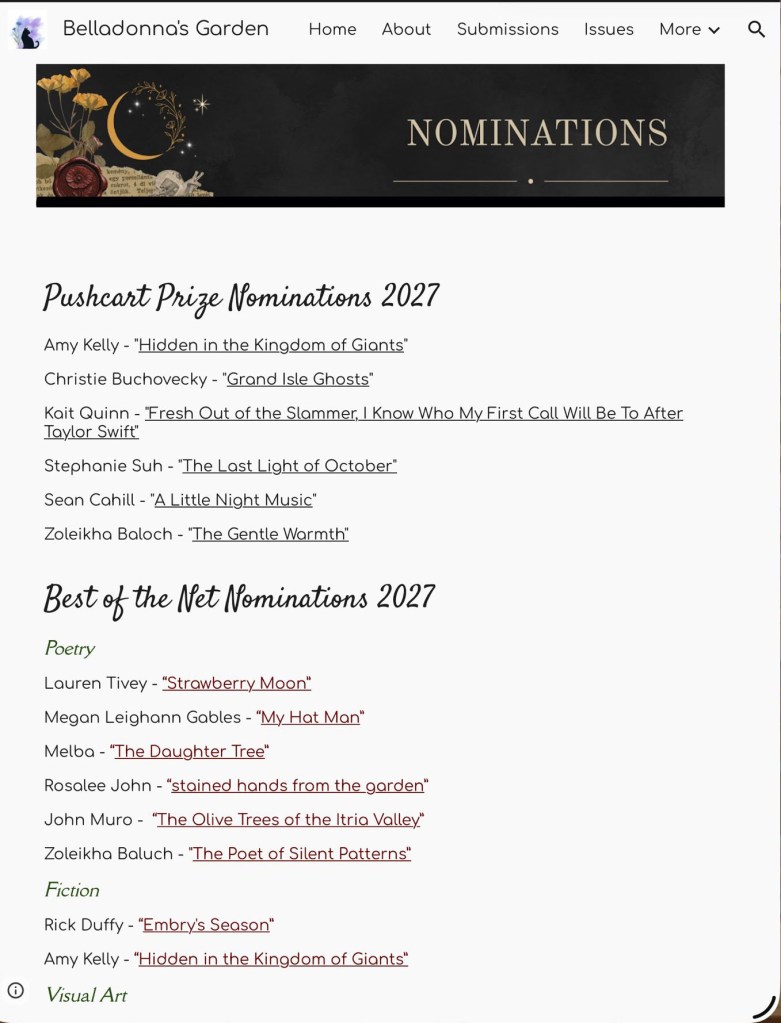
What I have done is to write my first chapbook of poetry this year. It is a collection of poems I wrote from my East Coast years to the present West Coast years. I auto-published a short story before as a Kindle Read, but this is my first time submitting a poetry chapbook to editors of ten presses. Some of them are for chapbook prizes, and some are regular chapbook submissions. And… one of them sent me an email last Wednesday that they wanted to publish my chapbook. I do not want to open a champagne early until I have an actual chapbook of mine in hand. Still, I feel I am in the procession of poets from the misty past and continuing as long as humanity remains.
I can’t think of myself just simply vanishing into the passage of time, becoming a tribe of the forgotten. I don’t want to leave this world without a trace of my existence. That is one of the reasons why I have been submitting my work to journals and my first poetry chapbook since last May. Before, writing was my soliloquy in which I wallowed myself away from the cruel reality where God was unkind, let alone people. However, things have shifted for me. Now, it’s different. This is a time of striking hard when the iron is hot. And boy, is my iron so hot that I can’t hold it any longer.
My first chapbook, “The Glass and the Flame,” consisting of 40 poems, was submitted to a couple of presses last week and this week. One of them required $15.00 for submission, which was quite costly considering that even if my chapbook were not selected, I would still have to pay the sum, just so the editors would read. Still, I decided it was worth it because I wanted to be famous. I want to mark my name in the aisles of bookstores from LA to Rome, to Paris, and wherever literate people live. Not vanity. Justice. My voice deserves to be heard. I write ache, loneliness, sorrow, and desire — with no shame. For whom should I feel shameful about expressing a free spirit in the language of beauty and truth? After all, even scholars have sex. No, my writing is not of Anaïs Nin. Instead, my writing follows the tradition of Anne Ernaux, Duras, and Sappho with the mind of Szymborska. Furthermore, elsewhere across the fields of desire, Plath calls for intelligent lust, which comes in the form of Eros in a purple cloak. And of course, Psyche comes in together. In the secret garden of language.
I have received rejections from journals that tout themselves as publishers of so-called “intellectual,” “confessional,” “existential,” or “societal” poems that demand social activism. Writers are routinely defined by their social, racial, and cultural backgrounds, as if these alone drive their voices. For example, if you are a Korean-American woman from an immigrant family, you are expected to address prejudice and alienation, tinged with jingoism. The prevailing belief is that my race and gender are the only traits editors value — as if being an “exotic” woman seeking an audience is enough. God, when will they realize that, beyond differences, we share more in common?
Maybe this is just a writer’s rant. If so, so be it. Nevertheless, I write the most universal human feelings about love and desire, about solitude and sorrow that any woman across all cultures, ages, and classes can understand. Forget the MFA writers. After all, writers do not need master’s degrees to be considered intellectuals whose work takes precedence over writers who have lived rather than studied.








You must be logged in to post a comment.