
Hounds are racing; horses are galloping,
She is running up on the hill so steep bedraggled
Panting in staccatos of fleeting hopes
for her star that someone stole away.
So she runs up on the hill again and ever
Till she finds her lost star.
Hounds are racing; horses are galloping,
She is running up on the hill so steep bedraggled
Panting in staccatos of fleeting hopes
for her star that someone stole away.
So she runs up on the hill again and ever
Till she finds her lost star.
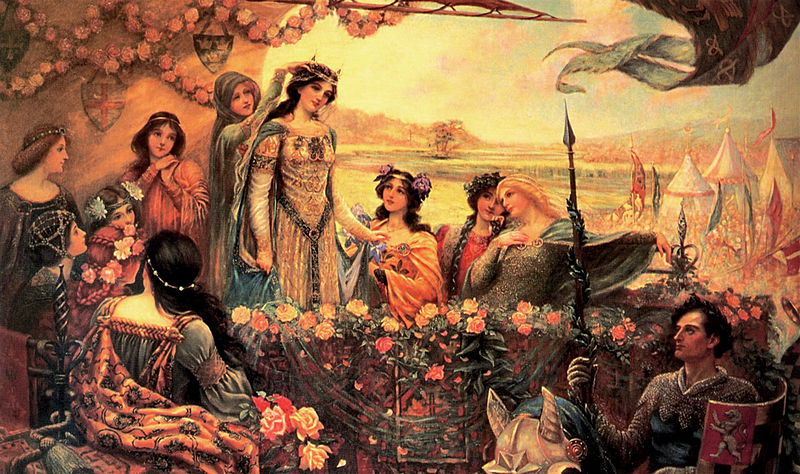
Across the five continents and seven seas
Beyond the bridges of time over the Lethe
There is the Fortune Isle – enchanting Avalon
Where all things grow and perfect themselves
Not by physical labor but by nature’s magician
in the sovereignty of nine faerie queens’ realm
of Prudence, Justice, Fortitude, and Temperance
Adonized in Beauty, revered in magnificence
As Morgan Le Fay, the Queen of the queens
Keeps the Holy Grail under the Sacred Oak
With her half-brother, once mortal King Arthur
Whom the Queen has brought from the battlefield
By Black Boat from which her paramour Dane Ogier
Came to Avalon, where his journey ended in a tryst
With the Queen by the lake of shining waters
Where she brought her son Oberon into light
who became the king of faeries and married Titania.
Avalon is near and far, real and mythical from whither
Truth and wishes are sought after and eloped together.

It is supposed to be about being a woman that binds all women regardless of race and ethnicity across a great divide of time. Forget all others and let us focus on the parallel circumstances and kindred experiences as women. But alas, that seems only a tale told by a romantic fool such as I am. If you think this is hyperbole, then I suggest you read the tweets and comments on the recent news that a black actress plays the role of Anne Boleyn, the second wife of Henry the Eighth and the mother of Elizabeth the First, in the upcoming British periodical drama, which went viral among the learned and the general. In addition to the vehemently acrid narratives on the racial authenticity of Anne Boleyn – especially from fellow women-, the juxtaposition of the two women’s images, the actress Jodie Turner-Smith and the queen Anne Boleyn itself, belies the popular sentiment as though to mock the actress’s appearance in the fashion of the Tudor period by making parallels with the classical portraiture of the Anne of 1000 days. It has produced vociferous tweets full of fury from people who regard the role as audacious cultural appropriation faithful to the PC ethos of the time.
Actress Turner-Smith’s playing the Tudor woman Anne Boleyn is indeed an innovational idea of breaking the typecasting based on the physical distinction for the roles thinkable and conventionally conceivable for the specific attributable characteristics of certain characters. Thus, non-whites playing the roles conceived for whites are seen as usurping the equilibrium of cultural heritage, upending the very foundation of national identity translated into racial identification, a sentiment prevalent even among the professed liberals anti-everything related to Trump, Republicans, and racism. The rejection of the race crossover representation on screen is supposedly due to the difficulty of following the story’s fluid narrative, unable to be absorbed in the story, not least because performers’ distinctive physical attributes mar the harmony of racial fluidity. But do we really?
I have watched a few good dramas (British) in which the races of performers do not pin down them to the racially charged roles. To illustrate, in Benedict Cumberbatch’s Frankenstein, the wife of Victor Frankenstein was played by a black actress. Besides, his father, M. Frankenstein, is a black actor, a fine ensemble of excellent thespians whose energetic performance brought Mary Shelly’s original Gothic story to a theatrical feast to the eyes and the mind. While watching the drama, I was not distracted by the black performers’ appearances being the father and Genevan Victor Frankenstein’s wife. Instead, the powerfully emotional and assiduously methodological performances resurrected the textual characters to real humans, full of pathos with vigor and wonder. Also, British Asian actress Gemma Chan, who played the role of Elizabeth Hardwick in ‘Mary Queen of Scot’s,’ is known for her versatile roles transcending her racial background. Her recent performance as a cyborg with a touch of humanity named Anita in ‘Humans’ is as naturally harmonious as streams of a river flowing into a great ocean, not highlighting her physical differences.

So why the fuss full of sound and fury of the people who cannot accept the black queen in the Tudor drama when they are boastful of the most advanced mind since the age of Enlightenment? In the wake of the global Black Lives Matter movements, people have become afraid of the wind of changes as a frightful tsunami to subvert social foundations, upending the social orders adverse to their belief systems. Although I don’t eschew their concerns for the wind of changes as I am also conservative, not conventional in belief, the current vehemently acrid opinions about the black woman becoming Anne Boleyn are tokens of latent racialized hostility surfaced by the deluged dissents pouring forth from the socially suppressed sentiments. Indeed, you can’t ignore the differences between the two Anne Boleyns. Still, there are more commonalities than the images seen through your optical sensory input: that they are both women of elegance and confidence who are not afraid of expressing what they can. The actress shows she can pull off the character with what she has, and the queen her the courage to confront the criticism for being the cause of subsequent religious turmoil that changed the face of Christendom in spades. Let not prejudice darken entertainment.

Where the ocean sends forth
The breeze of the shrill west
Pegasus gallops over the waves
Neighing in wondrous force, full of pathos
Dolorous, vigorous, resembling
The great conch of Poseidon, resounding
Across a boundless reach of the sky.

Carry me into your faerie chariot,
take me away from this humdrum rut
Over the bridge of the rainbows
Far away to the Elysian gardens
Where I will promenade fancy-free.
 When I saw the movie poster of ‘Cat’s Eye’ (1985) on Amazon prime, I was at first hesitant to watch it because it showed the stereotypical association of the cat as a witch’s familiar or something to that nature of foregone horror repertoire. But perhaps I was more afraid of what I would see and reconcile to the stereotype that the cat could not be the dog. Despite all of the phantasmagorial display of the flights of thought, the cat of the poster’s uncanny resemblance to my seven-month-old tabby Toro won me over the resistance. I rented it for Saturday Afternoon Home Cinema with the expectation which was akin to curious Alice in Wonderland. Be it ever magical or bewitching in a softly purring way, the result is one big wonder conflated with doses of warmth and mirth, whimsically betraying the genre classification as horror and the writer’s Craft of Gothic Fantasy like you never knew.
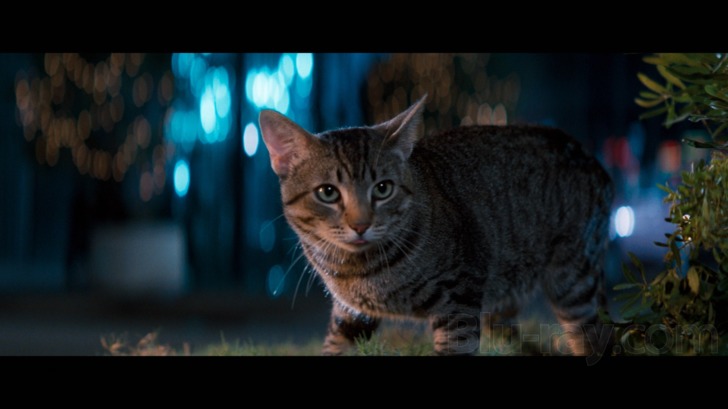
‘Cat’s Eye’ is a threefold anthology film based on Stephen King’s short stories, the first two from his “Night Shift.” King wrote the last story, especially for the movie. It tells a story of a traveling cat who comes upon three separate incidents during his search of the mission to save a life from danger, as annunciated by a spectral girl. In the first two stories, in which the cat takes an incidental role of witnessing human frailty and duality of evil and good, he goes by the names of “The Kitty” and “Sebastian,” showing the characters of the name doners per se. And who says that the cat is a harbinger of destruction as witch’s familiar? He is the judge of the character as if taking in the sun God Ra’s appearance, who was said to be meowing during what he was doing, representing the sun’s benefits for life on Earth in the Book of the Dead. Kitty and Sebastian do not directly intervene in the characters’ fates in the first two stories. It is the third story in which the cat takes charge of the narrative as the main actor with the name “General” on the stage.
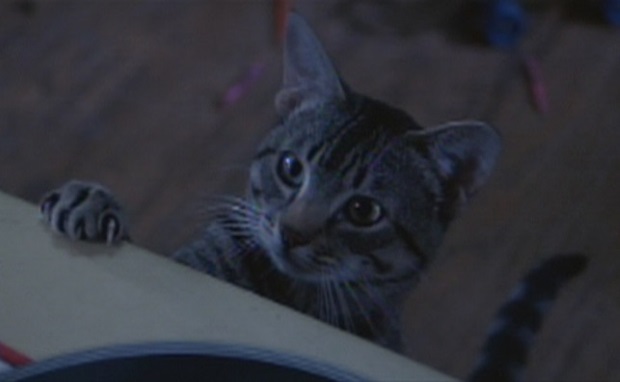
Stephen King is known for his excellent story-telling skills combined with supernatural and psychological elements of lonely and misunderstood characters with wounded hearts dealing with their enemies in extraordinary situations. In the tradition of Washington Irving, Nathaniel Hawthorne, and Ernest Hemingway, King’s narratives are always free from a baroque figure of speech with florid adjectives and complex sentences that flaunt the ego of an unapproachable writer on the mighty throne of English Literature. That is why King’s stories are attractive and widely acclaimed because they deal with the ordinary lives that are not ordinary when seen in close-up. That alchemical ingredient gleams through this movie, showing how our lives are vicariously interrelated, weaved by multiple strands of contemporary life that we all live now through the cat’s eye. Herodotus, the father of western narrative history, knew the connectedness of separate human lives and combined them into one vast story of humanity employing parataxis, individual narrative accounts’ integrity. King’s “Cat’s Eye” follows Herodotus’s narrative trail.
The movie’s real star that brought the fiction into reality is undoubtedly the tabby, whose performance is so wonderfully natural and deeply impressive that it eclipses the human cast’s performance. And yet, there is no credit for the feline star without his real name and a shred of information. He is now long gone, but then I see my tabby Toro at home and wonder if the actor cat might have been his great-grandfather because of the striking physical resemblance and reflective demeanor. But then I think anyone who has a tabby may be delighted to feel that way because otherwise, King might not have written for this film charmingly, which is unusually lovely with high paws.


You must be logged in to post a comment.