Tag: poem

  • Still pursuing, still achieving

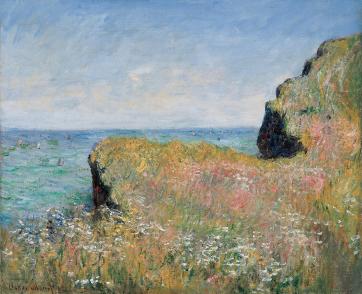
    edge-of-the-cliff-pourville-claude-monet
    Edge Of The Cliff Pourville by Claude Monet

    Albeit delay
    You may fret,
    Sometimes it may
    prove to be fortunate.

    P.S. According to Herodotus, an ancient Greek historian who is regarded as the Father of History for his pioneering method of compiling historical records in a narrative form, the Germanic tribes in the Rhine considered repose from war as a time to recuperate their spent vigor and stamina for the next round of the battleground. They spent the repose doing absolutely nothing but performing their physiological and biological functions to the point of sloth and gluttony. (The accompaniment of German beer was primary, if not absolute.)

    In the eyes of the learned and culturally sophisticated Greek, however, it was a sight to behold, a wondrous admixture of lackadaisicalness and  prudence in a way that looked effective for rejuvenation.

    My repose is not as starkly static as those ancient Germans, but it is a time of getting my hands off the helm of existential duties and responsibilities for a little while – to write a new chapter of my life in the continuous search of meaning and purpose thereof as a pioneer woman on the 21st century western frontier. Hence I wrote this very short poem during the current repose. 

    저장

  • The Hound of Troubadour

    greyhound-bus-clipart-10

    Into the dark of the night, we all travel
    tranced in the eurythmics of rainfalls
    outside the moving coach in a dazzle
    of somebodies packed full of stories
    to carry them over the westerly end
    of our dreamscapes, half-assured but
    willing to take on Fortune’s loose end,
    as we head for our unknown Fortune.

    P.S. Ralph Waldo Emerson once said, “Thinking is the function, and life (i.e., putting thoughts into actions) is the functionary.”

    Along the line of this maxim, anyone who’s been on a long distance cross-continental bus travel contracts sociological and psychological strains of Stockholm Syndrome; that whoever rides on the same bus with you will be an aggregate of the ad hoc assembly of accidental passengers, a surrogate band of battle soldiers from all walks of life, vivacious or lugubrious, voluntary or unintentional, funded or impecunious, assured or doubtful. That’s also an elemental attribute of the travel because there’s always something unexpected that happens along the way, which is what makes it all the more interesting and enriching for our life experience.

    After a long but worthwhile travel by bus, you will understand what made the former British Prime Minister Benjamin Disraeli during the reign of Queen Victoria declaimed about the lesson of travel thus: “Travel teaches toleration.” Which is also to be yoked into the ever truthful Nietzschean tenet of existentialism: “What doesn’t kill you can only make you stronger.” I can vouch for it on account of my own veritable veni vidi vici empirical learning acquired alone after five nights on two Greyhound buses from New York City, NY to Los Angeles, CA . I have lived thru it. I take the liberty of positing that I am now also become something of a student of life and literature following the existential experiences of George Orwell, Viktor E. Frankl, Henry David Thoreau, Stephen Crane, Bill Bryson, and Jane Eyre (the fictitious but realistic character) into the bargain.

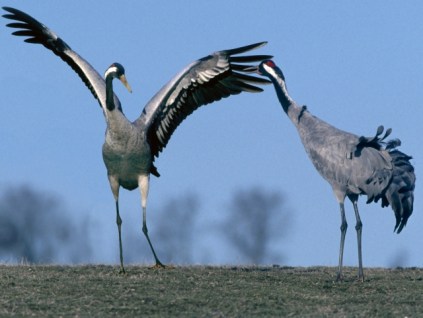
  • When cranes dance

    Kranich-Tanz_Bruno_Dittrich

    Their wings fluttering gracefully by the lake

    Guarded by dryads, naiads, elves, and dwarfs

    Shimmering iridescently in midnight moonlight,

    The ancient birds dance along the borderlines

    between mythology and history, hither and thither

    Till daybreak and fly away beyond the Misty Arc.

    P.S. Elsewhere in the world, people have believed that cranes dance at night when no mortals are around to transform themselves into human forms; then they choreograph their courtship, wooing and wooed. Mysterious and ancient, a crane is a bird of the misty past, of the uncertain present, and of the unknown future. Its regal poise makes wherever it stays a heavenly palace and entrances me into the whirlwind of Magic and Myth. 

    저장

  • The Fall of the Unicorn

    Hunter and hunted, quiet and questing,
    Tamed and wild, chaste and insatiable,
    It’s man and woman at its will shifting
    Its nature but the beauty still admirable
    As the Unicorn fell from a noble creature
    To a profane beast with Death of Adventure.

    P.S. The divinity of the unicorn suddenly declined during the Renaissance period (14th~16th centuries) and like Lucifer, the Fallen Angel, it became a symbol of bacchanalian debauchery associated with lust and a harbinger of moral corruption. Even J.K. Rowling’s unicorn is devious and ghoulish, which is antithetical to my perception of unicorn as a divinely beautiful being evoking a wide arc of imaginations in my mind’s eye that has become sore to the dreary sights of the existential vertigo I sometimes stumble into.

  • parliament of words is postponed

    Congress of Reason and Sentiment is suspended

    Till the key to Forum of Letters that’s

    Lost in the midst of midnight madness

    Of a phantasmal duo of rebels ignorant and crude

    Uprooting the Ministry of Independent Scribe

    Is found to continue its usual sessions with verve.

    P.S. Until my modus vivendi gets back on the track that is to be renewed with a bella  vistas in a new territory, all is suspended, willed or unwilled. 

  • Eros and Psyche: Sweet Sublimation

    M-17-343x450

    His love was fixed but unsought
    By the ostentation of Eros’s Play,
    The casual making-love façade
    With no precondition of the soul;
    But that which it consummates
    Is a union of the two existences
    Of Body and Soul, the sovereign
    Surrender of the self to the beloved
    Becoming a whole, an ensemble
    metastasizing  “I” lovingly, willingly
    Directed toward “Thou” entirely
    In trust of one another wholeheartedly
    making him of her and her of him magically.

    P.S.: A short essay called “A Courtship of Twenty Years” by John Stuart Mill (1806-73) reveals his infatuation with his friend’s wife, who eventually became his wife. It’s a rhapsody of his admiration of everything about her, her moral character, intellectual gifts, and graceful beauty. This secret affair of the heart is not, however, tinged with a lascivious desire for his friend’s wife thanks to his elucidation of her virtues that benefited him to become wiser and more wholesome; his love for her is a sublimation of the ego, which was capable of integrating the sexuality of the id into the personality. Nowadays reductionism is responsible for interpreting love as a mere sublimation of sex and conscience merely in terms of the superego. But love is the precondition of sex, not the result of the sublimation thereof. What might have been his physical attraction to her at the inception of his love affair was elevated to the actuality of Love, the wholeness of Eros (Body) and Psyche (Soul), which is the essence of love between the lovers.