
Look at the sky and find a day moon,
Go and catch the borrower with a pin,
Tell me where all pasts have gone,
Or who has tricked the fire demon,
Teach me to hear nature’s whisper,
And to walk in the sky, beautiful.
Look at the sky and find a day moon,
Go and catch the borrower with a pin,
Tell me where all pasts have gone,
Or who has tricked the fire demon,
Teach me to hear nature’s whisper,
And to walk in the sky, beautiful.

The ocean sends the detritus
Of memories written in water
And lashes it in tidal petulance
Untamed, forceful, to this shore
Of the world where I now wander
Aimlessly, alone, in the nostalgia
for the times I bid the return in vain
As the waves gush my footsteps over
With foams of oblivion, never to return.

Hounds are racing; horses are galloping,
She is running up on the hill so steep bedraggled
Panting in staccatos of fleeting hopes
for her star that someone stole away.
So she runs up on the hill again and ever
Till she finds her lost star.
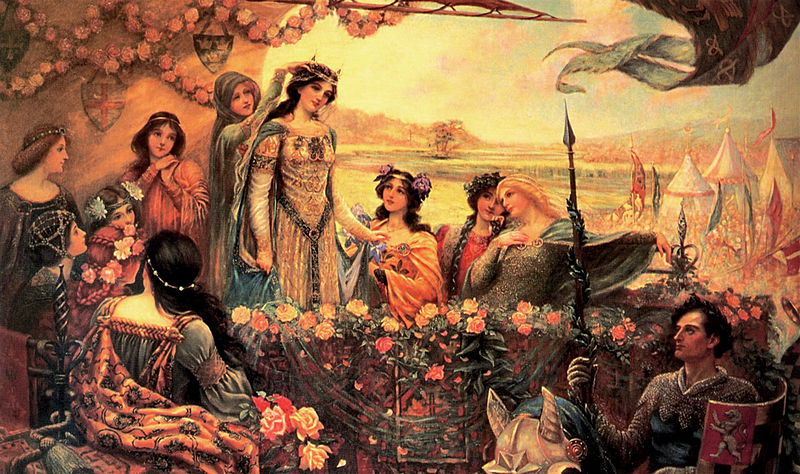
Across the five continents and seven seas
Beyond the bridges of time over the Lethe
There is the Fortune Isle – enchanting Avalon
Where all things grow and perfect themselves
Not by physical labor but by nature’s magician
in the sovereignty of nine faerie queens’ realm
of Prudence, Justice, Fortitude, and Temperance
Adonized in Beauty, revered in magnificence
As Morgan Le Fay, the Queen of the queens
Keeps the Holy Grail under the Sacred Oak
With her half-brother, once mortal King Arthur
Whom the Queen has brought from the battlefield
By Black Boat from which her paramour Dane Ogier
Came to Avalon, where his journey ended in a tryst
With the Queen by the lake of shining waters
Where she brought her son Oberon into light
who became the king of faeries and married Titania.
Avalon is near and far, real and mythical from whither
Truth and wishes are sought after and eloped together.

It is supposed to be about being a woman that binds all women regardless of race and ethnicity across a great divide of time. Forget all others and let us focus on the parallel circumstances and kindred experiences as women. But alas, that seems only a tale told by a romantic fool such as I am. If you think this is hyperbole, then I suggest you read the tweets and comments on the recent news that a black actress plays the role of Anne Boleyn, the second wife of Henry the Eighth and the mother of Elizabeth the First, in the upcoming British periodical drama, which went viral among the learned and the general. In addition to the vehemently acrid narratives on the racial authenticity of Anne Boleyn – especially from fellow women-, the juxtaposition of the two women’s images, the actress Jodie Turner-Smith and the queen Anne Boleyn itself, belies the popular sentiment as though to mock the actress’s appearance in the fashion of the Tudor period by making parallels with the classical portraiture of the Anne of 1000 days. It has produced vociferous tweets full of fury from people who regard the role as audacious cultural appropriation faithful to the PC ethos of the time.
Actress Turner-Smith’s playing the Tudor woman Anne Boleyn is indeed an innovational idea of breaking the typecasting based on the physical distinction for the roles thinkable and conventionally conceivable for the specific attributable characteristics of certain characters. Thus, non-whites playing the roles conceived for whites are seen as usurping the equilibrium of cultural heritage, upending the very foundation of national identity translated into racial identification, a sentiment prevalent even among the professed liberals anti-everything related to Trump, Republicans, and racism. The rejection of the race crossover representation on screen is supposedly due to the difficulty of following the story’s fluid narrative, unable to be absorbed in the story, not least because performers’ distinctive physical attributes mar the harmony of racial fluidity. But do we really?
I have watched a few good dramas (British) in which the races of performers do not pin down them to the racially charged roles. To illustrate, in Benedict Cumberbatch’s Frankenstein, the wife of Victor Frankenstein was played by a black actress. Besides, his father, M. Frankenstein, is a black actor, a fine ensemble of excellent thespians whose energetic performance brought Mary Shelly’s original Gothic story to a theatrical feast to the eyes and the mind. While watching the drama, I was not distracted by the black performers’ appearances being the father and Genevan Victor Frankenstein’s wife. Instead, the powerfully emotional and assiduously methodological performances resurrected the textual characters to real humans, full of pathos with vigor and wonder. Also, British Asian actress Gemma Chan, who played the role of Elizabeth Hardwick in ‘Mary Queen of Scot’s,’ is known for her versatile roles transcending her racial background. Her recent performance as a cyborg with a touch of humanity named Anita in ‘Humans’ is as naturally harmonious as streams of a river flowing into a great ocean, not highlighting her physical differences.

So why the fuss full of sound and fury of the people who cannot accept the black queen in the Tudor drama when they are boastful of the most advanced mind since the age of Enlightenment? In the wake of the global Black Lives Matter movements, people have become afraid of the wind of changes as a frightful tsunami to subvert social foundations, upending the social orders adverse to their belief systems. Although I don’t eschew their concerns for the wind of changes as I am also conservative, not conventional in belief, the current vehemently acrid opinions about the black woman becoming Anne Boleyn are tokens of latent racialized hostility surfaced by the deluged dissents pouring forth from the socially suppressed sentiments. Indeed, you can’t ignore the differences between the two Anne Boleyns. Still, there are more commonalities than the images seen through your optical sensory input: that they are both women of elegance and confidence who are not afraid of expressing what they can. The actress shows she can pull off the character with what she has, and the queen her the courage to confront the criticism for being the cause of subsequent religious turmoil that changed the face of Christendom in spades. Let not prejudice darken entertainment.

Where the ocean sends forth
The breeze of the shrill west
Pegasus gallops over the waves
Neighing in wondrous force, full of pathos
Dolorous, vigorous, resembling
The great conch of Poseidon, resounding
Across a boundless reach of the sky.


You must be logged in to post a comment.