Tag: Poetry

  • over and over

    gl_wildflowers

    She kept all her love to herself alone, all alone,

    But let her concealment, like a pearl in the clam,

    Feed on her rosy cheek: she pined in thought,

    And with a blue and even bluer melancholy,

    She stood there like Dido by the River of Lethe,

    Smiling gently at the last shadow of memory.


    P.S.: A new life can mean anything, which spawns multiple kinds of rebirth in any kind: Born-again Christians believe that their newly professed baptismal promise will gain them new strength in life through conversion to God. Reformed characters want to right the ship derelict in the maelstrom of life. In this regard, I think lonely hearts hardened by the absence of love should deserve a new life filled with the pleasure of love in the same way the heartbroken Psyche descended upon the Hades and found her lost love, Eros. It’s about the soul redeeming through love. This is my kind of New Life, the Supreme One of Life, which sets a confined soul, such as the narrator of my poem, free from unjust and cruel incarceration in an existential drudgery. 

  • Thousand loves

    ofclnku1pbi65qd0ft3lgwpoc56rwcsrzkjyo0hnaasfvv6uhpcol6xx8tzkpuwz-

    Her love that has been, it is that which shall be;

    and there is no one love but a thousand loves:

    A gentleman and a foreman, a mister and a master,

    A soldier and a sailor, a wrangler and a rancher,

    A fighter and a keeper, a preacher and a paramour,

    A singer and an actor, a drifter and a deceiver –

    A Shapeshifter with a thousand faces of a lover

    changing and changing, round and round, forever

    all but his heart true blue to his mistress, dear.


    P.S.: This is my a priori adaptation of Shakespeare’s idea of the perfect better half or lover in “All’s Well That Ends Well”. She sees different aspects of her sweetness dear whose various characteristics promise her fresh delights and never bore her. 


  • poesie – i dream myself alive

    cheret8

    Awake I know I dream not

    As the sense still alive

    Tells what is seen is not

    A fancy but a reality alive

    Of the wonder of the mind

    Working wonders of creation

    Of a fiction of the mind

    In a mind’s reservoir. 


    Awake I think when I dream

    As the pulses of sense weaken

    And the images seen past seem

    All but phantasmal panorama seen

    In a mind’s theater of illusion – 

    Fantastic beasts, wailing ghosts

    Enveloped in the cloud of dreams

    Lurking in the stupor of the sense. 


    Awake, awake, awake I become

    When the sense divorces fancies

    As the mind calls dreams hokum

    And claims a seat of imaginations

    Till it clears the clouds of ignorance

    Darkening the light of the mind wondrous

    Of creating the reality of its sovereign own

    With no assistance of chants and spells. 


    P.S.: Thomas Hobble (1588-1679), an English scientist and philosopher, excoriates in his essay “You and Your Dreams” the knavery of sham magicians and magical folk claiming to deal with supernatural beings to induce naive people to believe in superstitions and the power of magic for the promotion of their trades. Hobble enlightens readers that superstitions arise out of the ignorance of distinguishing imaginations, a second-hand reality, from dreams, a detritus of agitated part of the mind. The gist of his argument is that ghosts and haunted places ensue from an intractable combination of the images of the seen and the second-hand images that become distorted imaginations made look real.  In sum, Hobble’s theory of dream interpretation corresponds to the postmortem dream theories of Carl Jung. Hence this poem is my understanding of Hobble’s essay on the aforesaid subject. 

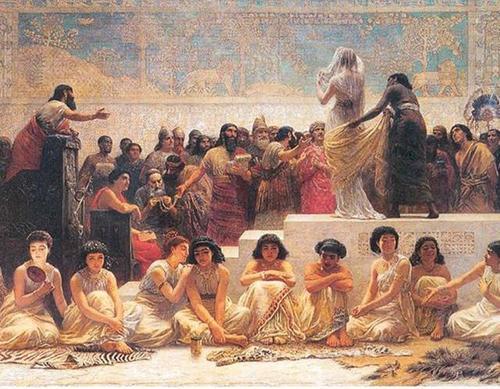
  • In the temple of Ishtar

    tumblr_inline_p7h7p1ICiL1tnzgls_500
    The Babylonian Marriage Market by Edwin Long, 1875

    There she stands like a nameless flower

    Alone, away from a heap of roses in the garden

    of the temple of Ishtar, Goddess of love in armor

    and looks not with pride seen but with pain unseen


    Days have left, Years have passed;

    But the girl still roams around the temple

    Alone, apart from the beauty selected

    And consummated to a sacred couple.


    Alas, what is it not the thing called Pity

    When the wallflower unwanted, unsought

    Alone, as always, waits a cruel eternity

    Till she meets a beholder besotted sought?


    P.S. Ishtar is the Mesopotamian goddess of love, war, and fertility. It is said that in ancient Babylonia, every young female when reaching a certain age should go to the temple of Ishta and wait for a man who will approach and take her as a wife to home. The temple was used as an open market for marriage, which was considered a sacred means of attaining divine union between mortals in the presence of the goddess. However, as the unfortunate ones in love have always been the figures of lamentation throughout human civilization, the shy, unpopular girls had to wait in the temple for years to be selected. This poem is to feel the feeling of being unwanted and ignored in the meritocracy of beauty…


  • Poesie – the moon

    They whisper lovers’ words

    In the soft sweet moonlight

    With the bright hues of 

    the Evening star quivering

    in a delight of a gentle caress

    of the commending nightly sky

    and its reflection in the waters 

    Beneath the visiting lunar beauty

    chaste and fair, excellently bright.

    P.S.: The moon has been an inspiration for many a writer, ranging from Ben Jonson, who revered it as a seat of chaste goddess Diana, to W.H. Auden, eulogizing it as the one and only lunar beauty. I took the liberty of joining Jonson and Auden by writing this with the image of the moon I have in mind. 

  • the five faces of a fool

    unnamed

    The Five Faces of a Fool he pulls off proudly

    The prince whines and whimpers loudly;

    He defies the humility of heart as ever,

    He falls for the false praises to no ends,

    He mocks the wise counsels evermore,

    He denies the evil’s counterpart as always,

    He repeats easy starts and hard ends forever

    With his head buried in the sand to problems

    Till Sister of Charity helps him to stand up

    To his follies and repent his foolish refuses

    To face off the Five Faces of a fool once for all

    And walk forward to what lies ahead in light.

     P.S.: While I was watching an episode of my favorite old western drama ‘Laramie’, a character of a falsely convicted ex gunslinger uttered, “I am seven kinds of a fool, ain’t I?” As a lover of fanciful words, I was immediately piqued by the expression, and in the subsequent search of the meaning thereof, instead, I happened on the expression of “The Five Faces of a Fool,” because of its sheer witticism from the wise King Solomon. 

    It’s derived from Solomon’s fatherly advice to his spoiled crown prince son Rehobam, circa 930 BC. It’s a verse consisting of five-fold warning against the fall and the decline of the kingdom as a result of refusing steadfastly to listen to the wise and surrendering to God’s will out of audacious laziness in the guise of princely hubris. 

    Obviously, the prince son was not a model student of his father’s school of proverbs, but the readers beyond the boundaries of time and place have taken the advice to heart and applied it to where it is deemed fit. In writing this poem, I was wondering which face of a fool I might be wearing… How about you my dear reader? But take heart! For there’s always redemption thru hope and faith.