Tag: prose

  • At the Harbour, Before I Know the Story

    Reading Day — Thursday, August 13th, 2026

    On Elizabeth Taylor’s A View of the Harbour

    My first time in the harbour: at the dock, standing in the sea breeze. English air. An unfamiliar coast, oddly familiar. But this is not a book about the cozy English sea town in a postcard.

    I have read only the first few pages of the book, and it has already given me its weather and atmosphere. I feel the harbour holding the secrets of the townspeople. I feel the sea carrying the flotsam and jetsam of life quietly and bringing them into the harbour—an always moving inside a never-arrival.

    The characters I have met so far are ordinary in the sense that none of them has that fierce individualism, existential malady, or anything that instantly piques the senses. But people may find pornography in Jane Eyre: the tension, the ache, the desire. They are not spoken but felt. People keep them in the mind, as if giving a voice to the forbidden would desecrate Jane Eyre.

    I think that is what the book wants us to see: what may seem ordinary on the surface, like a calm sea, hides a storm spiraling into a pillar of fury, discordance, and disorientation. I have not yet come to know the characters, except for Prudence, whose two Siamese cats love pushing their small heads against her legs. It is the cats that draw my attention to her, but she seems to have a story to tell as a beautiful young girl who does not act like a beautiful teenage girl.

    Prudence is Prudence: Quaker in name, puritanical in action. But she may turn out to be someone different from what I have seen as I progress through the pages, although I want her to remain as I see her now. I want her to be beautiful without being popular.

    That is life, isn’t it? Change is human, an uninvited grace. You want someone you like to remain the way you know them. That is what I want to know after I complete reading the book.

    The sea will remain the same. The harbour may not.

    — Stephanie Joori Suh

  • About Writing

    I can’t think of myself just simply vanishing into the passage of time, becoming a tribe of the forgotten. I don’t want to leave this world without a trace of my existence. That is one of the reasons why I have been submitting my work to journals and my first poetry chapbook since last May. Before, writing was my soliloquy in which I wallowed myself away from the cruel reality where God was unkind, let alone people. However, things have shifted for me. Now, it’s different. This is a time of striking hard when the iron is hot. And boy, is my iron so hot that I can’t hold it any longer.

    My first chapbook, “The Glass and the Flame,” consisting of 40 poems, was submitted to a couple of presses last week and this week. One of them required $15.00 for submission, which was quite costly considering that even if my chapbook were not selected, I would still have to pay the sum, just so the editors would read. Still, I decided it was worth it because I wanted to be famous. I want to mark my name in the aisles of bookstores from LA to Rome, to Paris, and wherever literate people live. Not vanity. Justice. My voice deserves to be heard. I write ache, loneliness, sorrow, and desire — with no shame. For whom should I feel shameful about expressing a free spirit in the language of beauty and truth? After all, even scholars have sex. No, my writing is not of Anaïs Nin. Instead, my writing follows the tradition of Anne Ernaux, Duras, and Sappho with the mind of Szymborska. Furthermore, elsewhere across the fields of desire, Plath calls for intelligent lust, which comes in the form of Eros in a purple cloak. And of course, Psyche comes in together. In the secret garden of language.

    I have received rejections from journals that tout themselves as publishers of so-called “intellectual,” “confessional,” “existential,” or “societal” poems that demand social activism. Writers are routinely defined by their social, racial, and cultural backgrounds, as if these alone drive their voices. For example, if you are a Korean-American woman from an immigrant family, you are expected to address prejudice and alienation, tinged with jingoism. The prevailing belief is that my race and gender are the only traits editors value — as if being an “exotic” woman seeking an audience is enough. God, when will they realize that, beyond differences, we share more in common?

    Maybe this is just a writer’s rant. If so, so be it. Nevertheless, I write the most universal human feelings about love and desire, about solitude and sorrow that any woman across all cultures, ages, and classes can understand. Forget the MFA writers. After all, writers do not need master’s degrees to be considered intellectuals whose work takes precedence over writers who have lived rather than studied.

    If this essay moved you, you can support my writing at Ko-fi: https://ko-fi.com/steph79650

  • cathedral of forest

    She, with her wings clipped in shackles
    Sees the light above the high altar
    Through the dusk of leaves and boughs
    Beneath the dome of boundless skies
    Without spires and stained glass within.


    But why else when nature has it all
    Sermons in trees, brooks, and skies?
    From the haunt of life’s vicissitudes
    rests herself under the pillars of trees
    As the choristers of hummingbirds begin
    The hymns of hope in nature’s cathedral.

  • Aesop’s Fables

    Aesop’s Fables by Aesop

    My rating: 5 of 5 stars


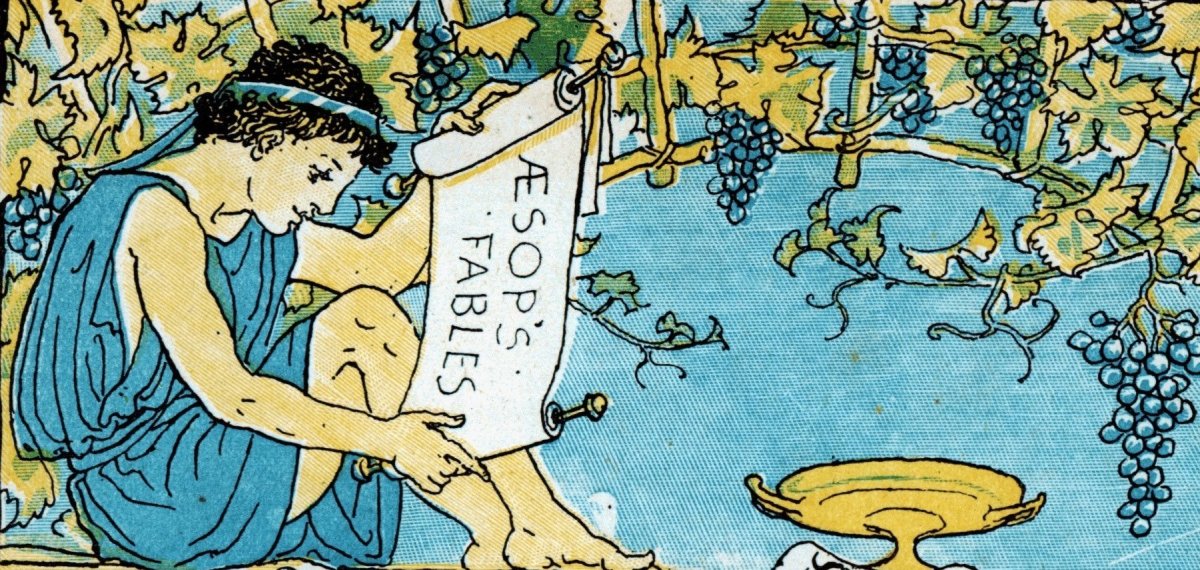
    Last week, I reread Aesop’s Fables as an adult (that is, in terms of the ages on an evolutionary scale) in the 21st century and found them just as attractive as the first time reading it as a child. What a feeling! A freed slave once, Aesop’s natural wit combined with protean imagination made him able to investigate the essence of things, the nature of things, and attribute it to human nature’s characteristics, which ultimately brought him mortal death and immortal life. He was, in a way, a lot like Hephaestus, the god of fire, blacksmith, presider of the arts, and the only legal husband of the goddess of love and beauty Aphrodite who found him unbearably unromantically ugly.

    Aesop’s Fables still scintillates in the brilliance of affabulation and humor that nicely relates to Nietzsche’s concept of immanence, the understanding of nature of all things; the Natural Law called conscience the supreme ruler of the universe has inculcated in us. The Fables are full of lessons that are akin to Jesus’s parables employed in his teaching of ethical codes for Christians in daily life. Of course, Aesop was of the Pre-Jesus era. Still, his stories bespeak something of human nature that had already existed, which is ongoing and will continue as long as humanity exists. The cardinal virtues of prudence, justice, temperance, fortitude, and Christian values of faith, hope, and charity are all embroidered on the elliptical, imaginative, and impressive episodes of and among humans, animals, and even gods in this immemorial anthology of ancient wits. “The North Wind and the Sun” teaches about the force of gentility over the fear of intimidation. “The Woman and Her Hen” resonates with the timeless adage of everything in moderation. “The Milkmaid and her Milk Pail” corroborates the famous proverb that you should keep a bird in your hand than catch two in a bush. Treating others in a way you want in reciprocity illustrates the dinner scenes in “The Fox and the Stork.” And yes, I believe President Ted Roosevelt must have gotten inspiration from “The Astronomer” that you should look at the stars while keeping your foot firmly on the ground. And there are more stories to wow modern readers.

    Aesop’s Fables are so practical and amusing that all of them collapse millenniums between his telling and our reading it. Besides, all of them read like Book of Proverbs or Psalms in free verse or prose version, which makes the reader unburdened with textual analysis to decipher meanings intentionally obfuscated by the high intellect the academic writers of the sort. The Fables are comprehensive to all, serving a purpose of providing tenets of reading; to bestow pleasure of the sense and satisfaction of reason in a way you do not consult a help of a dictionary or other lexical or literary reference. Reading the Fables gives a feeling of watching a TV cartoon, say Woody Woodpecker, which tells something about man’s nature wrapped in an animal hide. So do not fear reading Aesop’s Fables now. It is well worth spending your free time discovering the universality of the truth with that “A-Ha!” moment regardless of the subjectivity of time.


    View all my reviews

  • Minor Earth, Major Sky

    As a hobbyist dilettante writer, I have been writing this and that on my beloved blog for four years. Despite English being my Second Language, I dare to write in it against criticism of solecism regarding all the prescriptive rules of the most popular language of the Indo-European linguistic superphyla. The reason I continue to and love to write is no more than the justice of my meek self, smothered under the mask of exoticness that has become my sole identity, and a written touchstone for the neural activities of the mind. I sometimes wonder affected by the progress of neurological or physiological maladies as I slowly walk toward the end of the mortal journey on earth. So, I want to leave the mark of my existence. Welcome to My Invisible World, the Minor Earth.

    The provenance of today’s post comes from my reading of a Saturday edition of the Guardian subscription on my Kindle two days ago. It featured a book review of Must I Go by Yiyun Li, exultantly described as a cracking read written by a Chinese-American woman writer deserving of the commendation. The article began with her illustrious academic background as an immunologist and a recipient of a prestigious MacArthur grant bestowed on geniuses. While such introductory curriculum vitae is undoubtedly relevant to denote her intellectual brilliance, I wonder if such a decorative prerequisite is necessary for the book’s worth. What if Li were just an obscure Chinese writer delving into English writing without the decoration? Such a hypothetical question might be regarded as nothing but an incoherent rambling of a jilted would-be writer. Yet, I have noticed that ordinariness is off-putting, unglamorous, and unworthy of recognition. Call it a groundless presumption or jealous subjectivism even, but it’s the truth. Charlotte’s Bronte’s author’s tenet of faithful allegiance to truth and nature seems to apply to the otherness of the Far-Eastern writers whose ordinariness is merely invisible and regardless. That is, they exist in an invisible habiliment of mysteriousness from Shangri-La.

    The review analyzes Li’s literary reality of uprooted sentimentality in the background against America’s wilderness, so to speak, in which her existential question of who she is based. Li also rides on the crest of the waves of cultural identity, as is the principal thematic element of most Far-Eastern writers. Rather than striking the chords with the universality of human life, they tend to focus on the egoistic litany of alienation with their selfsame egoist emphasis on otherness. In this regard, Far-Eastern writers themselves foster this strangeness, this otherness, these less-than-ordinary images based on their literary tenet they believe truthful and appealing to selective, not universal readers. That is why I, who is also from the far east tend to eschew their stories, void of the common ground of empathy, no other than the shared physical reality.

    Enter Kazuo Ishiguro, author of The Remains of the Day, whose literary world is not limited in his racial and cultural backgrounds. A good writer is capable of travel and metamorphosis beyond the existential terra, where the vision becomes a reality of its own. Ishiguro wants to be all that he can be away from his physical context to manifest his views on human nature, which aims to chime the bells of universal emotions. However, such transfiguration of physical reality into the universal realm of consciousness does not betray Ishiguro’s ascribed biological characteristics because creative force, in conjunction with desire for aesthetic values of literature, is mightier and higher than physical reality. In this sense, Ishiguro gloriously triumphs over racial barriers, and splendidly demonstrates that what you look like and where you are from cannot confine you who you want to become.

    I still write despite my imperfect command of English simply because I love the act of writing as a valve for opening myself dying for a fresh breath. My book has sold only five digits of a hand. I recently received a comment on one of my book reviews I posted three years ago on amazon with 32 likes that callously slighted my ability to write in general because of minor violations of grammar rules. Yes, I am an amateur writer of Far-Eastern backgrounds with an ordinary job as a legal assistant with a B.A. in English from a state university. Yes, my English is far from the perfection of English Undefiled. Yet, writing is no longer a prerogative of the academically privileged whose selfish seclusion of lettered cases is adulated. Writing is a democratic vehicle in which anyone can morph into whoever she or he wishes without restraints. Take Tolstoy, Charlotte and Emily Bronte, and Jane Austen, all of whom put their literary aspiration into reality despite their spelling weakness. No one shall bully my writing skills, nor belittle my volition to write for universal readership. Forget how I look and speak. It’s the heart’s passion and satisfaction of reason letting out of the cocooned physical reality that deserves manifestation. For this reason, I write with or without public recognition with a myriad of likes.

    P.S.: I don’t believe that you can follow my blog without liking what I have written. Also, even if you fulfill the requirement above, if you are regarded as a marketing puppet, then I will drive you away. Therefore, I will not treasure your subscription to my blog if you just press the button on caprice and whims. Certainly not for my blog.


  • Isn’t this irony?

    Our post-modernist culture is nuanced with anti-establishment of anything traditional and proper, such as decorum, mores, and codes of chivalry. The result of degradation of the values under the pretext of establishing a New Brave World is illustrated  in the following cases of Manifest Grand Irony of Liberalism that is supposed to be synonymous with altruism and niceness.

    ima
    A Nazi sympathizer? Are you kidding?

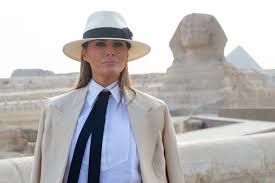
    According to this week’s edition of The Spectator, an anonymous former British Prime Minister revealed his hatred toward Theresa May by saying that she should be stabbed or done harmed in the most despicably atrocious fashion that reminds me of the gruesome murder of women by the Reaper of Whitechapel in the late Victorian period. Then there is a British conservative party leader named Esther McVey, who was maliciously excoriated by John McDonnell, a British Labor party politician instigating the mass in public to “lynch” her. Also, the First Lady of the U.S. Melania Trump was criticized for her supposedly apocryphal colonial fashion in Egypt by the media which also prompted the subsequent rebukes from the public. And this does not stop in the West. The first female president of Republic of Korea, Keun Hae Park was preposterously ousted by her radical left-wing contender Jae in Moon on the count of accepting bribery from a prominent business conglomerate based on unfounded grounds. Besides, Moon’s myrmidons maligned her reputation with indecent computer-generated photo-ops of her to destroy her political career as well as her personal life in prison because she was a leader of a conservative party.

    What the aforesaid ladies have in common is not only their conservative affiliations but also their social defenestration from their societies that show neither sympathy nor solidarity among the members of the parties and of the humanity in general. But then, woe betides anyone declaiming against the faults of the demagogues! Criticism of a political rival on different stances with courtesy is countenanced and actually encouraged in democracy, but contextualizing it in the egregiously violent words toward the women amounts to terrorism and therefore should be publicly deplored in full force and effect. Besides, however strong-willed and imperturbable the aforesaid women might seem in public, they are “ladies” deserving being treated with courtesy, for none other than being women because they are women. Where has all the honorable, respectful chivalry gone? It’s a code of honor, civility, respect toward womanhood that is transcendent of geographical, cultural, and racial boundaries. Just because they are conservative does not give anyone a license to harass them with malicious verbal remarks or gestures marshaling a mass prompting for the behoof of their political hegemony.

    To top it all off, the aforesaid betrays the usual faux-pas of declining against their contenders ad hominem, not on the ground of substantive factors or evidence, as Shakespeare corroborated thus: “Condemn the fault, and not the actor of it?” So it’s not altogether based on the standard of Reason but the manifestation of appetites, the raw emotions, the unbridled egos. Sounds antiquated, abstract, or even priggish? – Maybe so, but the men speaking about the women in the aforesaid manner are beyond the pale because it IS a violence of men in power against their women peers in a form of sordid verbal harassment. And it makes me wonder why #MeToo tweeters seem to connive at it, doing nothing to mobilize the supporters for pillorying the guilty men as usual.

    저장