Tag: reading

  • At the Harbour, Before I Know the Story

    Reading Day — Thursday, August 13th, 2026

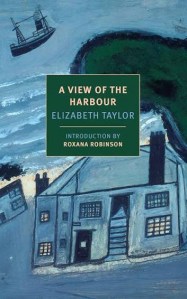
    On Elizabeth Taylor’s A View of the Harbour

    My first time in the harbour: at the dock, standing in the sea breeze. English air. An unfamiliar coast, oddly familiar. But this is not a book about the cozy English sea town in a postcard.

    I have read only the first few pages of the book, and it has already given me its weather and atmosphere. I feel the harbour holding the secrets of the townspeople. I feel the sea carrying the flotsam and jetsam of life quietly and bringing them into the harbour—an always moving inside a never-arrival.

    The characters I have met so far are ordinary in the sense that none of them has that fierce individualism, existential malady, or anything that instantly piques the senses. But people may find pornography in Jane Eyre: the tension, the ache, the desire. They are not spoken but felt. People keep them in the mind, as if giving a voice to the forbidden would desecrate Jane Eyre.

    I think that is what the book wants us to see: what may seem ordinary on the surface, like a calm sea, hides a storm spiraling into a pillar of fury, discordance, and disorientation. I have not yet come to know the characters, except for Prudence, whose two Siamese cats love pushing their small heads against her legs. It is the cats that draw my attention to her, but she seems to have a story to tell as a beautiful young girl who does not act like a beautiful teenage girl.

    Prudence is Prudence: Quaker in name, puritanical in action. But she may turn out to be someone different from what I have seen as I progress through the pages, although I want her to remain as I see her now. I want her to be beautiful without being popular.

    That is life, isn’t it? Change is human, an uninvited grace. You want someone you like to remain the way you know them. That is what I want to know after I complete reading the book.

    The sea will remain the same. The harbour may not.

    — Stephanie Joori Suh

  • The Ghost Generation

    Flashback to 1974 – Celebrating the pop culture, people, politics, and places.: From the original Time-Traveler Flashback Series of Yearbooks ― news … 1974. (A Time-Traveler’s Guide - Flashback)

    Flashback to 1974 – Celebrating the pop culture, people, politics, and places.: From the original Time-Traveler Flashback Series of Yearbooks ― news … 1974. by B. Bradforsand-Tyler

    My rating: 5 of 5 stars

    I always think that people born in the 1970s are in-betweeners. Visible, yes, but not conspicuous. It’s the transitional generation, crossing over the boundaries of the 21st and 20th centuries like faerie children, hybrids of yesterday and today. The last generation of the 20th century fully lived and ended in the new era. And it’s hard to encounter them in reality for some mysterious reasons. It makes one feel like a changeling among new and newer waves of generations.

    The choice of this book is, therefore, something akin to encountering an acquaintance among total strangers in a strange land, even if such excitement is not reciprocated. The 1970s was when the world we know now began to form its familiar landscape with the birth of new words as society became more technologically advanced and culturally enhanced. Here is a list of the terms we use, like commodities born in 1974: Touchscreen, telecommute, supermom, CT Scan, memory card, transgender, wake-up call and GOTCHA.

    It’s not about being proud of my generation or criticizing their generations. It’s about the generation I see as half visible and half invisible, especially in the current workforce, from law firms to the entertainment industry dominated by millennial babies. Of course, Watergate and the inflations from the oil shock imprinted on the generational pictures, but those born in the 70s grew up to enjoy the privilege of fully appreciating the digital age and its conveniences in every aspect of life. The Who’s “My Generation” should be the soundtrack of my generation.

    People try to put us down (Talkin’ ’bout my generation)
    Just because we get around (Talkin’ ’bout my generation)
    Things they do look awful cold (Talkin’ ’bout my generation)
    This is my generation
    This is my generation, baby

    GOTCHA.


    View all my reviews

  • Happy World Introvert Day⭐️🍀🧚‍♀️

    Alone but Curious🧚‍♀️

    Without my subscription to the newsletter “Letters of Note” by Shaun Usher, I would not have known that today was “World Introvert Day.” In celebration of the Feast of Introverts, I want to share some of the scintillating comments on the solace of solitude relished by the great writers of all time, which are selected by Usher, the founder of the Letters of Notes series, now also presented as in live shows where famous thespians – primarily British – including the excellent Benedict Cumberbatch, narrate many of the great letters from the series.

    Elizabeth Bishop must have felt the same as I do many times when I am forced to be in situations where I must pretend to be outgoing and all-around friendly to be with, joking and laughing in nonstop chattering: “After being so social… I don’t feel like myself at all. I’m exhausted all over but particularly the dace, which I suppose comes from wearing a horrible fixed grin for so long.” From her letter written on November 10th, 1948.

    But Sylvia Townsend Warner’s letter to David Garnett, written on September 2nd, 1970, won the olive wreath with a gold medal: “I live in a house too large for me, with three cats, and when the telephone rings and it is a wrong number, I feel a rush of thankfulness.” It’s a witty felicity of comfort in the company of romantic solitude. No, it doesn’t mean she is antisocial, but not everyone is outgoing, and outgoing people are not always positive, adept, or healthy. You can’t put people on the polar ends of the continuum of personalities and see them only in black and white.
    Surrounded by the crowds of vocal extroverts at work, where quiet is synonymous with sullen and too severe, I cannot help but agree with the writers mentioned earlier, for my sentiment shares with theirs. Perhaps it’s because we write, and writers are different tribes of people who hear and see things not recognized by those who are not.

    But for what’s worth, it doesn’t matter if you call yourself an Introvert or not because, as Ernest Hemingway chipped, just be content with what you are and how you are: “I don’t know what an introvert is, but if that is what you are may all my children be then.” Ditto.

    For your eyes only ✨
  • Prompt 59

    How are you creative?

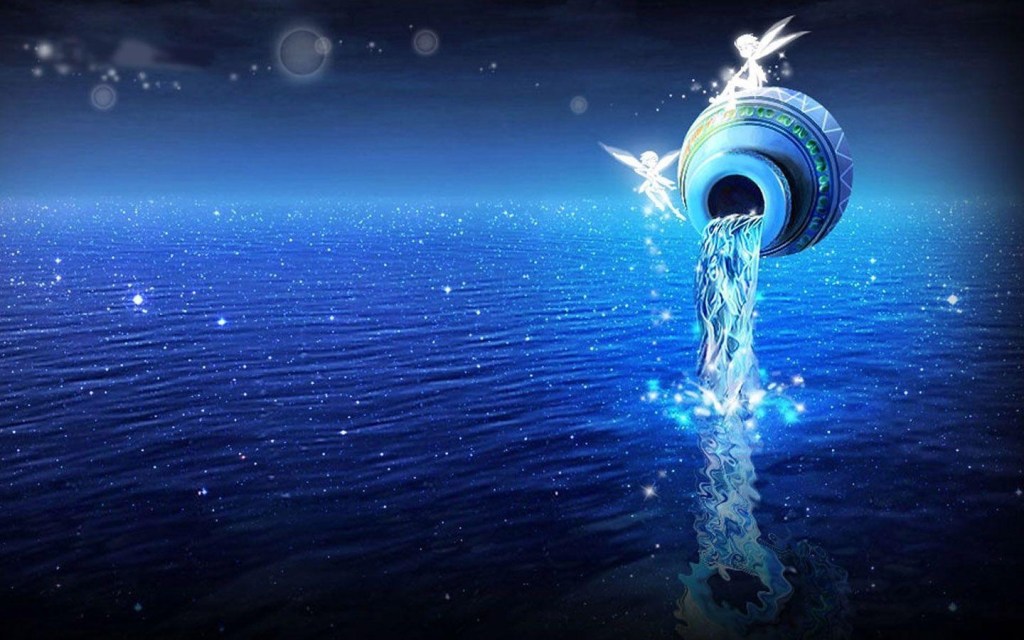
    It’s the stars that made me. Image from Google

    The stars met in the celestial jar and made me of Fire, Dew, and Spirit. From the jug pours the streams of ideas into the palace of the heart and the dome of the mind. I am Aquarius, whose inspirations from the outside invoke the creative spirit from within. The impulses are like flashes of fancies in a frenzy of visions springing from the mind’s spring as though to be possessed by a jolt of magical madness like the ancient sybil or oracle of Delphi.

    Writing is my hobby, and I write best when I feel like doing it without the restraint of perfect grammar or fear of infelicities of expression. Freedom and individuality are the Aquarius, and so I am. I write for leisure, which applies to three facts of Why I Write by George Orwell: (1) Sheer Egotism– I want to let the world know that I am also a practitioner of the witchcraft of writing – particularly in English – that is not a prerogative of the professional writer; (2) Aesthetic Value – The words always fascinate me, and the English language is the most excellent of all because of its richness in vocabulary and diversity in meaning. I want to write English as beautifully as Charlotte Brontë as creative as Wistawa Szymborska, or as heartfelt as Henry Wadsworth Longfellow, and (3) Historical Impulse – Writing on my blog and my other off-line writing will be a record of someone who lived this contemporary era that I lived and wrote something which could be attributed to archeological and anthological artifact. Who knows?

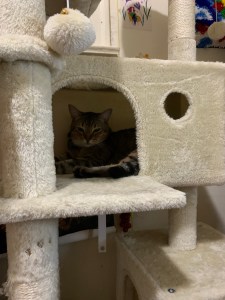
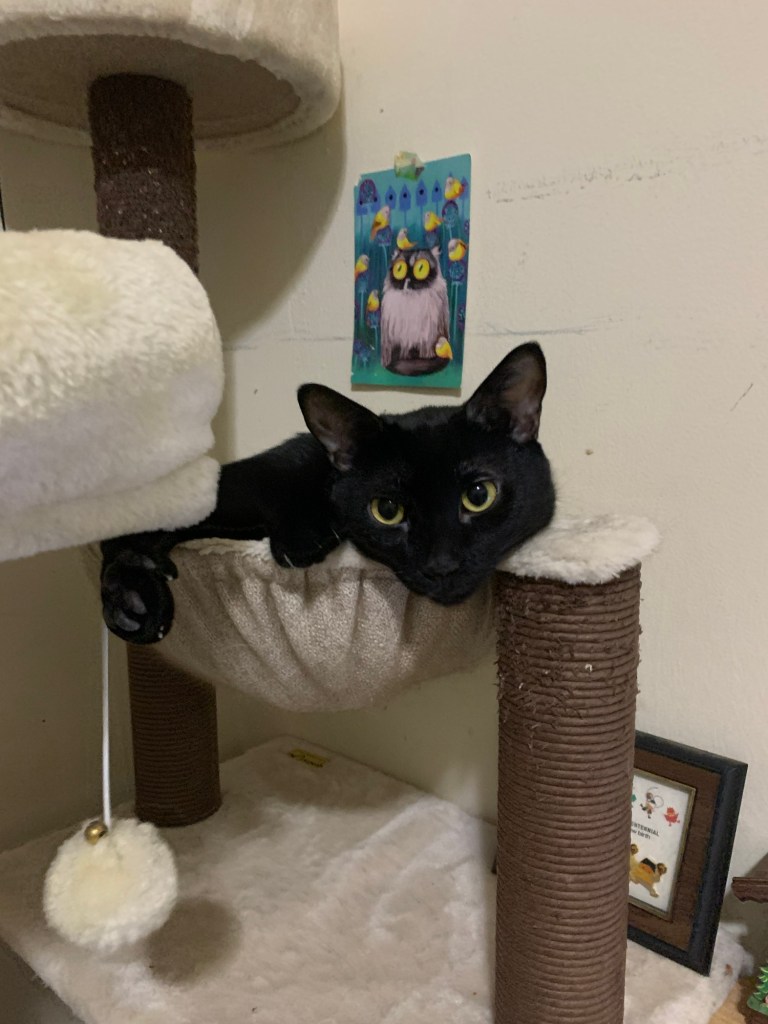
    Some say depression is their Muse who awakens their creative sphere from within. David Lynch, Jim Morrison of the Doors, and Dolores O’Riordan of the Cranberries believed so. But mine is pleasantness. I don’t want to make a Mephisolean pact to be the most adored writer. I may not be the best or even famous writer or blogger, but I write on my blog because writing as a creative value is the best way to actualize the purpose of living in search of finding who I am. When I am on the ridge, looking over the Pacific Ocean from the top of the Canyon, or watching big airplanes flying the skyways, the Muses whisper in the ear, awakening the dormant spirit yearning for the pep of creative stimulation. Also, my cats Toro and Camille are reliable and the best natural Muses who invoke the creative spirit within me. One day I want to write a short story based on them.

  • Prompt 50

    What cities do you want to visit?

    Cities are a symbol of civilization and well of culture. It’s cosmopolitan and utilitarian in that all social classes mingle and become a parliament of humanity. I prefer cities to the lesser versions of human dwellings because of these reasons, and there are cities I want to visit on my bucket list.

    Rome – Built by the Rolumus and Lemus, bred by a wolf mother, Rome was an eternal city with boundaries stretching from the east and the west, the North and the south. All roads led to Rome, and I want to walk down the same streets that ancient Romans trod upon with their own stories. So much so that Edgar Allen Poe summarized Rome thus: “The glory that was Greece and the grandeur that was Rome.” People say that today’s Rome is nothing like ancient Rome, but they don’t see that the place memories enveloping the city’s aura are lingering, affecting the minds of the people living or visiting there. Thousand years have passed, but the spirit of the place is immortal.

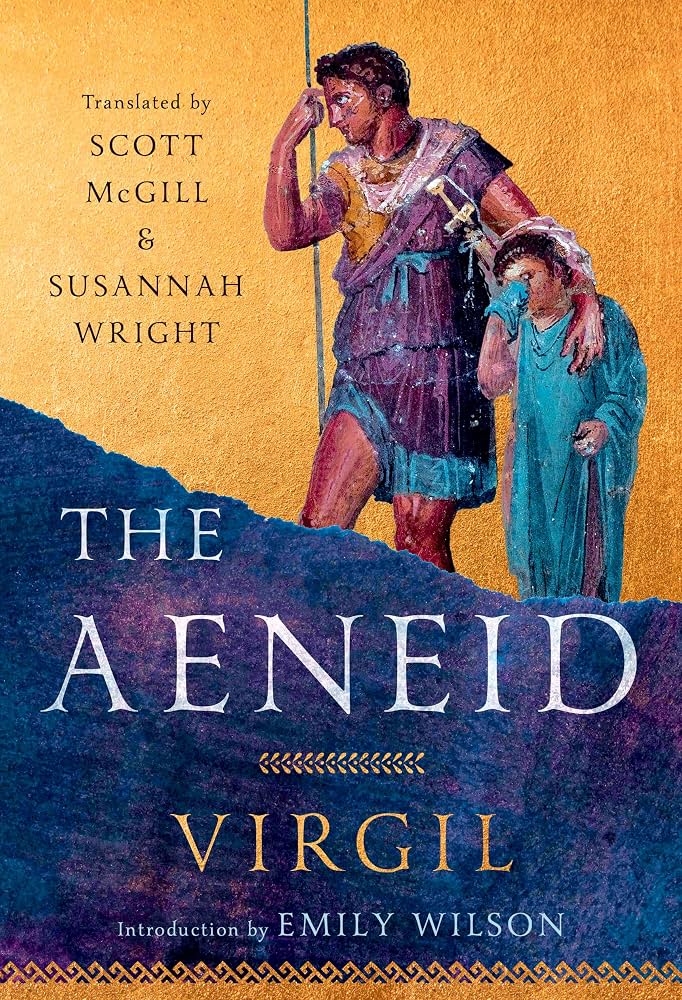
    Vatican City – My primary purpose will be seeing Michelangelo’s magnum opus on the ceilings of the Sistine Chapel. Reading Michelangelo and the Pope’s Ceiling by Ross King has egged me on to witness the magnum force of art as a manifestation of the ideal appreciated by the faculty of the mind affected by imagination. It would have been much more wonderful to visit Vatican City when Pope John Paul Second was the Bishop of Rome.

    Other cities have histories of millennium years, but Rome and Vatican City still exist with vivacity and alacrity. They may be crowded, expensive, and trivialized, but they were, have been, and will be so in posterity. This also makes me think that our posterity might feel the same way about the places where we live now. Hence are my wishful cities. 🧚‍♀️⭐️🌍

  • Prompt 32

    If you could meet a historical figure, who would it be and why?

    I would like to meet Jane Austen, George Eliot, Mary Seacole, and Francis Barber, whose backgrounds and personal aspects interest me not as celebrities but as persons from my knowledge of their extraordinary lives birthing from the ordinary milieu.

    1. Jane Austen – Today, Austen is one of the most revered writers of world literature worldwide. But her novels were not regarded as a lofty tome of literature in terms of academic value in her days. Austen was not of blue stockings, but a woman attending the household cares that feminists call drudgery. She took care of her elderly father, and writing was a means of her creative outlet to express herself. Also, she was weak at spelling, just as Leo Tolstoy was. (What a relief that perfect grammarians are not necessarily great authors!) She was also unmarried, so she and I would have many things to discuss as a single woman taking care of her family with a love of writing.

    2. George Eliot – a great intellectual writer, Eliot used to churn butter out of milking the cows on her family farm. But her family denied it because it would mar her image of an intellectual as if doing chores were considered unfit for a woman of her literary status. She was a strong-minded, independent-willed woman with the power of words to compensate for her lack of physical beauty.

    3. Mary Seacole – I want to ask her how she upheld her confidence and determination to care for the wounded soldiers during the Crimean War after Florence Nightingale rejected her application to volunteer for her Nurse Corps. Her love of humanity and keen observation of societal norms and behaviors have impressed me, and I want to ask her for a word of advice.

    4. Francis Barber – Born into slavery in Jamaica, Barber was a loyal servant of English essayist and author of A Dictionary of the English Language, who took him under his protection against racial injustice and mistreatment. Johnson even bequeathed him a small fortune after his death, so Barber set up his small business and started a family with an English woman. His descendants still live in Lichfield, England. I want to meet him and ask him about what Johnson was really like – as it is the best way to know the character of one’s boss – and how his life became after the death of his master in the time when the blacks on the British Isles were conspicuously existent in small numbers. Was he treated like his counterpart in the U.S.?

    It would be best never to meet your heroes or idols in real life because you will be disappointed with their actual characters. But my list of people will not be a disappointment because they were not from the highest estate of the ether and seem approachable and relatable. Or so I should think.