Tag: reading

  • ‘The Complete Book of Cat Names’ by Bob Eckstein

    My rating: is 4 out of 5 stars.

    T.S. Eliot, an admirer of the cat, advocates the importance of naming them in his Old Possum’s Book of Practical Cats because cats are so individual that they defy asinine nominative determinism inadvertently assigned by humans. Suppose cats like the names they are called. In that case, they will turn their heads toward the resonance of the calls with inquisitive eyes full of curiosity that often turns into alacrity of adventure. In this witty and illustrious book, Eckstein agrees with Eliot and gives practical advice on naming cats ranging from ancient legacies to modern celebrities.

    Toro, the Tiger

    Eckstein provides a variety of ideas about cat names according to the guardians’ cultural inclinations, such as history, fine arts, and entertainment. For example, if you are keen on ancient history, consider the names like Cleopatra or Caesar. Picasso or Figaro if you love their paintings. How about Bono of U2? Whatever it may be, one thing is sure your cat loves it by responding to the name. According to a book I read about dogs written by a monk who specialized in dog training, it is advisable to give a gender-specific name to a dog. For example, if it is a female dog, the name should end with the -na suffix. Conversely, if it is a male dog, it should end with -no. Although the canine and the feline are different species, I always think it is convincingly good advice. Hence, I named my tabby cat Toro, derived from Tora, meaning a tigress in Japanese. Incidentally, my zodiac animal is Tiger, so I thought it would be apropos of him. Does Toro like his name? You bet.

    Nero, being Nero

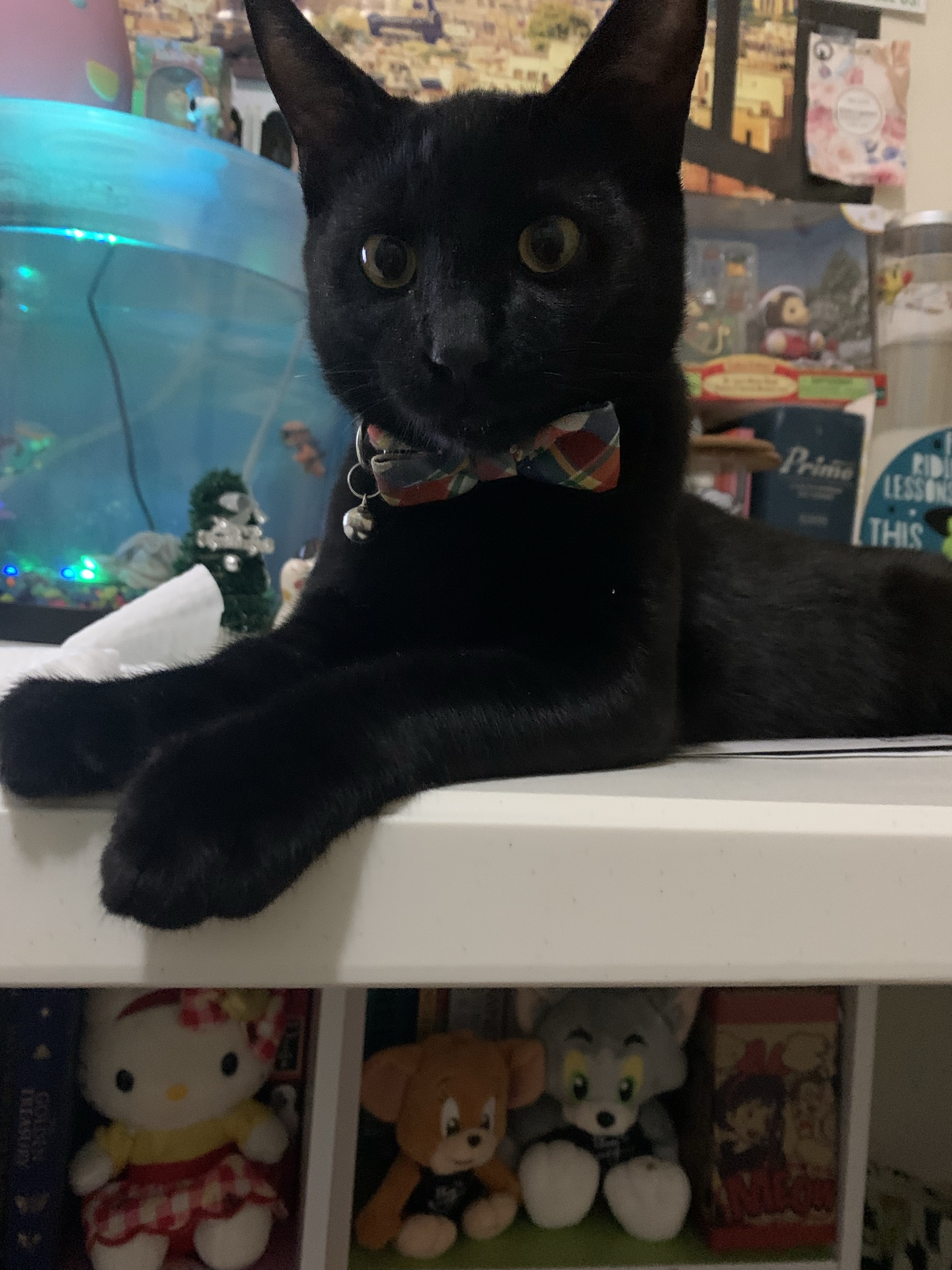
    My black cat now has a new name, Nero, changed from Camille, the name he didn’t respond to. Initially, I thought about naming him Bono as suggested by Eckstein, not because I like U2 but because I suspected my newly adopted cat being a Bombay cat with his beautifully shiny and sleek ebony fur coat. So I tried it, but there was no response. Then I remembered the song “A Black Cat Named Nero,” I liked when I was a little child. The result was Nero materialized. What can I say? Cats are individuals.


    I want to say this book is not only for readers with cats, but practically speaking, it isn’t. Any would-be cat owner or one who has just adopted a cat will find this book delightfully helpful in naming the cat. I have to say it reinforces me to change my second cat’s name from Camille to Nero. So when you call your cat, it should be the one only your cat has and likes it. You will know because your cat will meow. All cats are personal with stories to tell.

  • ‘I’m Glad My Mom Died’ by Jennette McCurdy


    My rating: 5 of 5 stars

    When I first learned of this sensationally titled book with the pinky perky cover photo of the author from the New York Times Book Review, I knew I had to read it because of its boldness and frankness that I believe would strike the chords of many who must have felt or wished it (let’s be honest). However, it was more like seeking a kindred spirit in such a titled book because I felt exhilarated with camaraderie and, once exonerated from such membership, a desire to revolt against mothers.


    But the book isn’t an angst-ridden, hate-filled, violence-saturated memoir nowadays in-vogue among celebrities who live to tell their dark life histories. Although it isn’t precisely wholesomely hall-mark like loving family history, it is worth pointing out the moments of love and warmth that childhood memories sometimes invoke because we thrive as human beings on those memories. McCurdy’s mother may not have been perfect, but who is an ideal mother anyway? The Bard once said that look not with the eye but with the mind. She was the one who saw talents in her daughter, encouraged them, and made them blossom into a pink dandelion when many parents either ignore or overlook the bests of their children for their future. Although I can understand McCurdy’s disaffection with her passionate mother controlling her life, I am envious of having such a mother who was willing to sacrifice her hard labor for her daughter’s success.


    The cover photo is puzzling. The author has a smile but not smiling, or instead trying to smile but is subdued as if her emotions are changing instantly or frozen in the moments between joy and sadness, independence and confusion in the transition of belonging to freedom. I can’t honestly fathom what the author thinks inside, but one thing is certain she loves her mother, who is now unburdened with the cares and pain of the world. Perhaps, that is why she is glad her mother died.


    View all my reviews

  • ‘Just So Stories’ by Rudyard Kipling – book review

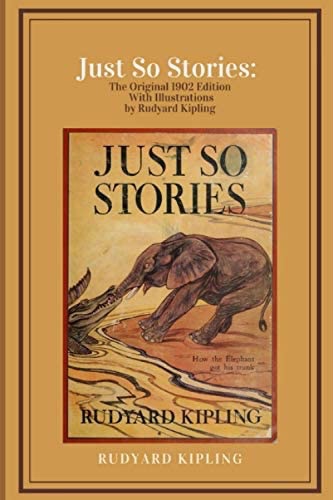
    I believe history is a branch of literature full of events and stories made by artists and artificers weaving facts into myth, and vice versa, into a timeless tapestry of the world that was, is and will be. In that regard, Kipling is an artist who spins beautiful tales of how animals became what they look like into a poetic wheel of ear-delighting and cadenced words aided by gorgeous illustrations distinctively graceful and dazzlingly beautiful.

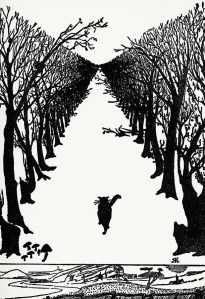
    Kipling’s evolution of animals explains why they look the way they are, such as a Leopard with spots, a Carmel hump, and many more. The stories become a fable and a history of its kind. It’s a literary version of Darwin’s Origin of Species, the wonderful menageries of Man and Beast that cannot live alone despite the differences in species because we are the inhabitants of this world, Earth. But, above all the fantastic tales of wonder, the Cat’s tale stands out in the story and the subject. Kipling’s Cat is proud but not arrogant, independent but affectionate, and vain but graceful. It’s a cat who walks by himself, and everything is alike to him and nothing else. The Cat is a beautiful stranger even if he likes to be a family, a kind of forever loner, the Puss in Boots with a cowboy hat and an empty holster. Kipling’s writer’s eyes saw the romantic solitude in a cat, and the result is one poetic Cat that rhymes well like the graceful way cats do their amazing somersaults.

    Just So Stories are not just for children even though it is classified in Children’s literature on the shelves of libraries. It’s a book for everyone who loves legends and magic, who still has a childlike innocence that refused to put away as an adult because it’s in nature. The stories are not for academic analysis or psychoanalysis but simply for the enjoyment of the mind and the delight of the heart. Remember Freud’s saying, “Sometimes, a cigar is just a cigar.” So are Just So Stories, so delightful and so pleasant.

  • A Man Without a Country by Kurt Vonnegut

    A Man Without a Country by Kurt Vonnegut Jr.
    My rating: 5 of 5 stars

    A man without a country is a connoisseur of humanity, appreciating the universality of sentiment and reason common to all humankind beyond the demarcation of the territorial, cultural, and racial ambits. In that regard, Kurt Vonnegut is not only a great American writer but also an honorable citizen of the world.

    Vonnegut was liberal and socialist without being Marxist, but he was also a traditionalist and Christian without being conservative and religious. He was on the side of the underdogs because he regarded himself as one by being a kind of black sheep in the literary circles for his studying engineering, not English literature. However, he wasn’t a grumpy sullen dark literary figure but a funny, talkative writer who stroke conversations with anyone in daily life. Vonnegut refused to lose his days in unsocial solitude and decided to become – as Samuel Johnson called – the sun in his evening declination, remitting his splendor and maintaining his magnitude, pleasing more, though intimidating less.

    A Man without a Country is a charming little book packed with thoughts, wits, and knowledge. Vonnegut was only a human because he saw the heart of human nature and wanted to help people bring it out and nourish it thus: “To practice any art, no matter how well or badly, is a way to make your soul grow. So do it.” Vonnegut was a writer who practiced what he preached. So why not read this book by such a writer?


    View all my reviews

  • Aristotle in Plain Language

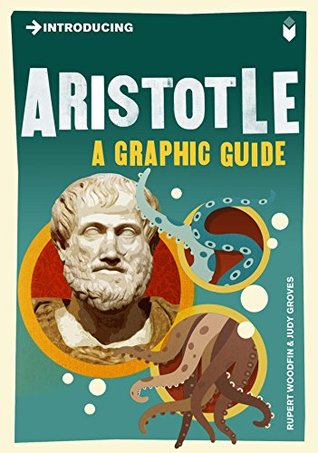
    Introducing Aristotle: A Graphic Guide by Rupert Woodfin

    Socrate was a liberal, Plato was a conservative, and Aristotle? Well, he was an educator, an academic, an intellectual with perks and passions who was never dull. His school of thought dominated western Europe during the Middle Ages. It became a foundation of Christian theology because of the conciliation of humanities with science, especially biology, to approach the hows in the quest of whys and whats.

    But don’t be intimidated by the dauntingly impressive resume of the philosopher. You don’t have to strain yourself with a burden to know the wondrous truth of our human life and the universe beyond. Woodfin’s illustrated guide to Aristotle will become your scholarly and witty Virgil to his circles of knowledge as seen in his mind’s casements. Through them, you are welcome to appreciate the panorama of Teleology, Thinness, the Four Causes, Beauty, Ethics, and the Cosmos like you never realized in plain language.

    Suppose you want to know more about the man who taught Alexander the Great and Thomas Aquinas, the top Doctor of the Church, and assured the distraught that excellence comes from habit. In that case, this book deserves your attention – with delightful Eureka!


    View all my reviews

  • Live, Die, Repeat, Repeat…

    Life is still beautiful, even if it deceives you.

    I wanted to find the Church’s stance on reincarnation and, above all, what the Bible said about this seemingly endless shapeshifting until the purification of the soul is complete, so to speak. What about the Christian belief that we live only once and have no return of life?

    According to “A Concise Dictionary of Theology,” reincarnation is the belief or metempsychosis (“animate afterward”) that the soul preexists its embodiment. After death, the soul exists in a ghostly state before animating one again, a body of the same in a different state, which sounds a lot like a demon or malevolent spirit possessing the body of the living. It is this very belief in resurrection and official rejection of the preexistence of wandering souls without corporeal substance that denies reincarnation itself. By maintaining an endless series of chances, the doctrine of reincarnation reduces the seriousness of God’s grace and, most importantly, human liberty exercised in one life that is ended by once-and-for all death.

    Furthermore, in the Catechism of the Catholic Church, death is the end of man’s earthly pilgrimage. When the single course of our earthly life is completed, we shall not return to other earthly lives as “it is appointed for men to die once” [Hebrews 9:27]. Christianity defends the duality of the body and the soul. However, reincarnation defends dualism that both beings exist separately and that the body is simply an instrument of the soul; existence by successive existence as an altogether different body is repeatedly assumed each time one recycles life. Thus reincarnation denies the idea of the resurrection of the body, as evidenced by the resurrection of Christ, and most primarily rejects the Christian doctrine of salvation. Therefore, there is no reincarnation after death.

    I feel much better now than before. While I succumbed to the belief in reincarnation, I couldn’t accept the thought of my present life as punishment for my wrongdoings in my past lives. To think that I have to live in a miserable state of discipline until my subsequent due recycling puts me on the verge of lunacy in the form of murderous headache for which I recently found myself in the ER. Viktor E. Frankl, the survivor of concentration camps during World War 2 and the founder of Logotherapy, urged us to trust that there is meaning in suffering, which helps us lead to our purposes in life. Samuel Johnson, one of the most significant 18th-century English men of letters and the author of A Dictionary of the English Language, describes life as progress from want to want, not from enjoyment to enjoyment. Forget the arguments about the religious dogma dictating an institutionalized belief for mass mind control. Or it so, then so be it. After all, reincarnation is also another offshoot of mysticism developed into religious thought. Then I will follow the light that gives me a sense of hope. And for this reason, I proclaim that my body and soul are inseparable and that I live only once, and that’s it.