Tag: religion

  • Prompt 8

    Are you superstitious?

    I read daily fortune telling according to my zodiac animal sign and sometimes horoscope in the newspaper or the internet more than daily passages from the Gospel or Psalms. I believe in the existence of the spirits of the dead, curses, hexes, and folk beliefs in what and how to act to keep off evil spirits. Oh, and I do believe in haunted places and stigmatized properties.

    Superstition is a manifestation of a belief system out of empirical truth that transcends the subjectivity of time and place. But being superstitious is different from being fanatic, pagan, or even satanic, all of which are dark and evil. In that regard, I am spiritual rather than superstitious and natural than religious.

    There are indeed more things in heaven and earth than are explained in books.

  • The Pope and the Heretic by Michael White

    I first learned about Giordano Bruno through a tweeter thread about Shakespeare discussing his one of many influences, including this Don Quixote-like miscreant Dominican priest who wrote The Art of Memories, the subject I was and still am keen on to improve my regressing memory. Since then, Bruno has resided in my memory chamber as an enigmatic pariah, a formidable rebel without compromise. So when I came across this book by Michael White, a former member of the 80s pop group Thompson Twins, I knew I had to read it.

    White describes Bruno as a martyr of enlightenment, thinking ahead of his time. Unfortunately, Bruno was born into the wrong place at the wrong time, so he suffered from the Catholic Church’s authoritarian rule that dominated the World’s knowledge. However, Bruno’s theory that Jesus was preternaturally a superb magician and therefore not the Son of God, not to mention that the Holy Ghost was the spirit of the World and that Satan would be saved, was sufficient to raise the eyebrows of the ecclesiastical figures. Also, he opined that the stars seen in night skies were actually suns and that there were other worlds in the universe where living beings like humans existed. I speculate such an opinion might have influenced a modern-day belief that we are not alone in this universe because there are extraterrestrial beings. All these ideas were indeed revolutionary. But unlike Galileo, who was said to murmur, “Still, the earth circles round the sun” after he was acquitted of heresy, Bruno was stubborn in his ideas. He proudly defied the Church’s intention to pardon him if he would recant before the death sentence. In his excellent lyrical portrayal of the dramatic confrontation, White sees it as the microscopic representation of the conflict between religion and philosophy, myth and truth, superstition and science.

    Notwithstanding White’s admirable wealth of knowledge used in defense of Bruno, I cannot help but think that White’s stance on Bruno overlooks or connives at some facts. The Catholic Church put him at stake on account of his theological errors, deemed dangerous to the spiritual formation of the Church and the Faithful as a priest to the Church. Bruno was not a willing martyr of his ideas but a Simon Magus-like figure trying to trade his knowledge for recognition in the arms of different sects of Christianity, such as Calvinism, Lutheranism, and Episcopalianism, across Europe.

    It’s an irony that rather than the man written about, the man writing about him turns out to be a genius in writing. Perhaps White, a former musician, attributes this to his lyrical rhythm of narration drawn from his emulous erudition. Moreover, he writes the language of the general reader in the panoply of academic disciplines, and the reader will find no time for disorientation or disinterest. This book carries a tone of what the Italian anti-Catholic activists campaigned against the Church, with Bruno as the symbol of persecution against what they believed in. Nevertheless, it is worth reading it if you are a proponent of Giordanism or just a curious bystander like me.

  • Live, Die, Repeat, Repeat…

    Life is still beautiful, even if it deceives you.

    I wanted to find the Church’s stance on reincarnation and, above all, what the Bible said about this seemingly endless shapeshifting until the purification of the soul is complete, so to speak. What about the Christian belief that we live only once and have no return of life?

    According to “A Concise Dictionary of Theology,” reincarnation is the belief or metempsychosis (“animate afterward”) that the soul preexists its embodiment. After death, the soul exists in a ghostly state before animating one again, a body of the same in a different state, which sounds a lot like a demon or malevolent spirit possessing the body of the living. It is this very belief in resurrection and official rejection of the preexistence of wandering souls without corporeal substance that denies reincarnation itself. By maintaining an endless series of chances, the doctrine of reincarnation reduces the seriousness of God’s grace and, most importantly, human liberty exercised in one life that is ended by once-and-for all death.

    Furthermore, in the Catechism of the Catholic Church, death is the end of man’s earthly pilgrimage. When the single course of our earthly life is completed, we shall not return to other earthly lives as “it is appointed for men to die once” [Hebrews 9:27]. Christianity defends the duality of the body and the soul. However, reincarnation defends dualism that both beings exist separately and that the body is simply an instrument of the soul; existence by successive existence as an altogether different body is repeatedly assumed each time one recycles life. Thus reincarnation denies the idea of the resurrection of the body, as evidenced by the resurrection of Christ, and most primarily rejects the Christian doctrine of salvation. Therefore, there is no reincarnation after death.

    I feel much better now than before. While I succumbed to the belief in reincarnation, I couldn’t accept the thought of my present life as punishment for my wrongdoings in my past lives. To think that I have to live in a miserable state of discipline until my subsequent due recycling puts me on the verge of lunacy in the form of murderous headache for which I recently found myself in the ER. Viktor E. Frankl, the survivor of concentration camps during World War 2 and the founder of Logotherapy, urged us to trust that there is meaning in suffering, which helps us lead to our purposes in life. Samuel Johnson, one of the most significant 18th-century English men of letters and the author of A Dictionary of the English Language, describes life as progress from want to want, not from enjoyment to enjoyment. Forget the arguments about the religious dogma dictating an institutionalized belief for mass mind control. Or it so, then so be it. After all, reincarnation is also another offshoot of mysticism developed into religious thought. Then I will follow the light that gives me a sense of hope. And for this reason, I proclaim that my body and soul are inseparable and that I live only once, and that’s it.

  • exiled

    I never told my wishes
    But let my concealment,
    like a furnace of fury,
    feed on my eyes riveted
    by ire and impudence;
    I eternally pined in thought,
    And with a blue and gray melancholy
    I sat like Longing on a pew,
    smiling at Grief and teardrops
    welled in the windows of my soul.
    No other Gods listened to my pleas;
    No other Sun lit up my heaven,
    No other star ever shone for me.
    And even yet, I dared not let
    my useless passion and vain hope
    languish in rapturous, radiant pain;
    Drinking deep of that profound anguish,
    How could I find my place again?

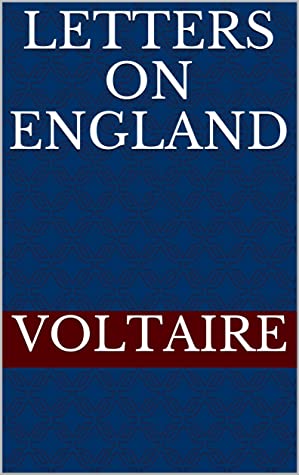
  • Letters on England by Voltaire

    Letters on England by Voltaire

    My rating: 4 of 5 stars

    Voltaire’s Letters from England, originally published in 1733, is a solipsistic treatise on political, religious, and cultural observation during his stay from 1726 to 1729 of the benign nation that welcomed the thinker with open arms when he fled from persecution in his native France.

    But the book is not a blinded paean to a rival country with a long sophisticated warring history with an intent to retribute his spites to his mother country as an expatriate. Instead, Voltaire takes a stance of a piqued paratactic storyteller in the fashion of Herodotus’s Histories or a trenchant journalist in the school of George Orwell’s Down and Out in Paris and London. In Voltaire’s eyes, that the English are practical folk with a propensity for realism: reflective, respectful of etiquette, cool-headed, and effusively proponent of scientific discoveries are conspicuous in the overview effect of France seen across from the other side of the Channel.

    From the manners of English Quakers to Isaac Newton’s (whom he admires as the brilliant sun of Halios) quantum physics and the law of the universe in great detail, the subjects of interest and the depth of knowledge demonstrate that Voltaire is more than a rebellious French enlightenment thinker. He is a true intellectual whose reason is constituted by the consilience of multidisciplinary subjects in depth. The book is a testament to a genius of a particular kind who embodies a man of letters in its truest sense.


    View all my reviews

  • ‘The Kite Runner’ by Khaled Hosseini – book review

    The Kite Runner by Khaled Hosseini

    My rating: 5 of 5 stars

    Writing is the most solipsistic and democratic means to make people discover your secret histories or inner world so that they can understand why you are what you are. That is what Khaled Hosseini does enchantingly in The Kite Runner. It is a bildungsroman story reminiscent of the Au revoir, Les Enfantes-Esque ambiance surrounding the narrative of a grown-up boy who wants to reconcile with the stupendousness of mistaken guilt becoming a malady of the heart. But that doesn’t mean it is all too surreal or stark grim to make an accidental reader think it is a wrong choice. On the contrary, Hosseini vividly conjures up the faces and scenes, resurrecting the spirits of the places and times, by putting together the tesserae of his memories in this rivetingly heartrending read.

    The book incorporates the sociological theory of symbolic interactionist perspective focused on the relationships among individuals within a society and how political changes affect the lives of individuals and the sense of who we are and our relationships to others. The story’s narrator, a young Afghan boy of the upper-class named Amir Agha, gives the reader a ride to his childhood in Kabul to show the halcyon days of pre-soviet and Taliban reigned Afghanistan. First, you will see him and his best friend Hassan, a Hazara servant boy in his house, wallowing in reading stories and lost in kite flying. Then and thereafter, Hassan becomes a victim of the most horrific act committed by the half-German blue-eyed Afghan boy threatening him to win kite. Amir’s retrospective narrative becomes his public confession and ablation, all of which is a combined act of purging out the painful memories of the past and exorcising his demons tormenting him with the guilt of jealousy, ignorance, and cowardice. The whole narrative then becomes a plethora of pathos and empathy, resulting in a cornucopia of forgiveness and sympathy, drifting it all in a high-flying kite once and for all.

    It is a fitting story in this particular time of Afghanistan history and Abdulrazak Gurnah’s winning of 2021 Nobel Prize in Literature for his achievement of universalizing human travails transcendent of racial, cultural, and geographical differences. Vivacious at times but dolorous at most, the Kite Runner is synthetic literature that wears habiliments of memoir and novel. There truth and fiction dissolve into one another anchored in real life with factual geographical and historical facts smoothly amalgamated in the individual narrative account, which reminds me of Herodotus’s “Histories.” Or it is an alluringly pioneering memoir-making that resembles Realistic Fiction. For whatever it is, the Kite Runner bestrides the aisles of contemporary literature sections, alluring the public with simple language that magically juxtaposed in beautiful prose style with lyrical quality, all soul and mind in the marks upon pages evocative of the spirits of the memories materializing.


    View all my reviews