Tag: religion

  • cathedral of forest

    She, with her wings clipped in shackles
    Sees the light above the high altar
    Through the dusk of leaves and boughs
    Beneath the dome of boundless skies
    Without spires and stained glass within.


    But why else when nature has it all
    Sermons in trees, brooks, and skies?
    From the haunt of life’s vicissitudes
    rests herself under the pillars of trees
    As the choristers of hummingbirds begin
    The hymns of hope in nature’s cathedral.

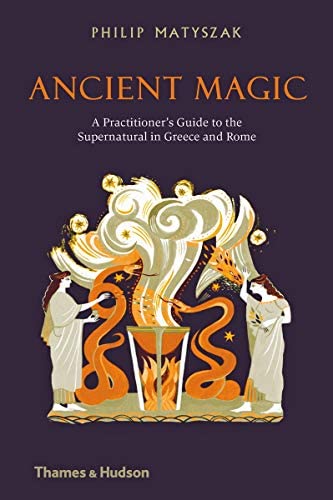
  • ‘Ancient Magic’, by Philip Matyszak – book review

    Ancient Magic: A Practitioner’s Guide to the Supernatural in Greece and Rome by Philip Matyszak

    My rating: 5 of 5 stars


    Magic in ancient Greece and Rome was an art of crafting natural force with a bit of help from the world of gods and spirits wonderous to the user without fully knowing them. Contrary to traditional orthodox Christian teachings, magic was not associated by default with sorcery privileged to an esoteric spiritual elitist often dark and sinister. To the ancient Greeks and Romans, magic was their belief system, part of their modus vivendi in everyday life from slaves to emperors in the sense that we go to doctors or counselors. In a word, magic, as we understand now, was not so much deviltry as a variety of rituals of individual petitions pleaded for the fulfillment, which even the tremendous ancient minds regarded worthwhile to record.

    Before the era of Christianity, the concept of magic was often interchangeably used with the knowledge of natural and supernatural worlds, which the ancients saw as not impossible to cross in between and thus believed the ghosts and the afterlife. Plato and Pliny, the Elder, advised no mortals go to graves alone after dark because there the restless souls of the dead not crossing the Styx, wandered. The most significant of the ghost story is Pliny the Younger’s letter to his friend Licinius Sura. He tells of the philosopher Athenodorus, a stoic astronomer and tutor to Octavian, the future emperor, witnessing a ghost of an old man in shackles showing his improper burial site.

    Magic encompasses auguries and omens by the flights of birds, spells, and potions to charm the figures of desires, and the astrological signs in the ascendant at births and the sun, all of which to make uncertain futures known as guides to walk the paths of life to arrive at the fates. Matyszak tells the reader in the capacity of a Virgil leading Dante to the Underworld that seers at Delphi and Cumae were relatively easy to foretell the futures, which were unchangeable. Their acute intuition took a dreamy leap to poetically versed oracle pronouncement in the background of ethylene atmosphere and told what the petitioners could do at their best to deal with what laid ahead of them because there was no more than one fixed future.

    The book invites the reader into the world of magic like never before because knowledge is a composite of Herodotus, Plutarch, Pliny the Younger, Socrates, and Plato. They took the extraordinary subject seriously because it was part of their daily lives bordering on a thin line of the spiritual world that was as real as they were. The book is written in a language accessible to all spectrums of education and walks of life. It is philosophy, religion, and history magically mixed in the author’s magic potion of erudition that significantly produces learning charmed in natural wits.


    View all my reviews

  • ridiculous

    The congress of professed faithfuls gather

    Under a great kiosk of memorial Agnes Dei

    Wearing their best masks misfitted altogether

    Sitting on the paws as pious sinners to pray

    Reciting verses that become meaningless

    Abracadabra that no pagans would know!

    The Feast of Life resurrected in Pascal Mysteries

    Is the feast of absurdities in deceived fallacies,

    And the heart among the entranced worshippers

    Pounds in great beats of passion and faints in weeps.

  • The Rambler – Religion

    “To one who has faith, no explanation is necessary,” said Thomas More, who died for his relentless faith despite Henry VIII’s promise of honor he would confer on to his most trusted counsel in his cabinet. Samuel Johnson also confirmed that faith required no byzantine theories or philosophy for the validity of truth. Until I attended a public Sunday mass in a parking lot yesterday, I had not realized the power of faith, which I doubted I still had in my heart.

    The beautiful liturgy of the mass, which culminated in the Eucharist, was akin to a flowing of streams of life to the eyes of a seasick seaman and the thirst of a weary traveler. I had never expected such exaltation of the soul with faith disappearing into an abyss of despondency populated with a school of doubt, disbelief, and frustration nurtured in a reality of everyday life. But while listening to a priest’s sermon based on the reading of Matthew 25:31-46, which is about the importance of practicing faith into actions, especially by sharing milk of human kindness with people you feel least likable or unkindest.

    The priest further asked if we would counsel with God in making decisions in life or just about anything needful of help. No one answered yes because let’s face it, we regard such tendency to recourse to God as a derogatorily medieval way of living life in this Digital Age of Artificial Intelligence. We try to reason our faith with the validity of practical truth and willfully turn our heads from the Gospel with the usual facade of “Religion has nothing to do with it.” But then can you also prove that we are nothing but of a highly complex living organism made of accidental atoms, sans souls? What is the feeling that urges you to search for meaning in life, our sense of purpose? Can atoms do it?

    It is my wholly solipsistic reflection of hearing mass, but now I feel like finding Ariadne’s Thread in the labyrinth to find a way out on this last day of the church calendar. What a feeling. Peace to be with you, and God bless you all. 

  • Magical windows of the misty past

    The story of man and beast decorates the wondrous latticework of the enchanting casement of Greek mythology. The ancient Greek weavers of stories used their poetic license to mirror the human traits, both attractive and unattractive, through the figures of the beast in scintillating ways. The resultant mythology created an aura of mysteriousness wonderfully anchored in reality whose thematics were originated in, such as the following tales from Greek mythology that reflect the nature of humankind as mirrored in the perspectives on the natural elements of animals and the relations to it.

    Cretan_Bull
    The Cretan Bull

    • The Cretan Bull and the Minotaur 

    The story of a half-bull and half-man monster known as the Minotaur epitomizes the primordial thematic perspectives of mankind juxtaposed along with the law of nature representing the mysterious force. It became a subject of belief tradition peculiar to its natural and cultural environs. The conflicting sentiments of reverence toward the awe-inspiring nature’s creatures and the ambition for domineering them as the ruler of the universe give birth to the bestial creature in the figure of the terrific Minotaur who was fated to be slain by the Athenian hero Theseus. 

    minotaur
    The Minotaur

    King Minos betrayed Poseidon by keeping his beautiful snow-white Bull, instead of sacrificing it to the expectant god, who, in turn, made his wife Pasiphae unquenchably infatuated with the Bull. She copulated with the beast by taking herself into the form of a hollow wooden cow designed by the Athenian architect named Daedalus. The result was the Minotaur kept in a Labyrinth by the selfsame designer of the wooden cow. The Minotaur showed no human feelings or emotions as the mythology did not treat him any more than a horrible bestial creature from the unnatural union of a woman and a beast. 

    A Bull in the ancient Greek culture was a chthonic animal associated with fertility and vegetation and also represented the sun and the might. In fact, the famous figure and paintings of bull-leaping are seen inside of the Minoan mausoleum in Knossos as first discovered by the eminent English archeologists Arthur Evans, who also found Linear A and B letters, the mother of the ancient Greek language, at the turn of the 20th century, 

    Unknown
    Argos finally uniting with Odyssey.

    • The dog – the best friend of mankind

    The perspective on the dog as the loyal canine companion collapses the millenniums between the ancient Greek’s time and ours. Even the Cerberus, the three-headed guard dog of the Hades look tamable with a piece of sweet cake, making it look less of a menacing beast necessitating the blood and flesh of man. This goes without saying that it was Argos, the paragon of the faithful canine, who recognized his travel-weary employer Odyssey after 20 years of absence from home and put forth what might think he had to approach him with a wagging tail. He died as his long-waited boss in incognito passed by him with his heart pounded by a surge of pathos dubbed in warmth. Of all the gods, goddesses, heroes, and even his family, it was Argos who showed genuine, artless unconditional affection to Odyssey and thus rendered his heroic owner all the more humane and sympathetic. 

    Laelaps_web
    Laelaps, the dog that never fails to catch

    Speaking of loyalty, Laelaps, a Greek mythological dog that never failed to catch what it was hunting, also denotes how the ancient Greeks perceived the dog as their life companions. Laelaps was initially a gift to Europa from Zeus, then bequeathed to Minos, who gave it to his concubine Procris whose sister included Pandora. She gave the hound to her husband Cephalus as a token of her unbroken love for him Cephalus used the hound for hunting the Teumessian Fox that could never be caught. Then Zeus turned both of the animals into the stars as the constellations Canis Major (the dog) and Canis Minor (the fox).

    12916666_f496
    The Eternal Catch-Me-If-You-Can between Canis Major (the Dog) and Canis Minor (the Fox)

    Consequently, the use of the animals above in the thematic context in the Greek mythology evinces that mankind cannot exist alone as part of nature. Man finds his meaning of what it means to be a human and its purpose in life by rendering the values and precepts of natural law emblazoned in the human consciousness to the meta figures of the mythology. The mythological animals, whether wild, imaginary, or ordinary, are the reflection of the human traits interbred with imaginary creatures from the Elysium of Fancy. It became the substratum of a belief tradition administering to the modes of social behaviors in society, and thus developed into an organized religion by way of syncretism in the era of Christianity. 

  • Feather of Two Truths


    02-ani-papyrus-anubis-bm07404g
    Osiris and the Sacred Scale, courtesy of National Geographic

    The days on earth ended

    And the days in Afterlife began

    As the Final Judgment of Osiris,

    The Lord of the Underworld

    To weigh the sins of the man

    On the Scale of Two Truths

    Against the Sacred Feather

    In the Hall of Goddess of Truth

    Waited for him to say “Never!”


    The assisting gods recited

    The long line of sins on earth

    To which the man answered,

    “No, I had committed none,

    None of the sins from birth to death.”

    Then Osiris ordered the goddess

    To put the man’s heart on the scale

    And the Sacred Feather in her arms

    To be on the other side of the scale.


    The heart as light as the Sacred Feather

    Kept the Perfect Balance of the Scale,

    And the Supreme Judge decided to declare

    The man to be true of voice by the Scale

    And allowed him to enter in eternal bliss

    Celestial Garden among the Stars

    That never died but lived forever

    Sailing as his happy heart wished

    And filled with Eternal Euphoria.


    P.S.: This poem was based upon my reading of the ‘Book of the Dead,’ an ancient Egyptian guide to the Underworld instructing the dead what to expect, where to go, and how to behave when entering the Underworld. The ancient Egyptians regarded death as new life, the beginning of the Afterlife where the souls of the virtuous dead lived in a heavenly landscape that looked so much like Egypt on earth. The blissful afterlife was meritorious by the ruling of Osiris, the supreme ruler of the Underworld, who questioned the souls of the dead according to a long list of sins that mankind was prone to commit by nature and put their negation of sins on a test by putting each of their hearts on the divine scale to weigh against Maat’s Feather.” Maat was the goddess of truth, and as she put the heart on the other side of the scale, the balance would remain the same if the heart was free of sins. Only such a sinless, weightless heart would give the soul of the man a passport to Paradise. Fascinating.