Tag: review

  • ‘Ocean Waves’ (1993 film) by Tomomi Mochizuki – review

    ocean-waves-49Some stories are better told in animation. The characters become vividly alive in a way that your imaginary world effortlessly conjures up before your very eyes by a witchcraft of wondrous imagination. It’s a world of fantasy, but it is also a realm of parallel universe where reality is poetically translated through the avatars living in the creator’s make-believe world without the alloyed feelings and crafted emotions by way of thespian performance. It also enables the characters to perform feats of wondrous physical motions and a wealth of emotions effectually, which real persons can hardly accomplish. That said, animation as an established genre of performing art deserves of legitimate artistic appreciation and merits its own place in the canon of cinematography.

    “Ocean Waves” a 1993 Japanese anime television film directed by Tomomi Mochizuki and written by Kaori Nakamura based on the 1990 eponymous novel by Saeko Himuro is worth noting the beautiful cinematic qualities and elegant storyline that spreads through the mind and lingers there in alterations so deep that they are felt almost physical. The setting of the film is in the city of Kochi, located on the Japanese island of Shikoku. It tells of the first love developed by Taku Morisaki whose story flashes back to his high school years in Kochi as he catches the sight of a familiar woman whom he has fallen for on the platform opposite at a Tokyo subway station. It’s Rikako Muto, a bright and beautiful new girl transferred to his high school. At that time, Taku did not realize that he was besotted with her. However, as Taku narrates the events that have brought her into his life, Taku comes to know that for all these times, he has been crazy about her. It’s a moment of great awakening of love, an epiphany of adulthood, all in the calm recognition of meaning of love as to see the essence of another human being in the inner most core of who the person is. Taku and Rikako has known their own faults and frailties since they first met in school, and now they see one another’s innermost core of their personalities, which are the essential traits and features of the beloved person to actualize their potentialities in love with awareness and understanding.

    The emotions are elegantly nuanced in the narration, but we know that the feelings are all present in the ways that the characters move and talk. That is the beauty of this animated film that renders no less visual and dramatic effects than other genres of film. Director Mochizuki is a young, ambitious director whose punctilious attention to details and the authenticity of the ambiance and theme of this film speak to our lost days of innocence in this world of collapsed grand narratives, gratuitous sensual expressions and super abundance of raw, unbridled charge of emotions that are hard to be empathetic to the minds of those who are likely to find solace in quietude. Walt Disney said animation offers an effective medium of story-telling and visual entertainment which produces pleasure and story that people of all ages everywhere in the world can enjoy and relate to. For these reasons, this film is worthwhile to be noted.

  • Have my say @ bbc history revealed

    I wrote this letter to ediotor of “BBC History Revealed” during my lunchtime today upon reading an article about the Wild West. A prospect of its publication is beyond the pale, outside the boundary of even the slightest hint of flattering hope and vain wish. Yet, I was egged on by to express my opinion on it as a new frontier-woman in California with the literary advice from Henry David Thoreau and Horace Greeley that the West is where we can start anew because of the Pacific Ocean, a terrestrial version of Lethe, the river of forgetfulness.

    Dear Editor:

    The article about the Wild West in this month’s issue was particularly interesting, since I am a recent immigrant from the East to the West: the restive nature, the swashbuckling gunslingers, the outrageous outlaws and the ruthless vigilantes were all embroidered on the popular Hollywood-generated image of the West that became something of a  factoid to people living outside the West.

    Even though the U.S. Census Bureau declared in 1890 that no more western frontiers were left to conquer, I believe that the culture and ambiance of the West remains here in California. As someone who lived many years in New Jersey and the New York City before moving to Camarillo, the most distinctive characteristic of California is its unsullied beauty of nature in replacement of the skyscraper jungle as I see every day on the commuter’s railways.

    Surely, there’s no more John Wayne, Clint Eastwood, Gary Cooper, or Paul Newman with Robert Redford walking in the streets. Yet, the spirit of eternal youthfulness is still nuanced by a combination of its beautiful rusticity of nature and a diversity of people interacting with the special aura surrounding the land.  For this reason, the West has not lost its charm with its continuous saga of immigrants in search of better future and the timeless beauty of nature.

  • ‘A Harlot’s Progress (2006)’, directed by Justin Hardy – review

    71+BMGiROqL._RI_Throughout human civilization, prostitution has been arguably something of a necessary evil, intentional or unintentional, an institution of erotic bartering between a client and s prostitute for wants of flesh and fortune. For a client, it’s all about releasing his rapacious libido in a brothel, whereas for a prostitute offering a pleasure of the flesh can be a means to a social mobility in a period when women’s place was confined by biological determinism. But that social mobility would be possible with the intervention of Goddess Fortuna. ‘A Harlot’s Progress’ follows a life of an unfortunate prostitute named Mary through the eyes of William Hogarth, an English painter and social critic renowned for choice of his subjects crossing the strata of the social class system for inspirations.
    The painter Hogarth chooses Mary as his unofficial muse for various paintings depicting modern moral subjects as a series of picturesque statements of social criticism on the oppressed conditions of the poor whose lives are already determined by their biological and social statuses. Likewise, Mary’s downfall from a beautiful courtesan to a common, over-the-hill backstreet slut is already a foregone conclusion for the nature of the profession. Besides, she’s not exactly cut out for a fine prostitute with artful plans to forward her rank and condition; she has a pride but no courage. She yearns for a polite society, but her frailty of character prevents her from advancing in her career to a mistress of a high-birth man. In other words: Mary chose a wrong job that ruined her life.

    The film is said to be based upon a true story with references to the famous figures of William Hogarth and his friend Henry Fielding, the author of Tom Jones. It gives the veracity of the event with a charge of authority, rendering the story of lachrymose life of Mary emotionally powerful and factually unchallenged in the veneer of historicity. Yet, in terms of objectivity of the stance that the film takes, its view on prostitution in the 18th century London is clearly askew on the side Mary because she is cast as being a victim of the social evil with her purity of the soul torn apart by men’s rampant animalistic sexual desires as presented by all uniformly unattractive and perverted men on screen. In fact, the only pitiful character in the film seems to be Mother Needham, who is mercilessly abused on the pillory for three consecutive days and nights of stoning, defiling, and cursing from the public who were once or twice her clients and neighbors. The sight is sufficient to incite pathos because of her plea for life authentically delivered by the excellent performance of actress Geraldine James.

    No one can throw stones at Mary for her life of “sin and depravity” because there’s no one who is immaculately cleared of guilt and sins to judge her character as arbitrator of morals. But then she is responsible for her own life with her own free will to choose to be a harlot. For not all destitute women driven by abject economic conditions are succumbed to the trade of the flesh. Nonetheless, this film is a good period drama that resurrects the ethos of the time with the parlance, habits, and costumes of different classes peculiar to the 18th century, well executed by a cast of classically-trained fine thespians.

  • ‘Prince Brat and the Whipping Boy (TV Movie 1994)’ – review

    unnamed
    The Unlikely Duo in tandem

    Tales of mistaken or traded identities between either by the irony of fate or whimsical voluntary submission bespeak our desire of realizing dreams and desires at one fell swoop without drudgery of going through rules and conformations of social norms and mores. From The Prince and the Pauper to Cinderella and to The Trading Places, the basic story lines contextualize the instant social mobility of improving one’s social status and the essence of human nature laid bare in dealing with new milieus. But forget the verbiage of latent sociological theory and academic analysis because after all, we all know that such wish for rapid social escalation is only father to the thought. So why not continue to enjoy the world of wishful thinking entertainingly translated on screen for the sake of art, such as this delightful movie Prince Brat and the Whipping Boy (AKA The Whipping Boy)?

    hqdefault
    Guess who’s the prince?

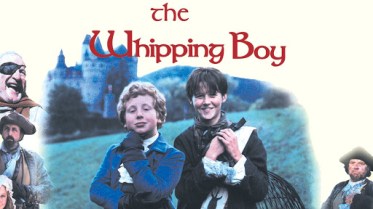
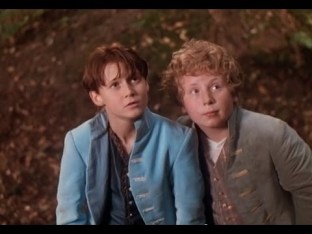
    The movie has a charm of Mark Twain’s The Prince and the Pauper and The Adventures of Tom Sawyer, giving it impression of a spin-off from the two stories in all likelihood. But what makes it worth the viewing are the characters whom you find difficult to dislike and the detailed background setting that conjure up the spirit of the time and bring out the personalities of the characters delightfully rendered on screen. The young prince is not really a brat but a lonely child who needs love and attention from his ever busy king father. The prince’s impudent pranks are signals for sending emotional SOS to the king who puts the security of his kingdom before the attention to his one and only child. And there’s a young rat-catcher about the same age as the prince who accidentally finds himself as a whipping boy for the unhappy prince. What happens next is the gem of this movie in their subconscious quest for their cherished ends, their treasures at heart, through their eventful journey together in the unlikely duo of the prince and his whipping boy.

    All in all, it is a little cute feel-good movie intended for all ages about what’s really important in life. Yes, we all may know the answer to it, but it really touches us in the denouement of the movie, leaving us with a feeling of warmth, affection, and jolliness, chiming the emotional, sentimental bells of our childlike imagoes. That said, if you want a movie that takes you away from your worries and sadness arising out of living adult life for some time, this movie might do good for you as it did for me for the day.

  • Birth of Underworld Train on 01/10/1863

    1863-metropolitan-_2447190a
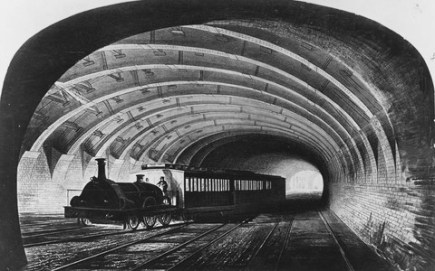
    1863: A contemporary lithograph of a steam locomotive on the Metropolitan line near Paddington Station, courtesy of the Telegraph

    As a commuter taking trains – that is, both overground and underground – to work, I deem it appropriate to pay a historical tribute to the opening of the world’s first subterranean railway in London, England on January 10th, 1863. The London Underground is the genesis of all the world’s trains running under the surface of earth, such as the New York City Subway, the Los Angeles Metro Rail, Paris Metro, the Tokyo Subway, et al, and for its perpetual legacies as one of the greatest inventions in human history that reconstructed social substratum as well as cultural setting, the commencement of the Underground 156 years ago from today deserves of its deferential recognition and universal commemoration. Thus is my reason I write this post as a personal token of my appreciation for the use of the Metro on a daily basis.

    When the idea of operating underground railways was proposed, the public and the critics alike decried it, demanded it should be offloaded, for they all shuddered at the thought of going under the surface of earth, which Dante indicated in Inferno as where Hell existed, or a pit fit for the condemned prisoners only. Those who had their disbelief on such daring idea of tunneling underground simply dismissed it as stark nonsense or one big hokum. Some even feared about a remote prospect of the tunnels collapsing due to the weight of the houses. And to some, it’s an express ride to Inferno, because the very thought of traveling underground by train seemed so preposterous, so blasphemous, so revolting that round trips should be used as a severe form of punishment for convicted criminals. Besides, like their modern counterparts grumbling about cacophonous environment of construction nearby, the entire procedural only instigated noisome puncturing of the equilibrium of locals.

    p05t5qkm
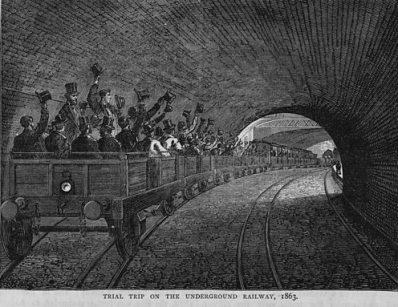
    Commuters waving their hats in the air during a trial journey on the London Metropolitan Underground railway, courtesy of BBC.com

    However, to the consternation of all those critics and public, the result of the Underground, the subterranean train of Hades,  came to fruition of its revolutionary speedy efficiency and cultural experience that was truly one-of-kind. In fact, it proved a triumph of determination and Victorian engineering feat, creating a dazzling combination of Arts and Science in terms of its technical prowess and the novelty of uniqueness in all things creative and venturesome. In fact, on January 10th, 1863, 38,000 people rode between Farringdon and Paddington stations. There were 3 compartment lit by gas, and each of the compartments was designed with care for passengers because efficiency and beauty could accompany one another, never rival.

    When I will be on the Metro tomorrow morning, I will think of those Victorian London passengers on the Underground and will likely to thank Directors and Engineers of the London Metropolitan Railway Company for opening a new era of public transport that has upended our patterns of life and shapes of our perspectives on our everyday life.

  • Suspenseful and Delightful: ‘Life on Mars’ – review

    b5e443781078a20c96d0659effa12d5ed7444463A good detective drama propounds you with an jolting twist in a story line with verve and gusto, making it an enjoyable and enlightening view. In this regard, Life on Mars is an ingeniously crafted TV drama, packed full of elliptically well-written scripts, impressively executed performance of a fine cast, and highly detailed periodical background setting that renders all the more convincing verisimilitude of each episode that resurrects the past in a mind blowing way.

    The story evolves around the protagonist Sam (brilliantly played by John Simm), a clever, sharp-witted DCI with a heart who after a near-fatal car accident, finds himself awake in the year 1973, four years later he was born, as DI in the Manchester Police Department. The cause of the mysterious teleportation to the decade and the dilemma of Sam trapped in the past are the gist of this wonderfully thought-provoking drama which otherwise would be just another cop/crime drama with gratuitous hot car pursuits, bloodshed crime scenes, and mindless half-nude scenes. Sam constantly wants to return to what he believes to be the present or the reality, but the police department of the past needs his help. And that’s how the entire two seasons of the drama are unfolded.

    Life on Mars is fun to watch with a delightful combination of 70s American cop drama appeal in appearance and scintillating synthesis of SCI-Fi and Psychological Suspense in content. It is a modern detective procedural worth the watching. You will have no guilty feeling of indulging in  the entire two seasons at one setting on your Kindle Fire because it will both entertain your senses and spur your mind on to think about your own reality.