Tag: reviews

  • The Rise of Fido : Book review on Dogs by Raymond Coppinger

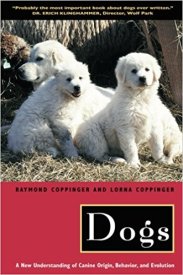
    513eG+OX1CL._SX329_BO1,204,203,200_Dogs: A New Understanding of Canine Origin, Behavior and Evolution by Raymond Coppinger

    My rating: 5 of 5 stars

    We claim to love dogs, and yet we know so little about them. We long for their unconditional affection, but we are ignorant of their needs and our faults altogether. Moreover, we like to think dogs as wolves and believe it so. Since I am a kind of person who says hello to a dog I encounter in the streets, this book caught my eyes and mind to know more about dogs, a beautifully different organism worthy of our attention and care, and to find out how they got their way based upon scientific and cultural examinations of dogs.
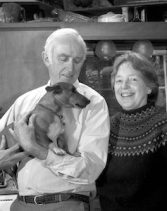
    Faculty_RayLornaCoppinger_011_300-237x300
    Raymond and Lorna Coppinger with their fido friend courtesy of google

    This book, written principally by Raymond Coppinger, professor of biology at Hampshire College, a former sled dog racing champion, is unique among many other books about dogs I have read in terms of its scientific bases of anthropological and behavioral studies of canine familiaris, i.e., the dog. The most significant fact about this book is that the author forthwith and forthright argues that dogs are not direct descendants of canis lupus, the wolf. Furthermore, he counters Darwinian evolutionary theory based upon the three factors of anthropological evidence, behavioral ecology, and Belyaev’s tamed foxes.
    dex
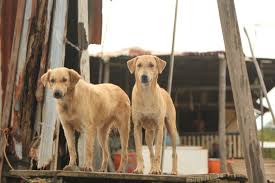
    Pemba Village Dogs courtesy of marinebiologist.com

    To begin with, the author takes readers to to a village of Pemba, an island off the East African coast in the territory of Tanzania, where the inhabitants still live on a boundary between hunting-gathering of the Mesolithic period and agriculture of the Neolithic period. In Pemba, dogs exemplify village dogs with a prevalent display of the uniformity of shapes, sizes, and colors of the coat, all of which indicate isolated gene pool untainted by any other strain of dog that would introduce a variation in appearance. The Pemba village dogs have co-habituated with their human inhabitants by choosing a niche close to human existence as a place of steady supply of food, safety, and reproduction. This leads to a conclusion that they are the descendants of the first evolved domestic dogs from the Mesolithic period of human history.
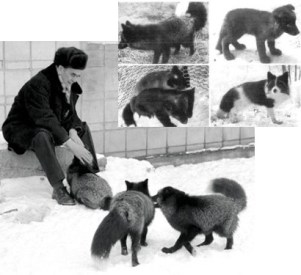
    Belyaev_foxes
    Dmitri Belyaev and his tamed Silver Foxes courtesy of es.turopedia.com

    First, people created a new niche called the village. Then some curious wolves came to the niche and gained access to a new food source. These wolves adapted to this new convenient niche are “genetically” predisposed to show less “flight” distance than those of their wild peers and become tameable. A Russian geneticist named Dmitri Belyaev’s long term experiment with the Russian Silver Foxes corroborates this domestication process: after 18 generations (36 years on our evolutionary clock), the foxes became naturally tamed and remarkably resembled dogs in appearance and temperament.
    domestication-and-evolution-41-728
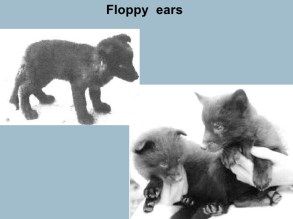
    Characteristics of  juvenile features of wolf pups courtesy of evolution-slideshow.net

    Moreover, Coppinger ardently disagrees to the wolf-turned-dog theory. Rather, dogs descended from a “wolf-like” species that became extinct is their paramount contention to the widely accepted opinion. In addition, dogs possess characteristics of neoteny by retaining wolfish juvenile shapes and features, such as round and short facial shape with floppy ears, and care-soliciting behaviors into adulthood. That is, by keeping the cute and lovable appearance of wolf puppies into adulthood, the behavioral developments of dogs still remain in perpetual juvenile stage, which makes themselves well adapted to the human inhibition and thus able to survive in their niches for their safe existence.
    1a254e2871ced71d4b2d38a9b598403e
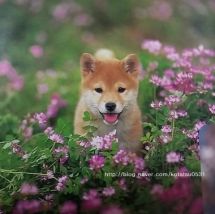
    A Little heartbeat at my feet courtesy of naver.com

    Dogs are one of the fewest animals who share our lives and require our tender attention and care for the reasons concerning the above and most of all, the feelings we get when we see the eyes of dogs that are so soulful and insightful. We need to take a close look at our canine fellow creatures in their true form based upon their biological needs and behavioral tendencies, to love them as they are, and treat them as a wonderful creature of nature that has been with us for so many years in our human history.

    Don’t forget the little heartbeat when a dog is at our feet. Never forget that they are only dogs.

  • The Timeless Art of Jean Francois Millet: Book Review on Jean Francois Millet by Estelle M. Hurll

    Jean Francois MilletJean Francois Millet by Estelle M. Hurll

    My rating: 5 of 5 stars

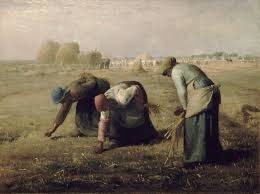
    I was 13 years old when I first saw “The Gleaners” reprinted on a small tin plate as a complementary bonus to a carton of vanilla ice cream my mom had bought for me and my little brother. The painting had a peculiar charm that diverted me from the love of my favorite ice cream; its serene but picturesque impression of the three working women and the pastoral scene produced in me a peace of mind and a sense of comfort. Since that time, the painter of “The Gleaners, ” Jean Francois Millet, has become my favorite painters of all. So when I came upon this book by Hurll published in 1900 on Kindle Bookstand, I was already downloading it on my kindle with a kind of same delight I felt when I was 13 years old.

    x
    “The Gleaners” By Jean Francois Millet courtesy of wikipedia

    Jean Francois Millet (1814-1875) was born into a hardworking and caring peasant family who had been residing in the old province of Normandy, France through the generations. The rustic, chaste beauty of the pastoral scenery and the coarse but artless and diligent village people who toiled to grow life out of land and tended flocks of livestock for living were imprinted on the senses and sensibilities of Millet. His subject matters were already indelibly marked in his nature. It is in fact, this natural beauty that became his muse and the epitome of his aesthetic beliefs. He spurned the artificial beauty of the forced setting. He believed, “The beauty is the fitting,” which links to what Saint Augustine explained in his “De Pulchra et Apte,” meaning “The Beauty and The Fitting,” in which two kinds of beauty: beauty inherent in the thing itself, and beauty by virtue of thing’s use were explained. In this regard, Millet’s tranquil beauty pertains to the latter as shown in his paintings of the pastoral life and its inhabitants.

    What’s special about Millet’s paintings are distinctive features of his art. To illustrates, in “The Angulus,” “The Gleaners,” and “The Shepherdess,” the landscapes cease to be a mere setting or background in figure pictures and become “organic” parts of the compositions, focusing on the human sides in the expressiveness of the figures, and thus make both figures and the landscapes interdependent, fitting together in a perfect unity. Millet also mastered in the effects of changing the light during different hours of the day, which creates the ambience of the normal and the quiet in the paintings.

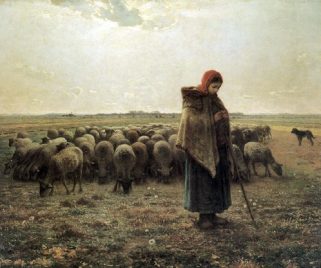
    cropped-g1mllt010_5_1862-1864-bergere-gardant-ses-moutons.jpg
    “The Shepherdess” by Jean Francois Millet courtesy of 1000 museums.com

    Although it was “The Gleaners” that allured me into the world of Millet’s paintings, my favorite is “The Shepherdess” completed in 1862. There is a young shepherdess knitting like she is transfixed, while her flock of sheep and her assistant black little dog are following slowly their pensive guardian. The expression of her face begets many thoughts on the sacredness of work and its worker that strikes into your heart with a sense of respectfulness, which is stretched to the far distance in the scene where men working on piles of hay and their carts to carry them over. This painting gives an impression of a suspended action captured in the eyes of the painter as if it were photographed that would proceed to move in any moment soon. Also, it renders the 3rd dimension of space with the figure of the shepherdess having a solid, tangible appearance and the space that seems so infinite, so boundless, and so eternal with the quality of surrounding light of space composition evocative of religious serenity.

    This book does not contain a biography of Millet but rather serves as a reference book of his paintings to get readers acquainted with the artistic world of Millet in a short period of time. One of the reasons I chose this book is its year of publication. It was published in 1900, only 25 years after the death of Millet. Therefore, Hurll could glean information on Millet’s life from surviving friends of his, which is all the more authentic and factual, devoid of myths, legends, and fables that are so prevalent in the books on the famous who were long gone.

    For these reasons, Millet is one of the fine artists whose intense love of human nature and expression thereof is the chief element of beauty. In his paintings, nothing is ignored in the landscapes as well as the figures. He was indeed a master of the arts who could use the seemingly commonplace with the feeling of sublime that gave to art its true meanings. Many years might have passed since the first time I saw “The Gleaners,” but the kind of mysterious delight of peaceful awe I felt at that time still remains with me after all those years. Millet was right: the true beauty knows no boundary of time and place.

  • The Classic Wisdom on Food and Drink

    Food and Drink: A Book of QuotationsFood and Drink: A Book of Quotations edited by Susan L. Rattiner

    My rating: 4 of 5 stars

    Inspiration can come from anywhere, but it is most well conveyed in quotations from famous writers, thinkers, artists, and many well-known figures in the matters of positive thoughts, great advice and ideas on human existence and humanity. As Oscar Wilde said, “Quotations are serviceable substitutes for wit,” inspirational quotations stimulate our minds to fresh endeavor, gives us a new viewpoint upon our existential matters, and enable us to get a fresh hold upon ourselves and things that are necessary for our human existence, such as elegantly compiled in this charming book of quotations about food and drink.

    The cover of the book showing Renoir’s beautiful painting of “A Luncheon Of The Boating Party,” imparts lightheartedness of the subject matters of the book encompassing the festivity of celebrating them both as a pleasure and a necessity. The quotations in this lovely little book, which readers can finish at one setting, comprehends all the aspects of food and drink -ranging from a necessity of our existence to an object of pleasure, from a means to measure our temperance to a touchstone of inculcating etiquette to achieve our self-respect and dignity- with insights, thoughts, and witticism from writers, thinkers, and proverbs. Included in this review are selected quotations from my personal reading of the book.

    Food is sacred, a victual for the nourishment of the body and the mind. Therefore, it should be taken in a peaceful, civil manner, as to appreciate its values both physically and ethically. In this regard, Rudyard Kipling seems to disfavor the American way of fast food as we can hear him saying that Americans had a habit of “stuffing for ten minutes thrice a day.” And who says eating alone invokes a sight of pity when Charles Lamb glorifies “Oh, the pleasure of eating my dinner alone!” Aesop also agrees to the importance of eating food with peace of mind as follows: “A crust eaten in peace is better than a banquet partaken in anxiety.” Mark Twain’s aphorism of “To eat is human, to digest divine” can become a mantra to reconstitute insalubrious eating habits.

    A host of the notable emphasizes on the power of coffee as a tonic to awaken our sleepy senses. Take Johann Sebastian Bach’s humorous claim that without his routine morning coffee, he is just “like a dried up piece of roast goat.” Honore De Balzac concurs with Bach metaphysically because he trusts a cup of coffee to be his Muse by confessing “Coffee falls into the stomach [and] ideas begin to move… [and] the shafts of wit start up like sharpshooter, smiles arrive, the paper is covered with ink.” Accordingly, President Teddy Roosevelt’s immortal approval of good coffee as being “good to the last drop.” still reverberates in radios and televisions.

    However, there is also the other side of food when it is indulged beyond the pale, as Ludwig Von Beethoven cautions against gluttony by which man “sinks almost to the level of an animal when eating becomes his chief pleasure.” The Talmud tells us how to eat in moderation as follows: “In eating, a third of the stomach should be filled with food, a third with drink, and the rest let empty.” Desiderilis Erasmus attests to the moderate way of eating by testifying, “When I got a little money, I buy books. And if there is any left over, I buy food.”

    In fact, moderate eating has been a matter of importance throughout the human history from the ancient time until now. For instance, Ovid counsel for the universal topic does not sound new to readers at all: “Stop short of your appetite; eat less than you are able.” The American Renaissance man Benjamin Franklin gives readers gives readers more detailed advice on the exercising and moderation of eating as follows: “If, after exercise, we feed sparingly, the digestion will be easy and good, the body lightsome, the temper cheerful, and all the animal functions performed agreeable. Eat to live, and not live to eat.” To cap it all, the simplest way of calorie expense is given by the Jewish proverb: “He that eats till he’s sick must fast till he’s well.”

    As illustrated above, these witty and reflective quotations about food and drink (mostly about coffee) from the great minds who lived before us are universal in their appeal and still applicable to our ways of life in terms of the manners of understanding the nature and values of eating and drinking as a pleasure as well as a necessity. In this delightful, light-volume of book, readers will enjoy more quotations without a need of contextual interpretation or psychological analysis of the words of motivation, reflection, and humor. This book will make a good companion at a coffee-shop when you wait for someone, rest yourself before heading in to work, or just enjoy your solitary comfort.

  • The Writer’s Guide to Everyday Life in the Middle Ages by Sherrilyn Kenyon

    The Writer's Guide to Everyday Life in the Middle Ages: The British Isles From 500-1500The Writer’s Guide to Everyday Life in the Middle Ages: The British Isles From 500-1500 by Sherrilyn Kenyon

    My rating: 4 of 5 stars

    Although the Middle Ages (roughly from the 5th to 15th century) is often dubbed as “The Dark Ages,” the epitaph coined by the thinkers of the Renaissance, this was the period when many important social institutions, such as universities, hospitals, marriage as a sacrament, and use of surnames, which have become norms of our society, were established. In this book, the author Sherrilyn Kenyon succeeds in closing the great divide of time and space between modern readers and the folks living in the medieval time by presenting general aspects of life in the medieval England ranging from food to medicine and so forth which are not so much outlandishly different from what we are familiar with in one way or another. This review of mine intends to provide the facts on the two of the necessities of the human life, which are food and clothing, plus medicine to share the fun of knowing them and of learning about the misty but not too distant past on an evolutionary clock.

    Food
    The folks in the Middles Ages were not usually voracious eaters; breakfast consisted of a loaf of bread and some wine for the nobility or ale for the peasantry, partaken of after a daily morning mass. Then between 10:00 AM and Noon, a dinner was served, and supper at the time of sunset was prepared. In the castle of a lord, during a supper time, a traveling minstrel (a wandering singer-songwriter) entertained the host of the castle and received food or coins in return. The most perplexing fact about the medieval table etiquette involves attitudes toward the dogs: food scraps were forbidden to be given out to the dog while the diners were at the table. It further prohibited tossing a morsel of food to the dogs even after the meal.

    With respect to the kinds of food mostly available to the folks living in the middle ages, the following were some of the common staples of the nobility and the peasantry:

    • Sugar was a very valuable spice and expensive to import. It was during the 12th century sugar became a common ingredient in England, where sugar imported from Alexandria was regarded prime quality because it was flavored with roses and violets. In fact, England in the Middle Ages seemed to be quite actively engaged in commercial activities in comparison to Spain, France, and Italy as follows:
    • England’s exports: Fish, Cheese, and Ale. Its imports: Raisins, figs, dates, olive oil, wine, almonds, and rice.
      Spain’s exports: Sugar, preserved fruits, and syrups
      France’s exports: Wine
      Italy’ exports: Pies
    • The most common vegetables were onions, peas, beans, and cabbages. However, cucumbers and leeks were considered unhealthy. As for the kinds of fruit, most consumed were apples, plums, pears, peaches, and nuts. Citrus ones, such as oranges and lemons were not seen in England until the Crusades.
    • Speaking of the Crusade, it was said that the French crusaders’ garlic breath disgusted the people of Constantinople for the reason that garlic was used as a main spice to conceal the taste of spoiling meat. There are two other ways to preserve meat: (1) Dry salting by burying meat in salt; and (2) Brune curing by soaking it in a salt solution. However, in many times, the meat, which was a main staple of the noble and the wealthy, became perished, causing a variety of skin irritations, scurvy, tooth decay, and different types of infection.

    Clothing
    Despite the class differences, there was a little difference between the styles of clothing and the types of fabric worn by the nobility and the peasantry at least during the early middle ages due mostly to limited trade caused by poor travel conditions. Merchants and peddlers could not travel far with their carts and wagons as a result of such poor road conditions and a peril of highwaymen. So Nobles made their fashion statements with jewels as accessories for their garments. When the power of kings and nobles grew stronger, they also controlled the roads, decreasing the risk of robbery and violence. Consequently, this new social mobility led to an increase in trade, bringing a greater variety of fabrics and colors. Moreover, the term “Fashion Police” was originated from this period when this deputy of the nobility literally patrolled the streets and checked all to make sure they were wearing clothes appropriate to their social class.

    Medicine
    I was especially interested in this subject due to my recent urgent medical treatments. What was it like being a patient of painful ailment? Contrary to my previous beliefs of barbarian methods of curing the sick without anesthesia and other superstitious ways of treating common diseases, the medieval doctors were actually quite competent to heal the wounded with surprisingly inventive surgical tools and remedies that can be adopted to tend to the modern day patients. Also, Jewish doctors armed with the knowledge of Arabic and Greek were most highly esteemed and exclusively employed by kings, nobles, or wealthy merchants in their castles or manors. Also, many women were licensed to practice medicine equipped with knowledge of various remedies passed from their elders. Some of these women specialized in eye diseases.

    The common types of ailments in the middles ages are as follows:

    • The most common diseases in the middles ages were dysentery, epilepsy, influenza, diphtheria, scurvy, typhoid, St. Vitus’ Dance, St. Anthony’s fire, stroke, heart disease, and leprosy. On the contrary, tuberculosis, cancer, alcoholism, and venereal diseases were rarely recorded despite the author’s thoroughly extensive research.
    • Also, doctors believed in the importance of preventive medicine, advising people to refrain from taking a nap because they followed the Greek belief that the body was made up of four humors that were sanguine, choler, phlegm, and melancholia and three spirits.
    • Interestingly, women gave birth in a sitting stance to allow gravity to streamline the delivery process. Moreover, anesthesia was used in surgeries in the form of a sponge soaked in the juice of opium, ivy, or lettuce and then dried in the sun. It’s re-soaked in water and held to the patient’s nose and mouth whenever it was needed.

    Further to the notable medieval medical achievements as listed above, here are some interesting information on how the folks at the time tried to cure their physical weaknesses which I think might benefit us:

    • Acorn: A woman carrying it will have the eternal youth
      Amethyst: the possession of it will prevent you from falling into drunkenness
      Blackberry: If you eat it, it will relieve you of diarrhea
      Camphor: It wards off infections
      Cold: Drinking a warm cup of barley tea will cure you of cold,
      Coughs: A pint of vinegar with a quarter ounce of finely grounded licorice will stop you from coughing.
      Dandelion: A cup of dandelion tea acts as a laxative
      Peppermint: Its tea will relieve you of bloatedness and relieve you of gas.
      Rosemary: If you wash your hair in water full of rosemary, it will make your hair grow.
      Rosewater: Apply it to your inflamed eye for treatment.

    To encapsulate, this easy-to-read book is a great guide to the ordinary customs of the middle ages that are compiled by the author’s diligently thorough research on the social/cultural aspects of the medieval England. In fact, as the title of this book presents, it will be also an excellent reference book for writers interested in creating stories set in this time period. Besides, the book shows readers that however arcane or backward the way of life in the medieval time may look to be in our modern standard, the medieval folks lived in what they imagined as “modern” time compared to the ancient Greek and Roman times. Therefore, we should cast away our fallacy of the human ego that makes us look back at the past and think we are better than they were. After all, the medieval was not altogether a grim and gloom dystopia ruled by religious didacticism and scientific ignorance.

    저장

    저장

  • Albert Speer: Hitler’s Architect

    Spandau: The Secret DiariesSpandau: The Secret Diaries by Albert Speer

    My rating: 5 of 5 stars

    Albert Speer was a very clever man; he managed to survive a death sentence at the Nuremberg trials and lived to tell his story of the Third Reich, Hitler, and himself as Minister of Armaments and War Production during WWII. Furthermore, Speer made a brilliant career of writing memoirs with many a television interview following his release from West Berlin’s Spandau prison in 1966 after having completed his 20-year sentence. This book, written between 1946 and 1966 in Spandau, is a collection of his diaries and letters to his family secretly kept against the prison regulations.

    The reason that Speer had written his diaries was to keep his mind disciplined and alert by using his mental faculties while serving his time at Spandau. He was afraid of undergoing mental and physical atrophy because the prison life to him was nothing but a repeated series of monotonous routines that would lead to mental stagnation and physical lethargy. Whether Speer had written diaries and other correspondence to his family with the thought of publishing them in mind is hardly probable because it was for the sake of his own ego arrested by a lack of social refinements and intellectual engagements during his confinements as well expressed in the diaries.

    There are many interesting anecdotes about his fellow prisoners who formed their own social cliques even inside the prison: Albert Speer and Rudolph Hess did not socialize with the other prisoners but spent most of their time alone. In fact, Speer was disliked by the other prisoners for his admission of guilt and repudiation of Hitler at the Nuremberg trials. So was Rudolf Hess for his reputed antisocial personality and conspicuous mental instability. The two former Grand Admirals, Erich Raeder and Karl Dönitz stayed together. Baldur von Schirach, the German Nazi Party’s national youth leader and head of the Hitler Youth, and Walther Funk, Reich Minister for Economic Affairs, were described as “inseparable”. It was Konstantin von Neurath whom Speer seemed to have a good opinion on for his amiability and amenability to all until his release in 1954.

    The book is not a history book or a testament to Speer’s apologetic gesture of doing public penance for his involvement in the Nazi regime. As Freud once said, “Sometimes, a cigar is just a cigar,” this memoir is a memoir, Speer’s personal journal, encompassing his intellectual capacities to observe and analyze what he saw and read in addition to his desire of being with his family, especially the sons who seemed to feel uncomfortable with their father when visiting him in prison. Upon reading this heavy volume of memoir, I am convinced that it was his sagacity and intelligence that saved him from death and that enabled him to launch a successful writing career afterwards.

    저장

  • The Romans as close as you can be

    Life in Ancient RomeLife in Ancient Rome by Lionel Casson

    My rating: 4 of 5 stars

    There was a time when all the roads led to Rome that lasted approximately 1,500 years ranging from the era of B.C. to that of A.D. It was from this Roman world where the art of politics was crafted and exemplified; it was also from this grandiose empire where Christianity gained ground and dispersed Christendom/Christianity to Urbi et orbi. However, what piqued me most was the key phases of life in the Roman world; what life was like in the various spectrum of society, ranging from the slave to the aristocrat? How different was the life in the Roman world from the life in our modern world? This book by the erudite historian Lionel Casson presents elegant sketches of such aspects of the Eternal City, particularly during the first and second A.D.

    Although Rome was the center of the Empire, its strength came from its provinces. For instance, the grain, wine, and oil came from Egypt, France, and Spain. The businessmen who traded such goods were largely provincials, so were the army recruits. Moreover, even slaves could achieve upward social mobility once they became freed through manumission which granted them Roman citizenship. In fact, it was this practice of incorporating into the state the communities it claimed and the populace it governed by bestowing upon them citizenship on the whole. To illustrate, Horace, the famous Roman poet, was a son of a freed slave who later became a wealthy farmer. Felix, who threw St. Paul in a jail, was himself a freed slave who rose above the planes of his melee. These nouveau citizens joined the citizen body and contributed their labor to the society.

    Most girls married between the age of twelve and fifteen, and they must possess a dowry. If her husband died, or the couple divorced, it was returned, except a portion for the raising the children by the husband and penalty in case of her misdemeanor. No dowry, no husband in this paterfamily society. Also, the common law marriage was accepted, such as in the case of Marcus Aurelius, the philosopher-emperor ruling Rome from 161 A.D. to 180 A.D. After his wife died, he lived with the daughter of his wife’s business agent as concubine. An upper-class woman could have a lover of humble status, even including a slave.

    There are lots of other interesting facts that will surprise the reader with a feeling of closeness to these citizens of the Eternal City because they were not much different from the citizens of the modern world in many ways; the scenery changes, and the people change, but the human nature does not change as long as the humankind exists.