Tag: society

  • Shooting star

    He shouldn’t have been there. No, not at that McDonald’s or any McDonald’s where random people might have seen him. For the class of people he seems to care about, that’s how they perceive him. What an irony it is—sad but true.

    Mangione must have been incredibly hungry to eat at a McDonald’s while knowing he was on the run.

    Did he think he wouldn’t be caught? It seemed almost naive in a boldly youthful way. Mind you, I am not endorsing his killing of the CEO of UnitedHealthcare on his way to the “investment” conference. Still, his motives reflect some of the ancient and medieval ideas of self-evident justice—his actions against the unjust. The entire narrative feels like an adventurous tale about a young knight.

    He comes from a wealthy background, much like our new president-elect, Donald Trump. However, there is a key difference: Mangione is a well-read, articulate thinker and writer who empathizes with the have-nots. He does not feel entitled or complacent about his status and circumstances. Here is a young man who truly cares about those outside the boundaries of social protection—those without health insurance or, even if they have it, without enough benefits.

    He is an unlikely person in an unusual situation.

  • Old People (2022) – Film Essay

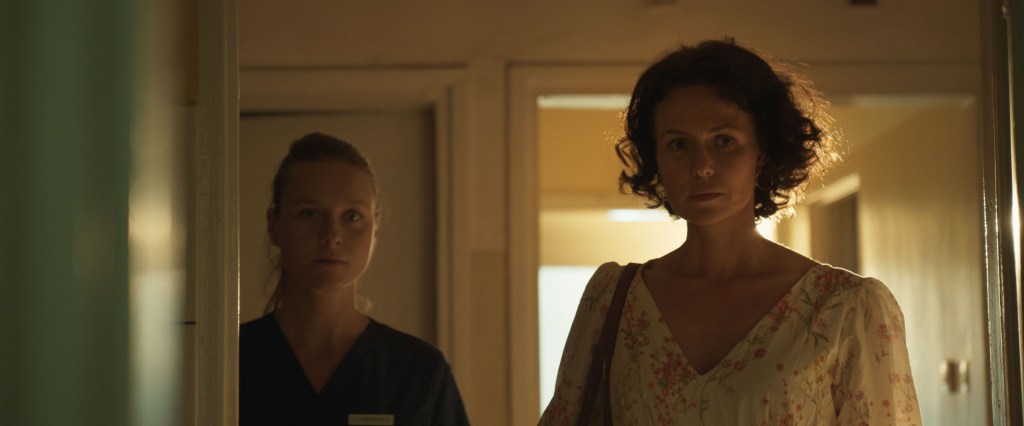
    Old People shows the issue of the generation gaps between the young and the old, not in the adolescent revolt against the adult institution, but in the societal and cultural context regarding the weakening familial bond between wife and husband, child and parent, and grandchildren and grandparent.

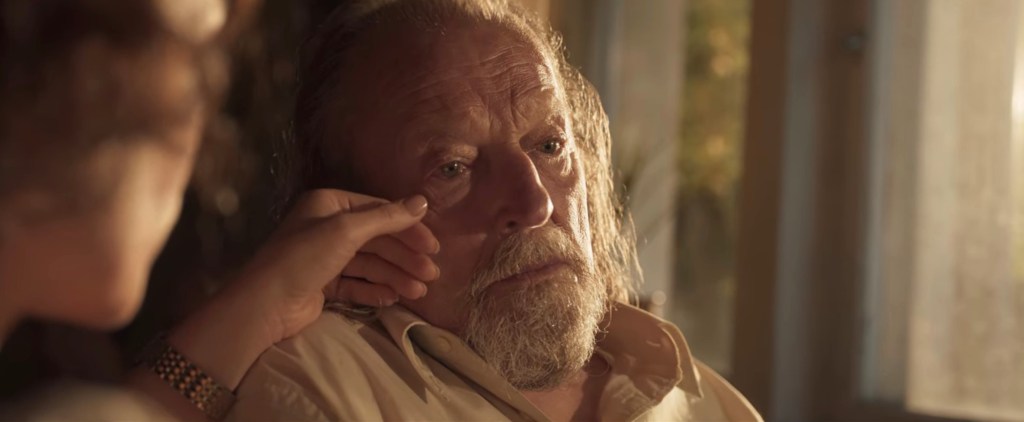
    Melika is a successful lawyer from a city heading with her children to her sister’s wedding at their childhood home in a village. Upon arrival, Melika finds her once beloved father, who loved her and her children so much, is sent to a nearby nursing home whose environment is no better than a mad asylum in atmosphere and appearance. Seeing her father spiritless and aimless alone in a dark room gives her a pang of leaving him behind for her ambitious future as a city lawyer, but she tries to suppress it by bringing him home just for the wedding day. But that is her self-induced wish to relieve herself of guilt, for her father is so broken with a shattered heart that his daughters deserted him, driven away from their home, their happy life that he still longs for. Such sadness is collected among all the old people in the nursing home, abandoned in dreadful isolation from the community that has put them into such an institutional grave and buried alive. The rest is a prelude to a symphony of carnage burning in the fury of the undead and neglected.

    Although this movie is presented as a horror movie, it really isn’t in terms of its thematic and contextual subject. It is a horror that we as a society have become Logan’s World, where ageism and lookism prevail over humanity and discriminate against those who do not fit in their touchstone of the ideal. And what is old, and how old is old? Are we not all advancing in age? Youth is wasted on the young, as Oscar Wilde cleverly concluded. Being old should not be a curse but a celebration of experience in life and, therefore, must be embraced with respect and dignity. Just because we become old doesn’t mean our feelings are dead, as the grandfather tells his beloved grandson: “Oh, yes! I love you so terribly much!”

  • Prompt 22

    What does freedom mean to you?

    People think of freedom as a philosophical concept in belief when it is the fundamental right to exercise humanness, the state of being human. Freedom is not a prerogative of specific class or status or group, but a sovereign privilege of every human being to be who they are and to express themselves under the aegis of regard for individualities that can be at their most creative and effective when well-guarded by enlightened society with humanism.

    Freedom to speak against injustice, freedom to keep one’s character, or freedom to think differently defines freedom in a civilized society characterized by low unemployment and high long-term employment rates. Unlike Europeans, Americans are unashamedly puritanical about the rights of at-will workers, meaning they are always expendable at the whims and caprice of tyrannical employers. Here in the States, an employer can let an employee go any time out of the blue. A yearly leave of absence with pay averages ten days, which can’t be used at once but sporadically. Would it be a bit of a stretch to see a feudalistic or ancient slavery system in today’s American employee-employer, which includes all those foreign-born doing business in the States, relationship?

    Jean Jacque Rousseau lamented that we were born free but are in chains everywhere. Activists clamorously campaign for Freedom” to showcase their political causes in the media, but they may also have been perpetrators of someone’s freedom. Freedom is not a cause celebre but a fundamental right to practice a will to live. Abraham Lincoln called the “Jewel of Freedom in the Family of Liberty.” Ditto. Freedom is accessible only in a civilized society.

  • Sound of Wind – Vol 1

    Mountains landscape in Vorarlberg, Austria

    Monday, May 1st, 2023

    Today’s Article: Labyrinth

    Have you ever felt that no matter how hard you tried not to make the same mistakes, you would turn a full circle as if trapped in a labyrinth? If you have, then you are not alone, and you are not uniquely flawed. Put it bluntly, you are not a loser and will never be. 

    We live in a society – or in an era inclusively – where uniformed measurement of success in status represents who you are regardless of how long a way you have come despite everything, Unlike Ancient Greeks who valued what individuals had endured and achieved as much as they possibly could under the most depraved circumstances, we look at what our eyes see in the face of the mind because of the misguided belief that only the fittest will survive in the Darwinian theory of evolution. Here in the States, people believe those subsisting on welfare are lazy losers because they are uneducated or less educated. But that’s not the case. People with college degrees also find themselves mired in the rut of life, eager to get even a mime-waged job just to get by lest they should be thrown out to the streets. Sometimes educated people live in poverty, not because they are substance abusers or mentally deranged, but because they have different personal reasons that are not to be generalized under specific circumstances. We are all different, and different people have different needs. Didn’t Depeche Mode sing in “People are people?”

    Failure discriminates against none, embraces everyone, and we are one in it. The Beckettian philosophy of failure as a championing, not championed juggernaut of doom echoes the Nietzschean credo of what doesn’t kill you only makes you stronger. Try again, fail again, succeed again. Or fail worse. Better worse. Fail worst. Till you get sick of it for good. Throw up for good, ad nauseam. If you are doing it, you are not alone; I am not alone. We are not alone. Don’t forget about it.

  • Emperor Titters

    The news that Elon Musk, the CEO of Tesla and Space X, has recently become the largest shareholder of Twitter Inc. is grist to the mill of the media with hoots and huhs. Musk has ascended to the throne and begun to wield his power to shake the Twitter Empire from inside and out. He expressed a design of converting the Twitter HQ into a homeless shelter while contemplating changing the name Twitter to Titter, egged on by a popular vote of consent he instigated a while ago on the portal. So the question is, has Musk already gone mad in the fury of retaliation against the Twitter Senate? Or is it out of his pure, unscrupulous intention drenched in the wine of humanity?

    My perception of Elon Musk may be an illustration of heuristics and biases to form a systematic judgment of error and make a decision based on resemblance shaped by intuitive preference. But such a design of machinery of cognition is also complemented by System 2 of slow thinking requiring analytical reasoning. Were it not for Tesla’s lawsuits brought by racism in the work environment and Musk’s nonchalant attitudes toward them adorned with his flamboyant gestures, I would applaud him to the end of the earth riding on a Tesla flying on a Space X. Perhaps, such acrid regard of him is akin to accusing a socially estranged woman of being a witch without a preponderance of the evidence. But Musk is anything but a pitiful figure deserving our pity with his immense universal wealth, doing businesses on earth and heaven. Although, as the saying goes, “A tree is known by its fruits,” the racially-motivated lawsuits betoken the dispiriting work environment of Tesla tells something about Musk’s personality. I find it very hard to regard Musk’s declaration of converting the Twitter HQ into homeless housing. It seems an adrenaline-driven uppercut blow to the foe as sweet vindication with Tittering.

    I read that Jeff Bezos, the executive chairman of Amazon and the owner of a private galactical tourist company, consented to Musk’s profound charitable remark. Nowadays, celebrities have all negative heuristics and biases against social media. Nevertheless, they feed on attention and thrive in it, so any such uttering of disaffection with the media is a sign of entrepreneurial solidarity. Not that I have the same sentiment toward Bezos, who is more intelligent and reticent than his slightly younger rival, but that they are astronomically rich and universally famous. It’s called class consciousness, by which the members of the same class share the same social statuses and cultures to guard themselves against those of another class. Musk’s sensational promise to give housing largess to the homeless and change the world’s famous media platform reminds me of Emperor Nero. Truth or false, he was said to play the cithara singing while Rome was burning and then distributed stipends to the homeless due to the great fire.

  • ‘The Maid’ by Nita Prose

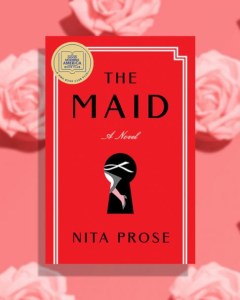
    The Maid by Nita Prose is a one-of-kind, touchy-feely novel without collapsed grand narratives and vehement subjective rhetorics about existential vertigoes in life that burdens the reader with a duty to interpret the philosophical, the intellectual meaning of a story, all fragmented and adrift. Instead, the story uses the real to perfect the ideal delightfully blended with a taste of Murder She Wrote with relatively ordinary characters doing the most extraordinary things like you never know.

    The Maid is one lonely young Molly Gray. She is a Maid of Maids, taking her job religiously in a hotel that does not quite reciprocate her dedicated service but sees her as a quiet oddball because of her reclusive comportment. But Molly is a swan in a lake of ducklings and geese, a harpist among percussionists, whose feet constantly move beneath reality’s surface. Molly is anachronistically muliebral and incongruously proper. She belongs to a preceding era of decency, saying early Edwardian London as a chambermaid, a coveted position for working-class women. To judge Molly as a misfit is downright callous and heartless because she inwardly craves recognition from those she thinks of as sympathetic souls who use her as a pawn in their game of passion and avarice. The more we learn about Molly as the narrative deepens, the better we know of her as if we were contracted severe strains of Stockholm Syndrome. Hence, our better angels persuade us to forgive and forget the stupendousness of truth that Molly confides to us at the end of the story’s labyrinth.

    This fictional Maid by Nita Prose and that real-life Maid by Stephanie Land are stories about working-class women struggling with the realities of life by themselves. The only difference is that the former has a blessing of luck in the form of sympathetic and resourceful supporters who rescue her from a dungeon of hopelessness. It is understanding because, as Charlotte Brontë expressed, one of the reasons she wrote was to be a kind creator for her stories’ heroines otherwise to whom no sweet soft touch of warmth and love would caress their weeping heads. However, Molly, the Maid is not all melancholic, a damsel in distress, a clueless loner succumbing to a subtle form of gaslighting because she is the one who laughs the last laugh with intelligence wrapped in a maid’s hide. Molly Gray the Maid may have a woman’s body but has the king’s stomach and heart in the most magnanimous way. Therefore, don’t mess with Molly – and the likes.