Tag: supernatural

  • Wanderlust

    For one hundred and twenty years
    Trapped in the maze of this mirage,
    Where I began, I can go back never;
    Here I stand and face the bare fate
    Or is it nothing but the illusion ever?

    As Aurora releases the first dewdrop,
    I go high over, down under
    From one end of the horizon to the other
    Across the five continents and six oceans
    Above the heavens, below the abyss
    Far into the milky ways and back to earth
    with the jewel of hope in beatitude.

  • The Truth About Horror

    Stephen King, the King of Horror, said we make up horrors to help us cope with real ones. Some people drink themselves to numb their existential maladies of daily life, or some abandon themselves to unguarded sensual or psychedelic pleasure. But I seek refuge in the stories about the supernatural world that have to be the actual, not the second-hand replica of the author’s imagination that I find hard to be connected. That said, to descry the headline title ‘The Horror’ from a recent issue of the New York Times Book Review delivered on my kindle seemed too pat not to feel psychic about it with a jolt of fillip bolted to my neural circuits. Reading it allowed me to reflect on my affinity for supernatural scare about whys and wherefores.

    The article posits that horror movies scare us through exteriority with image and sound to create the illusion of danger, whereas horror fictions are more sophisticated and cultured to understand the complex interiority of the characters by passing over to the creator’s mind. But why do I have to play an amateur psychologist to analyze the inner world of an author when I try to find a niche for my battered spirit in a supernatural realm where no bullies, despots, or melees would follow me? My kind of horror has nothing to do with overtly thought-provoking fictional narratives that are more like psychological thrillers than supernatural ones. That is why I favor the Japanese ghost stories bereft of bodily fluids and materials but full of silent terror in the presence of a sorrowful dead refusing to depart for the Otherworld. Fear is universal. However, its expression is nuanced in the ordinary landscape of daily life, with the undead still among the living in their everyday attire as if they were still alive, not least because Japan is a country of spirits and gods dwelling in nature among the people.

    The article is correct in saying that a love of the horror is a part-time love with a mysteriously eerie beautiful parvenue in Howl’s Moving Castle. By wallowing myself in the supernatural, I feel anxiety loosened, nervousness coaxed, anger diverted, sadness halved, and depression diluted to a certain degree. You may say it is another form of a psychedelic illusion of escapade from reality, then let it be. After all, aren’t we all addicted to something to that effect to relieve ourselves from existential frustration in a socially acceptable way?

  • frightful

    High towering ire beneath the mountains of tidal waves whirling,
    Darkness howling, ascending to light moaning, descending,
    Blackest somber fear turning into whitest hot hubris roaring,
    The spirit in the fetters bursts upon the furious waters, revolting.

    The souls of the dead rising from the abyss and walking,
    Midnight, moonlight, and starlight upon the waters shining,
    Heaven gaping then cracking, earth laying and embracing,
    The spirit with the wings clipped begins to flutter and leap, rejoicing.

  • ‘Poltergeists: Then and Now’. by Wayne Ridsdel – book review

    Poltergeists: Then and Now

    From Plato, who believed that the dead walked around a cemetery, Pliny the younger who told of his friend’s in Greece encountering a ghost of an old man in a chain, and Arthur Conan Doyle, who himself manifested as a revenant looking for his lost diary in his former early abode, there is no distinction between the learned and the general in acknowledging the existence of spirits. There are more things on earth than are explained in theories. Poltergeist: Then and Now by Wayne Ridsdell revisits the places where the noisy spirits were/are reputedly manifesting themselves and lets the reader judge the veracity of the existence of the century-old poltergeist on his own.

    The book reads like an anthology for the history of poltergeist 101. The author has gleaned several famous poltergeist cases from the Cock Lane Poltergeist to Borley Rectory Haunting, The Enfield Poltergeist, and the Rosenheim Poltergeist. They are all too familiar to stimulate the reader searching for a new case of the subject, even if it may not be as sensational as the aforesaid famous cases. But in all fairness, the instances’ enumeration latently serves as suggestive DYI touchstones for discriminating the genuinely supernatural from the others, including mental illness, fraud, or overt imagination. Take, for example, the Cock Lane Poltergeist and the Mayfair Ghost, aka Berkeley Square ghost. Despite the shocking incidents recorded in the annals, the circumstantial evidence surrounding the cases arises from a jilted lover’s malice, the rage of failed expectation, and rambunctiousness of avarice, manifested in one big hoax of an invented poltergeist. Although the authors do not directly debate the cases’ truthfulness, the detailed accounts of the stories behind the issues bespeak the possibilities of stratagem.

    What lacks in the originality of strange poltergeist incidents makes up in the unveiling intelligence about historical and literary relations to the ghostly phenomena. For example, the haunted 50 Berkeley Square in London inspired Rudyard Kipling’s “Tomlinson,” a poetic version of the Book of Dead retold in his poetic vision is a gem to discover. From London, the reader travels to the ghastly Glamis Castle and finds himself in the secret chamber where the sinister force originates from, which no one but the first-born son at his twenty-one birthday can access to. The secret remains intact to this date in the Bowes-Lyons Family, the castle owner, who included Queen Elizabeth, the Queen Mother, and the unfortunate Nerissa and Katherine, who were locked up in an asylum for their prenatal imbecility till their death, eschewed by their loyal cousins. The reader’s thirst for the supernatural piquancy in the context of historical evidence is adequately quenched in such information.

    The reader keen on supernatural (not paranormal, psychic, or psychological) stories based on real events might find this book mediocre in contents that are a well-organized summation of case studies. Still, the book is a good primer for the world of poltergeist and its historical record that links the past to the present, which the noisy spirit knows no boundary of time and space. What happened before happens now and will happen tomorrow. I think this is what the author wants to ascertain in this book.


    View all my reviews

  • ‘The Boy’ (2016) – film essay

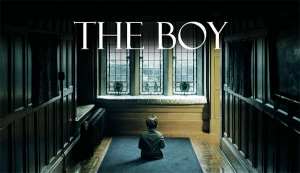
    Invitation, Manifestation, and Escape are typical acts in horror movies from ‘The Exorcist’ to ‘The Changeling’ and to ‘The Others’, all of which are supreme ones of the genre, demonstrating the genuine scare is without a masked slasher on a killing spree that seems to revive forever like a Phoenix. But what about ‘The Boy’ (2016)? The movie is a lackluster flick, a smart apprentice of the masters mentioned above but without depth and breadth of knowledge of the essence of things, natural and supernatural.

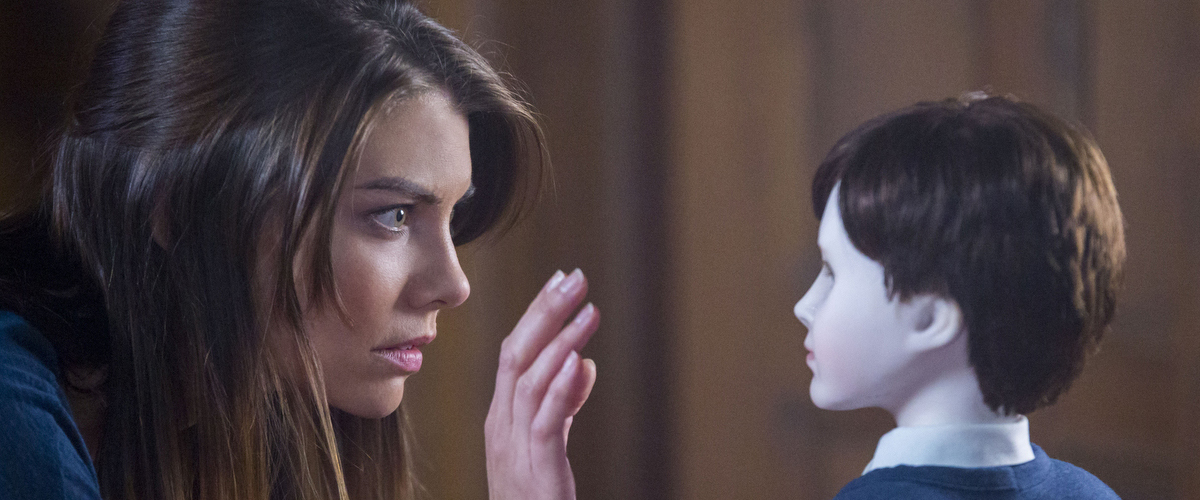
    It follows a young American woman with a past named Greta (very German or Grimm maybe?) hired by the overtly strange elderly couple as a nanny to their little son Brahms (possibly Bram Stoker?), a porcelain doll. As in Kubler-Ross’s Stages of Death, she shocks and denies, then accepts that she is a nanny to the doll. Of course, pretty Greta is not lonely because a young, good-looking grocer named Malcolm courts her as politely suavely as an English can be. Then Greta’s ex-lover Cole, who is the epitome of big, rough, and domineering man, suddenly manifesting from America in the English mansion, demanding she should leave for the states in the morning with him. And that’s not the end, for we are rudely introduced by a third character (or the same?), and the stupendousness of the story swivels in the flashes of screams, blood, tears, etc.

    Watching this movie last night on Netflix made me think that the classic horrors of the 70s and 80s were indeed long gone and would not revive – at least for now. What begins as a classic supernatural story ends as a tepid escapade from one big mess. Greta’s coming to England is loosely explained, not to mention Cole’s sudden appearance in the English countryside manor is abruptly shoehorned into the story, breaking the thread of subplots, changing the atmosphere of the movie into a thriller that is not supernatural at all. Nevertheless, Lauren Cohan’s performance as Greta is commendable for her naturalness and arduousness in portraying her role that is the only gem of the movie that makes it watchable without turning it off.

    Maybe I am either anachronistic or fastidious in selecting horror movies because of my propensity for subtle but incredible supernatural thematic elements without monsters, deformed humans, or amorous lovers. So be it. It’s all about how a story is intelligently and entertainingly told on the screen with minimum special effects, gore scenes, love scenes staging in either big swanky English country houses or big deserted mansions that are conveniently used as thematic elements. Reading the background information on this movie, I have noticed that there are quite a few production companies involved in making it. Would it be the reason for turning this otherwise excellent thematic element into a dull child’s play? Did all the companies know a thing about a movie not in monetary terms but art for art’s sake? I wonder.

  • ‘The Entity (1982)’ – film essay


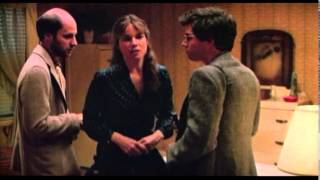
    “The Entity (1982)” is an American film based on the real-life event of Dorothy Bither, who was habitually raped by evil spirits that followed her everywhere. In the movie, Dorothy is Carla Moran, a young, intelligent single mother of three whose life becomes a Circle of Hell incarnate on earth in which she becomes a sexual slave of the unseen unclean spirits. Despite the physical signs of attacks, her well-meaning but over-zealous psychiatrist Dr. Phill Sneiderman believes that her unhappy childhood and different anfractuous life experience generate the mind’s play. He then forces his belief into her with a superior sense of academic and professional pride, even if her children have witnessed supernatural powers are attacking their mother. Carla catches at straws in the form of parapsychology to set herself free from the demonic forces, even if the help is not entirely altruistic and may turn on a full circle of violation of her body, her heart, and her spirit.


    The film agrees to the truth on the supernatural essence of rape by portraying Carla as a woman of diligence, intelligence, and heart who goes to a secretarial school at night for a better future. Her love and affection for children are filled with kisses and smiles, even to her head-strong adolescent son. Her childhood memories and paths she treaded upon thus far might have been labyrinthine, but just because you have past wounds doesn’t mean you are stigmatized for the malady of the heart forever. Dr. Sneiderman’s attitude toward his patient Carla is reminiscent of the late Victorian and early 20th-century institutionalization of women with checkered lives, the victims of violence, into crudely primitive asylums where any sane person was sure to lose a reason before long. However, Carla rejects her telltale testimony to the supernatural terror to be nothing but a tale told by a lunatic woman, full of sound and fury that means nothing.


    ‘The Entity’ is a classic movie of supernatural phenomena in the ordinary surrounding of Los Angeles, CA. What makes this film classic in its pure literary sense is the absence of gory scenes accompanied by shrill screams of overtly acted characters who know what will happen to them. Nudity is present in the film not as gratuitous scenes of repertories of box-office horror movies but as realistic segments of what and how it happened all. I initially avoided watching this film by its thematic subject of rape and its naturally subsequent psychological narrative analysis as someone craving for a true supernatural story without frequent staccatos of blood splashes and big sharp tooth. It was a low hope for high heaven when the film was impressively indelible in my mind after I watched it last Saturday. If you prefer watching 70s and early 80s supernatural films over slash movies after the golden periods of the genre, ‘The Entity’ will entertain your sentiment and satisfy reason. And remember this: “There are more things in heaven and earth than are dreamt of in your philosophy.” Don’t forget that.