Tag: thoughts

  • Sunday Letter – 2

    Sunday, September 6th, 2026

    Hi Freddo,

    It’s September, and fall will arrive soon. In fact, the cooler temperatures are already its harbingers, and I am all for it. How’s the weather in Rome? And how are your projects coming along? Last time I heard, you were working on a translation of a certain book from English into Italian. Are you still working on it? Can you tell me what the book is about?

    I want to show you my prose poem I wrote yesterday. It’s one of my recent experiments with story-like poems. I write poems that read like prose. The best thing about prose poems is that there is no complication of characters with existential dilemmas and metaphysical questions about who they are—questions that not many people care about. But these days, too many poems and stories can read like ideological catalogs, social agendas, or personal traumas that are not easy to read and take to heart. While I get that shared traumatic experiences may help those who find themselves therein, that is not my cup of tea. I don’t want to write about my ethnicity or race in the context of living in America as an Asian immigrant woman. I don’t want to be labeled as an “ethnic” woman writer whose work is shelved outside of the so-called mainstream book sections in bookstores. That is why I admire someone such as Kazuo Ishiguro, who wrote The Remains of the Day. His background does not prescribe the consciousness, subject, or voice he is permitted to inhabit; you would not necessarily know that a Japanese-British man wrote it in posh British English. There are no boundaries of race, gender, or age in the language of the mind and heart. You can be whoever you want to be and show the world the way you are.

    Today’s letter reads like a rant from an anxious woman irritated by a boisterous party of popular or best-selling writers. So be it. I do not want to be restrained in the realm of written words where I can be myself. I do not like being boxed in by what people expect me to be and write, because that is not who I am. You would find it a bit hard to relate to my literary zeal to write the truth about myself because you would not feel the pressure of ink in your own color, but that is okay. I do not expect you to understand my stance. However, I would be incredibly happy to see you on my side when people scoff at my poems and prose.

    Dreaming of a dusk on the Aventino Hill looking over Rome with you,

    Stefania

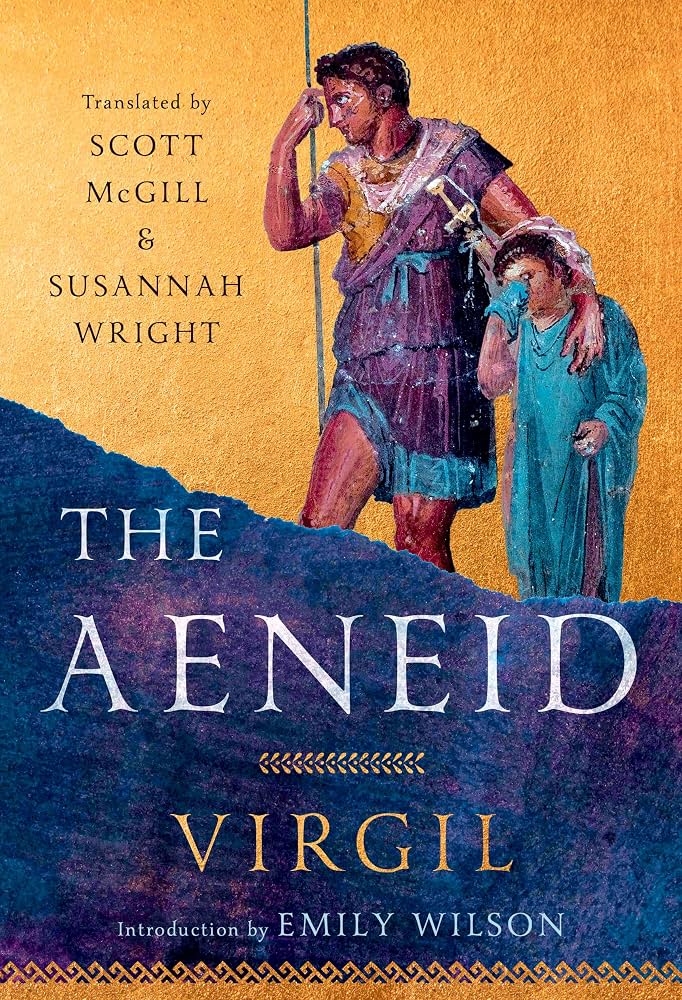
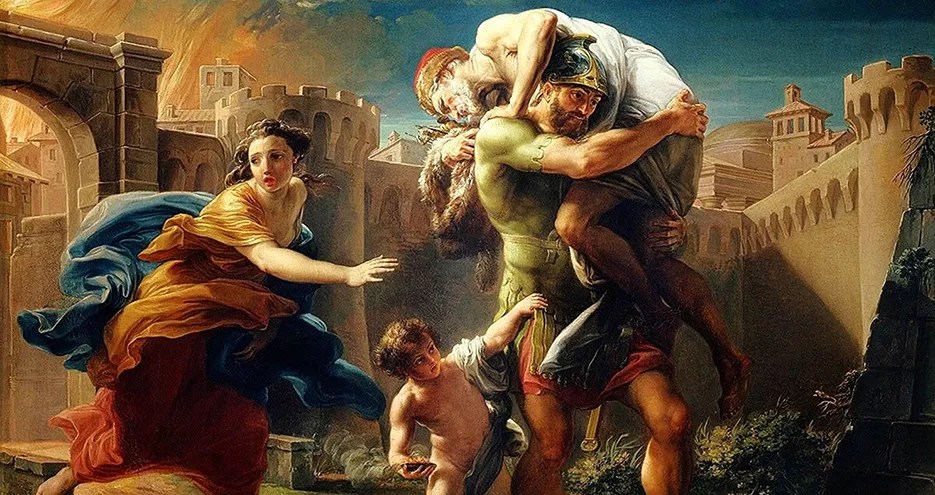
  • Reading on A Review of the Aeneid, Translated by Scott McGill and Susannah Wright, by Deborah Warren

    First, let me confess that I have not yet read the translation of The Aeneid by McGill and Wright. Maybe I will after I finish reading Robert Fagles’s translation. So, while it would be unfair for me to judge which translation better serves readers of the twenty-first century, I can say that Fagles’s translation of Virgil’s epic narrative of Aeneas reads like a prose poem to me, simply because its language and arrangement suit my taste.

    This essay is not for general readers but for readers with an academic background in Latin. Therefore, for general readers such as myself, its comparison of the original Latin with the English translations—in terms of metrical structures, the choice of words, and their juxtaposition—may not ring a bell. My interest in reading The Aeneid comes from a purely personal curiosity: I want to understand why Aeneas is the way he is, breaking the hearts of the women who loved him dearly. In that regard, Fagles’s translation chimes the bell of my heart and soul because his words are poetic and, at the same time, go straight to the heart. Take a look at these translations:

    Fagles:

    “Wars and a man I sing—an exile driven on by Fate,
    he was the first to flee the coast of Troy,
    destined to reach Lavinian shores and Italian soil.”

    Robert Fitzgerald:

    “I sing of warfare and a man at war.
    From the sea-coast of Troy in early days
    He came to Italy by destiny
    To our Lavinian shores,
    A fugitive, this captain . . .”

    McGill and Wright:

    “I sing of arms and of a man displaced
    by Fate, the first to leave the coast of Troy
    for Italy and its Lavinian shores.”

    Fagles’s version of “Wars and a man I sing . . .” clearly expresses Virgil’s intention to sing about a man destined to put duty before feeling. By placing the mainstay of The Aeneid—the fate of the man—at the beginning, Fagles conveys to his readers that Aeneas was not born to be a romantic figure, or even a heroic star, but to be a man torn between what he wants and what he must do.

    Through Fagles, we hear Virgil sing of Aeneas, a demigod and an excellent soldier: the embodiment of the Roman ideal, whose pietas and gravitas signify personal virtue as well as martial prowess. But Virgil was not a soldier; he was a poet. Bernard Knox, however—the classicist who wrote the introduction to Fagles’s translation—brings the crack of a horsewhip to it. A former U.S. Army captain and World War II veteran, Knox had literally followed in the footsteps of Antony and Octavian during the Italian campaign. He must have carried Euterpe and Calliope with him—the Muses who had also stood behind Virgil thousands of moons before.

  • On Reading “In the Reckless Hour” by Barry Schwabsky

    Two things stayed with me after reading Barry Schwabsky’s essay “In the Reckless Hour,” about the recent English translation of Cesare Pavese’s The Leucothea Dialogues—henceforth, the Dialogues. The first was an existential question: How do we ask mortal questions through stories about the immortals? But don’t let the question weigh on you more heavily than it should. We have always asked essentially the same questions in different ways.

    The Dialogues are twenty-seven short dialogues that bring the Greek gods and goddesses back into the human condition—under law, mortality, and fate—and question why things are the way they are: unfair, absurd, and cruel. What makes the gods and goddesses so deeply engaged in human affairs, and so human that they alter human fates? If they cannot show their strength in the realm of Fate, are they truly superior? These Greek divinities could not care less about humans unless humans offer them satisfying sacrifices to feed their divine egos. Even Shakespeare’s Oberon and his wife are more sympathetic than their Greek counterparts. Free will is unthinkable because Fate takes precedence. Humans are toy soldiers manipulated by Fate and deployed by the gods. Are they worthy of being worshipped? If they are, it is only out of fear of punishment in the form of unfortunate events in human life: the gods play their war games with human lives as pawns to see who will prevail. They do not interfere with human affairs but govern them. Then we do not have to work so hard or hope for anything better if our fates are predetermined. John Calvin must have felt the same way I do—and perhaps Pavese did, too.

    Regarding the translation of the Dialogues from Italian into English, Schwabsky is a strict examiner who questions whether the recent English version is a translation made without fully understanding the book. He also believes that its plain language lacks Pavese’s dark grandeur and the gravity of his language. Although I have not read the Dialogues yet, I can’t say whether I agree with his opinion. But I am a proponent of using plain language to make difficult themes and ideas accessible to general readers, so that knowledge can be shared and enrich their minds rather than remain exclusive to academics.

    This essay is apposite to my current reading of Vergil’s The Aeneid, in which a man’s destination is already predetermined, while everything he does seem like an act in a script written by the divine. Then what is the meaning of being human, and what is the purpose of living? If some people are fated to suffer the most violent pain and cruel injustice, would our hopeful search for the meaning of life be merely another futile act of living?

  • Queen’s cats

    Share a photo of your pet and tell us one thing that makes them uniquely them.

    Camile (L) and Toro (R) on their look out from Queen’s Castle

    My cats think they are human. They like Häagen-Dazs ice cream and want to lounge in the living room with me, let alone jump on my bed when I say good night each night. Did I also mention that they’re bilingual?

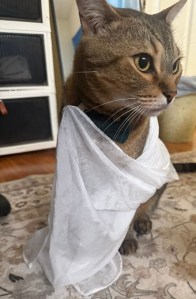
    Toro in Toga channeling into an ancient Roman aristocrat

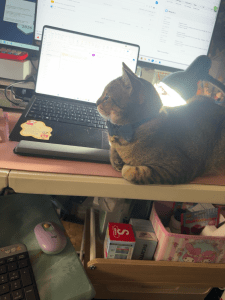
    Toro, the 6-year-old tabby, is a little tiger who wants to help me when I work from home, always insisting on typing emails and notes on my work laptop, which need my spellcheck. He takes breaks and lunch with me, so I am never alone at home. And Toro’s being human doesn’t stop there. He knows when my brother calls because he always sits next to me, his little furry body resting on my side.

    Camille’s magic eyes

    Camille, the 4-year-old black cat, is a little black panther who looks just like Gigi from Kiki’s Delivery Service. Although Camille speaks no Korean, he understands when I tell him my secret wishes and how grateful I am that he lives with me because I am lucky to live with such an adorable black cat.

    Toro as my assistant

    Whoever says cats are naturally independent and feral has not seen Toro and Camille. They are very affectionate and loving. I see their spirits in amber and emerald eyes. I feel their little hearts on my chest and at my feet.

    And they slowly blink their big eyes and bunt their little heads when I say, “I love you so much in every universe.”

  • Mirror Lake


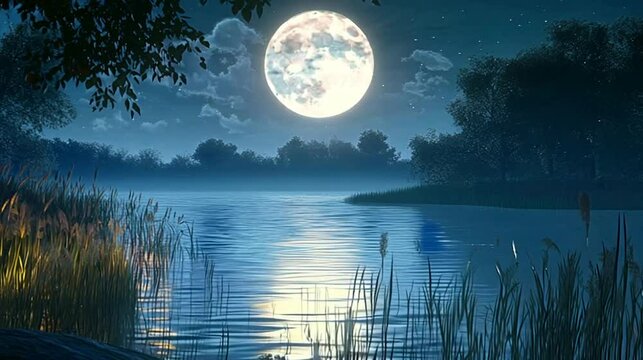
    Tonight, the sea is a sheet of glass,
    holding the moon’s timid face.

    “Don’t look at me—
    but don’t look away.”

    I lean toward her under the water,
    my face bruised with sadness,
    trembling beside hers
    in awe of still beauty.

    Two girls gaze back at me—
    sheepish, curious, luminescent:
    one made of ache,
    one made of flame.

    Her eyes—two diamonds
    cut from the tears of indifference.
    Drops fall into the lake,
    ricocheting sorrow into smile.

    I reach to touch their faces,
    but their reflections dissolve—
    a shimmer undone by my hand.

    I try to gather the pieces,
    but the more I gather,
    the deeper they sink
    to the bottom of the water.

    I lost the only friend
    who looked like me.
    Now my face alone—
    a ghost-girl drowning in her own reflection,
    born from love, but never for it.

    If you like this poem, you can support my writing at Ko-fi:

    https://ko-fi.com/steph79650

  • About Writing

    I can’t think of myself just simply vanishing into the passage of time, becoming a tribe of the forgotten. I don’t want to leave this world without a trace of my existence. That is one of the reasons why I have been submitting my work to journals and my first poetry chapbook since last May. Before, writing was my soliloquy in which I wallowed myself away from the cruel reality where God was unkind, let alone people. However, things have shifted for me. Now, it’s different. This is a time of striking hard when the iron is hot. And boy, is my iron so hot that I can’t hold it any longer.

    My first chapbook, “The Glass and the Flame,” consisting of 40 poems, was submitted to a couple of presses last week and this week. One of them required $15.00 for submission, which was quite costly considering that even if my chapbook were not selected, I would still have to pay the sum, just so the editors would read. Still, I decided it was worth it because I wanted to be famous. I want to mark my name in the aisles of bookstores from LA to Rome, to Paris, and wherever literate people live. Not vanity. Justice. My voice deserves to be heard. I write ache, loneliness, sorrow, and desire — with no shame. For whom should I feel shameful about expressing a free spirit in the language of beauty and truth? After all, even scholars have sex. No, my writing is not of Anaïs Nin. Instead, my writing follows the tradition of Anne Ernaux, Duras, and Sappho with the mind of Szymborska. Furthermore, elsewhere across the fields of desire, Plath calls for intelligent lust, which comes in the form of Eros in a purple cloak. And of course, Psyche comes in together. In the secret garden of language.

    I have received rejections from journals that tout themselves as publishers of so-called “intellectual,” “confessional,” “existential,” or “societal” poems that demand social activism. Writers are routinely defined by their social, racial, and cultural backgrounds, as if these alone drive their voices. For example, if you are a Korean-American woman from an immigrant family, you are expected to address prejudice and alienation, tinged with jingoism. The prevailing belief is that my race and gender are the only traits editors value — as if being an “exotic” woman seeking an audience is enough. God, when will they realize that, beyond differences, we share more in common?

    Maybe this is just a writer’s rant. If so, so be it. Nevertheless, I write the most universal human feelings about love and desire, about solitude and sorrow that any woman across all cultures, ages, and classes can understand. Forget the MFA writers. After all, writers do not need master’s degrees to be considered intellectuals whose work takes precedence over writers who have lived rather than studied.

    If this essay moved you, you can support my writing at Ko-fi: https://ko-fi.com/steph79650