I wish I could do more writing every day than I do now. Things are not the same any longer: until last year, I always found myself to write just about anything after work at night or even during my lunchtime at work. But gone are the days.
Maybe it’s because the routine of my work at my job changed. But then, I guess it’s just my lame excuse for not exerting myself to express myself in writing, which I love doing. I often wonder if this is my becoming disaffected with the quality of my writing, which used to be better than now. Some say it’s due to stress from work and attending to my infirm elderly mother at home, or both. Maybe so.
Elsie Robinson, who wrote the popular column “Listen, World” in the early and mid-20th century, encouraged her readers to write anything daily, like writing an article for a newspaper or magazine of their own. I think it’s a great idea. So maybe I should do the same every day.
One word is insufficient, for you and I are not a manufactured byproduct of living organisms. So I will defy it with the following parade of words that tells about me: munificent, seI am sentimental, sympathetic, compassionate, funny (in a delightful way), naive (but more leaning toward gullible), agerasia, Renaissance, timid, introverted, vivacious (only when I am in the mood under right conditions with right company), blue-stocking, independent, unreconstructed, passionate when talking about books and history with kindred spirits, ambitious, neverending, resilent, optimistic, silly, sometimes pretty when my spirit is high, sybil, Cassadra, ancient, cosmopolitan, spiritual, witch (a good one), dreamer, laid-back, warm, dilligent, genuine, trusty, mysterious, and hopeful.
When good things happen to me, I should not speak about it but lock it in my heart’s cabinet because otherwise, luck will soon be frustrated by jinx. Silly or superstitious as it may sound, but that is my empirical fact of life. I can write about good things happening to me but not manifest them in spoken words. For instance, if I say one of my co-workers at a workplace is pleasant, then all of sudden, the next day, that person’s attitude toward me betrays my trust in humanity beyond foreseeable and unforeseeable reason. Methinks there are evil spirits who swore a generational curse on my well-being because of unknown umbrage at my ancestors in the foregone times. So I have to keep good news or fortunate events sealed until such things actually bring me good results with long favorable effects that stay with me for a long time. This truth is the truth to the end of reckoning.
No pain, no gain! Who said that? What a sadist! Break the heart, what do you want? Blow the spirit, does it come again? Some may regenerate like an inveterate clown when some can’t take it with the heartstrings pulled tweaked, pinched, and torn Till their souls refuse to stay besieged, assaulted within. So, never say once again Pain is s necessary gambit with stacks of aces hidden because it simply isn’t but a swaggering fiddlestick.
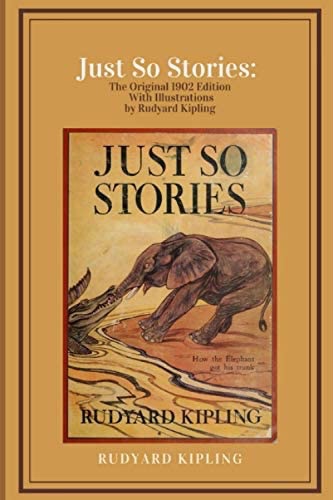
I believe history is a branch of literature full of events and stories made by artists and artificers weaving facts into myth, and vice versa, into a timeless tapestry of the world that was, is and will be. In that regard, Kipling is an artist who spins beautiful tales of how animals became what they look like into a poetic wheel of ear-delighting and cadenced words aided by gorgeous illustrations distinctively graceful and dazzlingly beautiful.
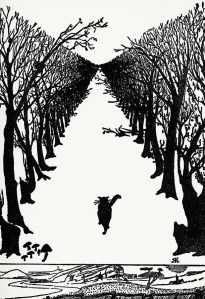
Kipling’s evolution of animals explains why they look the way they are, such as a Leopard with spots, a Carmel hump, and many more. The stories become a fable and a history of its kind. It’s a literary version of Darwin’s Origin of Species, the wonderful menageries of Man and Beast that cannot live alone despite the differences in species because we are the inhabitants of this world, Earth. But, above all the fantastic tales of wonder, the Cat’s tale stands out in the story and the subject. Kipling’s Cat is proud but not arrogant, independent but affectionate, and vain but graceful. It’s a cat who walks by himself, and everything is alike to him and nothing else. The Cat is a beautiful stranger even if he likes to be a family, a kind of forever loner, the Puss in Boots with a cowboy hat and an empty holster. Kipling’s writer’s eyes saw the romantic solitude in a cat, and the result is one poetic Cat that rhymes well like the graceful way cats do their amazing somersaults.
Just So Stories are not just for children even though it is classified in Children’s literature on the shelves of libraries. It’s a book for everyone who loves legends and magic, who still has a childlike innocence that refused to put away as an adult because it’s in nature. The stories are not for academic analysis or psychoanalysis but simply for the enjoyment of the mind and the delight of the heart. Remember Freud’s saying, “Sometimes, a cigar is just a cigar.” So are Just So Stories, so delightful and so pleasant.
The wandering Rainmaker A stranger To her power Invokes ever A benevolent rain Of inspirations On an arid terrain Of imaginations That are blocked In the Acheronian Wilderness barren Of wordlessness.




You must be logged in to post a comment.