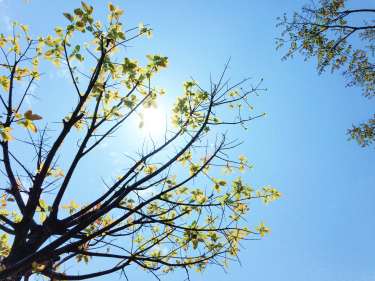
The Light of the Sun
Lifts Cloaks of Heaven.
Earth Sings a New Season.
The Light of the Sun
Lifts Cloaks of Heaven.
Earth Sings a New Season.
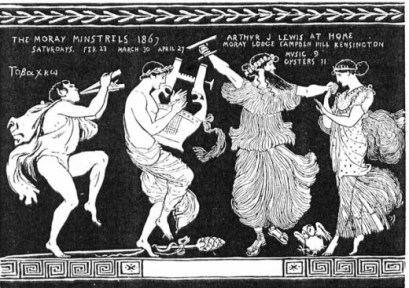
Herewith an ancient Grecian urn,
An ancient spirit of an unknown poet
Pines for the Divine Mania to inurn
The Great Four Madnesses as yet.
Against a Circle of Time ever more,
His pursuit of the Great Mania restless
And undead forever haunting thereafter
Circles an epicycle orb in orb timeless.
The Religious Madness from Dionysius – He knows no believing.
The Poetic Madness from the Muses – He looks to elsewhere.
The Madness of Love from Aphrodite – He experiences no feeling.
The Pythia’s Inspiration from Apollo – He turns to elsewhere.
Wherefore the poet runs after the Great Mania,
The delusion of Perfection still orbits the urn
In a room of Ancient Gallery of misty panorama
Of the incessant enthusiasm for the Great to yearn.
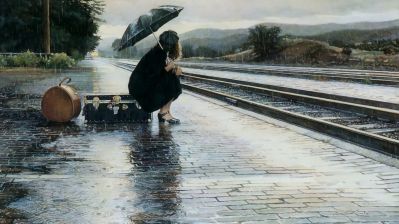
In a grey muslin veil
The last maiden of April
Sheds her tears of farewell
To earth tolling the final bell.
P.S.: This rainy afternoon of the last day of April disappears into our memory of time, being the experience of the ethos of the time we live in. Goodbye to April, 2018…
My rating: 5 of 5 stars
The violent collapse of the ecclesiastical caste precipitated by the French Revolution has given rise to the secular intellectual armed with their scintillating rhetoric and dazzling display of scholastic aptitudes; these social, cultural elites have become guardians of cultures and devised moral and ideological innovations, thus replacing the ancient regime of the priestly caste. Paul Johnson’s Intellectuals lays bare the human frailties of these beneficent intellectuals – ranging from Jean-Jacque Rousseau to Leo Tolstoy, to Henrik Ibsen to Ernest Hemingway, and to Noam Chomsky – and invites us to question the duplicity of these intellectuals that contradicts what they preached for the sake of humanity.
Intellectuals have traditionally proclaimed themselves to be liberals, torch-bearers of fraternity, equality, liberty since they became new potent oracles of societies dictating modes of life and modus operandi of political, social, and cultural systems. However, they are actually bound to the canons of external authority and to the inheritance; that is, the intellectuals are and were by no means free spirits as they profess themselves to be. They are the substitutes for the pagan gods and the elites of Prometheus, who stole the numinous fire for humankind into the bargain under the pretext of shaping our attitudes and institutions and of prescribing us panacea for the social ills.
However, many notable intellectuals who have influenced the arts and shaped our modes of thinking were deficient in rectitude toward their kin, families, friends, and others in their everyday life. To illustrate, Rousseau was an absolute egoist, a brilliant self-publicist, tending to equate hostility to him with hostility to truth and virtue as such. He disdained women of low birth, such as seamstress, chambermaids, and shop girls, while he claimed to love people of all walks of life. In fact, this trait of egoism can be also found in the figure of Percy Bysshe Shelley, a great English poet known for his proclamation that “the poets are unacknowledged legislators of the world.” A sublime egoist with a strong moralizing bent, Shelley assumed that others had to applaud his decisions and when they failed to do so up to his expectation, he was quick to display a sense of outrage. And there was also Ibsen, who changed the social thinking of his generation and that of posterity by preaching the revolt of the individual against the ancient regime of inhibitions and prejudices. He did not want to help others, let alone his own family, for richer he became, the less inclined he was to make any contract with them.
To encapsulate, Intellectuals serves as a literary stethoscope to examine the moral and judgmental credentials of select intellectuals most known to us throughout the modern western history. However, this is not a book to slander their intellectual contributions to the enrichment of culture and society on the whole by revealing their personal history. Rather, it is to show us readers a peril of effaced humanity undermined by the importance of ideas as held by most intellectuals, for ideas – or ideology – were their new gods or new mammon. They put ideas before their families, friends, and people for the sake of perfection of the arts, politics, or society. Moreover, so many intellectuals have jumped on the bandwagon of liberalism in favor of careerism. It is this hypocrisy that Johnson wants to bring to light in Intellectuals. And I think this book is one of the must-haves we should keep on our bookshelves to discern true intellectuals who practice what they preach, such as Ralph Waldo Emerson or George Orwell from those who are no more than learned careerists or demagogues or just talking heads of abstract ideas.
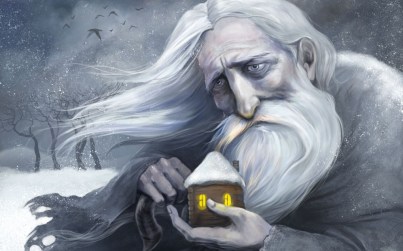
Behold his mighty wind power
Whirling leaves in eddies,
Rattling trees in terrible temper!
Boreas still remains in defiance!
Listen to the gale hissing, howling
Loud and hard, growing louder harder till
It becomes ranting of the god going
Mad with his utmost resistance to nil!
For the law of nature he cares none,
The principles of the Olympus he defies,
Boreas in great white ire against the Sun
Talks sound and fury in a whirlpool of gales.
P.S. : Boreas, god of winter is still here because even though we have officially entered Spring, the weather conditions of yesterday and today fraught with torrential rains accompanied by gale force winds betray the law of nature. I hope to see spring skies in no time.
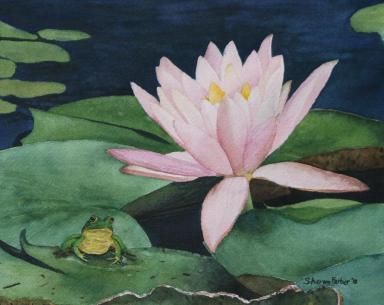
The green frog leaps across
the great petal of a lotus.
The pond fills the silence.
Sunday, February 22, 2011


You must be logged in to post a comment.