Tag: writers

  • Movies Digest

    Some indulge in drinking, some gaming, but mine is binge-watching supernatural/suspense movies when I am under dark spells. Hence this past weekend, I wallowed in the below visceral world of make-believe with my cats as guardians perched next to me on both sides like Odin’s two crows, Memory and Thought.
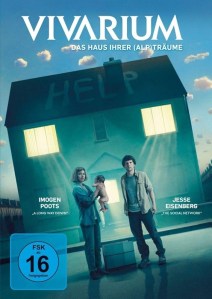
    Vivarium (2019): This is one of the most surreal movies I have seen. Some classify this movie as Si-fi, but it is Horror because it has no hope of escaping from the cycle of repetition with no end to the movie’s end. The young couple’s hopes of finding a new home could be this sinful. I am only asking because the movie’s central theme stems from the globally realistic issue of housing problems in the context of planning and paying. And the question of conformity dominates throughout the movie. Readers familiar with the YouTube sensation of the Backroom series will find a kind of deja vu phenomenon while watching this, but this is scarier because it happens to good people.

    The New Daughter (2009): Kevin Costner plays an affectionate father who wants to bring up his two young children to the best he can as a newly divorced father. It’s refreshing to watch such a movie that portrays a loving single father caring for his children when most movies show only single mothers struggling – of course, loving, with their circumstances. Although the film does not feature my favorite ghostly characters who are purely spiritual, it can be forgiven for the sinister consequences that show no mercy to good people.
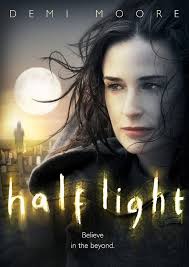
    Half Light (2008) – Demi Moore is a novelist in this movie who can’t get over the death of her beloved young son. She blames herself for him to drown to death while she is writing her new novel. The guilt-ridden mother retreats to a coastal village in Scotland, where she experiences supernatural phenomena so tangibly that it all seems too visceral to accept because of the preponderance of the awe. The lighthouse on a deserted island within such a small coastal village serves as a beacon of her spiritual guide, or could it be an alarm for the impending danger? But one thing is confident that the living must let go of the dead because once the soul leaves the body, then the soul belongs to no one, not even in the streams of love’s salty fires. If you really love them, set the departed free.

    Stephen King, whose name befits the sobriquet of King of Horror, once said that fiction is the mirror image of reality, sort of an alter ego of the real world. Horror reflects fear that hopes are only a vanity of imagination or, as Thucydides says, a dangerous daydreaming made of bodacious hubris. What if what we think of or see as real is not real but only the likeness of truth? That is Horror, which is all reflected in these movies.

  • Recollection of the Alhambra

    Alhambra (Alhambra de Granada): image credit from viator.com
    He came down from the throne of the crescent moon
    with the key to the paradise his ancestors gardened
    for eight hundred years of harmony in Saracen haven
    to the hands of the pious proud king and queen posing
    to accept it as the Christian champions emboldened
    by the surrender of the ruler of the Iberian paradise;

    Yesterdays, yesteryears, and to the last of the time
    crept upon the waters of the palatial fountains thence
    and began to fill the heart of the sultan of the palace
    whose eyes billowed streams of nostalgia’s longings
    on his hallow cheeks and to the back of his horse
    together, leaving the fortress of a thousand memories;

    And Fate, whose wings did he fly? Now, all’s bygone-
    Those melodies of sweet sojourns beneath visting suns
    in the neverending abundance of warmth and mirth-
    when every regret, every sorrow turned back his looks,
    Every look shed tears in the shadow of the evening sun,
    lingering in the recollection of the Alhambra Palace.
  • Prompt 68

    What is the greatest gift someone could give you?

    One of the reasons I like Charles Dickens and Charlotte Bronte is their happy ending with the most unexpected gift in the bliss of munificent largess that turned around their lives as la dolce vita. Likewise, (and frankly speaking) my Dickensian style of the greatest gift could be a recovery of my father’s stolen ancestral land in the will left by my grandfather.

    A Shakespearean play, it may seem, my father’s land was forfeited by his half-brother, who falsely attested to the probate court that my father was lost in contact and, therefore, presumed to be dead. We have recently learned about it and still can’t believe this preponderance of lies. With the purloined land, the half-brother enriched his family, helping his two sons to set up their businesses. The promised land would have significantly helped our family, and we would have lived in a better environment with a Dickensian happy ending.

    That happened to Charles Dickens. It was a small estate inherited from his paternal grandmother, which released his impecunious family from a debtor’s jail so that they could settle down in a fixed abode. So, yes. I should be so lucky if we could get back our land. That could be the greatest expectation.

  • Happy World Introvert Day⭐️🍀🧚‍♀️

    Alone but Curious🧚‍♀️

    Without my subscription to the newsletter “Letters of Note” by Shaun Usher, I would not have known that today was “World Introvert Day.” In celebration of the Feast of Introverts, I want to share some of the scintillating comments on the solace of solitude relished by the great writers of all time, which are selected by Usher, the founder of the Letters of Notes series, now also presented as in live shows where famous thespians – primarily British – including the excellent Benedict Cumberbatch, narrate many of the great letters from the series.

    Elizabeth Bishop must have felt the same as I do many times when I am forced to be in situations where I must pretend to be outgoing and all-around friendly to be with, joking and laughing in nonstop chattering: “After being so social… I don’t feel like myself at all. I’m exhausted all over but particularly the dace, which I suppose comes from wearing a horrible fixed grin for so long.” From her letter written on November 10th, 1948.

    But Sylvia Townsend Warner’s letter to David Garnett, written on September 2nd, 1970, won the olive wreath with a gold medal: “I live in a house too large for me, with three cats, and when the telephone rings and it is a wrong number, I feel a rush of thankfulness.” It’s a witty felicity of comfort in the company of romantic solitude. No, it doesn’t mean she is antisocial, but not everyone is outgoing, and outgoing people are not always positive, adept, or healthy. You can’t put people on the polar ends of the continuum of personalities and see them only in black and white.
    Surrounded by the crowds of vocal extroverts at work, where quiet is synonymous with sullen and too severe, I cannot help but agree with the writers mentioned earlier, for my sentiment shares with theirs. Perhaps it’s because we write, and writers are different tribes of people who hear and see things not recognized by those who are not.

    But for what’s worth, it doesn’t matter if you call yourself an Introvert or not because, as Ernest Hemingway chipped, just be content with what you are and how you are: “I don’t know what an introvert is, but if that is what you are may all my children be then.” Ditto.

    For your eyes only ✨
  • Wandering Cat

    The hate fills you with spite
    the heart is a barren desert
    the mind is a desiccated tree
    basked in the heat of hate;
    There’s a cat who walks
    by himself by the proud tree
    and his eyes full of memories
    that once beheld the leaves
    dancing in the breeze of peace;
    He catches in silence at the sight
    by the awe of the forlorn fate
    that wails into a void of ether
    and continues on his wander
    into the end of distant rainbows
    bridging over the skies yonder.

  • Auto-correction and Titivillus

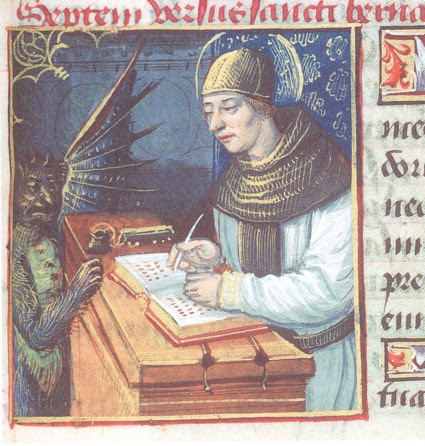
    Writing has never been easier these days than in the bygone days before the advent of the computer. If you are unsure about how to spell “Tomato,” then the computer will spell it for you by way of auto-correction. And it can even reconstruct your sentences like a pro. The magic is inside the computer, as if it has a mind and even a soul, as it were. This wizardly power of auto-correction can sometimes, however, lead you to an embroglio of nonsense, especially when writing emails or tweeting. Quite devilish, so I think and wonder: are things like auto-correction and the likes a wicked invention of science or science of diabolical existence? Hence, I am talking about Titivillus, the patron demon of scribes.

    The birth of Titivillus could trace back to the 13th century when Franciscan theologian John of Wales pinpointed the malicious demonic trickery for the scriber’s mistakes. That’s not a footless excuse for the faux-pas made in a beautifully ornamented medieval script. In medieval times, copying the passages of the Holy Scripture was a painfully punctilious task for a monk to accomplish with perfect penmanship and exquisite illuminations. And the job cost a good amount of his youth with arched back, squinted eyes, and cramped arms and fingers, not in the least due to the time spent scribing. Toiling (even though for the glory of God) and Rejoicing (for the joy of self-fulfillment), Sorrowing always hoovers over the glories. Titivillus often brings this Sorrowing by making the scriber err in labor, such as misspelling or miscopying. When that happens, a corrector scraped off with a penknife or an acidic solution was applied to loosen the ink. Or sometimes he just made little dots under a wrong word, meaning the reader should ignore that bit. In case of more significant errors, the passages were sometimes lined through, and the correction was written in the margin or copied on a smaller piece of parchment and glued into the book.


    To think of it, Titivillus has not returned to the Ninth Circle of Hell, always making himself a reason to stay as long as humanity continues writing. Writer’s block is a dark cloud hovering over the soul’s palace, the dome of thoughts. Philological carbuncles, including misspellings and awkward syntax, combine the demon’s interruption and the writer’s fear of writing. The fear is more than devilish trickery or neurotic obsession because it stifles creativeness and imagination of the writer. Still, I cannot help but think that today Titivillus manifests himself in the form of auto-correction, which can change the entire meaning of a whole sentence, often most embarrassingly and awkwardly. You agree?