RE: 8/12/2018 article of “Broken Guy goes down with plane” from the Los Angeles Times
However bleak and and fatalistic his views on Death of God and Nihilism might be, the one definitive thing German philosopher Friedrich Nietzsche knew was this: “Anyone who has a why to live can bear also any hows.” How reassuring it is because it means that even if life presents you anything but shattered dreams, aborted hopes, and clipped anticipations for whatever you try to work out, as long as you still hold steadfastly onto a sense of purpose – that is a why to continue this so-called “life”- your life will not end in nil, or in crash such as the man I read about in the newspaper today.
His name was allegedly known as “Richard Russel,” according to his bantering with an airport controller during his audaciously precarious aerial heist of an passenger aircraft he had stolen from Sea-Tac Airport in WA. He was reported to be a 29-year old former ground service agent at Horizon who had also run a bakery with his wife until 2015. It is reported that he died in crash on a wooded area on Ketro Island south of Seattle, WA by saying, “I wasn’t really planning on landing it.” The plane did not hit any structures nor did it cause any collateral damages to private properties, since the island itself is underdeveloped. The whys and wherefores of Russel’s quixotic joy ride have not yet been manifested in the course of the current FBI investigation, but judging from his communication with the controller, he might have been suffering from existential vertigo in which he had lost a sense of purpose, a why for continuing his life in dealing with demands of tasks that everyday life had imposed on.
In case of art imitating life, Russsel on the passenger aircraft reminds me of Don Quixote who, on his beloved Rocinante, gallops toward the huge windmill to vanquish it, a stereoscopic symbol of pompous hypocrisy of life that generates nothing but the ills. Foolish, yes, needless to say. But heinous or even insidious? Hardly so. Stealing is one thing, but ending his life out of emotional distress is another thing, as they are apples and oranges in the sense that he meant no fatal harm on anyone by using the stolen aircraft as a weapon of mass destruction as in the case of the terrorist carnage of 9/11. I wonder what might have gone through his mind in the cockpit of the plane as he was nearing to the end of his life: a phantasmagorical display of his memories that he had collected through life, willed or unwilled? Perhaps, being a pilot of the plane might have given him a tactile sensation of being capable of piloting his own life, that ineffable stupendousness of capability, which would have given him the equal dose of confidence at the spur of the fateful moment.
Playing a pseudo psychiatrist is not my forte, but it is viable to think that Russel ‘s contemporary strains of life and postmortem malady that anesthetized his Reason and thus emboldened him to do such a foolhardily venturesome act at the expense of his own life are something that we can feel pathos at the least. And that is why I find it hard to criminalize him by putting him into a moral/ethical Procrustean bed, which also brings me back to an act in Macbeth:
“Life is but a walking shadow, a poor player that struts and frets his hour upon the stage; and then is heard no more; it is a tale told by an idiot, full of sound and fury, signifying nothing”

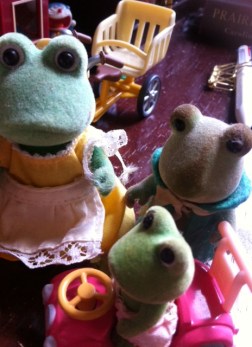 The mother and the son is also escorted by a trusty entourage of Phil, who is also concerned about his dear brother. Small as he is, Philip is all bravery and cheerfulness. He wants to make sure all’s well with Fred, who always reads him sweet bedtime stories by his nightly bedside as well as other illuminating stories about ancient Greek heros and the gods and goddesses of the Parthenon, great historical figures, and oeuvres of fine writers throughout the western civilization. Fred to Phill is what Yoda is to Luke in the Star Wars. Philippa is pleased to see her sons bound by Charity, Hope, and Faith, the three theological virtues, not by dint of mere blood relation that is often devoid of the virtues by default.
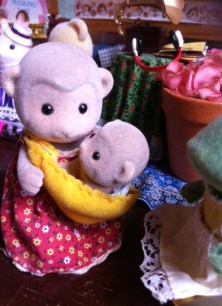
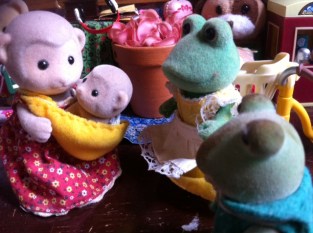 When the McGreen trio arrives at Dr. Hobson’s office on Kingsbridge road, they are amiably accosted by Helen, one of the prettiest and kindest ladies in Avonlea who is married with three children to a grocery proprietor Priam, who fell in love with her at first sight by thinking, ‘She’s beautiful, and therefore to be wooed. She’s a woman; therefore to be won.’ Helen and her three-old son George are pleased to see her neighbors there and wants to know what has brought all three of them to this far. “Fred has been in agony for two weeks due to a serious case of abscess on his right shoulder,” says Philippa, “But Fred did not tell me and his brothers until this morning, enduring all to himself only the gruesome pain that stymied his everyday activities, such as eating and working. In fact, the pain even prevented him from reading a book!”
 Helen does not understand Fred’s reason of silence that was broken this morning, so she ventures to inquire about the cause. “Fred, why did you not tell your mother when it began to hurt you? Had you told her about it earlier, you would have been cured.” Fred is absorbed in all the dialogues between his mother and Helen and forms the most honest and provident answer to the lady’s inquiry. “At first, I thought it would go away because it had happened before. But although I tried myself applying to a topical ointment and taking doses of pain suppressant and high hopes, it just became worsen… What’s more, I did not want to worry mom because she was always very busy with running the restaurant and the household all by herself. Now I am in great pain now, which has compelled me to alert mom about it.”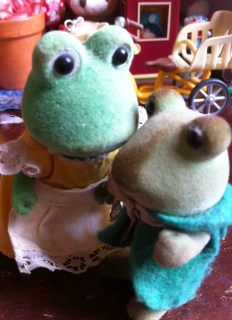





You must be logged in to post a comment.