Tag: Writing

  • On Reading “Student of Desire” — Adelle Waldman

    Saturday, August 22, 2026

    “Can intellectual recognition itself become desire?”

    Will an intellectual man fall in love with a woman of equal or greater intelligence? The question has become so entangled with sexism that it seems to invite textbook answers such as, “Beauty is only skin-deep.” But this is not about feminism or social activism. It is an intimate question: “Can you love me even if I am smart but not so pretty?” Waldman’s disappointmentpromptss her to ask about her existential value as a woman, not merely as a writer or intellectual, because the personal stakes are toohighg to ignore.

    Seeing her ex-boyfriend with a beautiful woman is painful enough to prick the pride of an intellectual woman who is supposed to believe that real love resides not in looks but in the mind. Or so it seems. Waldman extends the existential question into the erotic hedonism of The Professor of Desire, whose protagonist seems to vacillate between a whore and a virgin but never reconciles himself to the truth, always yielding to the pleasures of the senses. While I understand Waldman’s disappointment at seeing a smart man fall for a bimbo, she seems to explain his gorgeous new girlfriend as the result of animal instinct: Eros alone, without marrying Eros to Psyche.

    Call it the male subconscious urge to prove sexual prowess. Or immaturity. To me, a man’s intelligence or cultural refinement does not necessarily equate to his moral fitness. Think of the ancient Greek symposium and its beautiful and intelligent courtesans. Men, I think, are often more readily stimulated by the visual than women are. I remember reading that Updike had a voracious sexual appetite and engaged in sexual excesses. And that’s not the end. Arthur Miller’s marriage to Marilyn Monroe—even though she was herself intelligent, read books, and took literature classes at night—and his novella Plain Girl: A Life tell us that intellect does not necessarily determine physical attraction. After all, the plain girl finds her soulmate in a blind musician who loves her not with his eyes but with his mind.

    I know how Waldman felt when she saw him with such a beautiful woman. I think Waldman wants to believe that she is right: that a woman’s intellect can stand equal to beauty—par pari. I think Shakespeare is great because he recognized this human nature in everyone, including the rivalries of love:

    “Love looks not with the eyes, but with the mind;
    And therefore is winged Cupid painted blind.”

    But remember: Cupid is blindfolded. He does not know whom his arrow will strike.

  • On Reading “The Thorn in the Flesh”

    Reading Day — Thursday, August 20, 2026
    On D. H. Lawrence’s “The Thorn in the Flesh”

    Lawrence must have hated the military. Well, more exactly, the rigid discipline used to tame the naturally untamed. It is against nature, against free will: the controlled mindset that conditions you to believe that if you fail, you are a loser to be put in the pillory. Not a man. Not man enough.

    Is that really so? Lawrence asks. No. A man is a man when he witnesses his desire being reciprocated in the body of his lover. Virility is true manhood because it requires no weapon of killing.

    The young German soldier in this story recovered his lost confidence through sensual passion, which collapsed the wall between institutional dehumanization and being fully alive. Naked with his lover, the soldier felt no shame in wanting and loving her. The erection of sexual passion restored physical vulnerability.

    We know Lawrence for his controversial Lady Chatterley’s Lover. So, it may be convenient to call him a sensationalist whose agenda was to challenge religious doctrine and restrictive social norms. Instead, he was a writer who stood at the heart of humanity and showed us the beauty of being human in the expression of passion, in wanting and being wanted.

    The Thorn in the Flesh is Lawrence’s version of Dostoevsky’s “Only beauty can save the world.”

    — Stephanie Joori Suh

  • Queen’s cats

    Share a photo of your pet and tell us one thing that makes them uniquely them.

    Camile (L) and Toro (R) on their look out from Queen’s Castle

    My cats think they are human. They like Häagen-Dazs ice cream and want to lounge in the living room with me, let alone jump on my bed when I say good night each night. Did I also mention that they’re bilingual?

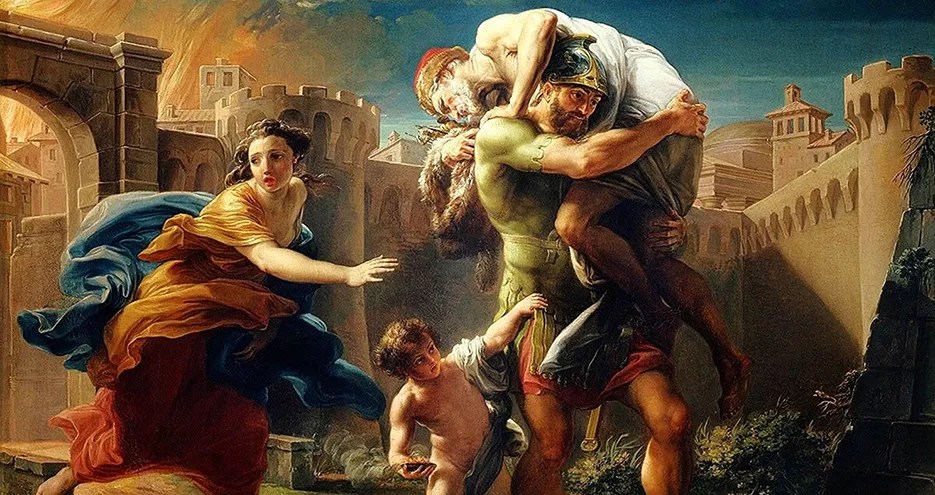
    Toro in Toga channeling into an ancient Roman aristocrat

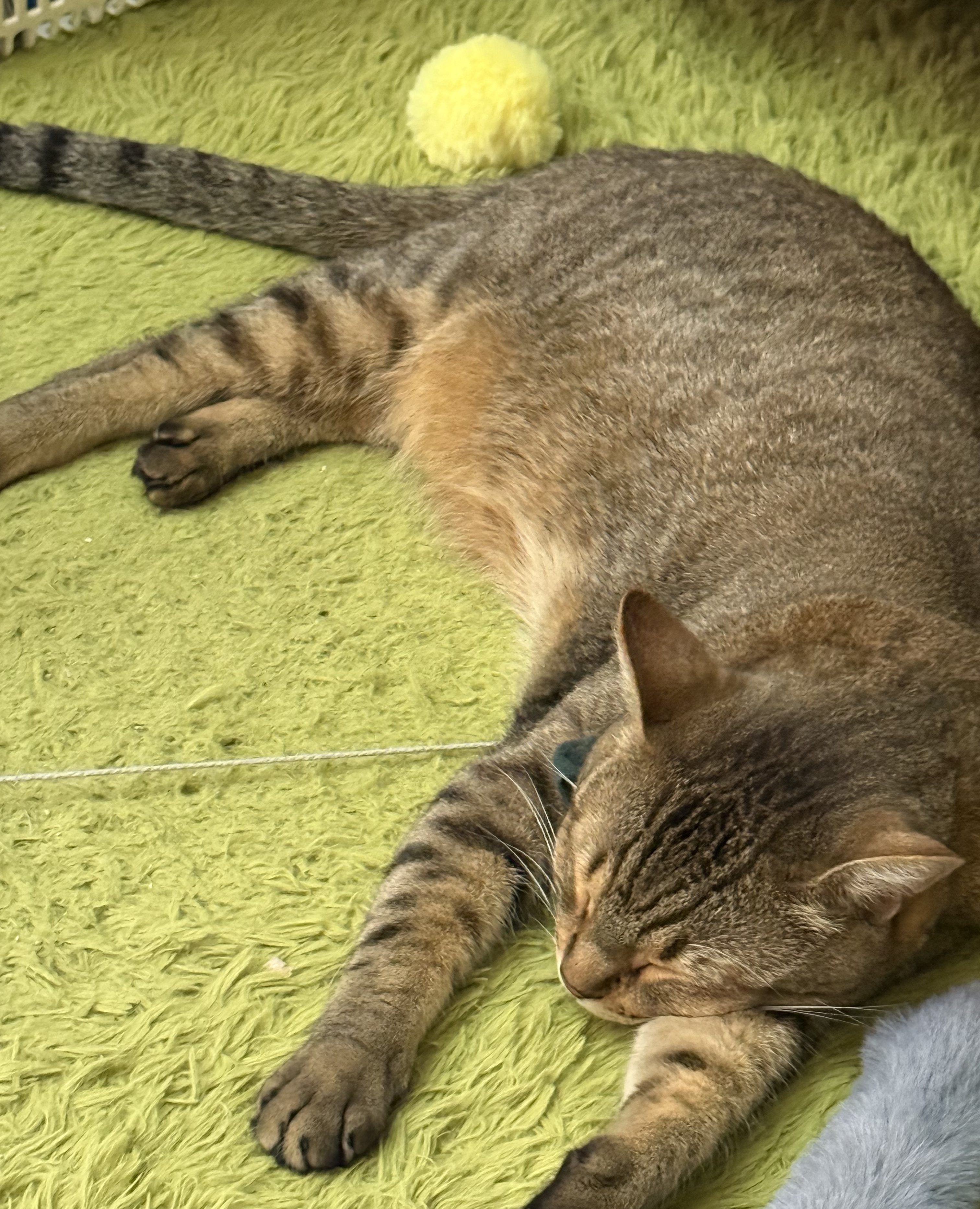
    Toro, the 6-year-old tabby, is a little tiger who wants to help me when I work from home, always insisting on typing emails and notes on my work laptop, which need my spellcheck. He takes breaks and lunch with me, so I am never alone at home. And Toro’s being human doesn’t stop there. He knows when my brother calls because he always sits next to me, his little furry body resting on my side.

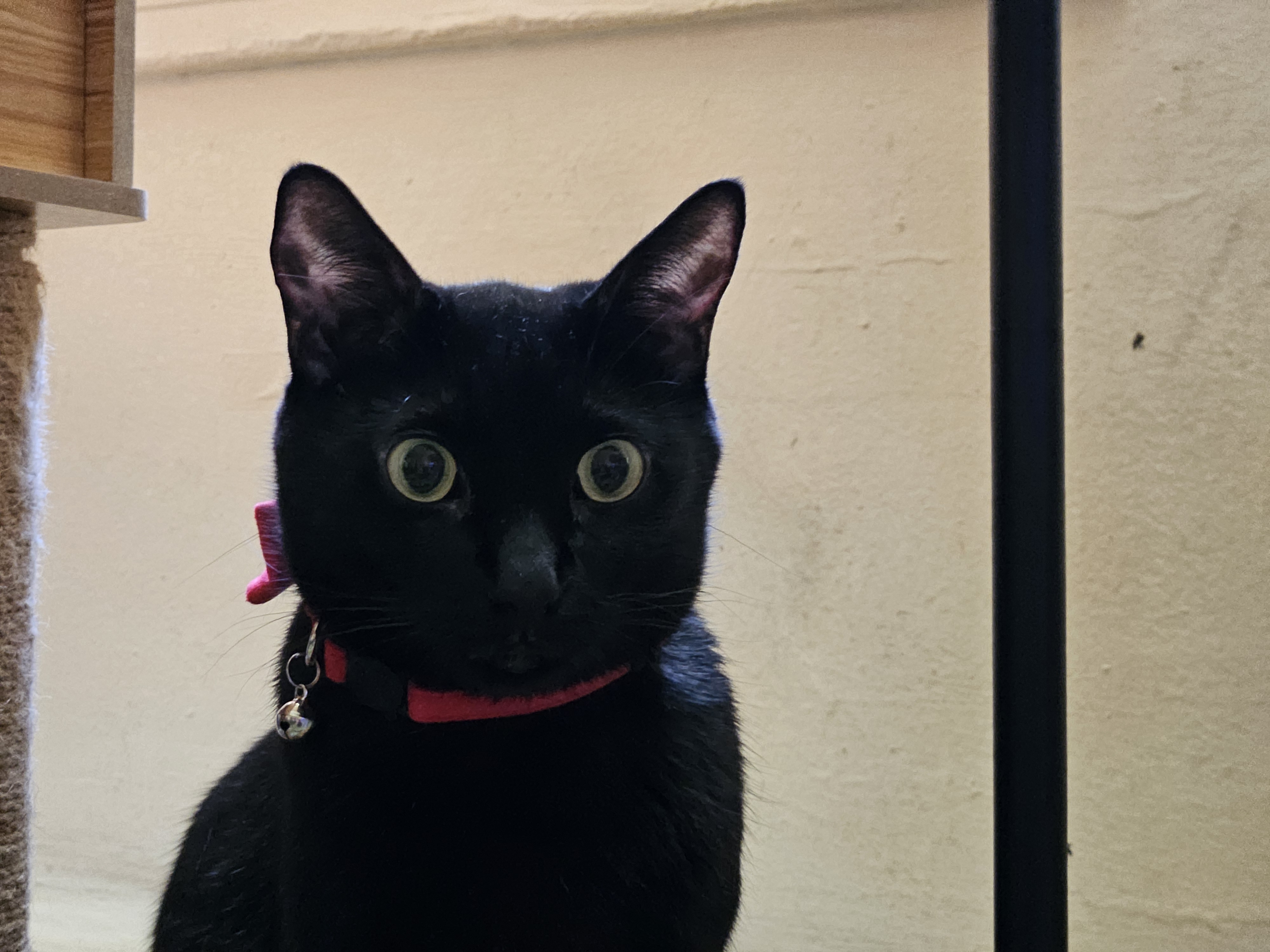
    Camille’s magic eyes

    Camille, the 4-year-old black cat, is a little black panther who looks just like Gigi from Kiki’s Delivery Service. Although Camille speaks no Korean, he understands when I tell him my secret wishes and how grateful I am that he lives with me because I am lucky to live with such an adorable black cat.

    Toro as my assistant

    Whoever says cats are naturally independent and feral has not seen Toro and Camille. They are very affectionate and loving. I see their spirits in amber and emerald eyes. I feel their little hearts on my chest and at my feet.

    And they slowly blink their big eyes and bunt their little heads when I say, “I love you so much in every universe.”

  • prompt returns

    Daily writing prompt
    What’s a promise you made to yourself that you’ve actually kept?

    I collect promises like Swarovski jewelry, from necklaces to earrings, to bracelets, and more. I love pretty things, so I change them, but it all comes down to a few select ones that I usually wear to my heart’s liking. So are my promises. There are many, but only a few of them remain, and one of them makes it out to a World Cup final.

    I have always wanted to write a book that I can leave as my legacy, just so to prove I have lived, that I, Stephanie Joori Suh, lived, saw, and wrote. The thought that one day my body will become a speck of dust or ashes gives me a panic attack amounting to losing my eyesight completely. The ancient Greek poetess Sappho also felt the same, as found in one of her surviving fragments. Besides, there is something in me urging me to write as it is my nature. My father once told me that he had the same urge to write poetry, as his mother did too. Maybe it’s in the genes, like a family of practicing ancient secret rites.

    What I have done is to write my first chapbook of poetry this year. It is a collection of poems I wrote from my East Coast years to the present West Coast years. I auto-published a short story before as a Kindle Read, but this is my first time submitting a poetry chapbook to editors of ten presses. Some of them are for chapbook prizes, and some are regular chapbook submissions. And… one of them sent me an email last Wednesday that they wanted to publish my chapbook. I do not want to open a champagne early until I have an actual chapbook of mine in hand. Still, I feel I am in the procession of poets from the misty past and continuing as long as humanity remains.

  • On A Woman’s Story by Annie Ernaux

    On returning to the quiet joy of reading, one discovers that some stories are not only theirs but yours too. Annie Ernaux’s A Woman’s Story was one of those stories—hers and mine.

    It was one of the days I visited my mom at the convalescent hospital for the elderly when I started reading this story, sitting by her bedside. Call it providence if you are religious or coincidence otherwise, but I wasn’t expecting it to become my story as well about my mom, who had been hospitalized since her stroke in January of this year. It was as though Ernaux was speaking to me as a daughter to daughter about her mom and mine, collapsing time and place and the cultural and social differences between us. No wonder I wanted to finish reading it at one sitting.

    This book is not of a certain literary genre. To call it a biography of her childhood and her mom’s influence on her misses the point of why it took her a year to finish the book. It’s much more than that. The absence of her mom made the author realize her mom’s place in her memory. Her mother was the first witness to Ernaux entering the world naked, and later, to her becoming the woman she is. It’s both a biological and an existential view of the author’s raison d’être. That there is no longer anyone on the other side of the first relationship, which has ended forever. It aches. It lingers. It evanesces. And before all of this will vanish into the ether, Ernaux lives to tell about the presence that was so familiar with her being that not seeing, hearing, and feeling it is painful to bear without letting it take the form of writing because writing is personal yet public, pensive but assertive, and quiet but powerful.

    I can understand the kind of ache the author felt after her mother’s death. Whether you loved her or not, you would never see her in life again. She may live in your vision of the past, but her person as a presence does not exist in this world. And that realization of forever disappearance would throw you into the abyss, stifled, blinded, and muffled—by the ineffable sorrow mixed with mystical longing.

    I think about my mom and me. What if she leaves this world soon—tomorrow, the day after, or anytime soon? Oftentimes, I wake up with indescribable terror at the thought that soon I will lose her to eternity if I breathe, like a panic attack. And it dawns on me that it is this feeling of detachment from the relationship, as the bond between mom and daughter is severed forever.

  • Mirror Lake


    Tonight, the sea is a sheet of glass,
    holding the moon’s timid face.

    “Don’t look at me—
    but don’t look away.”

    I lean toward her under the water,
    my face bruised with sadness,
    trembling beside hers
    in awe of still beauty.

    Two girls gaze back at me—
    sheepish, curious, luminescent:
    one made of ache,
    one made of flame.

    Her eyes—two diamonds
    cut from the tears of indifference.
    Drops fall into the lake,
    ricocheting sorrow into smile.

    I reach to touch their faces,
    but their reflections dissolve—
    a shimmer undone by my hand.

    I try to gather the pieces,
    but the more I gather,
    the deeper they sink
    to the bottom of the water.

    I lost the only friend
    who looked like me.
    Now my face alone—
    a ghost-girl drowning in her own reflection,
    born from love, but never for it.

    If you like this poem, you can support my writing at Ko-fi:

    https://ko-fi.com/steph79650