Leonardo and the Last Supper by Ross King
My rating: 5 of 5 stars
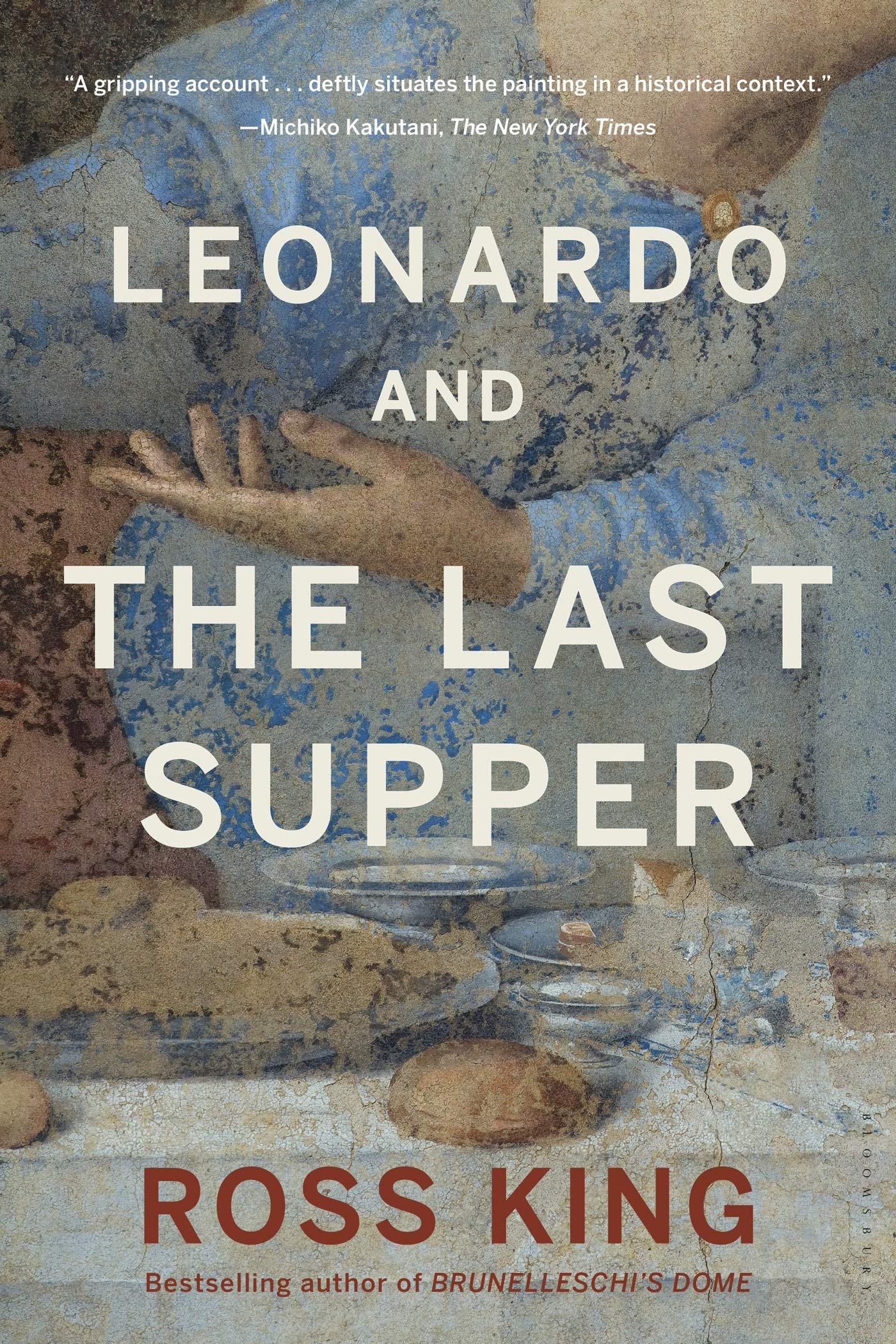
I still remember an excellent replica of Leonardo da Vinci’s “The Last Supper” in a tapestry form decorated on the wall of our family living room when I was in elementary school. It was vast and expansive, nonetheless magnificent with the profoundness of the scene and the expressions on the faces in it – all wondrous and curious. Now a stream of time has flown, but the first impression of the art still has become one of the stars in my heart’s constellation. “Leonardo and the Last Supper” by Ross King has added to the star the brilliance with telling stories resurrecting the atmosphere of the time and vividness of the people surrounding the creation and the creator of the art.
The book is an alluring admixture of the biography of Leonardo da Vinci and the history of religion, politics, society, and culture; all skillfully swirled in Ross’s skillful narrative account of the person of da Vinci and his work of the Last Supper. The narrative becomes more intriguing as the chapters replete with entertainingly informative tidbits about personal accounts of people related to da Vinci and involved in creating the Last Supper are ascending. The story’s construction follows how Samuel Johnson, the 18th-century English essayist and cultural critic, narrated the lives of poets in The Lives of the Poets, composed of a brief biography of a poet, personal accounts of the poet, and professional criticism of the works. The reader will first be acquainted with da Vinci’s biographic backgrounds: parents, a well-to-do lawyer father, and a middle eastern slave mother owned by his father’s household. Da Vinci’s struggle with spelling and even harder Latin education, his fabrication of engineering work experience in his curriculum vitae to obtain a military commissioned engineer post when coming to Milan from Tuscany, and so forth. All the information is a telltale factor contributing to da Vinci’s rise to celebrity in his and our times, which is refreshingly informative to learn that the perennial polymath also had feet of clay with colors of contrast.
Ross is a scholar with a novelist’s magic wand to wield his writing power, casting a spell on facts and knowledge with the beauty of language and ease of words, captivating readers of all life paths with gripping narrative skills. Another book of his “Michelangelo and the Pope’s Ceiling,” which I enjoyed with great pleasure, is a helpful companion to this book because both Michelangelo and da Vinci were contemporaries, working under their aristocratic patronage the recalcitrant spirits of creative souls in reins of livelihood. It would also be an excellent reference to the social statuses of artists at that time. Contrary to our images of free-spirited artists, artists worked for their royal, ecclesiastical, and wealthy employers. Therefore, they were not free to choose subject matters for their works because their bosses wanted their power and fame to become works of art, as it were.
Upon closing the last page of Leonardo and the Last Supper, I reminded myself of Plato’s aesthetic definition. Art is a copy of Form, the perfect, pristine Beauty. It exists only in Idea because da Vinci was also a scientist and an engineer who found perfect beauty in perfect numerical and astronomical elements of nature. However, da Vinci’s Last Supper is filled with pathos, contrasts of human emotions, paradoxes of light and dark, good and evil, constantly changing, never-ending. Da Vinci was a humanist, finding beauty in nature as it is, regardless of perfect Form, the unattainable ideal that is out of touch. One thing right about Plato’s Aesthetics is that art is at best entertainment and at worst a dangerous illusion. That says it. Leonardo’s Last Supper is a soul’s entertainment, and so is Ross’s “Leonardo and the Last Supper.”
View all my reviews
Tag: Writing
-
‘Leonardo and the Last Supper’ by Ross King
-
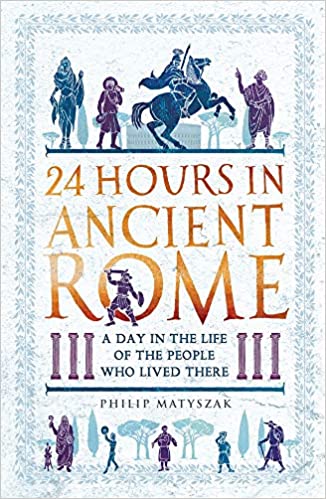
’24 Hours in Ancient Rome: A Day in the Life of the People Who Lived There’, by Philip Matyszak – book review
24 Hours in Ancient Rome: A Day in the Life of the People Who Lived There by Philip Matyszak
My rating: 5 of 5 stars
Edgar Allan Poe once declared that the great was Greece, and the grandeur was Rome. Rome was not built a day, and it lasted from Before Christ to His After for one thousand years. All roads led to Rome, and foreigners, colonials, and slaves from the foes all wanted to become the proud citizens of the Roman Empire. So, what then was it like living in Rome at its glorious prime? 24 Hours in Ancient Rome: A Day in the Life of People Who Lived There by Philip Matyszak comes and carries off the reader in a time coach to Rome’s grandeur and invites to the daily lives of people there with magic of words.
In terms of residential mode, there were more apartment buildings than villas and detached houses in Rome. Apartments called Insulas had 3 or 4 floors with no bathrooms, which means the residents dumped their bodily wastes in buckets out of their windows to the ground any time of day or night when unfortunate passer-byes would have unpleasant surprise showers from above. The apartment residents were city dwellers whose livelihood was arranged from a fish-stroll attendant to a nightguard, an unlicensed independent prostitute, and primarily others diligent and savvy waiting their time and luck to come.
Rome was a practical society with shrewd politicians and powerful merchants/tradespeople. For instance, baking was a highly respectful and lucrative trade because not many people had well-equipped kitchens to cook or bake at home. Bakers had their representatives in the Senate who would lobby for the increase in the price of bread. Still, the Senate often rejected the proposal because the Senate knew that keeping the price low would maintain social stability lest the mass should not cause riots for a change of living cost.On the other hand, unless they were aristocratic or wealthy mercantile families, women had not many choices of working with desirable pay or respect. They worked in shops or stalls densely concentrated outside the walls of Circus Maximus for long, arduous hours, wrestling between the demands placed upon their tasks at work and home without due respect. Slave women’s employment was mainly hairdressing and doing domestic chores. It was less rewarding and more demanding, contingent upon the mercy of their lustful masters and the whims and caprice of their mistresses, who often inflicted cruel punishment on their slaves if they irked their temper and nerves on a bad day.
Rome was undoubtedly splendid in its dominance and influence consummate with the longevity, but only a few privileged basked in the sunshine of grandeur. Matyszak puts together tesserae in the mosaic of ordinary Ancient Roman lives in this leisurely entertaining and academically stimulating narrative of his part-fictional and part-actual characters. It becomes each vignette comprising a collective story of human life that still rings true to our modern life. Matyszak is an unlikely, uncommon historian whose erudition and humor put him on the same pedestal as renowned historians, such as Tacitus, Plutarch, Herodotus, and Paul Johnson. His narrative styles are engagingly knowledgeable but surprisingly personable, collapsing a great divide of time between the people of the past and the present reader.Rome was no fun when you had none. Nevertheless, for all that’s worth, Rome was a great city rich in ethnic and cultural diversity. The energy of urbanity made Rome all the more vivacious and vibrant, bustling with businesses and people, and created opportunities for better lives. It is no surprise that Poe thought highly of Rome.
View all my reviews -
‘The Way Mothers Are,’ written by Miriam Schlein, illustrated by Joe Lasker – book review
Nietzsche’s theory of Immanence is about intellectual kind of love of God, Agape, through an elevated perspective of God’s existence manifested in things great and small. That said, this vintage book about unconditional motherly love, first published in 1963, is a charming adaptation of immanence translated in simplicity of language in speaking “charity,” which also means love, as it is derived from “Caritas,” meaning “dear” in Latin. It is a kind of love that Mother Teresa expressed to all, discriminating none to prove superior level of love. And it is this love that Mother Cat has for her son.
The story of the Tabby Cat Mother and Son reads like a poem. Also, the book has adoring illustrations delineated with admiring details on the backgrounds: the wallpapers of rooms, the feline version of Mount Rushmore’s Great Faces, and the carved decorations of charming furnishings – all heartwarming elements that are so fitting to this book about love. The son asks why his mother loves him even when he is a little urchin to his younger sister and is naughty all day. The mother tells him full of affection that she loves him because he is her son and cares for him for who he is, not what he does. The son cat tries to reason his mother’s love for more innocent questions rather than nagging but then finds that the reason she loves him even in his least desirable behavior is lovely. The epiphany of true love also reminds me of Marilyn Monroe’s saying that if one cannot love her in her worst self, that person does not deserve her love. It is not a blatant egoism of a Tinseltown celebrity, but the truth about unconditional love, which is not synonymous with Eros on the heat of passion.
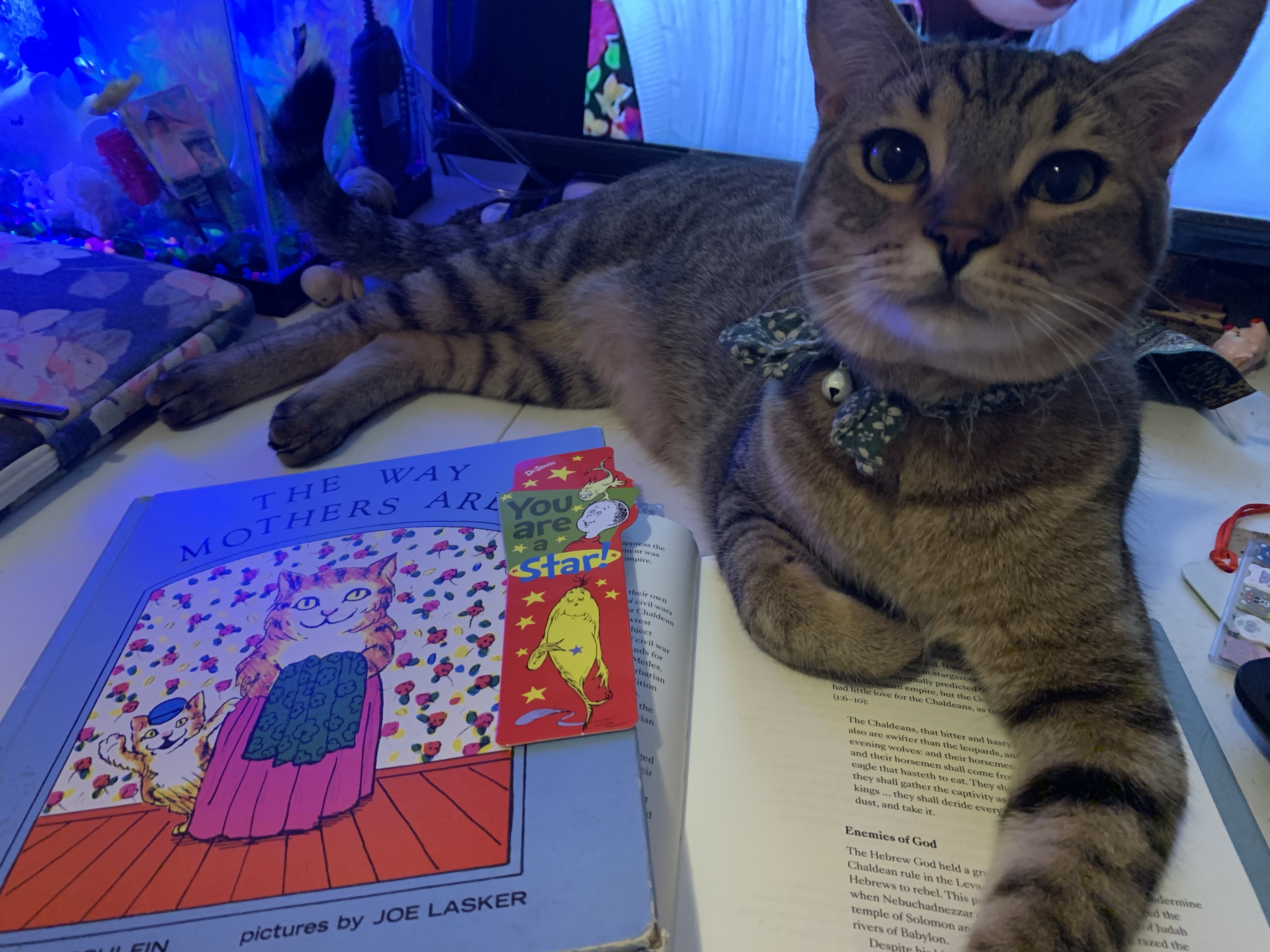
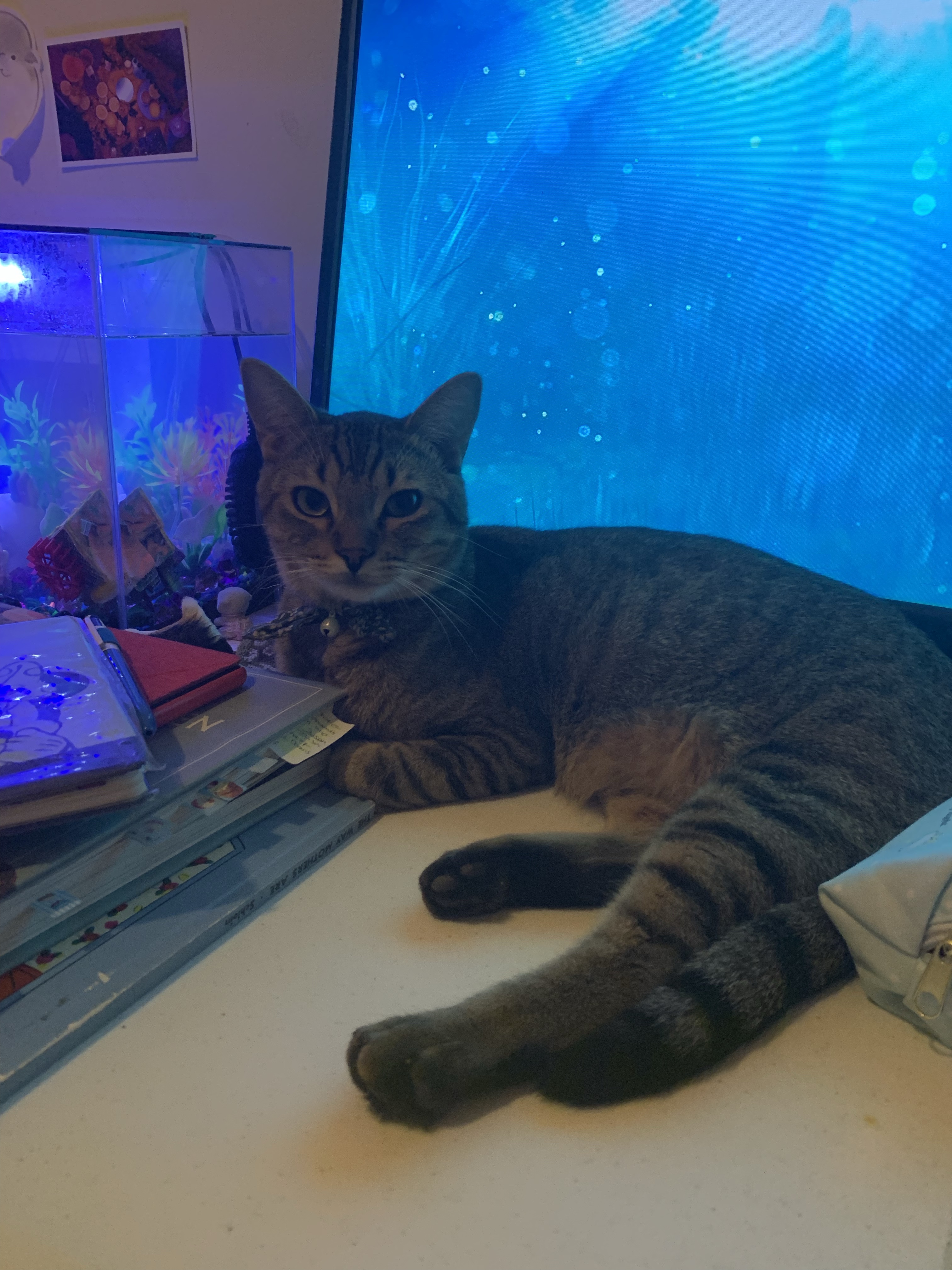
It is a story for all ages whose inner children refuse to grow beyond the evolutionary scale of time. Mark Twain, Lucy Maud Montgomery, and Walt Disney had never outgrown their childhood whose childlikeness became all the more radiant and illustrious with their boundless imaginations conjured in the alchemy of the arts. On a personal note, When I saw a tweet about this book, the forever child in me urged the grown-up me to get it because of the adorable illustrations of the Tabbies reminding me of my tabby cat Toro. I wonder if Toro’s mother might have looked like the Mother Cat because the son cat takes a solid resemblance to Toro. So I read the book to Toro, and he seemed to like it, starting to close his eyes on my desk and then purring softly. And I understand Mother Cat’s love for her son because that is how I feel for my little Toro, whom I adopted when he was nine weeks old. Now he is 11 months old, and although he is a sweetheart, his occasional Zoomies and forceful nibbling surprise me. Still, Toro is my cat. And I say to him every day thus: “I love you, Toro. Never forget that.” I know how the mother cat felt for her dear son.
-
“The Conjuring: The Devil Made Me Do It” (2021) – film review
“The Conjuring: The Devil Made Me Do It” (2021) is the newest in the Conjuring Universe Series, a new artifact to the Museum of The Haunted All and Sundry. The legendary Ed and Lorraine Warren are as inseparable as a couple in love and benevolent as rescuers of souls afflicted with the forces of evil as ever. But the mysteriously noble and spiritually convincing atmospheric elements are barely there, albeit the mix still has the thematic Catholic flavor. They said that when fact becomes legend, publish legend. So the story of the movie may be based on an actual event that has become American folklore, a modern legend, and it is the legend that the movie published.
As with the tradition of the Conjuring World, the movie evolves from the actual event of the supernatural phenomenon beyond the reasonable explanation on what the eyes only can see. First, an insidious ambiance surrounding a family house that seems strangely alienated adumbrates a sinister force lurking behind the bathroom door, over the shower curtains, and finally inside your head. Then comes a Catholic priest, thanks to the rite of exorcism popularized by The Exorcist and the Warrens’ association with the religion as their spiritual base. But he is usually not too much of significant help, if not a trouble, so it is always the Warrens’ job to ghost-bust with a style of a medieval magician who used to reconcile esoteric paganism with Christian faith. In this installation, Lorraine proves to be a mighty Christian mystic and a white witch in crossing over the space and reading memories of the dead, all for the fighting the devil’s deputy in a tunnel that promised to capture as many human souls as possible to fill up Hell’s Circles.
The essential thematic elements of good v. evil, love v. hatred, violence v. peace are unfailingly ubiquitous in this installment. Still, more violence and hatred make up the scenes than the others, making the movie more aligned with screaming scary movies than classified as supernatural horror. Perhaps the application of Catholic elements as a credible supplementary spell on the movie’s ambiance might have slightly fared well with the director’s intention (or the producer James Wan, the original creative director) to make the film elevated to a canon of classic supernatural movies. But it doesn’t give much of the movie’s intended effect when the Warrens can do what priests can do. Besides, the characters other than the Warrens themselves are not convincingly real, sympathetic, or natural. Instead, they are either surreal or theatrical to the point of playing a masque in Elizabethan time, so to speak, which would have been excellent.
I watched the movie with high hope when it first started showing on HBO Max last Friday night. But my expectation was already turning ominous when I had trouble viewing it at first for some unknown technical reason. Once I got into the third world of Conjuring Universe, I knew it wouldn’t be what I had expected. The real Warrens have become the ghosts themselves, and I wonder what they would have thought about the movie. Judging from their celebrity status in the society of paranormal investigators, I think they would probably have been thrilled about their being the creative subject of the movie. Then maybe, it’s time for me to leave the Conjuring Universe in search of a new world of the supernatural without celebrity.
-
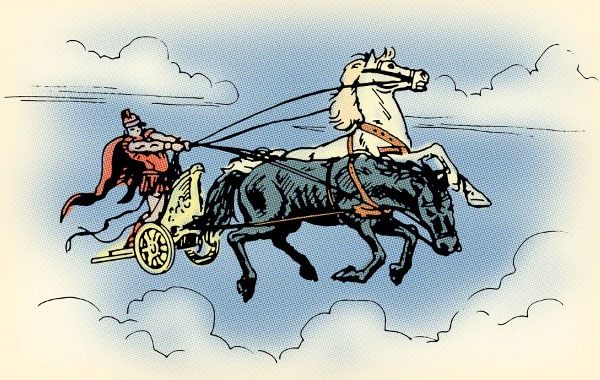
Chariot of Heart and Mind
The chariot has two horses
Called Heart and Mind
racing in their own fury
Neighing in the strokes of urges
Spurred by the driver’s goading
Hard and harder, fast and faster
As the horses are galloping
On the long and winding road
Toward the unknown end.
-
‘The Fugitive’ (1993 Film) – film review
The Fugitive (1993) is an adventure and a drama cleverly put together by the elements of popular entertainment and thought-provoking thematic subject of human nature in dealing with the malice of fortune. It consists of elegant scripts, solid storyline, and outstanding performance of the already cracking cast with Harrison Ford as the Fugitive and Tommy Lee Jones as Senior Deputy U.S. Marshall. Brilliantly, veteran actors do not vie for the best shot of cameras to claim the title of Hollywood aristocracy. Still, they only do their very best to portray their roles as possessed by their fictional characters.
Ford plays the role of a renowned cardiologist with the brain and the heart to care for patients in need. Then one day, the doctor finds himself on the run for the crime he didn’t commit, and above all, for the love of his wife. He has to find who killed his beloved wife, and the Marshall played by Jones has to catch him alive because, well, it’s his job. So much so that when the doctor confronts the Marshall face to face within an arm’s reach and tells the latter that he didn’t kill his wife, the henchman of law says, “I don’t care!” But the marshal isn’t all grim-faced reaper of death hell-bent on capturing the Fugitive, which makes him hard to dislike. Both the Fugitive and the marshal are alike as the mythological Teumessian Fox that never gets caught and the Laelaps Dog that never fails to catch, whether they like it or not.
Harrison Ford is one of the greatest American actors whom I think belongs to the last 20th century’s Hollywood nobility of actors, including still alive Clint Eastwood. He has the face of a romantic adventurer, an intelligent doctor, an ambitious corporate man, and a no-nonsense prosecutor. From the galaxy far away to the offices in cities, Ford is a protean actor who can pull out the characters as if conjuring them from his grimoire without trying too hard or with overtly effusive sex appeal. The emotions wanting to outburst are nuanced in the power of his voice carried in the elliptical words. He is an action adventurer who seems so natural living in our real-world yet so ideal on-screen, making us wonder whether life imitates art and vice versa.
The Fugitive is worth watching again if you want to watch something smart and thrilling to forget about the momentary existential dilemma or frustrations. The movie is at present for free to view if you are an amazon prime member. It is a one-of-kind American movie that has become a classic of our own time, and I wish there would be more movies such as this.


You must be logged in to post a comment.