Author: Stephanie Suh

  • Fairy summoning in the Florentine Renaissance period

    41a59389f2e8e71b94e50f9d1ae7d39a--vintage-fairies-vintage-artwork
    A supernaturally pretty fairy deludes men’s hearts.

    There are magical elements in religion, and there are religious facets to the practice of magic, as succinctly summed up by Sir Walter Raleigh: “The art of magic is the art of worshiping God.” That’s how I feel and what I see during my Dutiful Sunday Morning Masses, the ancient rite of the Church, a perennial panoply of syncretism with its splendid paraphernalia of prayers and the liturgical ceremony of rites and mechanical recitation of prayers; it is the melding of religions or beliefs of the similar elements but of different origins. Hence, to come upon an article in the recent issue of BBC History Magazine about an academic study by a certain British scholar of the existence of fairies in the context of the validity of cultural and historical artifacts gave me an uncanny pleasure.
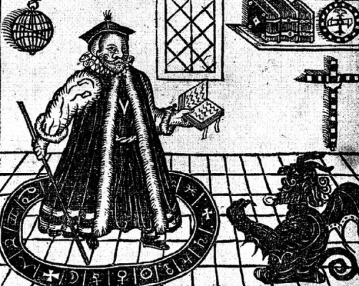
    Dr-Faustus
    The famous Dr. Faust, summoning Mephistopheles for his service

    In fact, Religion (that is, Christianity) and Magic (in the forms of divination and sorcery) are not to be seen as polar opposites and antithetical systems of belief because they are interdisciplinary agencies of attempting to seeking and offering a panacea to our dilemmas – physical, metaphysical – competing for supremacy in propitiation. Such mysteriously syncretic elements of the two different agencies of beliefs became the academic subjects of intellectuals, such as Francis Bacon and John Aubrey who accepted the potentialities of physiognomy as an infallible guide to predicting one’s character and argued for the validity of non-Christian practice based on certain intellectual bases therein. With this in mind, you would not be surprised to learn that fairy summoning rituals were all the rage in the Renaissance period (15th~17th centuries), indiscriminately practiced by all strata of society, learned or ignorant, rich or poor, Christian or pagan. The author of the article informed the reader that the early Renaissance idea of fairies was pretty nebulous and varied with a wide arc of wonder and trepidation and that the dainty image of ever famous “Tinker-bell” was a Victorian construction of the whole fairy race.

    Then, how did the “real” fairies look? Although there is no magisterial, definitive version of the physiognomy of a fairy, a collective description gleaned from various records boils down to it as a supernaturally attractive man/woman imperiling the souls of whoever it was summoned to, which is reminded of incubus/succubus, consecutively. Notwithstanding the dubious nature of fairies, the invocation of fairies halfway between angels and devils was widely used in hope to (1) acquire medical knowledge, such as whereabouts of herbs and their properties; (2) delight in the highest degree of sensual ecstasy; and (3) reveal the future and prevent from misfortune in advance. Be it as it may seem wholly pagan, the summoning ritual was surprisingly required for God’s intervention because it included periods of purification through abstinence, fasting, and prayer in preparation, all of which would testify to the sanctity of the performer ministering to the moral and ethical character. God willing, a fairy at request manifested to the summoner, but he should not come out of the circle he had drawn because it protected from sudden maleficence of the ambiguous fairy.

    Delphic_Sibyl_Michelangelo___21969.1501257269
    Delphic Sibyl from the Sistine Chapel fresco by Michelangelo

    In sum, the article was an elegant primer for a further interdisciplinary study of literature, religion, and folklore from the medieval times to the Reformation period and possible stretching to this date. The exemplary texts that spring to my mind are Religion and The Decline of Magic by Keith Thomas and Christopher Marlowe’s version of the legend of Dr. Faust, both of which are excellent testaments to the contextualization of the esoteric knowledge on the grounds of intellectual bases into academic studies of social, cultural, and historical facets of different zeitgeists, which also serve as invaluable literary artifacts to epochal changes. But for all that is worth, this relation between religion and magic is commensal, exhibiting a mesmerizing consilience of gods and God, profane and holy, pagan and ecclesiastical, forbidden, and disciplined, as superbly unfolded in the Sistine Chapel fresco, prodigiously expressed by Michelangelo.


    저장

  • Witchcraft

    rsz_12014_-_the_satellite_girl_and_milk_cow_still_6-thumb-630xauto-45583

    A wondering changeling
    fairy-born ever drifting
    bewitches beasts and men
    and spirits them away in
    one fell swoop then flies away.

    P.S.: This very short poem about a woman whose peculiarities estrange her from groups of people where she goes despite her beauty due to a reason none other than her solitary nature born out of a pretty fairy mother and a peripatetic, feckless wayfarer. Plus, this poem of mine is an appendix to my prose entitled “Fairy summoning in Florentine Renaissance period”,” which is basically a review of a scholarly article about historical texts of summoning fairies in the Renaissance period, published hours ago.


  • The Beautiful World of Henri de Toulouse-Lautrec

    220px-Lautrec_moulin_rouge,_la_goulue_(poster)_1891
    Moulin Rouge La Goulue 1891by Henri de Toulouse-Lautrec

    On my desk now, I have a lovely little music box made out of a replica of Lautrec’s Moulin Rouge La Goulue 1891 that pleasingly plays “French Can Can” when I wind up a handle attached aside to the box. The sweet melody played from the vivacious four-color lithograph affords a delightful digression during my study, which sparks off the subsequent musings on the artist and the arts, self-proclaimed, would-be,and aspiring artists and the act of creation itself.

    A creator of the arts is a solipsistic benefactor of humanity whose congenitally proud egotism is a grand collective reflection of his cultivated trauma, sadness, frustration, anguish, and anger. With this in mind, an artist is endowed with a certain kind of poetic license to be freely and respectfully egoistical because an act of creation – or sometimes referred to as “intellectual drudgery” – demands of an unusual degree of courage, imagination, imaginativeness, knowledge, confidence and patience, all in a frenzy of his imago already existing or incipiently forming, by pouring out everything that is in him unsparingly, furiously into his creation. In fact, creative originality of standing quality often reflects high resources of courage, especially when the artist will not yield to his formidable foe in the form of biological determinism. Such was a noble spirit of Henri de Toulouse-Lautrec (1864-1901), a French painter and illustrator who sublimated his existential cross into his glorious laurel through the medium of art, the creation of his own reality of the world as he saw and felt in his mind’s eye.

    bio_toulouse_lautrec_henri
    Henri de Toulouse-Lautrec (1864-1901)

    Anyone who is interested in the Post-Impressionist paintings by Cezanne, Gogh, and Gauguin, might have come across Lautrec’s bold but gorgeous posters of actresses and dancers of Paris cabarets and theaters during the Belle Epoch period (1870-1914). Lautrec’s inherited disabilities as a result of his aristocratic familial consanguinity blighted him with grotesque physical deformities and congenital weakness: a midget taking a feral resemblance to a cross between a bull frog and a monkey. If you think that this physical misfortune alone merits his artistry or self-inflicting sybaritic lifestyle, you are probably not seeing the forest for trees. True, that he was often too ill to paint any and frequently visited the brothel to dispel his existential loneliness due to his pronounced external features. However, it was his preservation of a sense of purpose in life and tenacious grasp on his artistic existence, his recognition of the values he possessed and talent to express them to mark his standing in the world. The wisely chosen attitude toward things that he could not change but accept speaks to our world of post truths, grand fustian narratives, fake news, and fleeting ambitions that demerits  courage and patience, which are the handmaids of genuine confidence as a reservoir of creativeness.

    4147-2
    Le Rire Les Grans Concerts De L Opera 1897  by Henri Toulouse Lautrec

    Being an admirer of the works of this amazingly daring and talented artist, I believe anyone struggling to better the self can relate to a prodigy of courage and effort demonstrated by Lautrec at the darkest hours of his life, when in fact it was the most creative time of his artistic career as a highly sought-after illustrator of French entertainment industry that provided visionary artists and technicians the substantial grist for the mill of their subsistence. Into this dazzling new luminous conflation of art and technology staged Lautrec, lord of the blank space and the bold line, to claim his dominance as the bell epoch’s master of artistic poster designer not only of his time but also of our time. The capital difference between Lautrec and his contemporaries was his daring characterization of the models and ambience he portrayed; the individuality was in the expression of the colors, lines, and perspectives, making the subjects into work of new creation, elevating their planes and milieus into the artistic ether of exquisite beauty and peculiar charm, giving unforgettable impressions on the minds of the beholders.

    Lautrec proves to be a human testament to triumph of will over biological/social inhibitions during difficult times. His decision to work through his sadness by painting comes closer to serving as a sovereign remedy to the existential ills than any other semblance to solution thereof. In light of the above, it occurs to me that to practice any form of art, however good or bad, is not a prerogative of a professional or publicly recognized artist with more than hundreds of followers. The actualization of ideation, i.e., an expression of yourself in writing or painting, is a noble act of claiming your sovereignty, your own intractably unique self that attests to your existence, a sense of purpose in life. A life is not fully realized unless you actually live through it by unlocking what’s inside you. Be it ever called a cathartic effect or solipsistic satisfaction through the medium of creative act, just as Aristotle defined the primary function of the Arts as an imitation of natural beauty. That is why I write, and so should you.

    저장

  • Jane Eyre (1983 BBC TV Mini-Series)

    BBC_JaneEyre_1983
    Jane Eyre, the Timeless Classic

    Charlotte Bronte’s Jane Eyre (under the pen name of “Currer Belle” to discombobulate her biological determinism) is neither a romantic novel about a lonely young woman falling for her rich master nor a proto-feminist literature subtly championing women’s economic independence and choice to select their lovers on their own. It is a story of a resilient and noble spirit armed with education, clothed in a canopy of humanity, and adorned with reflective beauty of the mind that transforms physical plainness into comeliness. That’s what makes our heroine Jane Eyre timelessly unforgettable, undeniably attractive; perchance, that’s why this novel has been made into a series of film versions for television and cinema resurrecting the ambiance of the period and bringing the hauntingly impassioned characters into life. Of all the dramatized adaptations of Jane Eyre, this 1983 BBC mini-series version merits itself in the movie firmament as the authoritative translation of Charlotte Bronte’s original novel, wonderfully delivered by a cracking screenplay, a brilliant cast of performers, and a correct setting of the story, resembling none other than themselves altogether in this riveting panoply of Bronte’s dazzling creation.

    Dramatized by Alexander Baron, this TV series is composed of eleven episodes that faithfully capture the epochal moments of the passionate heroine Jane Eyre from the moments she was cruelly castigated by her callous aunt and her equally sordid cousins to her eight years of boarding school experience, to the fateful encounter with the brooding but vulnerable Mr. Rochester, and to the significant events packed full of surprises and serendipity worth every reward to the lonely Jane. The gem of this BBC miniseries is that each of the episodes is treated as a small story – that is, a story embedded in a whole story as if it were a short story itself – so you can skip the early years of Jane and jump into her employment as governess for Adele, the only daughter of Mr. Rochester at Thornfield without feeling adrift from the previous story that will defenestrate you to the middle of nowhere in the whole story. Of course, for those of us who have read and re-read the novel since the time immemorial, it’s a foregone conclusion, but even if you haven’t, take heart and play it fast forward to meet the grown Jane (although she’s only nineteen years old.) in her tantalizing, suspenseful moments with Mr. Rochester and even St. John Rivers.

    jane_1983_2_314x465
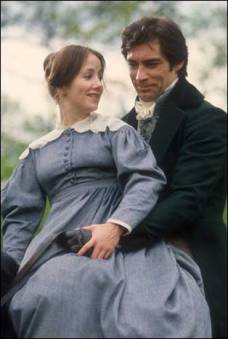
    Zelah Clarke as Jane Eyre and Timothy Dalton as Edward Rochester

    At the heart of the drama lies the commendable performance of the characters: Jane Eyre, played by Zelah Clarke, Edward Rochester aka “Mr. Rochester,” by Timothy Dalton, and St. John Rivers, by Andrew Bicknell invest the drama with the beautifully nuanced dialogues and gestures, which are never outlandishly displayed, vying for individual attention, but harmoniously concerted that impart the enthusiasm and the verisimilitude to the story. The appearances, gestures, and diction of these three characters are exactly what I have always imagined them to be in my mind’s eye. Clarke’s rendition of Jane Eyre is the finesse itself that would make Charlotte Bronte happy with her performance as well as physiognomy. Jane is a passionate soul, but conservative, if not conventional. She is an intelligent woman who loves her gruff but deeply hurt and lonely Edward Rochester as her equal despite a sea of an age difference and his petulant past. Unlike other Jane Eyres played previously and posteriorly, Clarke’s Jane epitomizes the heroine of oddly beautiful enigma personified: the plain but pretty, expressive but demure, passionate but docile, sensitive but intense, patient but yearning… Which is befittingly summarized by St. John Rivers, wonderfully and unforgettably played by Andrew Bicknell: “She has an unusual face rather…The grace and harmony of beauty are wanting in her features. She is not at all handsome…” I have seen other film versions of Jane Eyre, but none other than this Clarke’s Jane Eyre has won my approval in terms of all things regarding the heroine of Charlotte Bronte’s original novel.

    x1080-VfL
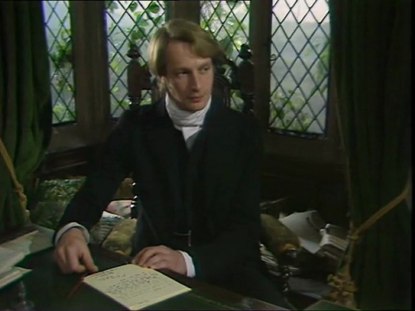
    Andrew Bicknell as St. John Rivers

    That goes the same for Timothy Dalton’s irrepressible Edward Rochester and Andrew Bicknell’s stoical but misguided St. John Rivers. On a personal note, Bicknell seems to nail the role down as handsome and intelligent St. John Rivers, who prioritizes his religious duties as a parson over his human feelings and emotions for his beautiful and kind-hearted admirer Rosemund Oliver in the irrational belief that stoicism is the grist for the mill of vocation as a man of the cloth. He believes that it is his calling to be a missionary in India and that it behooves him to abnegate sensuous delights to which a man is naturally inclined with all his might. Watching Bicknell playing the character makes me wonder if the casting director or the screenwriter had the uncanny ability to conjure up the spirit of Charlotte Bronte and ask of her the fitting image of the character before the production of the drama. The tall, imposing manly figure of St. John Rivers with beautiful Grecian facial features and golden hair is just as the description created by Bronte in the novel as if she had seen Andrew Bicknell in the peculiar alchemy of literature that enabled her to look into the future and to view her character incarnate.

    All in all, this 1983 BBC miniseries of Jane Eyre will arrest your full attention to every scene of the episodes without infelicity and pomposity that classical period dramas sometimes tend to produce on account of obsolete diction and rude gestures that look incongruously emphatic to our modern senses and sensibilities. This is a quaintly gorgeous drama without the ostentatious glamor of television drama exhibiting luminous Vanity Fair; it shows that just simple good scripts based on the loyal adaptation of the original novel and excellent performance of the fine cast that seems to be destined for the roles can translate the imaginative world of the author into the visual firmament of television drama this beautifully and impressively in a way that makes you feel the emotions of the characters by passing over to their inner worlds.

    저장

  • Pleasure Garden, Emerald Thoughts

    IMG_4085
            Mary’s Proud Pleasant Garden

    What an immaculately beautiful sunny Saturday it is! The sun claims its indomitable superiority alone in the azure sky without the scatterings of clouds with occasional pleasant breezes sent from the nearby Pacific Ocean, or “the Lethe of the Pacific,” according to Henry David Thoreau, who saw the West as Land of Rebirth or Rejuvenation where you could exorcise all your past easterly mishaps and misfortunes by the baptism of water in the Pacific. In the poetic eyes of Thoreau, a Lethean stream flew through the West, and it was imperative we drink it to forget the Old World and its Institutions in order that we could start anew in the West. With this poetic justice rendered by Thoreau in mind, Mary Lamb, a benign spinster and loving aunt of Sally Lamb, couldn’t think of doing anything more pleasant and uplifting than tending to her lovely garden this afternoon.

    IMG_4088
       Everything grows with love.

    Mary is an expert gardener trained in her old family home in New Jersey when she was little. It was her father Ted who inculcated in  her the wonder of nature and the beauty of simplicity. On point of digressive notes, people think that it was Leonardo da Vinci who legitimatized the aphorism of “Simplicity is the ultimate sophistication.” But come to think of it, who would not have arrived at such stratagem of aesthetics throughout our human civilizations? It’s all about the merits of whoever said it. That is, your status weighs against the validity of sayings.  For what’s worth, Mary’s gardening skills and her love of gardening prevails on any such abstruse philosophical musings of influential talking heads just for the sake of its pleasantness.

    IMG_4086
    Homegrown organic vegetables!

    Laura Collie, a good neighbor of Mary and trusty confidante, calls on Mary’s to look at her lovely garden in the afternoon. Laura wants to decorate her backyard with flowers and hedges around it, but the whole task of doing it seems daunting because she has so many other businesses to attend to: a wife, a mother, a shopkeeper, and a member of church’s guild for women. Laura thinks that Mary’s spinsterhood imparts freedom from marital obligations to her, which sometimes Laura secretly covets. But then unlike Mary, Laura is always surrounded by her laconic but loyal and understanding husband Paul and their perky and smart daughter Julie at home. Surely, looking at Mary’s gardening makes anyone think about the life itself. It’s a visual exhibition of life with its vicissitudes, with its impositions, and with its obligations, all beautifully embroidered with flowers, plants, and trees.

    IMG_4089
          The laborer is worthy of the reward.

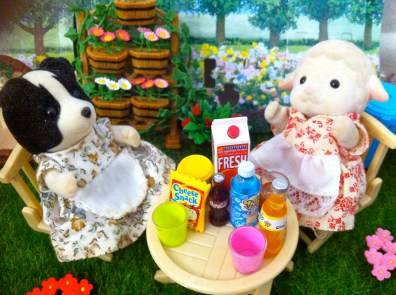
    When Mary finishes her gardening, she invites Laura to have refreshments with her in her proud garden to bask herself in the beauty of the sun and nature in general. It’s also very gratifying to have a glass of cold orange juice or Fanta after laboring on the nature’s work, which Mary regards as a religious experience of being a guardian of nature with the power of appointment by the Creator. Mary, who is also an admirer of Thoreau’s work, understands why Thoreau did not go to church despite being a Christian; it’s because of this feeling of sacred guardianship of nature conferred by the Creator, which can’t be felt by mechanical recitation of prayers without understanding the meanings. Although Mary’s unorthodox views on faith and the church worry religious Laura to a certain degree in a way that makes her unmarried friend look perched precariously on the brink of heathenism like a solitary village cunning woman in Elizabethan England accused of being a witch, Laura admires her spiritual friend’s tenderness toward nature and aesthetic expression of herself through gardening that is all the more resplendent with her erudition from reading many a good book, mostly classics pertaining to previous centuries. While enjoying the carpe diem of the afternoon, both Mary and Laura think in harmony that God is in his heaven, and all’s well with this world.

    thanks-for-reading-Rok-Hardware


    저장

    저장