
With the works of great writers
Of Beauty and Intelligence
In magical feats of Imaginations,
She regales with infinite varieties.
With the works of great writers
Of Beauty and Intelligence
In magical feats of Imaginations,
She regales with infinite varieties.
RE: 8/26/2018 The Los Angeles Times article of “Long-lost wallet’s unlikely return”
For the times passed by, you can just look away and say, “they are gone away” because they are woven by your memories that you have collected through life, willed or unwilled. They become part of you, making you of spirit, fire, and dew, an unique star in a constellation of the universe. Hence nothing could be more pleasingly surprising than discovering that part of you or your beloved kept in photographic images or words of the frozen time, evocative of distant nostalgia that beckons you to reminisce about them, by a happy stroke of serendipity paired with benevolence of a stranger. Something like that happened to Ms. Sharon Moore, a daughter of one former army corporal Robert McCusker.
When Ms. Moore received a “Friend” request from a certain Frenchman named Patrick Caubet on her Facebook page, she deleted it. But then Mr. Caubet messaged her inquiring about the lost wallet of her father Mr. McCusker with the pictures and documents contained therein that he had accidentally found in a basement of his building presumably used as an America officers’ social club. This time she responded and verified that it was her father’s. Prior to Mr. Caubet’s contacting Ms. Moore, he had launched a campaign for locating the rightful owner of the wallet, which encompassed an aid of his English-speaking friend and inquiries to the Pentagon and the U.S. Embassy for help to no avail. Then the help came from a French military office in Paris that located the names of Mr. McCusker’s children in just days. Being a military man himself with a certain feeling of soldierly camaraderie, he was determined to succeed in his campaign, which ultimately came to fruition.
Thanks to this benevolent efforts of one French military man, Ms. Moore and her brother living in Dover, New Hampshire, could reminisce about the lost pages of his Korean War veteran father who had died in 1983. The wallet had pictures of their mother and aunt, military documents, Massachusett Driver’s License, and a Social Security Card, all of which were still kept in a mint condition. Ms. Moore said that since she had her father’s Purple Heart, her brother would be in possession of the wallet that their father had lost on his way from the Korean War to home. In return of her gratitude, Ms. Moore sent Mr. Caubet a lovely basket full of sweet jars of maple syrup she had made herself, some of the candy her father had enjoyed, and a New England Patriots Jerky. Thus, the wallet became their treasure of their beloved father’s memories that they had not known – the terra incognita of their father’s memories before they came to the world -. It became the part of their memories that bound them together to the legacy of their lineage, reminding themselves of their father’s valorous war efforts as a soldier and of his tender loving memories of their mother as a man.
Amid the news of endless politicking, peddling of social media that goes beyond reasonable measures, and a litany of social ills, this article stroke me as a bonanza of altruism that still thankfully kept alive in everyday life, a fresh breath of air that made me feel grateful and hopeful for our future in which so long as we don’t lose a thread of sanity and milk of human kindness, we can make constraints of our lives bearable with a lightheartedness. The kindness of the Frenchman speaks to us that no matter what language you speak, the feelings and emotions that you and I have can strike the chords of our humanness because the principles of reason and of sentiment are universal in all human creatures. The return of the lost wallet as the living record of Ms. Moore’s father attests to the truth.
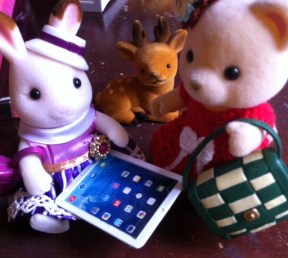 “Anything new in today’s newspaper, Seraphina?” asked inquisitive Patricia, who arrived at Cafe Jolie, her and Seraphina’s “third” place after their homes and workplaces. “Yes, there is very shocking news connected to our neighbors in Avonlea!” Seraphina was excited by this one-of-kind news involving her beloved town that was seldom covered by any major newspaper unless big wigs in corporate world or bureaucrats in political arena visited the town with no other reasons than canvassing for “likes” of the good people of Avonlea, all for their dominance of popularity over the populace. So what made her flushed with rare effervesce? Patricia was by all means curious about it and wanted to dig out the whys and wherefores.

“You know the Magoo family who owns the mini mart down on the Merton Bowley Road? While Mr. Priam Magoo and his two other children Tony and Tracy were on their fishing trip to Bella Vista, their bedroom ceiling completely collapsed to the ground all of sudden on Friday morning! And the thing was that Mr. Priam’s wife Helen and their infant son George were in that bedroom! But by the grace of God, she and the baby were unscathed by the falling debris because Helen, with her innate athletic feats accelerated by her maternal instinct, covered George’s tiny body with hers and escaped the scene as swiftly as she could. Both the mother and the baby fled to the Collies, their next door neighbors to calm their nerves. Until Priam and the other children would return home tonight (a drive to Bella Vista takes about two days.), Helen and George would stay at the Collies.”
 Patricia’s heart became laden with ebbs and flows of emotions, erratically setting in motion a convolution of sadness, indignation, ebullience, longing, benevolence, and then pathos with a detritus of the news about the unfortunate incident befalling Helen and George she had just heard from Seraphina. So much so that her eating at the cafe with Seraphina made her feel indulged in some sort of sybaritic activities with a phantasmagorical display of the scenes in which both the mother and the baby were frightened, taking a flight to their neighbors until the return of other family members played stereoscopically in her metal theater. While her friend Seraphina just matter-of-factly discoursed the news as if it had been one of those articles in a provincial bill posted on a public board in a park, Patricia took it to heart and decided to visit Helen and George at the Collies after the brunch. Just as the great Roman historian Pliny the Elder aided the refugees of the catastrophic eruption of Mount Vesuvius with all his might, Patricia was willing to offer consolation however small it might be to the mother and the baby.

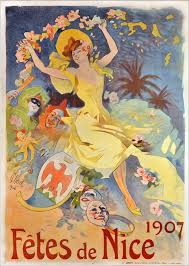
Tell me, Sweetness, if your eyes see me
Dear as a land after storm to a weary sailor,
A sensuous stream to a thirsty wayfarer,
Even if it’s just my wish to my own fancy.
 Notes from a Small Island by Bill Bryson
My rating: 4 of 5 stars
It has been twenty years since Bill Bryson, a writer originally hailing from a small town in Iowa, fell in love with Great Britain where people are delighted in small pleasures, call strangers “Love,” and orderly wait on lines in public without peevishness. So much so that he has even married one. Now it is high time that Bryson returns to the States along the lines of Odyssey, who returned home in Ithaca twenty years after the decade-long Trojan War and another decade of travails. In retrospection of the memories collected on his beloved adopted homeland, Bryson decides to take a valedictory jaunt around the island small but big enough to nurture him with a wealth of culture and a bounty of humanity. And he does it on public transportation and by hiking equipped with his trademark razor-sharp wits, intractably keen intelligence, and his usual touchy-feely way of observing people and things that either irk or pique him. All of it comes to fruition in this highly amusing and genially forthright travel memoir.
You will be surprised to find out that the British think that the cereals are their invention. You will be overawed by the ubiquitous hedgegrows dated back to Anglo-Saxon times embroidering on the British landscape. Bryson will also take us for a ride in a London cab driven by an affably jocular cabbie who has to pass the Knowledge Test to memorize almost everywhere in the City of London. But London is not his demarcation of traveling. Bryson will further come along with you to Bournemouth, Exeter, Liverpool, which is his favorite city, Manchester, and even up north to Scotland all by train or coach, and by walking. With his truculent feistiness, irrepressible inquisitiveness, and scintillating sense of humor fabulously ingrained in his choice of the apropos words and jovial descriptions devoid of malice, Bryson is a cool cicerone, and your excursion will never be a bore.
The book seems to be primarily aimed for British readers who might be curious about what a foreigner would think of them and their country as a whole. In that regard, Bryson’s words are predominately British in the sense that the words and expressions he uses in the narrative are familiar to the British. For example, “bank holidays,” “coach,” “lorry,” or “Sainsbury’s” are peculiar to the British ways of life. But this kind of cultural barrier is kindly tackled by Bryson by providing you with a glossary of the British terms at the end of the book.
I have read other books by Bryson because of the same reason that induced me to select this book: his story-telling like narration is very appealing to me with his proverbial witticism smeared in every word he employs. He may appear to be a grumpy American man, but he has a heart to feel and see milk of human kindness in every quotidian thing or nondescript person by using the most appropriate words in wonderfully lucid expressions. There is a charm in his writing that will make you an admirer of his writings, and this book is no exception. It is Bryson’s long love letter to the small island he has fallen for head over heels with sincerity sealed with kisses and memories.
 Prairie Fires: The American Dreams of Laura Ingalls Wilder by Caroline Fraser
My rating: 5 of 5 stars
A really good biography by a really good writer about someone fascinating reads like a good novel full of intriguing characters, events, and places. In the peculiar alchemy of literature, such biography creates a literary chiaroscuro, an iridescent interplay of light and shade alloyed in the alchemy of words laced with an internal rhythm of the words that delightfully flavors otherwise flat discourse of nonfiction. On top of this magical incantation, all-around erudition of a writer cognizant of the historical and social contexts armed with exhaustive scrutiny into the subject is the Rosetta stone that consummates the performance by contextualizing the subject’s motivation, actions, and vicissitudes of life that is all very much like a plot. In this regard, Caroline Fraser’s Prairie Fires about Laura Ingalls Wilder, a prodigious American literary heroine enshrined in the great American literary pantheon, fits into such definition with gusto.
I first came across this book from an article about The Laura Ingalls Wilder Medal, a significant achievement award in Children’s literature, from The Los Angeles Times a few months ago. The award changed the name into “The Children’s Literature Legacy Award” because Wilder’s allegedly stereotypical attitudes toward people of color were considered to be not in harmony with today’s social core values of inclusiveness, integrity, respect, and responsiveness to the epochal changes. In defense of Wilder’s works, Fraser argued that her works were products of her life and that the reception of her books should be more complicated than we might hastily believe based upon the cursory reading of her books as social or historical contexts. It was this very argument that piqued my curiosity about Wilder and her biographer Fraser. As someone who always inclines to someone whose views and attitudes are dauntlessly unreconstructed and intellectually provocative, I wanted to know more about the accused and her public defender. Hence, Prairie Fires is a testament to its quality that sheds light on the myths and misconceptions on the literary world of Wilder and her fascinating self.
To many of us, Wilder is most well known by A Little House on Prairie, also translated into television firmament by Michael Landon in many a language, making it a kind of household name in everyday life. I remember watching it with the unforgettable leitmotif music that rendered the ambience of a story of a pioneer family with none other than faith, charity, hope, and themselves on the Great Plains. Notwithstanding a streak of fictionality laced with idyllic romanticism portrayed in the TV show version, it was this very ambience Wilder cherished the most and delineated in words despite her seemingly perpetual struggle against impoverishment in the epochal changes of economic climates of her time. She was something of a pioneer troubadour who sang the chaste and rustic beauty of the wild prairie as well as the acuteness, coarseness, and strength of a pioneer spirit found in her beloved father. Through a series of poverty after poverty, struggle against struggle, and hope against hope on the life of the open prairie, Wilder was already in training to become a great writer.
It is one of Fraser’s literary finesses that she alludes to “prairie fires” as a metaphorical means for illustrating Wilder’s queasy and passionate character that ultimately spurred her on to writing professionally at a relatively late age in her life. Wilder’s circumstances pushed her into a reluctant lifetime position of a breadwinner and caretaker, making herself to the hostage of Fortune. Her stoic, matter-of-fact manner belied overwhelming fear, dismay, disappointment, and grief as a result of taking a vow of self-denial against her feisty feminine self. All of her aborted dreams and hopes and projections smothered under daily duties that life demanded by a succession of misfortune and became her pant-up fury that metastasized into the fiery images of prairie fires, real or phantasmal.
Fraser is also excellent in providing us with very intriguing information on Wilder’s inseparable relationship with her writer daughter Rose, who is also believed to influence her mother to write professionally. Rose was a very complicated woman whose literary talent seemed to be prevented from blossoming into full fruition on pedestals by her endless windy rage and self-doubt. She loved her mother and father dearly for sure because whatever money she had earned from writing was a munificent largess to them in the forms of a house and other apparatuses. Moreover, it was Rose who induced Wilder to write about her dramatic life that ultimately resulted in A Little House on Prairie. And yet Rose was also always out of reach of her beloved parents. She loved independence, living in the New York City and Europe with a penchant for cultural sophistication and extravagance, measuring herself against the burgeoning careers of her peers. But even her foibles are pathetic and sympathetic in Fraser’s punctilious portrait of Rose colored by the language she employs from her arsenal of words and narrative skills that guard Rose from misconceptions.
The paramount achievement of Fraser in this biography is her flawlessly lucid contextualization of Wilder’s philosophy of life, her viewpoints society, and most importantly, her backgrounds of the oeuvres in the context of regarding the epochal social and historical changes of her time, all of which are gleaned from her comprehensive research into the relevant subjects and her impressive erudition fascinatingly laced with her acute feminine sensitivity in the magical play of the words. In fact, her knowledge on the 19th and early 20th centuries are so impressively and naturally incorporated into the discourse of Wilder’s story that you come to an understanding of Wilder like never before and appreciate her oeuvres in the canon of American Classics by exonerating the accused from being a jingoistic provincial “white” writer. Rather than pontificating the blind idolization of Wilder, Fraser serenely but efficaciously narrates the facts of the controversial author and her meritorious achievements both in life and literature in an expense of will, belief, and truth, producing a mesmerizing biography of a riveting character in literary Americana.
The book does succeed in shedding light on the life of Laura Ingalls Wilder by recasting this famous American literary figure in a candid way which none other than Fraser could have possibly done on the topic with her magistral knowledge of Wilder armed to the teeth with thoroughly exacting research on historical and social resources with utmost solicitous attitude and sweet tenderness. For this very reason, Wilder’s books should read as a classics not as a historical textbook of the bygone era whose zeitgeist irks the populace of this modern time. Literature is an art, and therefore its value lies in Art for art’s sake. We use the real to perfect the ideal, and the real encompasses anything – including our foibles and idiosyncrasies – we deem worth sublimating into beauty, which is what art is all about by appealing to our senses, the pleasure of reading something beautifully profound, evocative, and enduring. In this regard, Wilder was and is an artist making the beauty of life out of the reality of life. All this makes this book an enjoyable and illuminating read with Fraser’s irrefutably magical alchemy of words and consummate storytelling skill devoid of expression of infelicity and authoritativeness. This is a canonical biography of a great American writer by another fascinating writer who deserves of the applauding to the very echo.


You must be logged in to post a comment.