RE: 9/3/2018 The Los Angeles Times article of “Convicts and canines get a new leash in life”
No one is either excellently good or extremely evil. It’s this ambiguous nature that we must guard at all times lest we should give free reins to our defiant, recalcitrant horse in our soul which can prompt us to go beyond the pale of Reason and Judgment universal in human societies. Nevertheless, this does not mean that those who are sinned against the principles must be forever stigmatized by their wrongdoings in public and barred from turning over new leaves because by doing so, we not only estrange them from a sense of belonging to society but also oblige them to resort to their former errors. That is why every person deserves of a second chance without question to right the ship of the life with wise, practical, and altruistic supports from good folks.
Janette Thomas, aged 53, strongly believes redemption of the souls of human and the lives of dogs from whatever predicaments they are put in either by will or against the will. Every human as well as every dog needs second chances. Out of her firm conviction in redeeming the lives of Nature comes in a form of 10-year-old organization named “Cell Dogs”. In fact, the program is for the benefit and behoof of both the inmates and the dogs. Throughout the year, the organization takes dogs from various shelters and brings them to correctional facilities where inmates put the dogs through 8-to-10-week training course. The course begets mutual munificence to both of the estranged spirits; inmate handlers gain new skills with confidence, patience, and responsibility that provision them with new career opportunities. Canine trainees go on to become companions to autistic children, veterans with post-traumatic disorders, and physically disabled individuals. In effect, the records show that there is a low rate of recidivism by inmates who participated in this program and that more than three hundreds dogs found their new homes upon completion of the program.
This program is indeed all things to all people and our canine friends by giving both of them second chances to start their lives anew. The act of bonding between a human and a canine produces the very essence of trust, security and happiness in a psychospiritual way. An inmate who trained his canine partner attests to his noble ends of turning over a new leaf as corroborated by the following verse from the Gospel of Luke: “He who is faithful in a very little is also faithful in much.” For any possible criticism of cynics jeering at this beneficial and altruistic program and dismissive of bestowal of second chances to the neglected, it is perhaps high time that they should thumb through the bible and read the following Gospel of Matthew:
“Then came Peter to him, and said, Lord, how oft shall my brother sin against me, and I forgive him? till seven times? Jesus saith unto him, I say not unto thee, Until seven times: but, Until seventy times seven.”
 Christian Dior, the father of modern women’s fashion, said of a perfume thus: “A woman’s perfume tells more about her than her handwriting. ” How rightly so. A scent is stronger than a sight because it not only creates a certain mystery of ambience but also unlocks a cascade of memory. Hence is my approbation of a certain perfume I have begun to like.
 J. K. Rowling bewitches us again with her famed literary magic wand. Her fabulous creation of fantastic beasts, a young brilliant wizard, white witches with hearts of gold, an ominous black magician, and an amiable non-magician all coming vividly alive on the screen, will please your senses and touch your heart in no time with delightful feats of magic and boundless imaginativeness without interventions of boredom or cheesiness.
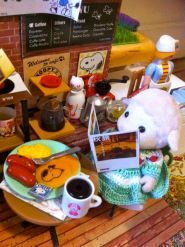
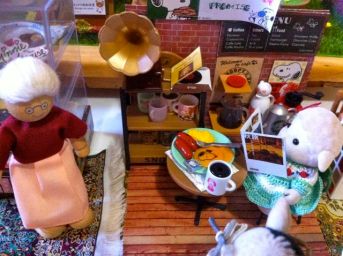 “Ms. Long, your hazelnut coffee is one of the best in the town, and I told it to all my friends and colleagues at work and suggested them they come by here.They are not hypochondriacs or bombastic health freaks at all. I mean what can coffee possibly do harm on people? The eminent Baroque composer Bach once said without a cup of hot coffee, he would be like a grilled goat. and as far as I am concerned, I have never heard of any one who has died from drinking too much coffee.” There was a flicker of smile flitting in the gracefully aged face that shinned with her incorruptible beauty from within. Ms. Long had never felt more comforted and warm than ever in her long life as a spinster. “Thank you, Sally, for your caring words. I will continue to make the best hazelnut coffee just for you.” There was in the air something that filled the whole of Hush Puppy’s at the moment. It was wonderfully conflated with the aroma of Sally’s hazelnut coffee that Ms. Long had just finished brewing. Sally’s spirit was flitting in the loveliness of the ambience, soaking herself in the moment of happiness coming from within. It sure was a pleasant morning for Sally.


You must be logged in to post a comment.