Category: book review

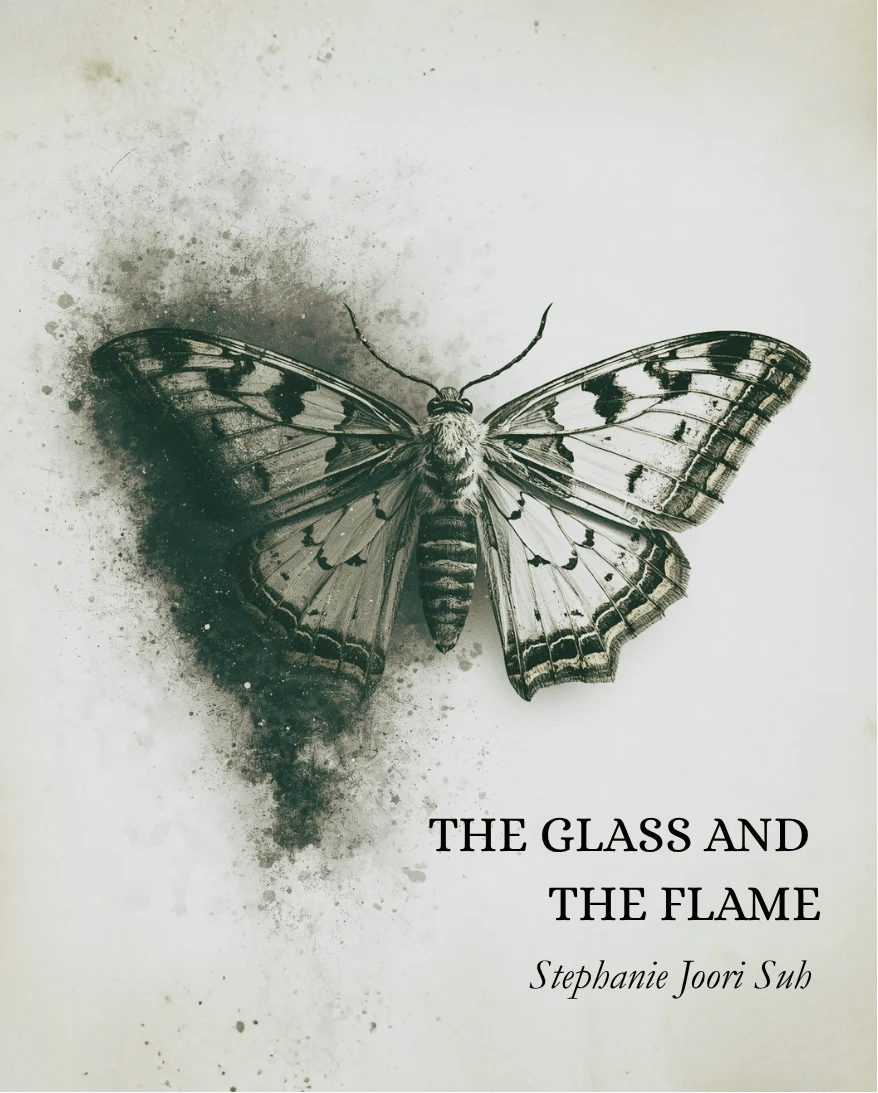
  • So This Is It: The Glass and the Flame

    My First book ever selected and published by an independent press. I knew that one day I would have my own book published. It is not arrogance disguised as confidence. Writing has always been part of who I am.

    The Glass and the Flame is a fugue of the heart, woven from multiple strands of longing and sorrow into a polyphony of eros and psyche. I have learned that you can write the felt without being met.

    The axiom that “you are who you are” is not necessarily true in my writing. Rather, I am what I write.

    In terms of Orwell’s reasons for writing, I write from aesthetic enthusiasm and sheer egoism. Neither political purpose nor historical impulse belongs to my work.

    If you dare, walk with me in the garden where Eros freely roams with Psyche.

    Listen to what I sing.

    The Glass and the Flame now lives in the world.
    You can find it here: https://dulcetshop.myshopify.com/products/suh

    Sincerely,

    Stefania

  • At the Harbour, Before I Know the Story

    Reading Day — Thursday, August 13th, 2026

    On Elizabeth Taylor’s A View of the Harbour

    My first time in the harbour: at the dock, standing in the sea breeze. English air. An unfamiliar coast, oddly familiar. But this is not a book about the cozy English sea town in a postcard.

    I have read only the first few pages of the book, and it has already given me its weather and atmosphere. I feel the harbour holding the secrets of the townspeople. I feel the sea carrying the flotsam and jetsam of life quietly and bringing them into the harbour—an always moving inside a never-arrival.

    The characters I have met so far are ordinary in the sense that none of them has that fierce individualism, existential malady, or anything that instantly piques the senses. But people may find pornography in Jane Eyre: the tension, the ache, the desire. They are not spoken but felt. People keep them in the mind, as if giving a voice to the forbidden would desecrate Jane Eyre.

    I think that is what the book wants us to see: what may seem ordinary on the surface, like a calm sea, hides a storm spiraling into a pillar of fury, discordance, and disorientation. I have not yet come to know the characters, except for Prudence, whose two Siamese cats love pushing their small heads against her legs. It is the cats that draw my attention to her, but she seems to have a story to tell as a beautiful young girl who does not act like a beautiful teenage girl.

    Prudence is Prudence: Quaker in name, puritanical in action. But she may turn out to be someone different from what I have seen as I progress through the pages, although I want her to remain as I see her now. I want her to be beautiful without being popular.

    That is life, isn’t it? Change is human, an uninvited grace. You want someone you like to remain the way you know them. That is what I want to know after I complete reading the book.

    The sea will remain the same. The harbour may not.

    — Stephanie Joori Suh

  • On A Woman’s Story by Annie Ernaux

    On returning to the quiet joy of reading, one discovers that some stories are not only theirs but yours too. Annie Ernaux’s A Woman’s Story was one of those stories—hers and mine.

    It was one of the days I visited my mom at the convalescent hospital for the elderly when I started reading this story, sitting by her bedside. Call it providence if you are religious or coincidence otherwise, but I wasn’t expecting it to become my story as well about my mom, who had been hospitalized since her stroke in January of this year. It was as though Ernaux was speaking to me as a daughter to daughter about her mom and mine, collapsing time and place and the cultural and social differences between us. No wonder I wanted to finish reading it at one sitting.

    This book is not of a certain literary genre. To call it a biography of her childhood and her mom’s influence on her misses the point of why it took her a year to finish the book. It’s much more than that. The absence of her mom made the author realize her mom’s place in her memory. Her mother was the first witness to Ernaux entering the world naked, and later, to her becoming the woman she is. It’s both a biological and an existential view of the author’s raison d’être. That there is no longer anyone on the other side of the first relationship, which has ended forever. It aches. It lingers. It evanesces. And before all of this will vanish into the ether, Ernaux lives to tell about the presence that was so familiar with her being that not seeing, hearing, and feeling it is painful to bear without letting it take the form of writing because writing is personal yet public, pensive but assertive, and quiet but powerful.

    I can understand the kind of ache the author felt after her mother’s death. Whether you loved her or not, you would never see her in life again. She may live in your vision of the past, but her person as a presence does not exist in this world. And that realization of forever disappearance would throw you into the abyss, stifled, blinded, and muffled—by the ineffable sorrow mixed with mystical longing.

    I think about my mom and me. What if she leaves this world soon—tomorrow, the day after, or anytime soon? Oftentimes, I wake up with indescribable terror at the thought that soon I will lose her to eternity if I breathe, like a panic attack. And it dawns on me that it is this feeling of detachment from the relationship, as the bond between mom and daughter is severed forever.

  • Paul Gauguin: With Sixpences Beneath a Visiting Moon

    The Writings of a Savage by Paul Gauguin

    With sixpences beneath a visiting moon, Gauguin could produce wonder. He was an artist in an endless pursuit of the rising sun at the dawn of a day with a flaming glory in dazzling magnificence. He was an intellectual with a wealth of knowledge drawn from a wide range of reading and classical Jesuit education. Gauguin was a man of irony, with contrasting colors reflected in the soul’s spectrum, from the passionate red to the sanguine blue, hopeful green, and melancholic purple, which is why he left Vincent Van Gogh alone in Arles, in never-ending loneliness. He craved recognition in a grand salon, yet he longed for independence on an island beneath an ancient sun. So, naturally, I wanted to know about Gauguin from his own writings, not from another in the form of a biography. Hence, The Writings of a Savage by Paul Gauguin.

    The book is an attractive compendium of mostly letters to his select few friends and, occasionally, to his wife, as well as essays and articles on the arts and religion, demonstrating Gauguin’s erudition and introspection. While reading the book, I could not help but think that if he had been a professional journalist or an art critic, his artistic talent would have basked in the glorious dawn sun rather than a struggling painter always on the verge of starvation. But most of all, what I wanted to know was if Gauguin had cut off Gogh’s ear, as I heard the rumor. Before reading this book, I had already assumed Gauguin was a man of temper because his image was incompatible with the Dutch painter’s delicate, sophisticated, and sensitive appearance and temperament. But while my prejudice was not entirely faulty, Gauguin proved himself innocent as he talked about it before his impending death away from civilization. Besides, my reading of Gauguin’s writings convinced me that he was not culpable for the injury, even if some like to assemble circumstantial rumors to make the French pariah artist appear jealous and violent toward the suffering Dutch genius. Gauguin might have been passionate, but his passion is directed toward his artistic creation of the worlds he sees in his mind, while the snobbishness of critics and bureaucrats curates the works of painters who know nothing about the arts.

    Imagination, innovation, and independence are the jewels of Gauguin’s prime colors that create his artistic Elysium. Gauguin was liberal in social stance, especially against clericalism, but sovereign in his artistic philosophy that how to draw doesn’t mean an exact copy of the figure because that’s not the purpose of art for art’s sake. As the title suggests, Gauguin was a noble savage who, as a disciple of Rousseau, returned to a primordial state of humanity to escape the over-intellectualized inertia of civilization, which depreciated and ignored his art. I still can’t say the book converted me to the cult of his paintings, which differ from those of Renoir, Monet, and Pissarro. But the book is a medium of looking through the labyrinth Gauguin has built, leading to his secret garden, wondrously vibrant and dazzlingly radiant.

    If this review moved you, you can support my writing at Ko-fi: https://ko-fi.com/steph79650

  • The Housemaid by Freida McFadden – Book Review


    Being a housemaid is no easy job. Apart from daily chores, one has to ensure that one is not on the wrong side of one’s employer and family for job security. Who says it’s a lowly job for little women with no or little education when it requires guts and wits to endure all of these and those that will jeopardize her sense of existence? It would be best if you did not make your maid angry because once she is exposed to the unkindness of her employer, her ire becomes Rage, which will turn her into something of a she-hulk.

    Here comes Mille (Wilhelmina) Calloway in the house with a secret past, trying to pretend to be someone she isn’t. Never will she be the one she wants to be because normal is not normal for her. Security is insecurity, and love is betrayal, or is it ever such? That doesn’t mean she’s Devil incarnate, but a being between an angel and a human, something of a Valkyrie, trumpeting one’s death, bringing the soul to the Underworld. In this book, you will find it hard to dislike her because she will not harm you if you do not betray and hurt her. The plot is intriguing in how you see what she is and why she is the way she is. That is not to justify any wrongdoings, but the motive is free from guilt, like Robin Hood stealing treasure from the arrogant rich or, shall I say, Incredible Hulk helping the good against the wicked? You will want to know more about her and the characters who are not dull from the beginning to the end. What a twist of fate!

    A few books are written about protagonists whose livelihoods are not as glamorous or glossy as many featuring women or men with high incomes and fanciful lifestyles because being common is a trifle and, therefore, not worth writing about. But that’s a lack of imagination and creative resourcefulness, which inhibits creating a world beyond reality in the likeness of truth. In that regard, this book is a fresh breath out of stuffy air. It is a thrilling admixture of Harrison Ford’s The Fugitive, Bill Bixby’s The Incredible Hulk, and Clint Eastwood’s High Plains Drifter wrapt up in a maid’s hide.

  • The Ghost Generation

    Flashback to 1974 – Celebrating the pop culture, people, politics, and places.: From the original Time-Traveler Flashback Series of Yearbooks ― news … 1974. (A Time-Traveler’s Guide - Flashback)

    Flashback to 1974 – Celebrating the pop culture, people, politics, and places.: From the original Time-Traveler Flashback Series of Yearbooks ― news … 1974. by B. Bradforsand-Tyler

    My rating: 5 of 5 stars

    I always think that people born in the 1970s are in-betweeners. Visible, yes, but not conspicuous. It’s the transitional generation, crossing over the boundaries of the 21st and 20th centuries like faerie children, hybrids of yesterday and today. The last generation of the 20th century fully lived and ended in the new era. And it’s hard to encounter them in reality for some mysterious reasons. It makes one feel like a changeling among new and newer waves of generations.

    The choice of this book is, therefore, something akin to encountering an acquaintance among total strangers in a strange land, even if such excitement is not reciprocated. The 1970s was when the world we know now began to form its familiar landscape with the birth of new words as society became more technologically advanced and culturally enhanced. Here is a list of the terms we use, like commodities born in 1974: Touchscreen, telecommute, supermom, CT Scan, memory card, transgender, wake-up call and GOTCHA.

    It’s not about being proud of my generation or criticizing their generations. It’s about the generation I see as half visible and half invisible, especially in the current workforce, from law firms to the entertainment industry dominated by millennial babies. Of course, Watergate and the inflations from the oil shock imprinted on the generational pictures, but those born in the 70s grew up to enjoy the privilege of fully appreciating the digital age and its conveniences in every aspect of life. The Who’s “My Generation” should be the soundtrack of my generation.

    People try to put us down (Talkin’ ’bout my generation)
    Just because we get around (Talkin’ ’bout my generation)
    Things they do look awful cold (Talkin’ ’bout my generation)
    This is my generation
    This is my generation, baby

    GOTCHA.


    View all my reviews