
To come upon E.B White’s essay “Goodbye to Forty-Eighth Street” could not have been more opportune than at the time when I was in the middle of sorting out flotsam and jetsam of the paraphernalia that imperceptibly commandeered in my dilapidated apartment over the years. The logistics of moving from one place to another is, I think, really a Herculean task of clearing the famously filthy Augean stables; you have to decide which ones to discard or bring along with to your new habitat, which you would not find easier than you presumed. Then there comes the physical exertion of putting the stuff into boxes or thrash bags before movers come and have those lucky select items of yours shipped out to your new domicile. In peculiar synchronicity of literature, White’s musings on this task of dispensing the contents of the apartment chimes the bells of my feelings and thoughts in tandem.
I ditto to White’s witty comparison of a home to a “reservoir equipped with a check valve that permits influx but prevents outflux” on account of its being filled up with the detritus of the sundry things that have come to me and clung to me even though many of them escaped my radar of affection quite a long time ago. Maybe I don’t have the guts to throw it all away, but as those things now all of sudden show me a phantasmagorical display of the memories of how they came to me, it’s most likely that I will bring them with me to my new place. I believe that whatever you have possessed for a long time or wherever you have lived for long, you have ingrained a vestige of your spirit, your inner part in them, willed or unwilled. It’s called “place memories,” imprinting part of you to the outside of your world. Thus you become part of that something, and that something part of you. Come to think of it, wouldn’t these place memories also become ghosts themselves in haunted places?… Just a thought.
The solitary process of upending the apartment would have been brutally lonely and cruelly vexing were it not for my fortuitous reading of the essay by Mr. Whites whose own moving experience strikes the chords with me. That’s the joy of reading: you get a fresh viewpoint of your own matters, making you feel you are not alone in it. With this uplifted encouragement, I shall complete the Aegean task of moving out before heading for my new sunshine destination in less than a month.
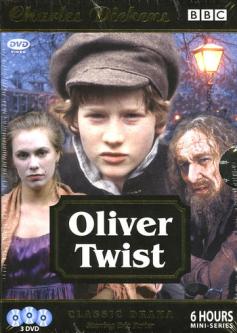 What distinguishes Charles Dickens from his contemporary writers is his belief in redemption, forgiveness, and benevolence of a human spirit triumphing over poverty, guilt, and death, the three cardinal ordeals of existential phenomena. For almost every character in his oeuvres, including villains, heroes/heroines, and even minor characters, has some shred of redeemable traits, if not goodness in the case of swindlers, pickpockets, or murderers. The question of morality in the Dickensian world is never proprietarily imposed upon the reader, and thereby leaves out harsh puritanical judgment of a character because humans are more sinned against than sinning. That’s the beauty of Dickensian reality set in the background of the stuffy Victorian reality. That’s why I can’t hate any of his characters, such as Bill Sikes, The Artful Dodger, and even Fagin from Oliver Twist in the parade of humanity.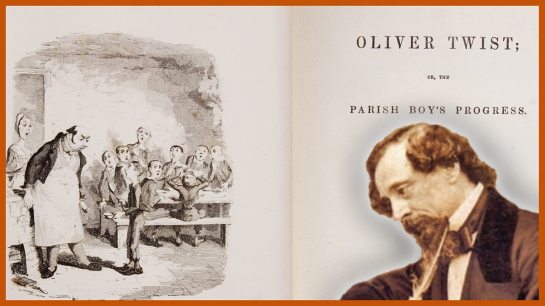

 Given the authenticity of the storytelling aligned with the original context by Kipling and the performance of the characters studded with breathtaking scenes of nature so characteristic of Disney’s creative imaginativeness, it is a film worth of the spending your time on screen. It is a kind of film that stimulates your mind by inviting you to think about a meaning of our human life and existence and of our purpose of life. It will also thrill your heart with the adventures of Mowgli in the heart of the jungle and the stereoscopic views of the nature on screen created by a wonderful collaboration of our timeless human imaginations and 21st century feats of technological bona fides.
 Dr. Fleming’s finding of Penicillin was something of serendipity or more likely divine providence. Dr. Fleming, an erstwhile captain in the Royal Army Medical Corps during World War I, began researching antibacterial substances at St. Mary’s Hospital in London after witnessing so many deaths of soldiers due to rampant pervasiveness of infections even though the wounds were not seriously intractable. Then one day in August 1928, Dr. Fleming left his bacteria cultures stacked up on a bench before embarking on his family holiday. On his return in September, he found a mould growing in one of his sample cultures, destroying the bacteria. What’s more, the mould produced a substance that destroyed the bacteria responsible for scarlet fever, diphtheria, pneumonia, and meningitis. Dr. Fleming first named it “mould juices” in 1940. Then in 1940, two medical researchers from University of Oxford named Ernst Boris Chain and Howard Florey succeeded in mass-producing penicillin. The concerted collaboration of the three trailblazers of the first modern antibiotic awarded them with the Nobel Prize in Physiology in 1945. Indeed, the laborers were worthy of the rewards.
 Let’s go back to the time when the great American humorist and writer Mark Twain (1835-1910) regularly featured in the nationwide newspapers with his trademark scintillating remarks on just about any subject that piqued him; but none other than reading articles about his own deaths twice in the New York Times would have perturbed his otherwise usual sanguine nature. After the first ignominy, the writer told the Times that it was an exaggeration. But after the second occasion, when the Times suggested that he had been the victim of a yachting accident, he thought he had it enough for such media farce and remonstrated to the Times with a public complaint that he would make a thorough investigation of the fallacious report. To think that a respectful newspaper such as The New York Times published such fake news of the famous writer of the time twice is something of a bitter pill to swallow, but it also shows that reputation isn’t necessarily likened to integrity or even probity.
 Flame, Glass and Ink are Poems, essays, and reading notes by Stefania Joori Suh
You must be logged in to post a comment.