Category: Film Review

  • National Theatre’s Frankenstein with Benedict Cumberbatch as the creature – review

    Mary Shelley’s atmospheric gothic novel of Frankenstein has provoked a full arch of protean artistic imaginations in translating the story into the screen. Still, none of them is arguably more unforgettable and impressive than the production of National Theater, featuring Benedict Cumberbatch as the Creature. It is as if the novel itself were played out by witchcraft of Art, conjuring up the spirits of the characters, possessing the souls of the performers and those of the spectators in the enchantment of the Sense and Reason in one fell swoop. 

    Cumberbatch’s performance of the miserable Creature is so well studied and crafted that it is quite impossible to conceive: the crudely sawed up sutures without even a remote sense of estheticism, the awkward gaits of one huge mystical beast – perhaps wodewose? -, the muttering that sounds like the low guttural hissing, and the face that only inspires diabolic terror to the eye of the beholder. It is a plenary reincarnation of all things abominable to Taste and Reason universal in mankind from which it is eternally barred. If Dr. Frankenstein resurrected a corpse into life, it is Cumberbatch who resurrected it from the textual existence with gushing emotions and passionate actions that give to his Creature Human Sentiments and Sympathy even. 

    Cumberbatch makes his Creature a creature of Pathos, a divine streak of humanity. It seems unpardonable and criminal to even feel toward such an abominable monster. The actor does it with the choreography of movements to express the changes in the moods and emotions. From the moment of its birth from death in the artificial placenta and to the return to its collapsed dreams and wishes, Cumberbatch does a superb job of expressing the tragic panorama. He delivers the Pathos of the Monster without the swashbuckling display of overt sentiments to render excessively contrived sympathy to his Creature, merely crying out, “I see inside, but I dare not go inside!” 

    The power of reality in the setting of the stage gives the story of the play the verisimilitude. The specious scene in minimalist background conspicuous by the splendid display of the lights expresses the changes in the moods, emotions, and feelings of the characters. It also produces a maximum theatrical effect of resonance of the voices and illumination of the actions, holding the attention of the spectators without the infelicity of interruption and disinterest, making every scene wholly real and engaging.

    This theatrical version of Shelley’s masterpiece is not a reactionary revision of the story. On the contrary, it is a manifestation of Shelley’s perspectives on her contemporary society, which is also contemporaneous with our own. This astonishing play makes the social and physiological elements realistic and enjoyable for the pure sake of exceptional art experience. It is a beautiful play inspired by a muse that would ascend the highest celestial stage with divine thespians to act and enchanted spectators to behold the swelling scenes. And yes, Shelley will be very content with this magnificently performed interpretation of her oeuvre from the heavenly balcony of immortal Theater of Arts by applauding the cast and the staff to the very echo.  
     

  • ‘Papillon (1973)’ – film review

    6daa8bbc3333a0740fe55fecd9b16439

    From Shakespeare to Hemingway, the resilient human spirit rising above life’s challenges is always a high human drama. Nietzsche said: “What does not kill you only makes you stronger.” This paean to a noble human spirit against the existential strains of life has been a paramount theme for masterpieces of arts, especially in literature and cinema appealing to the universal audiences, touching the deepest valleys of human consciousness and pulling at the heartstrings all in a polyphony of humanity. It is this very reason that Papillon (1973), directed by Franklin J. Schaffner, still evokes ineffable inspiration and indelible impression so powerfully displayed on the screen with the authenticity of a true story of a real-life character.

    DagmEaVV4AENyWE

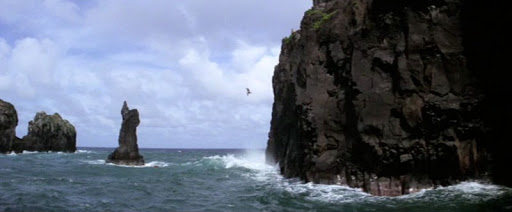
    Papillon, a butterfly in French, is a nickname of Henri Charriere (played by Steve McQueen), a safe-cracker framed for having murdered a pimp because he has a butterfly tattoo on his chest. Henri was sentenced to life imprisonment in French Guiana and decides to escape from the man-made inferno where death is the only way out of the murderous maltreatment doubled with dysentery and hard labor, which makes me wonder if the Nazis, especially Himmler and his ilk of the Final Solution, adapted the French Penal Colony system into concentration camps during World War II. And yet, Papillon’s will to escape and to live as a free man supersede the hellish daily realities fraught with endlessly cruel labor, inhumane solitary confinements, prolonged starvation, and deaths of his fellow inmates, all of which seem to conspire to break his will to live to conform to the totalitarianism of inhumanity in the name of punishment of his crime that he didn’t commit. Escape after escape, hope against hope, and betrayal after betrayal is fortune’s malice trying to overthrow his sovereign state. Still, Papillon’s sturdy mind exceeds the compass of her will, even if it takes him to the furious watery main and the murderous cliff in the Devil’s Island.

    source

    The stellar performance of Steve McQueen, playing the role of Henri Charriere, renders a sense of verisimilitude of the character and the story so convincingly that you dive into his emotions without realizing a boundary between a screen and yourself. Upon watching the film, you feel that you have contracted a severe biological strain of Stockholm syndrome with the Henri character on whose biography the film is based, which bestows the power of reality and the authenticity of truth upon your mind. Steve McQueen, often referred to as the King of Uber Cool, is excellent in portraying the convict with extraordinary feats of endurance and rebellion against the totalitarian penal system that wrongly imprisons his free spirit. McQueen’s abilities as a character actor shine when he commands his presence in a way that seems wholly authentic without overt gestures and contrived charisma but with his eyes sparkling even in the filthy prison uniform that speaks a thousand words surrounding him like a radiant halo as a token for his strong will to freedom.

    This film is, in a way, reminiscent of Ernest Hemingway’s ‘The Old Man and the Sea’ in terms of old Santiago’s indomitable burst of pep to fight the shark appropriating his hard-won big fish. The old man might look feeble and weak in comparison with the mighty power of the vast sea. Still, it is his will to win the battle against the force of sea that is sublimated into a victory of the human spirit with the resounding  dictum of this feat of humanity: “Man can be conquered, but cannot be destroyed.” That’s what comes to my mind while watching this excellent film about an ordinary human being with an extraordinary power of will to freedom. Hamlet uttered: “To be or not to be, that is the question.” To Henri Charriere, such contemplation is a meaningless echo of a defeatist. Henri is more of Macbeth working out on his plan for life as a free man with stubborn courage: “We fail! But screw your courage to the sticking-place, And we’ll not fail.” And Lo! Did he not take the advice of the Bard! And so, splendidly!

    unnamed

    Author’s Note: I watched the film last night and was immersed in the characters and the story. Not that I am an admirer of Steve McQueen but that he’s one of the greatest actors who vanished like a meteor gives a special meaning to this film. It is one of the best performances in his acting career and will always linger in our hearts. 

  • ‘The Good, The Bad and The Ugly’ (1968) -film review


    Whistle, and he’ll come to you

    From a wild haze of desert maze

    Blowing smokes, looking aglow

    On his steed with the blue gaze

    Into the windows of your heart

    Sealed against pillage of the cabinet

    Full of secrets locked tight and fast. 

    For Blondie is The Good doing it. 


    Watch, and he’ll stand behind you

    In a soldier’s hide with a golden watch

    Grinning with the blue lamps that glow

    Like the phantasmal light of a ghostly torch 

    Penetrating the bastion of your spirit

    Guarded in the deep forest of your mind

    Against a carnage of the spirit with a feat. 

    For Angel Eyes is the Bad doing it.


     Wait, and he’ll show you

    In a gringo’s hide with a squint eye

    Calling you, “My friend!”, following you

    Wherever you go, even to a valley 

    Laced with tombs of the drifters and solders

    Where the dollars are paid for the tribute

    To the litany of woes and more woes. 

    For Tuco is the Ugly doing it. 


    Author’s Note: This is based on my viewing of “The Good, the Bad and the Ugly” directed by the great Sergio Leone. The film often referred to as the masterpiece of Spaghetti Western, is in fact far superior to any other western movies made by Americans in terms of storyline, plots, settings, and cinematography. 

    For example, in this film, all of the characters are morally ambiguous and ethically challenging, which makes them realistic and relatable. Besides, compared to the perfected appearance of typical “American” characters, the Good, the Bad and the Ugly are all scruffy-looking and unhygienic even, and yet they all look quite stylish in their naturally rugged ambiance and masculine outlooks, especially well manifested by the iconic piercing gaze of Clint Eastwood as the Good and the amazingly chiseled face of Lee Van Clef as the Bad. What’s more, even though director Leone had never been to the States before making the film, he was excellent in portraying the Wild American West during the Civil War by filming it entirely in Spain.

    The music by Ennio Morricone also plays an integral part in this film, creating timbres for each of the characters, so that whenever the character appears on the screen, the unique thematic music is played, indicating the moods of the characters without having them narrated in words. Hence I wanted to write about the impression of this unforgettable film that’s engraved in my Hall of Fames.

  • In defense of Arthur Fleck adv. People

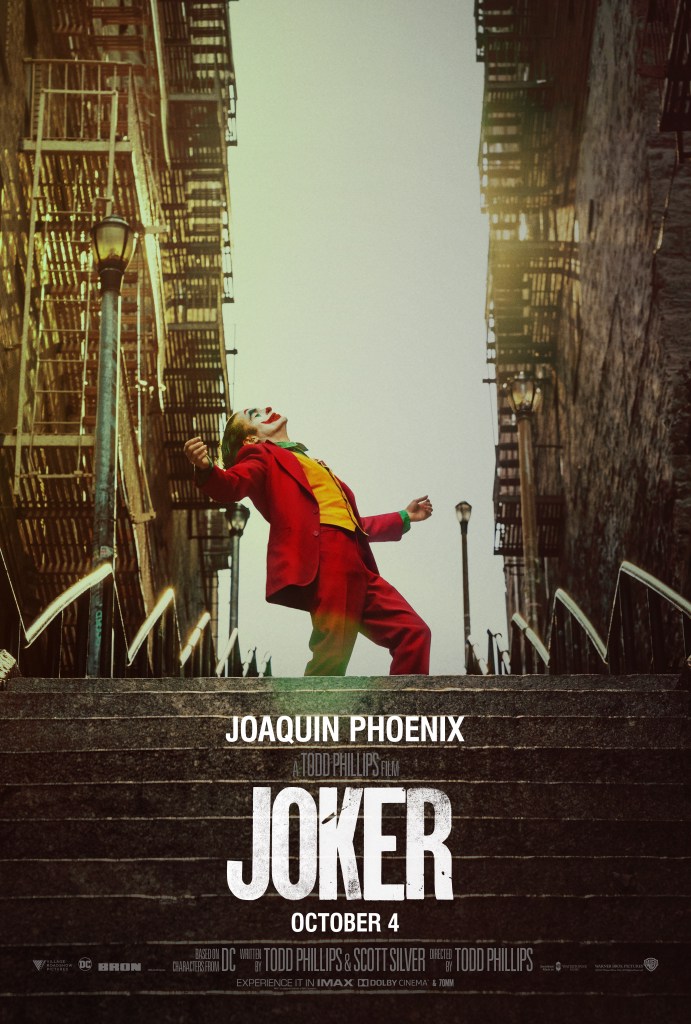
    The movie ‘Joker’ has taken the world by storm. The citizens of the four cardinal directions of a compass all seem to flock to the screening of the movie and feel gobsmacked or spellbound even by the stellar performance of actor Joachim Phoenix in his soul-wrenching portrayal of Arthur Fleck before his rebirth as Joker. The aftercome of the movie is a great legion of tweets rhapsodizing about the character and the man behind, which is deemed meritorious, justifiable, and agreeable. However, most of the tweets about this outstanding movie disappoints me because of their opinions that seem to miss the gist of the movie, the logotheraphical nuance of the movie itself that director Todd Phillips tries to express on the screen. Is this movie about a clinically crazy man, a so-called “psychopath” who wallows in killing-sprees? Why do people suddenly seem to care about a man whose existence is constantly slighted and ignored when they unconsciously or consciously do the same to the ilk of Arthur Fleck in everyday life? Will the movie change their attitudes toward those struggling to make their presence amid constant ridicule and estrangement?

    As I previously stated in my review of the movie, this is about a man whose efforts to preserve a sense of purpose in the world and a tenacious grip on recognition are ruthlessly vanquished. Everyone from all social strata, including those recognized as underprivileged underlings, not to mention the upper crust of society, indiscriminately ignores him. And the reason for such unanimously consented mistreatment of Arthur Fleck is not so much due to his low social class as due to his unlikeness that manifests itself, so visible that it makes onlookers regard him as a tacitly public domain of disdain and estrangement. He is a public whipping boy, a modern-day equivalent of a cunning man accused of witchcraft or dark magic, bestriding on the verge of madness as a result of concerted social alienation, which forces him to choose none other than being Joker. Hamlet’s existential question of “To be or not to be, that is the question.” seems too pat and gives a fillip to the loneliest, darkest, and saddest moment of Arthur Fleck when he feels pushed into the edge of his conscience. He surrenders himself to the death of his old, bullied, slighted self because it’s better that way than spends his life misunderstood and ignored to the end.

    Alas, poor Arthur Fleck! I know him, my dear reader. For however fictional the character may be, an Arthur Fleck is here in our ordinary landscape of everyday life. Workplaces, schools, supermarkets, buses, trains, streets, hospitals, and houses that you go and live are where you see him but not regard him, hear him but not listen to him, speak to him but not talk to him. If you protest, then you are probably feeling guilty of doing the same thing that they did to Arthur Fleck whom writers call a misfit, employers an incompetent, social workers/psychiatrists a basket case, and a detective a psychopath. That whom we call him by any other names will remain the same as neglectful and insignificant.

    In sum, those of you who rave about the movie in terms of the outburst of the suppressed shall regard it not as a liberal cause of partisan ideology or a demotic social manifesto but as a visual memoir of a very lonely man who cries inwardly every day for the wounds of his estranged soul. For what Arthur Fleck wanted was very human and basic as appreciated by American philosopher and psychologist William James many years ago: “The deepest principle in human nature is the craving to be appreciated.” Praising what is missing and ignored makes the remembrance dear. This is about one man’s struggle against finding a meaning of life, will to meaning, stumbling into a vertigo of his existential horrors of daily life. That is the message.

  • ‘Joker (2019)’, directed by Todd Phillips- review


    He’s nobody to whom people neither listen nor talk. He’s alone, alone, all alone on a vast gaping sea of people who continuously berate the person and the dream and the existence of himself ruthlessly. Francis Bacon’s phrase of ‘Magna Civitas Magna solitude’ bethinks the case of Arthur Fleck. The Joker is a man trying so hard but futilely to preserve a sense of purpose and a tenacious grip on social recognition at the bottom rung of social hierarchy. Even the goddess Fortuna seems to vent her usual aeonian capricious nature on the fate of this unfortunate man whose Wheel of Fortune is destined to be positioned to True North of Tragedy. If this sounds maudlin enough to frown over that “just a movie” façade, then think of what Charlie Chaplin elegantly sums up thus: “Life is a tragedy when seen in close-up, but a comedy in long-shot.” This is a life of Arthur Fleck, and it is here where he becomes Joker, the archenemy of Batman and the good citizens of Gotham City. It all begins here in ‘Joker,’ directed by Todd Phillips, who seems to have an eye for the absurdities and hypocrisies in our society.

    fragileArthur Fleck is said to be mentally insecure, seeing a social worker every week who only cares about her civic duty to talk but not listen so that he can get his usual five different psychotic medications. He is conditioned to be mad amidst the licensed incivilities of the people indiscriminately. He is a victim of severe bullying and taunting for his bouts of uncontrollable laughers and gawkish rail-thin appearance in which his piercing blue eyes are the only resilient torches of his soul that defy the injustice and humiliation by society. It is the society that slowly maddens Arthur with those multiple chemical prescriptions and willful neglect of his presence. Must I chant his litany of woes further?

    The clown mask of Arthur Fleck becomes the persona that gives him a new personality with a sense of empowerment by freeing him from conscience in the heat of passion. According to the ancient Greek thespian idea of drama, the tragic actors were heavily disguised with a religious purpose in honor of Dionysus, the god of ecstasy, for the actor was to give up his identity to let another (i.e., the mask character) speak and act through him. In this regard, Arthur’s clown face betokens his suppressed self, drenched in vindication against the tyranny of societal conformity that allows no place for anyone like him. It’s certainly a tragedy in the sense that the painted mask becomes paradoxically the real character that imbues people with fearful attention to him, not the entire bare face of the man. The Joker’s face is stark defiance to the hypocrisies and absurdities that slight his existence as a person. As Melpomene, the muse of tragedy is portrayed as wearing a mask of sadness and a buskin, Arthur Fleck wears a clown mask with a buskin hiding his tears from his heart. The uncontrollable bouts of his laughter are, in fact, a cry of his wretched soul.

    At the heart of this film lies a heartfelt performance of actor Joachim Phoenix, who is said to have lost about fifty-two pounds in response to the director’s request to portray the linchpin as a gaunt man to render his vulnerability and alienation from people. The dedication to the character that is never easy to play shines through Phoenix’s stellar performance on the screen. The deliverance of the characterization is so realistically touching that it pains my heart to follow through the life of Arthur Fleck, oozing out insurmountable pathos and that even his chain-smoking is deemed less toxic and vice-signaling. We see him alone in his apartment, on the bus, and on the street, even among the crowd. We see him slowly abandoning himself to a bottomless pit of despondency as the world around him, including his mother, shuns him from humanity. His crime is to be condemned, but is this not a man who is more sinned against than sinning? Joker is a kind of movie that makes you go thinking after the lights are off.

  • ‘Kiki’s Delivery Service’ by Hayao Miyazaki (1989 film) – review

    kikidoyouloveme-c537c2fbe895a651b76179c8b7a4f23bBeing a witch can be this fun. She can fly on a broomstick anywhere faster, higher and further and see the world in her own eyes, which takes her to a higher plane of existence. Perish the titular image of a spooky hag with an equally evil-looking black cat flying together on an old broomstick on Witches Sabbath as a medieval invention of a woman laden with sexual and spiritual depravity. For a witch can be young, innocent, good-hearted and hard-working into the bargain who tries to live purposefully and meaningfully with what’s given to her as a result of responding genuinely and humanly to life’s challenges.  Such is a growing tale of Kiki’s Delivery Service, aka Witch’s Delivery Service.

    Kiki, a thirteen-year-old witch, leaves her mother and father for an independent one-year training of witchcraft at a faraway place where no other witch lives. Her companion is a witty and trusty talking black cat named Jiji that is more of kin than a pet. When Kiki finds a place in the port city of Koriko that has the outlook of San Francisco, Marseilles, and Nice beautifully combined, she sets up a delivery service as a messenger flying on a broomstick passed down to her in a long line of witchery by her witch mother. The business is in bloom because of her excellent customer service, positive attitudes, and beautiful heart, boosting her self-confidence, filling her heart with the love of humanity. Her broomstick and craftiness in flying with amazing navigation skills are part of witchery. Still, her real magical power is her empathy with people that infatuates all with a sense of euphoria. Kiki comes to know that the real magic comes from within, not from supernatural entities.

    Kiki’s Delivery Service is a 1989 Japanese animated film that was written, produced, and directed by great Hayao Miyazaki, which was an adaptation of the 1985 eponymous novel by Eiko Kadono. The fineness of Japanese animation is at the meticulous rendering of an original literary source text to the animated version without losing the authenticity of the unique theme and maximizing the emotional and visual effects. Also, there is a polyphony of pathos and affabulation found in Miyazaki’s animations, such as Graves of Fireflies, My Neighbor Totoro, and his other television works, as presented in The World Masterpiece Theater. Kiki’s Delivery is a bildungsroman film of an adolescent girl who tries to establish her place in the world while growing up, independent of the comforts of her home and conformity of lifestyles that are likely to be pinned down on her by a society’s convention. In a way, it is reminiscent of Jonathan Livingston Seagull in terms of his search for self-identity and growing into adulthood through the difficulties of life. However, Kiki’s rite of passage seems more adventurous, more libertine, and more animated, all in the artistic mastery of Miyazaki’s creation of La Vie de Rose, according to the eyes of young and resilient witch Kiki. Young, Old, Man, Woman, regardless of where you are or what you do, this is a film that will bring you all to the world of fantasy wonderfully anchored in the reality that will entertain you with beautifully rendered scenery in detail and a story worth the keeping at heart.