Category: Miscellany

Anything that’s on my mind.

  • Puss in the Boots for Folklore Thursday

    Puss in the Boots is an ingenious trickster of a good sort. Who helps his impecunious master left with none but the Cat himself bequeathed by his father. The Cat’s goodwill to help his good master launches a creative series of playing the Game of Fortune:

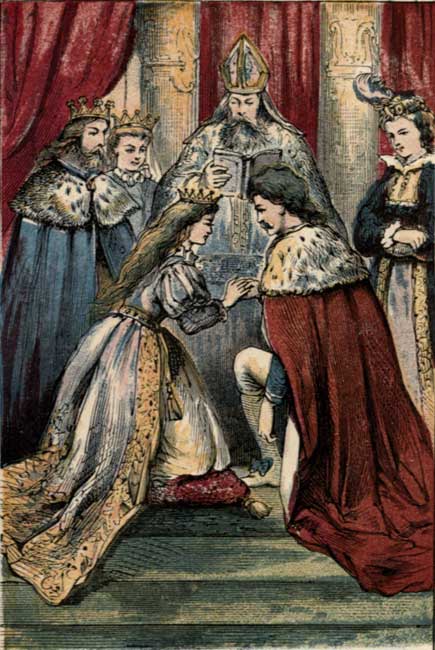
    bagging rabbits and presenting them as gifts from his Marquis master, turning an Ogre into a mouse and eating it, and commandeering its castle to the marquis’s own, all of which lead to the blissful marriage of his master to the king’s lovely princess.

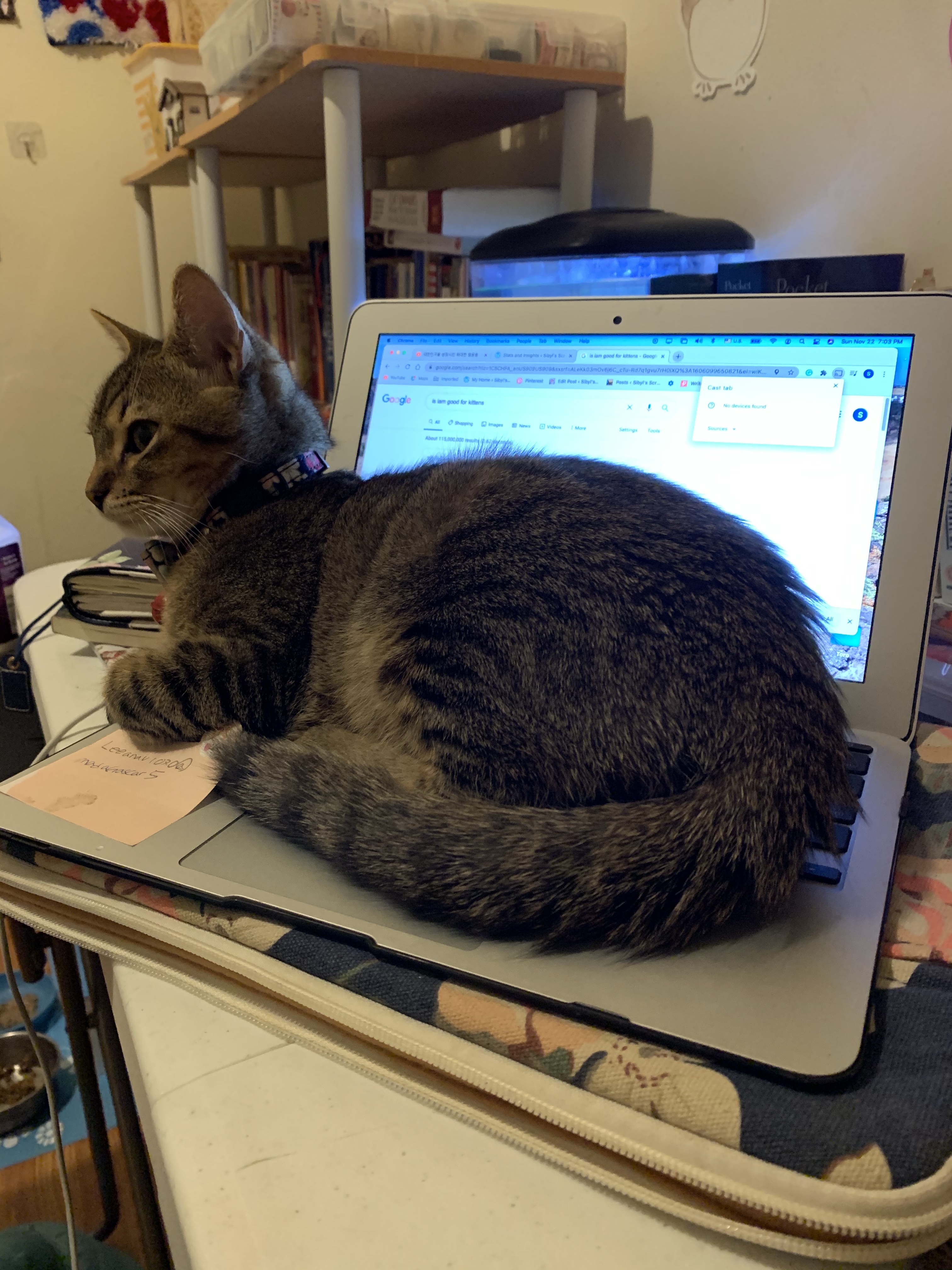
    Of course, the brilliant booted puss becomes a great lord in dolce vita. Who knows? Your molly and tom at home may be a puss in the boots at night when you are asleep. So, be nice to them. They know who you are.

  • ‘The Twelve Months’

    The Twelve Months is a Russian fairytale about good-hearted Marushka meeting the spirits of the months led by the elderly January while hopelessly searching for violets, summer strawberries, and fall apples in the middle of winters as presents for her stepsister’s b-day. Alas, what a cruel task!

    The evil stepmother’s wicked demand for such a task exacts terror and inflicts pain on Marushka. But, the sprits help her and punish the wicked stepmother and sister as January Elder brings forth the mighty force of Winter upon them by the following incantation:

    “Winds, gales, storms, Blow as hard as you can, Rage the whole night long. Whistle in the chimneys, Drum in the skies, Twist and turn over the earth, Like a great white snake.”

  • Elect Sensibility

    The wake of Black Lives Matter and subsequent racial justice movements have upended the fundamental quo of society from education to fine arts with full force and effect amid the Pandemic pandemonium. What was once a work of art is not art any longer if it is suspected of socially inappropriate. The Dawn of Brave New World looms large as the storm of revolution sweeps across schools’ hallways and the galleries of museums. Now the Reckoning Force stops paintings outside their racial principles and social taste in the case of Philip Guston Now.

    According to Julia Friedman’s recent essay about the artist’s paintings mentioned above, museums delayed exhibition worldwide until 2024. The woke culture tries to dominate the arts and humanities like Orwellian leviathan censoring the artistic expressions to curtail them into their Brave New World puritanical disciplines, breeding their types of artists conforming to the abstract figurative standards of ideological art. But that is what the directors of the NGA, Boston MFA, Tate Modern, and Huston MFA have done, holding off Guston’s 24 images from the 19060s and early 70s, which evoke imagery of the Ku Klux Klan through buffo depictions of hooded figures. In terms of the newspeak, the subject matter of the paintings in hooded robes implicate that Guston is a racist who exposes the vulnerable, the most eggshell sensitive viewers of non-whites, especially blacks, to “incendiary and toxic racist imagery” regardless of the intention of the artist.

    In her essay, Friedman opines that a lack of intellectual vigor on Guston’s subject paintings’ contextualization fails to protect the artistic license, but I differ from her opinion. Art is not for the practical analysis of sensibility, nor a vehement statement of a political campaign or social agenda. Art is an ultimate expression of the individual soul with universal appeal to all human creatures regarding principles of judgment and sentiment common to all humankind. In this sense, shaking the foundations of all social institutions and governing individuals’ Sense and Sensitivity are no less damaging than the dictatorship of minds. Just because you in with the Movement does mean you should conform to what they tell you to think and like. Artists should not hurry their imaginations with public affairs at the moment of creation. Stop patronizing the public what to like and how to think. Let us judge them on our own. Let art be for art’s sake.

  • The Rambler – History

    As members of society and citizens of the world, we are one way or another connected to the past, present, and future. That is why history is a multidisciplinary study to understand human nature and learn lessons from the past. Listen to Winston Churchill: “Study history, study history. In history lies all the secrets of statecraft.”  Watching our nation’s leaders on T.V., dividing the country into splinters of dissenters instead of embracing them as one people of the nation, makes me urge the current political leaders of our country to read about what it means to be an intelligent and influential ruler who knows a thing about leadership.

    Roman emperor Hadrian was of history scholar, specialized in ancient Greek history and mythology. He was affectionately known as a “Greekling” and endeared and admired by the Greeks whose land he made in the Roman Empire. The Greeks’ love of the Roman Emperor was inscribed in the Arch of Hadrian built in AD 131, an archeological wonder with the 59 feet high structure made from marble from Mount Pentellicus used for the Parthenon, that read: “This is the city of Hadrian, and not of Theseus.” The Greek elation reached the pinnacle when their Roman ruler built the Temple of Olympian Zeus, Hadrian’s dedication to the king of Greek gods and goddesses’ splendor. He also made the legendary Library of Hadrian, containing 100 marble columns with halls with printed ceilings, alabaster walls, and great statues of the Olympians destroyed by the malice of fortune AD 267. Greek enthusiasm for their Roman emperor was no unreason for their willing submission to Rome’s rule, which they had once colonized. The site of the Temple of Olympian Zeus and the Arch of Hadrian in modern Athens

    The Temple of Olympian Zeus and the Arch of Hadrian

    Hadrian’s fascination with Greece developed from his learning under the tutelage of his cousin Trojan became a foundation of Pan-Hellenism to turn Athens into a new cosmopolitan cultural center for the Roman Empire. By way of acculturation, Hadrian hoped to stabilize the Roman Empire’s fractious eastern part and effectuate the colonials’ ruling. Hadrian followed what the antecedent Roman poet laureate Virgil in the Aeneid to solidify Greece and Rome’s cultural link. In this fashion, he succeeded in ruling the colony with glad acceptance by the governed, who even declared him a founder of new cosmopolitan Greece, intent on cutting ties with the mythical ancient past.

    Hadrian’s motto of Pan-Hellenism reminds me of Macedonian predecessor Alexander the Great’s Hellenism, both of which proved work in incorporating different cultures into a dominant culture with respect and benevolence. Both Alexander and Hadrian had an eye for beauty in arts embedded in cultures they annexed to the dominion and knew how to rule wisely and effectively. It was acculturation of the native cultures on both sides, the ruling and the ruled. Yet, Hadrian’s way of exercising sovereignty over Greece is more accommodating and welcoming, even if the intention was not free from political ambition. The ancient Athenian historian Thucydides confirmed that history is the ultimate record of the events by recognizing certain commonalities between the past and the present that transcends the subject of times and applying it to our present situation. If our current political leaders take a cue about social integration to the same vein’s present social conditions, it might help the country stratified by race and class.

  • The Rambler – Religion

    “To one who has faith, no explanation is necessary,” said Thomas More, who died for his relentless faith despite Henry VIII’s promise of honor he would confer on to his most trusted counsel in his cabinet. Samuel Johnson also confirmed that faith required no byzantine theories or philosophy for the validity of truth. Until I attended a public Sunday mass in a parking lot yesterday, I had not realized the power of faith, which I doubted I still had in my heart.

    The beautiful liturgy of the mass, which culminated in the Eucharist, was akin to a flowing of streams of life to the eyes of a seasick seaman and the thirst of a weary traveler. I had never expected such exaltation of the soul with faith disappearing into an abyss of despondency populated with a school of doubt, disbelief, and frustration nurtured in a reality of everyday life. But while listening to a priest’s sermon based on the reading of Matthew 25:31-46, which is about the importance of practicing faith into actions, especially by sharing milk of human kindness with people you feel least likable or unkindest.

    The priest further asked if we would counsel with God in making decisions in life or just about anything needful of help. No one answered yes because let’s face it, we regard such tendency to recourse to God as a derogatorily medieval way of living life in this Digital Age of Artificial Intelligence. We try to reason our faith with the validity of practical truth and willfully turn our heads from the Gospel with the usual facade of “Religion has nothing to do with it.” But then can you also prove that we are nothing but of a highly complex living organism made of accidental atoms, sans souls? What is the feeling that urges you to search for meaning in life, our sense of purpose? Can atoms do it?

    It is my wholly solipsistic reflection of hearing mass, but now I feel like finding Ariadne’s Thread in the labyrinth to find a way out on this last day of the church calendar. What a feeling. Peace to be with you, and God bless you all.