Category: Miscellany

Anything that’s on my mind.

  • Samuel Johnson Rambles on Dictatorship over Feelings

    VFS109729 Dr. Johnson (1709-84) at Cave’s the Publisher, 1854 (oil on canvas); by Wallis, Henry (1830-1916); 49.5×59.7 cm; Private Collection; English, out of copyright

    Temperance is not an abnegation of sensuous pleasure that is innate to our human nature. It is one’s willingness and ability to rein in his or her horse of impulsive id under moderation lest the driver of the mind chariot lose the control and fall by the wayside of life’s journey and leave it in the lurch of spiritual anomy. Yet, to obliterate the pleasure of the taste that our sense requires for nourishing the body and soul will only produce counterintuitive consequences, leading to noogenic neurosis, chronic depression, or existential frustration that life is nothing but a vast vacant lot. That is what Samuel Johnson, one of the great writers of the English language and a trailblazer of the English dictionary, discerned in his brilliantly unbridled and witty essay ‘The Rambler, No. 32, written on Saturday, July 7th, 1750.

    Johnson was an intellectual of the best kind: erudite in the scope of knowledge drawn on his wealth of reading, artless in expressing his views on the Pooterish lettered caste that prided themselves on the florid display of arcane words and difficult syntax, and charitable in recognition of the vicissitudes of human life without prejudice. Perhaps, such admirable traits contributed to creating a dictionary of the English language, which required the universal understanding of humanity to comprehend the origins and meanings of a language of any kind. According to Johnson, Stoicism seemed too puffed up with its lofty philosophical principles of restraining feelings that would only beget misapprehension of the old school of thought for denying the most natural human emotions.

    Emotions measure changes on a continuum of arousal on the one hand and the pleasantness and unpleasantness on the other. For example, High Arousal and High Unpleasantness produce Fear, whereas High Arousal and High Pleasantness equal to Ecstasy. Low Arousal and High Unpleasantness beget Misery, but Low Arousal and High Pleasantness lead to Satisfaction, which is a positive emotion. It is this physiological state of feeling that Johnson deemed it desirable in the face of existential frustration. One in despair can not eradicate the low tide of an emotional wave but can divert it in a direction that gives a fresh viewpoint on the heart’s malady, thus making life worthwhile to continue with every new try. It is logical reasoning because consciousness predicts the world we live in, a constant revolving hypothesis of reality triggered by neurons in the visual cortex. Since the brain does not have a function to think of itself, it uses a template of emotional scripts based on experience. Thus, instead of willing away unpleasant emotions, one can translate it on a different emotional template, measuring it on the arousal continuum for positive emotional affects. 

    While Stoicism advocates the puritanical governance of the sense and taste for Reason’s eminence, humanity’s natural law revolts against the unnaturally philosophical dictatorship under the disguise of decency and propriety. Stoicism is a school of philosophy that distinguishes the cult from “the sensibilities of unenlightened mortals.” Johnson was right in saying that repressed feelings about pain could only lead to a dormant sense of guilt in a denial of physical reality and later erupt into violent tantrums or perverted forms of debauchery. Pain is part of life, and the way to relieve its severity is by way of finding its riddle with fortitude through doing things that channel the concentration on the pain to something meaningfully pleasant, creating a sense of fulfillment. This concept is also parallel to Viktor E. Frankl’s Logotherapy, a school of psychotherapy about willingness to meaning in life as a result of responding genuinely and humanly to life’s challenges. Both Johnson and Frankl denied no tactile sense of pain, emotional or physical, and prescribed a palliative solution for mitigating a malady of heart.

    Johnson’s essay on criticism on Stoicism agrees with my idea of expressing genuine feelings about sadness to effectively communicate to listeners’ hearts in a compassionately empathic way so that pains will be less burdened, griefs shared in halves, and loneliness complemented in companionship. Likewise, I believe that suicidal feelings arise from that utterly helpless loneliness alienated from the world. They are usually concealed by the actor’s self-made barriers, where the emotions are despotically imprisoned. And I believe that Johnson would have agreed with me.

  • The bio of seventeen weeks old Tabby Tom

    Hi There. Nice to meet you!

    Ralph Waldo Emerson said: “What lies behind us and what lies before us are tiny matters compared to what lies within us. How rightly so. Despite my sixteen weeks of life thus far, my feline instinct feels that there are unpathed waters and undreamed lands within me. So I deem it high time to unravel the mystery of Me.

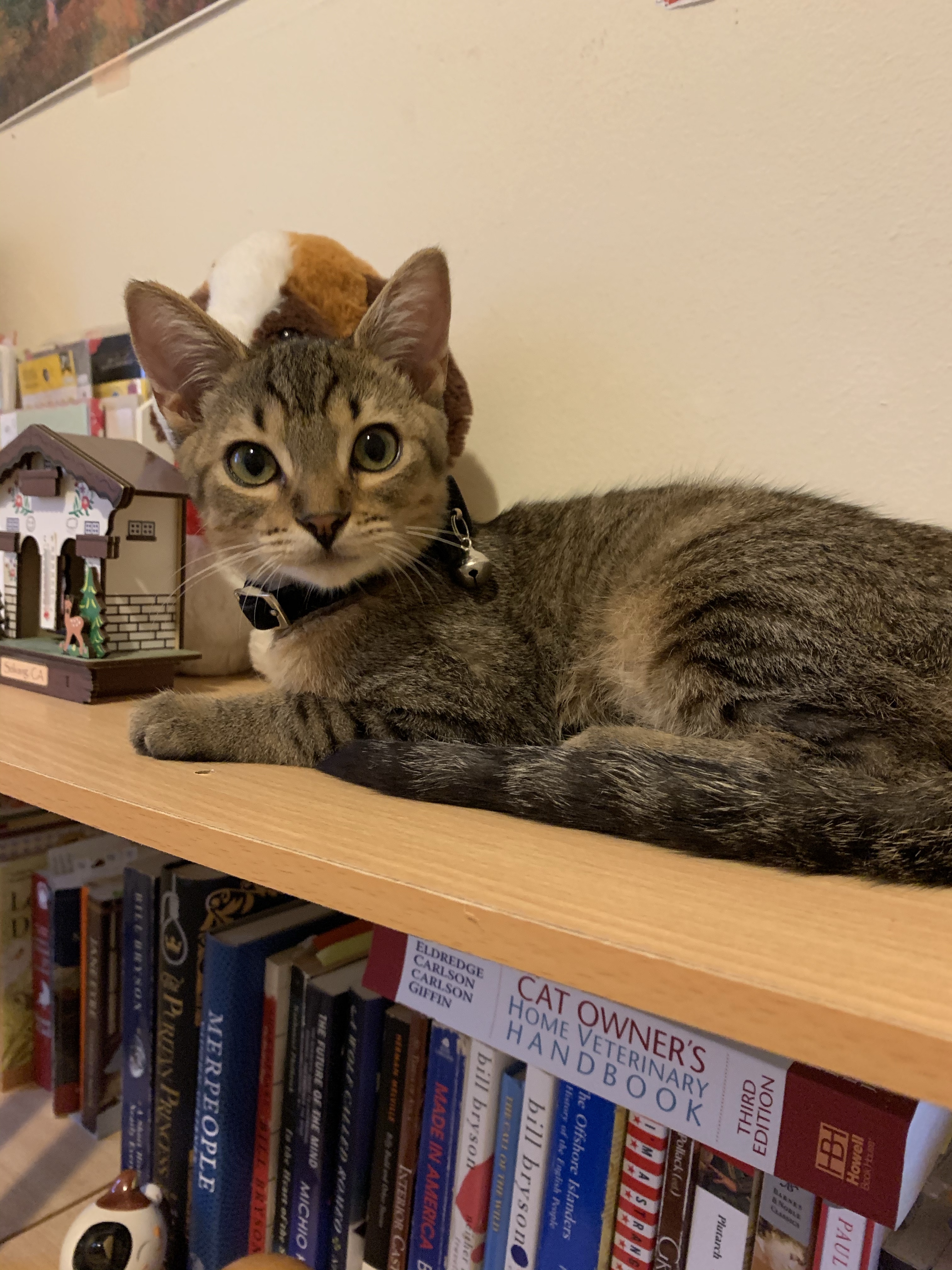
    My name is Toro, the co-editor at large of this blog with Stephanie. I am sixteen weeks old. I am a domestic short-haired tabby tom, but Stephanie believes that I am of an Egyptian Mau, admired by ancient Egyptians and the divine cat of Ra, God of the Sun, as portrayed in the Book of the Dead. I think Stephanie’s hypothesis of my suspected heritage is due to my beautiful turquoise eyes and dainty figure. She also seems to want to liken her and me to Cleopatra and her beloved Mau. (Wow!) Well, no one can blame her for regaling herself with such lofty imagination of my elated pedigree because – in all honesty – I look like one. What can I say? Seeing is believing, and beauty is in the eye of the beholder. Then the truth is to the end of reckoning, as the Bard chimed in.

    As is the queen, so is the subject.

    Despite my regal appearance, my biological and family background is that of an orphaned pauper, lesser than the pauper who exchanged his identity with a prince because he had mom and dad. When I was born, my mother left me alone, so a passing old lady took me to a nearby shelter where I met my sister Stephanie. I followed her because there was something that connected us from moods to tendencies and personalities. We share our peculiarities in mutual solitude shared by orphaned patronage of love and care.

    How’s the writing going?

    Because I was left alone to tend myself at so young an age, I am prone to frequent mood swings from high and low, which often makes me frantically run around the room back and forth, up and down, and left to right without stopping. I know this strange behavior of mine startles poor Stephanie, but I can’t help such impulsive pulsing as it is part of my irrepressible feline nature. However, one thing is sure that when I see Stephanie returning home from work, my whiskers are moving all withers, my tail rises to fortune, and my little feline heart fills with meows and more meows.

    This much is the bio that I dictated to Stephanie for my new career in publishing. As I am excited about this new adventure with Stephanie on board, I hope readers will join us in our one of a kind literary enterprise in joyous spirit! Meow.

    I am done with my share. So, I am taking a break.
  • A Tale of a Cat in Tote

    Finding a good vet is a challenging task

    It may sound funny but finding a good veterinarian seems parallel to Perseus’s finding the Hesperides’ whereabouts, the nymphs holding the weapons for destroying Medusa, as instructed by goddess Athene. The half-god and half-human Perseus had divine help from the goddess to accomplish his terrific mission. Still, the whole human Me, left with my limited mortal device, had to embark alone on a daunting quest for a competently proficient veterinarian who could precisely ascertain the cause of my cat’s gastrointestinal malady with the utmost professionalism and most profound care for animals. So, I want to relate my journey to arrive at the mission accomplished to Hercules’s Twelve labors to fulfill his moral responsibility for the beloved he had slain.

    Toro’s Arrival at the Hospital in Tote

    No, not that I harmed my little sixteen-week old Toro. How despicable! But that he had been suffering from irregular bowel syndrome, aka constipation. Although well-potty trained, Toro had difficulty in releasing excrement completely with heartwrenching yowling, resulting in inappropriate elimination everywhere in my room. As his human caretaker/sister/mother, the onus of relieving him from the pain was naturally on me with an initial frustration of finding the panacea. In a new city with no acquaintance to recommend me an expert on cats, I looked up a list of veterinarians nearby on the Internet, mostly Yelps and Googles’ reviews. As a follower of Thuclyclides on hearsay’s integrity, not on the popularity of the subject from the masses, I eliminated the superfluously effusive complements of reviews suspected of blind bromides advertised by sponsored reviewers. I followed my instinct that led me to a particular veterinarian with less florid advertisements and more evidentiary results of curing cats, one of whom looked a lot like Toro. What can I say? It was more of my intuition, leading me to take Toro to the veterinarian of my choice.

    Toro’s X-Ray reveals his inner world, including a microchip

    The doctor listened to my plea for examining Toro thoroughly with his entire medical history obtained at his adoption from a shelter. He took Toro’s X-ray and explained that it was constipation and that he would inject enema to release due eliminations from his stomach. I was also given a bottle of lactulose solution to be administered to Toro orally three times a day. Besides, he gave me a bottle of Betagen topical spray for Toro’s infected buttocks due to the remnants of dried defecation, free of charge. It was certainly more than I expected of the care, now that the cause of the sickness had already been precisely diagnosed and adequately remedied.

    What an adventure I had today!

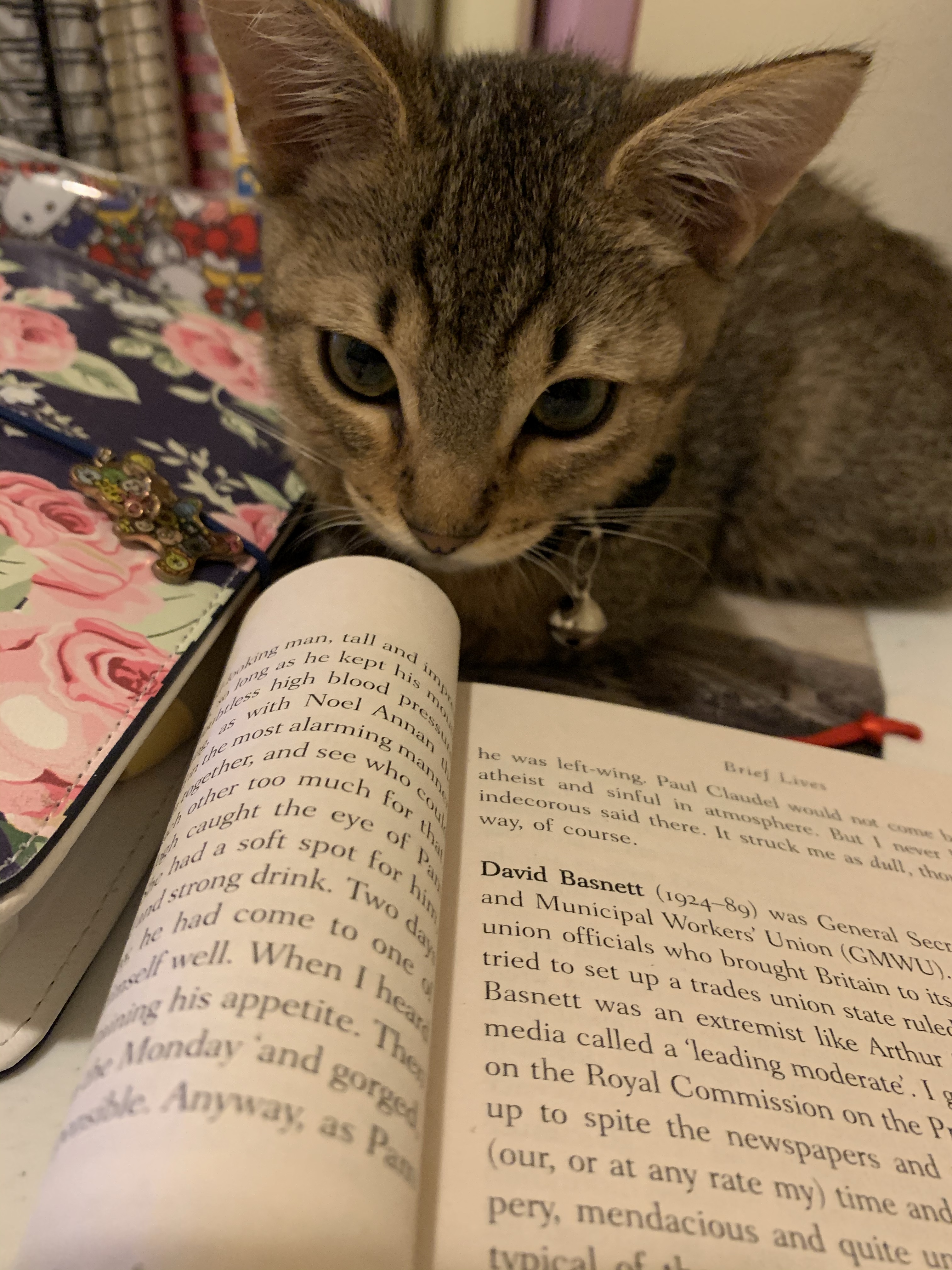
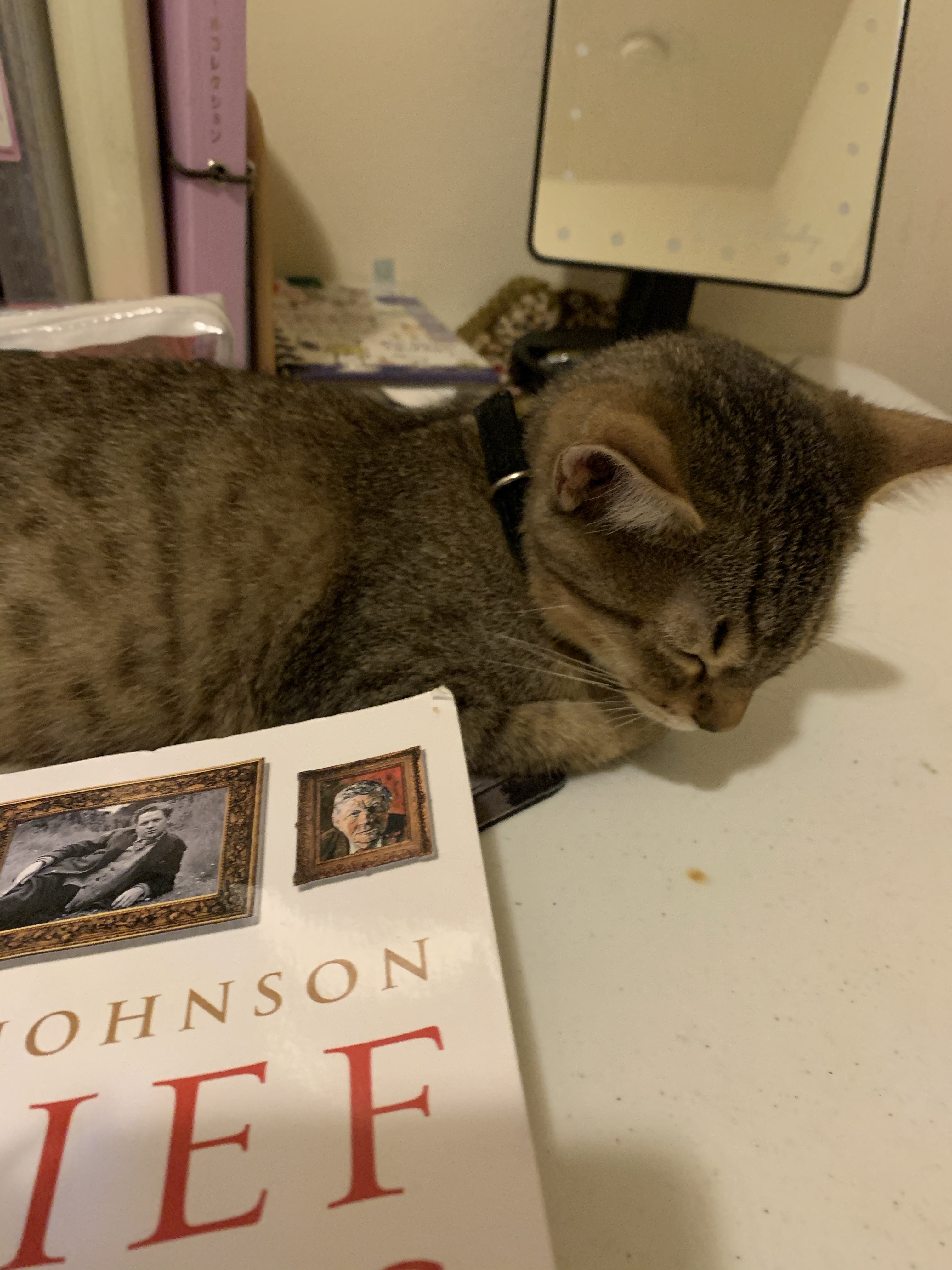
    Toro is now easily defecating in the letterbox. However, he seems to be a bit lethargic due to the oral solution that I have been injecting to him, which is a challenging task every time because of his apparent dislike. But Toro knows that he feels better now than before, so I guess he takes his medication as a daily ritual until the solution is finished. At the moment of writing, Toro is sleeping sweetly on the books shelved on my desk, and looking at him produces a phantasmagorical display of images of all things loving and caring and comforting I have seen from paintings and movies. Would this be the same kind of feeling when God sees his creatures made in love? It may be a bit of stretch, but I like the idea of it.

  • Our Mutual Friends

    Some say animals do not have a faculty of mind that translates the sense into meaning.  I always find it ironic that educated people can sometimes be heartlessly benighted, belittling a simplicity of nature. That they do not have the emotional spectrums, ranging from guilty to remorseful, and to resentful, gives free rein on arbitrarily judging animal behaviors according to human rational thinking that supersedes instincts common to all living creatures. Nor does it sound sane to cosset pets with outpourings of maudlin sentiments out of anthropomorphism for our convenience. We are fortunate to live in the age of the Brilliance of Science. Still, the overflux of information sometimes begets counterproductive results. Amid the deluge of information on animal behaviorism available on the Internet, I am often doubtful, if not fearful, of the way I am raising my cat.

    I observe how my 14-week old tabby Toro behaves from defecating in the litterbox to drinking from the water fountain, playing with his toys, and to watching his new finned friend, Hope, a Betta fish. Although they do not have the faculty to produce physiologically-driven emotional effects as complex as humans, my observation has yielded that cats exhibit a feline version of a continuum from pleasantness to unpleasantness. For instance, when I discipline Toro for not behaving, he does about-face and hides under the bed or goes to a corner of the room, sitting there like a mini sphinx statue, sulking and avoiding my eyes. Then in about 10 minutes or so, he slowly (and stealthily) approaches where I am while still keeping his feline pride in a way he doesn’t want to ingratiate himself with my favor. When finally arriving at his destination of Me, he announces his arrival with the unmissable “Meow,” with his eyes pleading for my petting. Cats may not have the same kind of grudge that we humans secretly harbor as in William Blakes’ ‘Poison Tree.” Yet, they possess the tactile feelings at the primary level, which can be akin to those exhibited by infants. Also, I don’t think raising a single cat will prevent her from socialization or emotional well-being. Most cats do not like to be with other cats unless they are littermates from birth.

    My a posteriori opinion about a myriad of scientific theories and expert dos and dont’s about raising cats happy and healthy is an intelligent hypothesis of feline nature. It attempts to explain why they act the way they do so that we, as caretakers, should take care of them better and more effectively. From my personal experience thus far, it is really up to individuals’ discretion to respond to their cats (or other pets) because each animal has different characters with particular likes and dislikes. So I try not to read more than I need in terms of feline care. (i.g., Toro likes no cat tree, no chasing ball but likes to climb on chairs, shelves, and tables that humans use.) Cats are solitary and egoistic, but that is why they are so affectionate toward us.  As the Victorian British writer George Eliot said, “Animals are such agreeable friends, they ask no questions, pass no criticisms.” Therefore, I would treat my furry little friend as he is, rather than turn him into an obsequious, listless pet whose existence depends on the mercy of his master.


  • Wounded Wings

    I often feel excluded from circles of literary people who seem to think less of what I have written. Be it self-conscious or counterintuitive perception, but my senses feel acutely from the stolid reaction or derisive comments on writing platforms. When my writing is derided or ignored, I take arms against the invisible keyboard scoundrels to guard the bastion of my creative world. Otherwise, I will remain a victim of ruthless bullying combined with barbarous ridicule, which I do not deserve, ever. I am only a human, so there’s no magnanimous pretext of “constructive criticism” because there’s no such.

    There are new comments for my review of a particular book posted on Amazon. The acrid and derisive comments that my writing was incomprehensible pierced my heart with a great spear and put my entire body fixed to the wall. While I have been trying to write better, the comments only affirm a doubt about the purpose of writing. The common denominators of the words were as follows:

    • They were both men.
    • They seemed to form an appreciation of English Undefiled.
    • They were British and American.

    Though I always try not to associate people with their national characteristics, men who speak English as their mother tongue have a certain air of arrogance, young or old, and seem to delight in schadenfreude. What makes these men put their hands on keyboards to pillory my writing skills in public is astonishingly callous and vile. I am with the disappointment dipped in the anger of Timon of Athens uttering, “The unkindest beast is kinder than a man.” How rightly so.

    People associate a fluency of language with a level of intellect, believing that thinking shapes language. Therefore, solecism in writing equals a lack of education, learning disability, or low intelligence. It is their ignorance of such a mode of thought because language is instinct, not a thinking product. It is said that the windows of learning other languages are typically closed at the age of 13. Given that fact, shall we regard someone who tries to exercise an adopted language by writing, however poorly, as a buffoonish dilettant pitifully trying to simulate the impossible?

    I am more in sorrow than in anger as I am trying to compose my emotions’ agitated waves. That does not mean I beg for customary sympathy, empty consolation, or instant charity. I want to defy being put in a public pillory to endure underserving mockery, harassment, and ridicule like a poor maid masquerading as a refined lady of high society. Truth is truth to the end of reckoning, and it will reveal itself someday. You may not like my writing, but that doesn’t give you an ipso facto reason to belittle it.

  • Let Children out of Politics.

    There has been a vortex of fiery opinions on the controversial Netflix film “Cuties,” directed by French Senegalese Maimouna Maimouna Doucoure as her debut feature. I first heard of the movie while checking on Twitter feed filled with vehement subjective narratives divided -yet again-by the in-vogue trend of racially charged political views, which seems to blur the ambit of art for art’s sake appealing to the universal audience. But the unified viewpoint on the provocative representation of sexualized pre-adolescent girls weighs against the film’s thematic slogan of liberation from oppression, come what may.

    The movie has gained a cult status among self-professed progressive keyboard warriors, defenders of social inequality, when in fact, they are seldom in contact with the people they speak for or even get together in their daily lives. That said, the movie has become something of a visual manifesto of social activism, rather than a joy of cinematic experience that bestows a sensory pleasure and mental piquancy on viewers. No pornification and the misguided display of sexual oppression in children’s figures can be sublimated into art. Children are not a medium of political efficacy or a vehicle of personal ambition. The sexualization of children imitating adult acts is counter-productive in translating onto screen per se the socially disfranchised class consciousness in a highly secular society where the income level defines individuals’ worth. Little girls in skimpy attires, gyrating and eyeing in a way that makes them the cult of Ishtar at a Babylonian temple where girls offer their bodies to strange men for holy prostitution. Or shall I say it is a revisionist adaption of “Pretty Baby” or “Lolita” directed by a black woman whose directorial debut is undoubtedly impressive and provocative in the BLM wake?

    It amazes me to see people think themselves rational and reasonable when they are just self-professed egoists illustrated with their ostentatiously abstract view of social reality that seems to be out of touch with their own class. They regard “Cuties” as telltale cinematic radical feminism and socialism with a view to liberation by the parody of the reality. However, these intellectuals oversee or willfully ignore the truth about human nature: physical, rather than metaphysical; it is tactile rather than theoretical. Our faculty of mind is affected by the works of the senses and of the imaginations. To this effect, ‘Cuties” will adversely affect people’s judgment when their eyes direct toward the visual feast of perverted pleasure because the impulse, when arisen by stimuli, defeats Ego, voids the Superego, and commandeers false promise of liberation with rapacious sensuality.