Category: Miscellany

Anything that’s on my mind.

  • Have my say @ bbc history revealed

    I wrote this letter to ediotor of “BBC History Revealed” during my lunchtime today upon reading an article about the Wild West. A prospect of its publication is beyond the pale, outside the boundary of even the slightest hint of flattering hope and vain wish. Yet, I was egged on by to express my opinion on it as a new frontier-woman in California with the literary advice from Henry David Thoreau and Horace Greeley that the West is where we can start anew because of the Pacific Ocean, a terrestrial version of Lethe, the river of forgetfulness.

    Dear Editor:

    The article about the Wild West in this month’s issue was particularly interesting, since I am a recent immigrant from the East to the West: the restive nature, the swashbuckling gunslingers, the outrageous outlaws and the ruthless vigilantes were all embroidered on the popular Hollywood-generated image of the West that became something of a  factoid to people living outside the West.

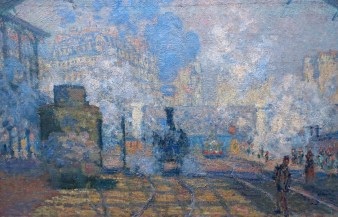
    Even though the U.S. Census Bureau declared in 1890 that no more western frontiers were left to conquer, I believe that the culture and ambiance of the West remains here in California. As someone who lived many years in New Jersey and the New York City before moving to Camarillo, the most distinctive characteristic of California is its unsullied beauty of nature in replacement of the skyscraper jungle as I see every day on the commuter’s railways.

    Surely, there’s no more John Wayne, Clint Eastwood, Gary Cooper, or Paul Newman with Robert Redford walking in the streets. Yet, the spirit of eternal youthfulness is still nuanced by a combination of its beautiful rusticity of nature and a diversity of people interacting with the special aura surrounding the land.  For this reason, the West has not lost its charm with its continuous saga of immigrants in search of better future and the timeless beauty of nature.

  • chapter 4 – hunter

    italian-landscape-sketch_we

    Cumae.

    Whoever denominated this city must have been either inspired by the ancient Roman spirit or just plain high, having a momentary kick of phantasm just as Cumaen Sibyl had experienced in the cave filled with hallucinating gases and vapors. But this Cumae was nothing of the sort. 4 hours of drive from Rome, populated by yuppies, young technocrats, and artists of all kinds, it was typical suburbia that middle-class liberals would like to claim as their permanent residence. No wonder liberal politicians took their winning of votes from Cumae for granted. Which was quite a symbiotic relationship between the constituents and the politicians because young people with money and artists tended to subscribe to liberalism. It was not because they were particularly zealous for the liberal causes, but rather because it suited their modes of life.

    Into this largess of liberality, Hector was driving fast. Driving was never an annoying drudgery, but today it was. He needed to think about his next oeuvre which he did not even have the slightest idea of what it would be. Yet, the image of beauty, that mysterious entity formed by the midsummer’s moonlight sonata two nights ago was keeping him restless, making him breathless, and turning him resistless.  The passion dashed him to the finale of his journey as he was trying to think deeper about his secret imago. ‘Finally, I am at home.’ Hector felt safe and relieved at last when he entered the studio. It was well-kept by Mrs. Maria Martinez, who came to clean on a weekly basis. The paintings and sculptures of his creation welcomed him silently, but that was even more liking to Hector. He felt free from a leviathan of stress, obligations, morality… He was intoxicated with a sudden urge to sing a hymn to Dionysus and wanted to be among the cult of his temple. Out of the bliss of solipsistic presence came his ritual bath filled with an aromatic fragrance and warm water that would melt any man of steel or wood into a captive of euphoric oblivion; it smeared Hector’s manliness with an enchanting perfume of calm and soaked it in Sea of Forgetfulness. So much so that Hector wanted to proclaim such euphoric moment to be part of his Eleusinian Mysteries by hollering “Eureka,” just as Archimedes had done. My dear reader, it all seems that taking a bath would lead one to brilliant enlightenment.

    It was almost 6:00 PM when Hector decided to take an evening promenade. He was a perambulator, taking delight in walking a long distance, which put him in a league with Henry Thoreau, Edgar Allen Poe, and Robert Browning, all of whom walked with pleasure for hours. He could walk far and wide without specific destinations. Wandering like a cloud across the vast skies, Hector returned to his true self as a hunter. He was a hunter again, and he was a want of fresh blood that gave him vitality for life in which he with wife Moira and little daughters had given hostages to fortune. So, like a lone wolf that intentionally broke away from its pack, into the dusky horizon Hector started to walk as his instinct ruled over his way.

  • chapter 3 – beauty rides on mystery train

    monet, the gate saint-lazare

    The route to Arcadia was a painting of Georgia O’Keeffe, a famous landscape artist with an eye for authentic beauty: the restive naked beauty of vales and hills covered with rocks and reddish toil would make the flickering amber of any vapid spirit ablaze with prairie fires in the mind’s field. Looking at the panoply of the spectacular landscape from her seat on the train, Iris could not help but think that it resembled her. The untamed nature in its pristine condition looked a lot like her independent spirit, a unicorn whose wings were clipped by the needs of existential life. The nature without the landmarks of civilization betokened its uncorrupted virgin territory that no force could dare violate it. Nature was part of her, it was whole of her. It was wild and innocent and breathtaking, a mysterious reconciliation of ancient esoteric paganism with traditional orthodox Christianity in her. Iris was contemplating all of this, and she was taking all of it in.

    When the train arrived at Arcadia Station, Iris was suddenly seized with her usual brooding premonition that misfortune might happen to her today. She wanted to ignore it, but it was bugging her like a mosquito in the middle of a sizzling summer night. She had to ignore it because today she would be read what the Fates had spun for her. She wanted to come to terms with it and face the Fates whom she wanted to defy and challenge with the help of the wise woman. ‘This will be the day,’ thought Iris as she walked into the sunlit streets of Arcadia. Going to a pagan witch was against her Christian teachings as though by going to Hellfire Club of unspeakable debauchery and ineffable blasphemy. And yet, Iris wanted to get things sorted out for her own clandestine future and humdrum present. When Iris arrived at the door of the pagan, she saw an adumbral shape of face lurking out of the opaque window stained with the debris of dust. It was the face of a beautiful woman smiling at her. She looked ageless as if age could not wither her away, nor could custom stale her magical power. Emboldened by her beautiful welcoming, Iris went into the bungalow and thought to herself that it was a good thing to take a trip to this place, even if the prophecy would be contrary to her already smoldering anticipation.

    “So, you came all the way from Corinth to find a tapestry of your life. Welcome, I was expecting you.” Iris was flabbergasted. ‘How did she know I was coming? She must be genuine.’ Iris was even more gobsmacked when the woman continued. “Iris, the Fates had already told me in my dream a fortnight ago that you would become. And your grandmother Elaine appeared in my dream yesterday to tell me I should be attentive to your needs. Therefore, my dear Iris, do not worry about anything. You were not alone, you have never been alone, and you will never be alone.” Those kind words, those thousand comforts, all flew from her graceful lips and Amethyst crystal eyes that looked deeper than Sea of Jewel. She was irresistible not to answer, she was impossible to be real. Yet she was there, before Iris the doubtful who would not trade the moment of mystic beauty incarnate in this beautiful mystic for anything now. She was already bewitched by the witch, or was she become already one? Or even more so, Iris would be a changeling born of fairy, bred by a human. All this would be known to the unknown today. Iris could not wait any longer.

  • first woman orbits solo in space on 06/16/1963

    hqdefault
    Astronaut Valentina Tereshkova

    Surely, it must have been the Soviet’s ambitious plan to claim superiority of its scientific advance and social progress over the capitalist imperialists. However, in recognition of its achievement, free from bias and embellishment, we should transcend the subjectivity of the political ideology and reach universal truth and applicability, which is a principle of studying history as championed by the ancient Athenian historian and general Thucydides that still reverberates down to date.

    Fifty-six years ago from today was when twenty-six year old Valentina Tereshkova successfully orbited alone in a rocket named “Vostok 6” with her call sign “seagull.” It was two years after Yuri Gagarin had commenced the age of spaceship, and it was the first time of womankind to be in space. Coming from a model proletariat family of a tractor driver father killed in action in the Winter War against the Finns and a textile worker mother, Tereshkova was the “It” poster woman for the Soviet Union’s social and cultural ideological emblem. Raised by her mother, she didn’t go to school until the age of eight and left six years later to work in a local factory. It was during this period Tereshkova discovered a singular hobby of parachuting.

    The Soviet authorities were looking for candidates to become the first woman to go into space two years after Gagarin’s space travel. Goddess Fortuna winked at her and inspired her to apply for the candidacy, which was the job to be had only for the asking, because she was the woman they were looking for: (1) there were relatively few she-pilots to endure the rigorous training requiring mental as well as physical strength; and (2) she was the child of a war hero whose life was sacrificed for a patriotic cause with immaculate proletariat family credentials. That is, Comrade Tereshkova was the Soviet’s ideological manifesto incarnate in all aspects.

    After fifty-eight orbits lasting more than two days, Tereshkova returned to earth and found herself famous. But she deserved such recognition and respect because she demonstrated courage, go-aheaditivess, and strength eloquent of womankind in the most elegantly powerful way without brandishing a banner of feminist screed that the equality of women’s rights must be also exercised in space by orbiting in a rocket. Moreover, her non-elitist social and cultural backgrounds in comparison to those of famous Western European or American woman notables was worth noting that true equality meant for all regardless of rank and meritocracy because it would reveal everyone’s adumbral talent.

  • names do matter

    1024px-times_square_new_york_city_hdr

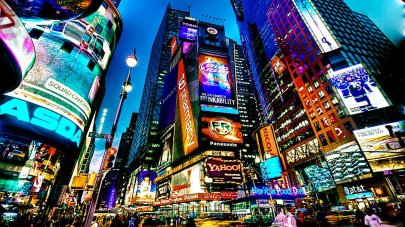
    Some brand names have become unique nouns in days of our lives: a box of Ziplocs to carry leftovers from last night dinner for lunch, an iPhone that has become a safety blanket, a Kindle for all-around entertainment, and a box of Kleenex to wipe away make-ups or tears… Then there are the ubiquitous Starbucks stores for perk-me-up coffee or regular hangouts… The panoply of brand names is illustrated in the ordinary scenes of our daily life as a byproduct of endless human cultural and social enterprise. Hence, I think it worth noting the origin of some of the globally proverbial brand names of products that we are familiar with.

    The first and foremost principle of naming a product is to make it as catchy and snappy as possible to effortlessly remember. In this regard, Nomitative determinism can be also linked to a name of a product because it can decide its longevity and popularity based upon the ingenuity of name that matches its purpose with brilliant ideas taken from literary inspirations, cultural influences, or historical artifices. Take Mazda, which is originated from Ahura Mazda, the ancient Persian God of light, wisdom, intelligence, and harmony, the highest supreme being in Zoroastrianism. It is also a symbol of eastern and western cultures. Nike is the winged goddess of victory with the resounding slogan of “Think Nike”. Starbucks comes from the chief mate in Herman Melville’s classic Moby-Dick. It is also interesting to know that the name Starbucks belongs to the famous wealthy Quaker shipowner of Nantucket in Massachusetts as featured in Nathaniel Philbrick’s In the Heart of the Sea, a nonfiction narrative of the tragedy of the Whaleship Essex. And there is Yahoo, which is a deformed savage in Jonathan Swift’s Gulliver’s Travels.

    Some brand-names are curious blending of words. Vodafone stands for Voice, Data, and Telefone. Here is a classic example of ASICS, a Japanese sport goods company, whose cool name is derived from Latin, “Mans Sana in Corpore Sano,” meaning “Healthy mind dwells in healthy body.” Which is a motto of ancient Greek’s competitive spirit manifested in Olympiad. Then there is Volvo, meaning “I roll” in Latin, while Lego actually comes from Danish word for “play well”. And who else can ignore the presence of Amazon, the largest river in the world?

    That which we call car, cellphone, or coffee by any other name would remain as functional and purposeful to make our life convenient and accommodate to our whims and desires. So why not give it a clever name to remember with a burst of pep? It’s all about the art of witty soul of brevity that penetrates the psychology of the mind in the world of adverts.

    vc4a5

  • before the train came

    It was an ordinary commuter’s early morning on a platform at a train station. A train would arrive in 10 minutes, and the people whose faces were no stranger than those of my distant relatives were starting to gather on the platform, waiting for the second earliest morning train to carry us into our destinations of a new grateful day of livelihood or leisure or even escapade, maybe. Which might be the case of The Man and The Dog in this video I took as the train whistle was heard in the distance .