Category: Miscellany

Anything that’s on my mind.

  • Blasphemous

    img_0364
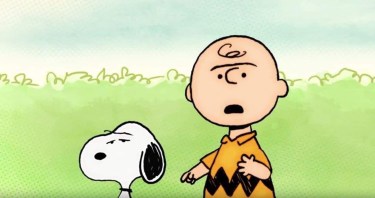
    The state of my heart is incarnate in Snoopy. The collective criticism on me is expressed in Charlie Brown.

    It’s 10 minutes before regular Saturday Vigil mass begins, and I am sitting on my regular pew, feeling responsible rather than faithful. I wonder if I am being irreligious or irreverent toward the existence of God and the observation of the ancient rite of faith that has been performed for a long thread of centuries from the Last Supper to this Modern Day of Social Media. For my trinity of Heart, Soul, and Mind is not one with this belief when my emotions run counter to the teachings of the Church that seem incongruent with everyday reality. If this sentiment had been read aloud in the 16th or the 17th century Europe, then I would have been labelled an immoral atheist, a pariah cut adrift from the traditional mooring in the canonical faith and morals of Christianity.

    My anxiousness about the existence of God is emotional, rather than logical in the working of the intellect, which has been shared by writers, philosophers, and even canonized saints of the Church. According to Professor Alec Ryne’s article of “The fury that filled the rise of atheism” as featured in this month’s BBC History, the workings of emotions and the first-hand experiences of uncharitable Christians and dogmatic clerics laid out a foundation of atheism in the 16th and 17th centuries, which later became nourishment of modern western civilization.

    The French polymath Blaise Pascal knew about the power of emotions: “The heart has its reasons, of which reason knows nothing.” In fact, humans make the great choices of beliefs, values, purposes intuitively, unable to articulate how and why they have been made. This means that prior to the establishment of conformed sets of moral code and religious doctrines, the Creator has already imprinted moral and ethical guides in the human mind. This can be also meant that you can be an atheist or unbeliever with a good heart because your conscience, the law of nature, can be a guide to an outward moral virtue.

    In fact, the Enlightenment’s prime critique of Christianity, that is the churches in a broad sense, was that it was “immoral.” Thinkers, such as Voltaire and Thomas Paine declaimed against the churches because of their moral revulsion. Paine furthered his vehement subjective on religion as a human invention, set up to terrify and enslave mankind, bereft of advanced metaphysical views on the churches. In other words, religion as an institution should not govern human free will to decide moral choices laid out by arbitrary set of invented rules.

    Thanks to the works of philosophers based upon humanism, a discovery of belief in contemplative retreat to natural wonder percolated institutionalized belief through individual spiritual reformation. That you can find God in the beauty of nature and the wonder of how the human body and mind work is a way you can affirm the existence of God as a manifestation of God because all of it could not have created itself. As a matter of fact, this natural way of finding the existence of God was St. John Paul II’s favorable method of praying during his lifetime because being a former student theater actor, he could see the clear signs of God in the workings of nature. Which coincides in the Enlightenment thinkers’ views on belief, free from institutionalized doctrines of belief.

    In light of the above, my crisis of belief was more of emotional than of intellectual. The temptations that there was no God, also sprang in the minds of St. Therese of Lisieux, St. John of Cross, and other saintly men and women. Even Jesus on the Cross cried out, “Father, why have you forsaken me?” Which indicates the workings of emotions in the face of existential strife, a vantage point from which belief they had steadfastly held no longer or momentarily felt true. From angry unbelief that religion was morally intolerable to anxious unbelief that religion was an ethical institution, the history of atheism has ironically redefined the notion about belief, authentic faith, by pointing out the corruption of the churches and purifying the understanding of God as the modern world is familiar with. For me, it’s high time I went hiking on the nearby mountain trails to seek a manifestation of belief for My Own Reformation of Belief.

  • the ancients already knew it

    BUJDt1DIAAA7rUX

    The brain is a foundation of the universe that controls our physical as well as mental being. In a similar manner of the cosmos constantly moving across the great divine space, the brain fires nerve cells called neurons and expands their territories from the physical realms of perception to the world of consciousness, which creates a model of our own reality. The brain is the leviathan enterprise that puts together the tesserae of our existence under our constant attentive care of its functional longevity by understanding its fabulous varieties that neither age cannot wither away nor custom can stale away.

    Our brains keep learning and adopting throughout our lives by the two neurological processes: Neurogenesis by which the brain creates neurons and neuroplasticity, the ability of the brain to rewire the connections between the neurons. These processes continue to change and grow our brains into very old age as scientifically corroborated by the finding of these neurological processes in the brains of 70-year-olds with terminal illness. Also, Albert Einstein whose brain was dissected after his death to unravel the secret of the genius was found to have more interconnections between the neurons in his brain. This is very telling evidence because Einstein was considered “slow” during his high school years. What Einstein made genius was his use of imaginations and reasoning skills that required of him the use of the faculties of the mind to the extent possible by firing and wiring millions of neurons. To further illustrate the wonder works of neurogenesis and neurolplasticity, scientists have found it in the avian world. Unlike other birds, canaries produce new melodies every ear to attract a mate. On examining their brains, scientists discovered that canaries generate each neurons each spring.

    The theory of the brain is not as complex as it seems. Simply put, thoughts are like “sparks” rising from a campfire or sunlight’s igniting fire when focused through a magnifying glass. A thought repeated with intense focus becomes concentrated mental power, which becomes a dominant, archetypal energy that authorizes our thoughts and actions. These thoughts in the form of neurons form neural networks, which are like paths through a meadow. What we should do is a change in our brain by rewiring the neural pathways that drive our thought and actions. Einstein, whether or not he knew about neurology, constantly expanded the neural networks by engaging himself in finding a Rosetta Stone for Relativity Theory and other questions of the Universe.

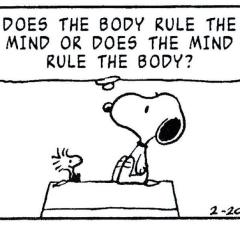
    The workings of the brain are in conjunction  with the upkeep of physical exercise, social interactions, and new daily challenges because they are portent stimuli to ignite ongoing mental sparks in the brain. In fact, the ancient Greeks and Romans already knew about the key elements of keeping the body and mind fit with the slogan of “Mans sana in corpore sano” (Sound mind dwells in healthy body.” Father of western narrative history Herodotus noted a holistic connection between diet, drink, exercise and lifespan. Socrates pointed out that many people did not think clearly because their body wasn’t in good health. His pupil and founder of Lyceum Aristotle added that physical exercise was essential for general mental and physical capacity. Then there was famous Roman orator, writer, and statesman Cicero proclaimed that soundness of mind depended on applying one’s energies to something of interest. This relates to the empirical finding of keeping the mind fit and alert in spite of horrible existential situations as evidenced by founder of Logotheraphy Viktor E. Frankl, who endured the horrors of daily life at Auschwitz and other subsequent concentration camps by persistently forcing this thought to turn to drafting his books on the tablet of his mind to publish them after the war. It’s both a priori and a posteriori illustration of how channeling one’s interest to intellectual or creative activities keeps his mental state stable and fit in such a dreadful mire of despondency and atrociousness.

    In light of the above, it is not a hyped fashionably cliched mantra that we are what we think and what we do all the time. Popularity of self-help literature bestriding the bestseller charts has the origin of truth in the workings of the brain in the form of neurogenesis and neuroplasticity. For my own brain at the moment of writing this essay is firing and wiring neurons, expanding the neural pathways and the yonder territories of my consciousness. The brain is then also plastic because it is being shaped by everything we do and what we opt not to do. It’s really a self-fulfilling prophecy without recourse to deities or even demons. Consequently, the more actively we use our brain to accomplish new daily challenges by fulfilling demands placed upon our daily tasks however trifle and insignificant that may seem and learning something creative or intellectually stimulating, the healthier our bodily and mental health becomes. Which is elegantly summed up by poet Henry Wadsworth Longfellow: “Still achieving, still pursuing… Learning to labor and wait.” For this reason, the brain and the mind are concomitantly intertwined to constitute our wholeness so fascinating, so awesome that even a Psalmist praised God because we are “fearfully and wonderfully made.” Surely, the praise is worth the singing, for our brain and its works are indeed a wonder.

    저장

  • leonardo’s horse that came alive

    01-leonardo-da-vinci-og.adapt
    “Il Gran Cavallo” in San Siro, Milan, Italy

    It was meant to be the largest horse in the world when the future Duke of Milan Ludovico Sforza commissioned Leonardo Da Vinci in 1482 to conjure it up from the phantasmal world of the artist with his magic chisels. This fantastical statuesque beast, “Il Gran Cavallo” (aka “Cavallo”) was soon to be cast in bronze, standing 24 feet high as the greatest equestrian statue in the world, following the clay model of the equal height made by Da Vinci. Then war broke out in 1499, ravaging Milan and engulfing the clay horse, leaving Da Vinci alone with the original sketches of Cavallo to go back to the drawing room. Such was Da Vinci’s plan to restore the aborted birth of the magnificent bronze horse before it became indefinitely suspended by his death.

    The story of the unfinished Leonardo’s Horse piqued my usual counter-popularity curiosity when I came upon an article in a magazine on the train. Since this year sees the 500th anniversary of the death of Leonardo Da Vinci, many an article has featured the masterpieces of Da Vinci and the background stories thereof, but to me none other than this story about Da Vinci’s last masterpiece is intriguing and worth the writing. In fact, this “Horse that Never Was” had spanned a phantasmagoria of imaginations throughout the centuries until a certain American art patron named Charles C. Dent intended to make it his lifelong goal to bring the abstract equestrian statue to reality in 1977 when he first learned about Leonardo’s incomplete project about which the National Geography magazine covered. Upon his death in 1994, American sculptor Nina Akamu continued to carry out where her Renaissance predecessor had left off based upon the surviving sketches as a substratum of artistic guidance and completed a bronze sculpture of the horse in 1999, which was dedicated in San Siro in Milan, Italy. The great statue of Cavallo is a sight to behold with poised magnificence: it commands a sense of legitimate attention in a moment of suggestively continuous galloping that looks wholly authentic and real, rendering a majestic impression of dynamic continuity to marching music as pomp and pompous as Radetzky March.

    Da Vinci’s creation of the great horse proves to be his last masterpiece that truly links the past with the present and the future by the medium of art. It weaves the subjectivity of time into a grand tapestry of history and betokens cultural achievements as an intelligent collective enterprise. Akamu wonderfully re-created the great horse by internalizing the artistic sense of the Renaissance period by devoting her years of studying Italian Renaissance works of art in Italy as she pursued the highest levels of craftsmanship and professionalism in the field. Also, her love of animals, especially horses, contributed to the anatomical study of and aesthetic perspective on Leonardo’s Horse. Akamu’s recreation of Cavallo manifests beauty that penetrates minds of the beholders and lingers there in solipsistic ecstasy so deep and intimate that it feels almost physical. For our faculty, as it interacts with a plight of fantasy, is rather instinctive than reasoning; rather sensual because it delights in pleasure than because it thrives in disciplines. That is why “Il Gran Cavallo” is a gorgeous piece of art.

  • Lifeline advice from Francis Bacon

    Some wise people take shadows for true substances. Like medieval mounted knights in body armors, they skillfully protect themselves from the exploitation of their true substances in everyday interaction with the people they are forced to work with. How the wise accomplish this art of shielding amounts to an art of war in its defensive and offensive strategical tactics as well as to a discipline of cognitive behavioral therapy in its practical approach to noogenic neurosis or existential crisis. English philosopher Francis Bacon (1561-1626) knew all about this intricacies of human nature in conflict with existential planes, ergo he advised to the posterity how to keep our individuality from pressure of false conformity under the pretext of socialization.

    According to Bacon, simulation and dissimulation are an armor and a shield to guard oneself from being a subject of malicious gossip or cruel bullying, if used wisely. The dichotomy of two principles is simple: simulation as being what he is not. That is, he pretends to be someone he’s not. Dissimulation as being what he is not by way of concealment. However, simulation and dissimulation should not be confused with signs of diffidence or cowardice. On the contrary, it is for the benefit of anyone whose softness is often mistaken for weakness, his hamartia in all things he hopes to achieve. In fact, Bacon posed the advantage of simulation and dissimulation as thus: (1) to quell opposition and to surprise – that is, being a wolf in sheepskin can be a good thing in social interaction as long as you do not hurt anyone with claws and teeth; (2) to reserve a fair retreat to a man’s self – which means by concealing himself to a certain measured degree, he can protect himself in a situation that he feels inappropriate to him. It’s better kept to yourself in a situation that feels and seems a bit averse to you; and (3) to discover the mind of another by letting the other party open himself and turn his freedom of speech to freedom of thought. Simply put, let the other one do the talking until the tower of barbel rings the bell of the talker’s mind to retreat into his chamber of thought. In the end you will remain unsullied by the pompous self-revelation.

    As a coin has two sides to it, the principles have the disadvantage that is inescapable. It casts a shadow of fearfulness that discourages people to flock around the quiet one. Also, it transmits a false impression on others who might otherwise corporate with the the reserved one, which then unfortunately begets a deprivation of camaraderieship or closeness that the thoughtful one does not deserve. Hence, it will be the best to concoct doses of (1) prepossessing demeanor; (2) secrecy in habit; and (3) concealment in use – all for the power to feign, so as not to get hurt unnecessarily by those whose intellect, characters, personalities, and habits do not amount to your class and thus are unworthy of even tying your shoelaces. Bacon’s elegant treaty of simulation and dissimulation may seem heretical, treacherous even to the minds of today’s world where stark self-revelation is highly prided and treasured as a modus operandi of self-empowerment paddled by motivational speakers, clinical social workers, therapists, celeb-turned authors, etc… However, of all the chanting mantras of “being yourself”, Bacon’s method of being yourself by means of simulation and dissimulation to guard your most sacred mental sovereignty is still powerfully resonant with its practicality that strikes the hearts of those whose mildness is used against by the rabble.

  • for love of a tabby

    praying-cat
    Praying cats

    As a dog person who always has a soft spot for the man’s best friend, I tend to give a rather stoic glance on a cat that seems so high and aristocratic to reciprocate my regard. Cats are the cool, agile, cynical, and independent lords of the households, the poised and legal Pharisees of the animal kingdom. Yet a comparison of superiority between the canine and the feline is a puerile way to exert one’s favoritism of one species to another, which is reminiscent of eugenic theory of a superior race aggressively peddled by intellectuals in the early 20th century. That said, this note on cats reflects my findings of cats as man’s timeless companions in historical contexts, casting different lights over their stereotypical sinister image that I had about them.

    170px-Interior_of_a_school_in_Cairo_(detail)
    Mohammad and Muezza

    Cats as a symbol of witches betray the fact that a revered religious figure such as Prophet Mohammad was very fond of a cat. So much so that his pet cat named Muezza was treated with the utmost tenderness. It is said that Mohammad used to shiver without his cloak in the cold rather than disturbing sleeping Muezza. Further to the Mohammedan episode of his beloved cat, cats have a sacred pedigree in Christianity as well. It is said that a local tabby, after a fresh wash, instinctively jumped in and laid down next to Baby Jesus. The cat’s warmth and soothing purr, all the more added by a pleasing after-wash scent, were conducive to an undisturbed sleep of the baby. In fact, researchers claim that letting a cat sleep on your bed at night will relieve you of symptoms of insomnia due to its calming purring sound that sends relaxing positive signal waves to your mental as well as physiological wavelength.

    51m9fTbUyKL
    C.S. Lewis and his Cat

    C.S. Lewis, Author of the Chronicles of Narnia, also loved cats and had a stray cat he loved tenderly. Every morning he took his hat off when greeting his cat with pleasantly resonant “Good morning.” Moreover, when his veterinarian told Lewis to euthanize the cat due to its senility, the great Lewis refused to do so and nursed the cat for years until it finally met its creator.

    Baby-Jesus-and-the-tabby-cat-artCome to think of it, cats have appealed to the fountains of imagination and boundless perception in the human mind. The ancient Egyptians worshiped the lithe beauty of cats that distinguished itself from other animals. Edgar Allen Poe also saw something magically fascinating in a feline creature as his creative muse in literature. For me cats do not seem to be as cold, arrogant, and coquettish as they used to be. I even say hi to my neighbor’s big beautiful cat in sight, although it sends me a quizzical look as if I were a Prodigal Daughter. But above all, now I think that not only dogs but also cats will go to heaven.

  • solo button for joe meek, really

    JoeMeek
    Joe Meek at work (from google)

    I had thought Joe Meek as an imaginative character in the eponymous title of electronic music by Matmos until I came upon an article about the real Joe Meek from this month’s History Revealed. Since I liked the music, I read it with relish, which was also a great pleasure entertaining a long commute time on the last train home after work. It was indeed worth the reading because the article was both informative in telling about this highly sensitive artist who was ahead of his time and reflective in leaving the reader to ponder about what rushed into to cancel his own fate in his own hand.

    Joe Meek was an innovative and unique record producer in 1960s, but he was more of a maverick figure in the music industry because of his uncompromising individuality in musical taste paired up with his blazing volatile temper, which were attributed to his thespian epilogue. But according to the article, the most capital assumed factor contributing to the tragedy of Meek was said to be his homosexuality in the time when it was an illicit tendency of warped minds and degenerate souls that belonged to Sodom and Gomorrah. That is to say, shoehorning obsession with sexuality into the sine qua non of a man’s demise is a non sequiter without considering other evidentiary elements.

    It seems that Meek had cultivated the trauma of violently depressed, pitifully unstable childhood into a grand unified theory of self-loathing that in turn became self-indulgence to an inordinate measure. It was more of a lack of parental love and support in his childhood that fueled Meek’s high-strung disposition like an unquenchable prairie fire in wilderness. It is a precipitately formulated hypothesis that Meek’s tragedy ensued from his paranoia of persecution of homosexuals in his time. For a panoply of unpleasing manifestations, including alcoholism, drug addiction, compulsive copulation, enduring guilt, and an inability to form a lasting emotional relationships, are also shared with heterosexuals. To me what Joe Meek suffered from was his inner conflicts with his unhappy past, his sovereign artistic sensibilities that made him uncommunicative and estranged, and his sense of insecurity, all pitchforked in existential reality of life where he as an indie producer had to constantly worry about what to do next if his records did not produce lucrative results. To corroborate this hypothetical theory, Joe Meek was said to have a Janus personality, redolent of the characters of Dr. Jekyll and Mr. Hyde, because he was also a very affable person with polite manners and a sense of good humor in to the bargain.

    Such a man of complex inner world is often prone to fatal mental breakdown, which happened to Joe Meek. What carried Meek over the last sacristy of his sanity was his being interrogated by the police for the infamous “Suitcase Murder,” an epochal murder plastering the headlines of the media in January 1967 when the raped and dismembered body of 16-year-old Londoner named Bernard Oliver was found in two suitcases near the city. The police was hell bent on investigating all homosexuals in the city, especially the high profiles ,one of whom was the unfortunate innocent Joe Meek. Consequently and patently, the Inquisition let loose his sanity, resulting in his shooting his landlady and ending his own life thereafter. He was only 37 years old.

    Therefore, to conclude that it was all about his homosexuality and nothing more causing his tragic end seems to ignore other more mental, spiritual, and existential matters that Meek must have struggled with. A spiral of loneliness, insecurity, frustration, and disorientation was Joe Meek’s quagmire, and from this quagmire in turn came his own killing field. “See though fear. Face the fear. Recognize a lie or a masquerade for what it is and deal it with a mortal blew,” said Ralph Waldo Emerson during his lecture to young men. But sadly, Joe Meek was too beaten down in harsh existential life where he felt unwelcome all the time despite his great artistic achievements. Thus, to end himself seemed to be the only escape from emotional turmoils, “for who would bear the whips and scorns of time… the pangs of despised love… when he himself might his quietus make with a bare bodkin?” –Hamlet, Act III, sc I.

    Author’s Note: This writing is based upon my review of an article about Joe Meek from this month’s historical magazine History Revealed. Normally, I would bypass an article of similar nature, but this one held my attention for the following reasons: (1) Joe Meek’s dilemmas ensued from his inability to cope with the demands imposed on daily tasks in life due to a constant grip of depression and anxiety;  and (2) application of Freudian psychoanalysis on his miserably repressed sexuality in public to the proximate cause of his tragedy disregards the more essential elements of humanness. For these reasons, I felt pathetic toward his life, and thus wrote this writing.