
What an immaculately beautiful sunny Saturday it is! The sun claims its indomitable superiority alone in the azure sky without the scatterings of clouds with occasional pleasant breezes sent from the nearby Pacific Ocean, or “the Lethe of the Pacific,” according to Henry David Thoreau, who saw the West as Land of Rebirth or Rejuvenation where you could exorcise all your past easterly mishaps and misfortunes by the baptism of water in the Pacific. In the poetic eyes of Thoreau, a Lethean stream flew through the West, and it was imperative we drink it to forget the Old World and its Institutions in order that we could start anew in the West. With this poetic justice rendered by Thoreau in mind, Mary Lamb, a benign spinster and loving aunt of Sally Lamb, couldn’t think of doing anything more pleasant and uplifting than tending to her lovely garden this afternoon.

Mary is an expert gardener trained in her old family home in New Jersey when she was little. It was her father Ted who inculcated in her the wonder of nature and the beauty of simplicity. On point of digressive notes, people think that it was Leonardo da Vinci who legitimatized the aphorism of “Simplicity is the ultimate sophistication.” But come to think of it, who would not have arrived at such stratagem of aesthetics throughout our human civilizations? It’s all about the merits of whoever said it. That is, your status weighs against the validity of sayings. For what’s worth, Mary’s gardening skills and her love of gardening prevails on any such abstruse philosophical musings of influential talking heads just for the sake of its pleasantness.

Laura Collie, a good neighbor of Mary and trusty confidante, calls on Mary’s to look at her lovely garden in the afternoon. Laura wants to decorate her backyard with flowers and hedges around it, but the whole task of doing it seems daunting because she has so many other businesses to attend to: a wife, a mother, a shopkeeper, and a member of church’s guild for women. Laura thinks that Mary’s spinsterhood imparts freedom from marital obligations to her, which sometimes Laura secretly covets. But then unlike Mary, Laura is always surrounded by her laconic but loyal and understanding husband Paul and their perky and smart daughter Julie at home. Surely, looking at Mary’s gardening makes anyone think about the life itself. It’s a visual exhibition of life with its vicissitudes, with its impositions, and with its obligations, all beautifully embroidered with flowers, plants, and trees.
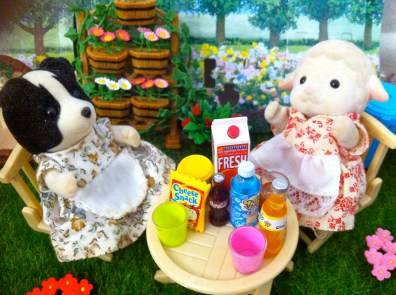
When Mary finishes her gardening, she invites Laura to have refreshments with her in her proud garden to bask herself in the beauty of the sun and nature in general. It’s also very gratifying to have a glass of cold orange juice or Fanta after laboring on the nature’s work, which Mary regards as a religious experience of being a guardian of nature with the power of appointment by the Creator. Mary, who is also an admirer of Thoreau’s work, understands why Thoreau did not go to church despite being a Christian; it’s because of this feeling of sacred guardianship of nature conferred by the Creator, which can’t be felt by mechanical recitation of prayers without understanding the meanings. Although Mary’s unorthodox views on faith and the church worry religious Laura to a certain degree in a way that makes her unmarried friend look perched precariously on the brink of heathenism like a solitary village cunning woman in Elizabethan England accused of being a witch, Laura admires her spiritual friend’s tenderness toward nature and aesthetic expression of herself through gardening that is all the more resplendent with her erudition from reading many a good book, mostly classics pertaining to previous centuries. While enjoying the carpe diem of the afternoon, both Mary and Laura think in harmony that God is in his heaven, and all’s well with this world.

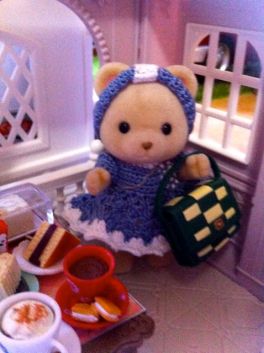




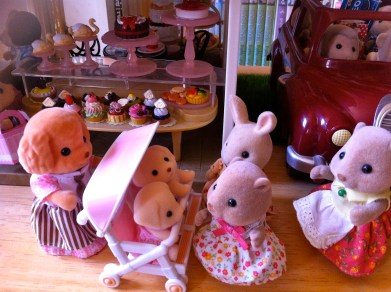


 “Hello, this is Sally Lamb of 62 Errant Terrace, Apt 1C, Ritterford. May I speak to someone in the accounting department?” Sally really did not want to call her apartment management company. She would avoid calling them at any cost because it was operated by the descendants of Scrooge; or so they seemed. Despite the fact that Sally had been a conscientious tenant who paid her monthly rent fees on time, the company never responded to her requests for any repair of out-of-order fixtures through no fault of her own. Their response was always uniformly scripted as thus: “Put it in writing.” She had acceded to the blimpish command as dutiful tenant to landlord, but she then gave up pleading for any mercy with the shylock company. You see, it took Sally’s guts to call the management and asked for the particularly supercilious woman dealing with her apartment matters.
 “Yes, what is the matter?” the usual callousness of the woman on the other line punctured her heart, but Sally tried to muster what vestige of courage left in her spirit. She was Lamb to the slaughter. “Yes, I just would like to know when you can pay me back for the overpayment of my apartment rent fees? Can I get it next week?” Upon decanting what had troubled her spirit and soul for long, Sally was still unsure if she had done the right thing because she had a premonition that the request would be thwarted. “No, it will not happen soon. You have to wait at least for 30 days to get your money back. It’s our company policy!” Then came silence on the other line. The minion of Scrooge hung up on Sally after shooting off her mouth. This made Sally godforsaken and dumbfounded. How could anyone possibly do such an inhumane thing? Sally wondered if that woman would still attend Sunday morning Mass tomorrow and receive the Communion for the sake of her family and her shamelessly haughty self.
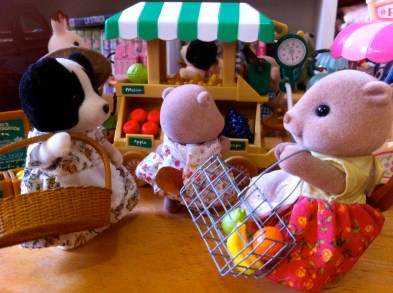
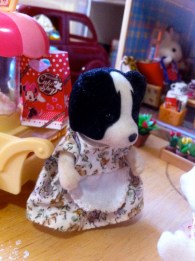 As usual, Willie’s Fruit Cart is the first business enterprise that heralds a beginning of every day. The merry women of Avonlea are loyal customers of Willie’s fresh and scrumptious fruits because the products are organically planted, cultivated, and handpicked by the conscientious farmer Wille himself. Naturally, it is no surprise to spot both Mary and Brenda chatting away around the cart on every saturday morning. “Hi, Brenda! You bought some fruits there. Did you get them from Willie’s Food Cart?” Mary opened the day’s bantering (or gossiping, depending upon your point of view.) “Hi Mary! Yes, I needed to get some fruits for my family because my daughter Betty is on a diet. I told her she would not need to lose weight, but you know, girls are girls. (sigh)” Having said it with a touch of motherly concern for her daughter’s growing self-conscious image about herself, Brenda looks ruefully at Betty picking up more fruits from the cart. Mary ‘s innate empathy connects her into the inner world of Brenda and commiserate with her incidental m melancholy.



You must be logged in to post a comment.