
Julie has a sweet tooth. She loves bonbons, jelly, fruit candy, and butterscotch candy saturated richly in fresh milk. She savors them not in excess, for her motto is “Nothing in excess. Moderation is a virtue,” which is a synthesis of Apollonian adage found in the terrace of the temple at Delphi and Christian virtue recorded in the bible, a wonderfully syncretistic maxim created by her father Willie Shue, an intellectual food vendor of Avonlea. But today is not one of those lax halcyon days of Julie’s; neither Sally’s Sweet Cart stuffed with fresh buttery popcorn, Ice Frappuccino, chocolate-covered bananas, sugar-coated churros, and bottles of Coca-Cola nor her good old chum Lana seems to perk up her innate conviviality. It seems as though Julie was under the spell of a malicious witch bearing generational grudge against the Shues.
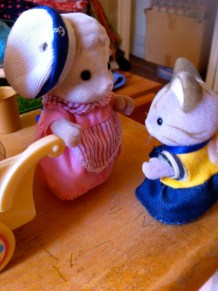 Anyone around Julie is flabbergasted by her sudden change of mood. None has seen her this lugubrious, saturnine, and crestfallen. This perturbs the heart of ever altruistic, magnanimous Sally, who is tending her aunt Mary’s Sweet Cart today and tomorrow during her brief jaunt to Lake Leda 10 miles away from Avonlea. Having known Julie for over ten years since she and her vagabond intellectual father Willie made their debut entrance to Avonlea. Although the father and the daughter have been living in a hut with limited bare necessities, they are rich in humanity, knowledge, and imagination. Knowing this eggs on Sally to ask Julie if all is okay with her and her father.”No, Sally. Actually, I am deeply worried about my father. Last Wednesday, he went to see his physician for his result of a blood test. And the doctor told my father that his kidneys were damaged and that he needed to take medications everyday for two months until the next appointment with the doctor. My father has been diagnosed with “Acute lobar nephronia”. That was why my father was often dizzy and stumbled on the ground as flat a pancake.”
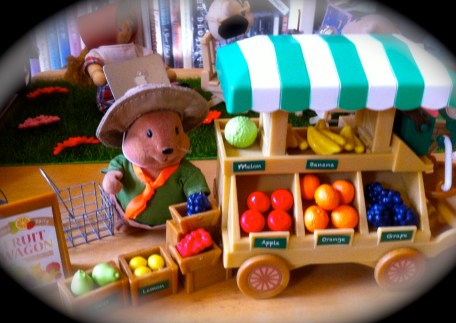
The litany of Julie’s woebegone feelings becomes a heartrending ballard of life in which we have to deal with unforeseen forces of malice and misfortune akin to those of Odyssey, Hercules, Jonah, and Aeneas according to the whims and caprice of gods and goddesses, and God. So would Willie’s predicament be a fortiori sign of divine intervention in the maning of his life? The new medical revelation of Willie’s ailing kidney poses a concatenation of philosophical musings that seems like Sphinx’s famous riddles: Delphic, visceral, esoteric, and maddening. Sally is wondering just what Willie is thinking about his decided fate, a diagnosis of his failing health. Perhaps he takes it in stoical attitude. Or according to Elisabeth Kubler Ross’s five stages of dying, he will be at Stage 1, which is “Shock and Denial.” It’s all a priori assumption that Sally can think of as far as Willie’s state of health goes. But most of all, Sally’s heart is now heavily laden with pathos for Willie and his daughter Julie. What will become of Julie if Willie’s symtoms gets exacerbated all of sudden, and he does not wake up next morning?… With all her a posteriori assumptions about Julie and Wille locked in her mind, Sally consoles Julie with a cup of buttery popcorn and a bottle of ice-cold Coca Cola for free and tells her that she will drop by her house to say hello to her father Willie with a box of Julie’s favorite bonbons later in the evening.

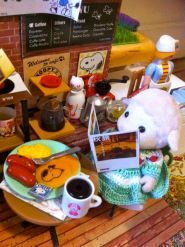
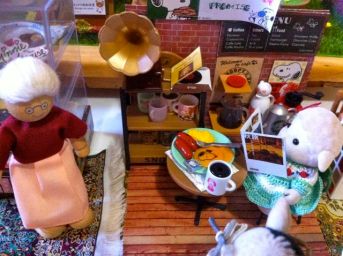 “Ms. Long, your hazelnut coffee is one of the best in the town, and I told it to all my friends and colleagues at work and suggested them they come by here.They are not hypochondriacs or bombastic health freaks at all. I mean what can coffee possibly do harm on people? The eminent Baroque composer Bach once said without a cup of hot coffee, he would be like a grilled goat. and as far as I am concerned, I have never heard of any one who has died from drinking too much coffee.” There was a flicker of smile flitting in the gracefully aged face that shinned with her incorruptible beauty from within. Ms. Long had never felt more comforted and warm than ever in her long life as a spinster. “Thank you, Sally, for your caring words. I will continue to make the best hazelnut coffee just for you.” There was in the air something that filled the whole of Hush Puppy’s at the moment. It was wonderfully conflated with the aroma of Sally’s hazelnut coffee that Ms. Long had just finished brewing. Sally’s spirit was flitting in the loveliness of the ambience, soaking herself in the moment of happiness coming from within. It sure was a pleasant morning for Sally.
 “Anything new in today’s newspaper, Seraphina?” asked inquisitive Patricia, who arrived at Cafe Jolie, her and Seraphina’s “third” place after their homes and workplaces. “Yes, there is very shocking news connected to our neighbors in Avonlea!” Seraphina was excited by this one-of-kind news involving her beloved town that was seldom covered by any major newspaper unless big wigs in corporate world or bureaucrats in political arena visited the town with no other reasons than canvassing for “likes” of the good people of Avonlea, all for their dominance of popularity over the populace. So what made her flushed with rare effervesce? Patricia was by all means curious about it and wanted to dig out the whys and wherefores.
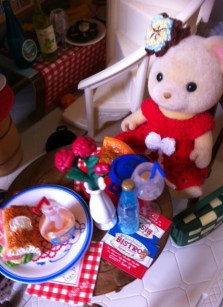 Patricia’s heart became laden with ebbs and flows of emotions, erratically setting in motion a convolution of sadness, indignation, ebullience, longing, benevolence, and then pathos with a detritus of the news about the unfortunate incident befalling Helen and George she had just heard from Seraphina. So much so that her eating at the cafe with Seraphina made her feel indulged in some sort of sybaritic activities with a phantasmagorical display of the scenes in which both the mother and the baby were frightened, taking a flight to their neighbors until the return of other family members played stereoscopically in her metal theater. While her friend Seraphina just matter-of-factly discoursed the news as if it had been one of those articles in a provincial bill posted on a public board in a park, Patricia took it to heart and decided to visit Helen and George at the Collies after the brunch. Just as the great Roman historian Pliny the Elder aided the refugees of the catastrophic eruption of Mount Vesuvius with all his might, Patricia was willing to offer consolation however small it might be to the mother and the baby.
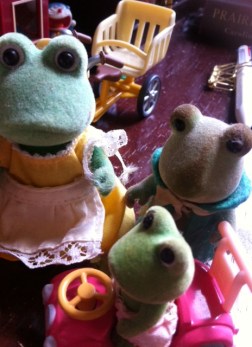 The mother and the son is also escorted by a trusty entourage of Phil, who is also concerned about his dear brother. Small as he is, Philip is all bravery and cheerfulness. He wants to make sure all’s well with Fred, who always reads him sweet bedtime stories by his nightly bedside as well as other illuminating stories about ancient Greek heros and the gods and goddesses of the Parthenon, great historical figures, and oeuvres of fine writers throughout the western civilization. Fred to Phill is what Yoda is to Luke in the Star Wars. Philippa is pleased to see her sons bound by Charity, Hope, and Faith, the three theological virtues, not by dint of mere blood relation that is often devoid of the virtues by default.
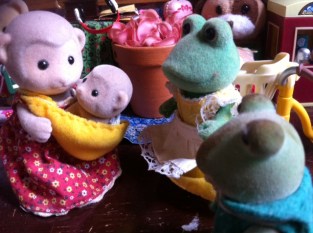 When the McGreen trio arrives at Dr. Hobson’s office on Kingsbridge road, they are amiably accosted by Helen, one of the prettiest and kindest ladies in Avonlea who is married with three children to a grocery proprietor Priam, who fell in love with her at first sight by thinking, ‘She’s beautiful, and therefore to be wooed. She’s a woman; therefore to be won.’ Helen and her three-old son George are pleased to see her neighbors there and wants to know what has brought all three of them to this far. “Fred has been in agony for two weeks due to a serious case of abscess on his right shoulder,” says Philippa, “But Fred did not tell me and his brothers until this morning, enduring all to himself only the gruesome pain that stymied his everyday activities, such as eating and working. In fact, the pain even prevented him from reading a book!”
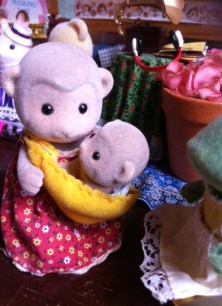 Helen does not understand Fred’s reason of silence that was broken this morning, so she ventures to inquire about the cause. “Fred, why did you not tell your mother when it began to hurt you? Had you told her about it earlier, you would have been cured.” Fred is absorbed in all the dialogues between his mother and Helen and forms the most honest and provident answer to the lady’s inquiry. “At first, I thought it would go away because it had happened before. But although I tried myself applying to a topical ointment and taking doses of pain suppressant and high hopes, it just became worsen… What’s more, I did not want to worry mom because she was always very busy with running the restaurant and the household all by herself. Now I am in great pain now, which has compelled me to alert mom about it.”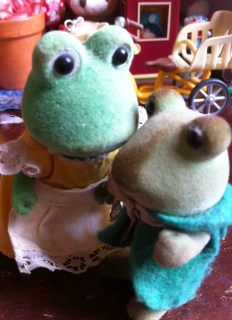

 Ever a voracious reader of good books and sensible, informative articles of The Los Angeles Times, Paul Collie is immediately steeped in a headline of today’s newspaper; that is, an article he has just read in the Times about a fight over the present fishing laws. It is reported that some amendments were made to the laws, which are called “The Magnuson-Stevens Fishery Conservation and Management Act”, a 42-year old rules regulating over-fishing of New England Sea Scallops and Bering Sea Crabs, and that they were approved by the House of Representatives on Monday. Subsequently, these changes have stirred a projected friction between fishermen and environmentalists mostly consisting of researchers, scientists, and radical natural/animal conservatory activist whose viewpoints are normally out of touch with realities.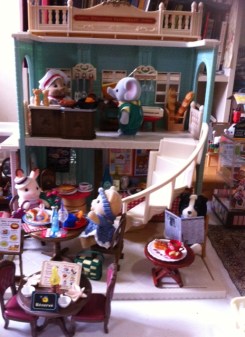




You must be logged in to post a comment.