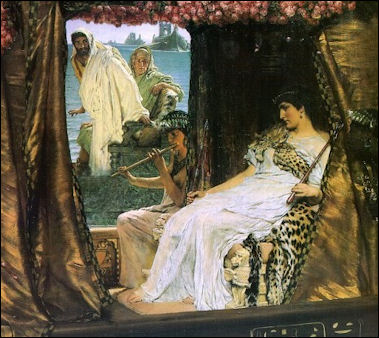
All about her beggared all description,
For she was none other than herself
Femininity incarnate vested in erudition
That no other woman could ever excel.
Her beauty was a perfect federation of
Sensuality and Intelligence dazzlingly
Pleasingly enchanting all in the contact
With the Last Hellenistic Queen of the Nile.
One day, she rode in a gilded barge with sails
Dressed as Venus with her entourage as cupids
And nymphs to meet a Roman general who was
Marc Anthony with untamed virility like Hercules.
For her own person as Venus, the goddess of love
And beauty, she bewitched the general and made
Him her slave of love with all her charms spelled
With the most delightful voice he had ever heard.
AUTHOR’S NOTE: Last night, I read an anecdote of how Cleopatra encountered Marc Anthony for the first time as described by Plutarch in The Lives. The most interesting thing I learned about the proverbially seductive queen was that she was not exactly a gorgeous woman with a face that would launch a thousand ships. Rather it was her demonstration of all-around erudition, intelligence of speaking a variety of languages in such an euphonious voice, and her general demeanor, all of which curiously made her enchanting to anyone in contact with her.
This irresistible charm of Cleopatra corresponds to the principles of aestheticism expounded by Thomas Aquinas, which are: (1) Element of being – her existence as a woman; (2) Actuality of Form – her presence as a woman achieved a higher level of perfection in its form by being beautiful to the degree in which she perfectly attended to the form of femininity; and (3) Actuality of Action – the manifestation of her intelligence contributed to the perfection of her beauty as regards the aforesaid principles by grounding beauty in whatever she did, thus making her being a beautiful person.
I think Cleopatra was more beautiful and real femme fatale than Helen of Troy, who was said to have a face that launched a thousand ships. It seems to me that Cleopatra’s attractiveness will be no less appealing to the eyes of the modern men than those of the ancient men.
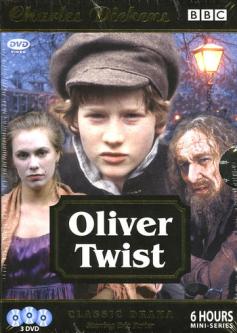 What distinguishes Charles Dickens from his contemporary writers is his belief in redemption, forgiveness, and benevolence of a human spirit triumphing over poverty, guilt, and death, the three cardinal ordeals of existential phenomena. For almost every character in his oeuvres, including villains, heroes/heroines, and even minor characters, has some shred of redeemable traits, if not goodness in the case of swindlers, pickpockets, or murderers. The question of morality in the Dickensian world is never proprietarily imposed upon the reader, and thereby leaves out harsh puritanical judgment of a character because humans are more sinned against than sinning. That’s the beauty of Dickensian reality set in the background of the stuffy Victorian reality. That’s why I can’t hate any of his characters, such as Bill Sikes, The Artful Dodger, and even Fagin from Oliver Twist in the parade of humanity.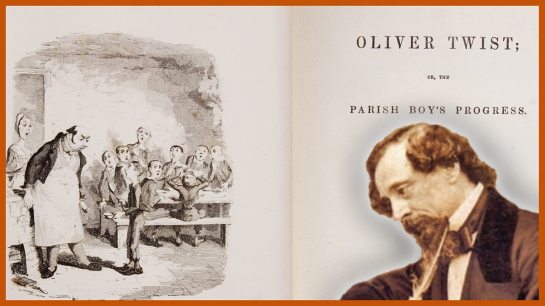
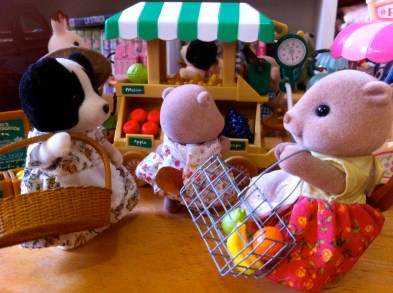
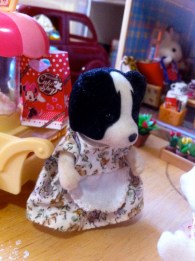 As usual, Willie’s Fruit Cart is the first business enterprise that heralds a beginning of every day. The merry women of Avonlea are loyal customers of Willie’s fresh and scrumptious fruits because the products are organically planted, cultivated, and handpicked by the conscientious farmer Wille himself. Naturally, it is no surprise to spot both Mary and Brenda chatting away around the cart on every saturday morning. “Hi, Brenda! You bought some fruits there. Did you get them from Willie’s Food Cart?” Mary opened the day’s bantering (or gossiping, depending upon your point of view.) “Hi Mary! Yes, I needed to get some fruits for my family because my daughter Betty is on a diet. I told her she would not need to lose weight, but you know, girls are girls. (sigh)” Having said it with a touch of motherly concern for her daughter’s growing self-conscious image about herself, Brenda looks ruefully at Betty picking up more fruits from the cart. Mary ‘s innate empathy connects her into the inner world of Brenda and commiserate with her incidental m melancholy.


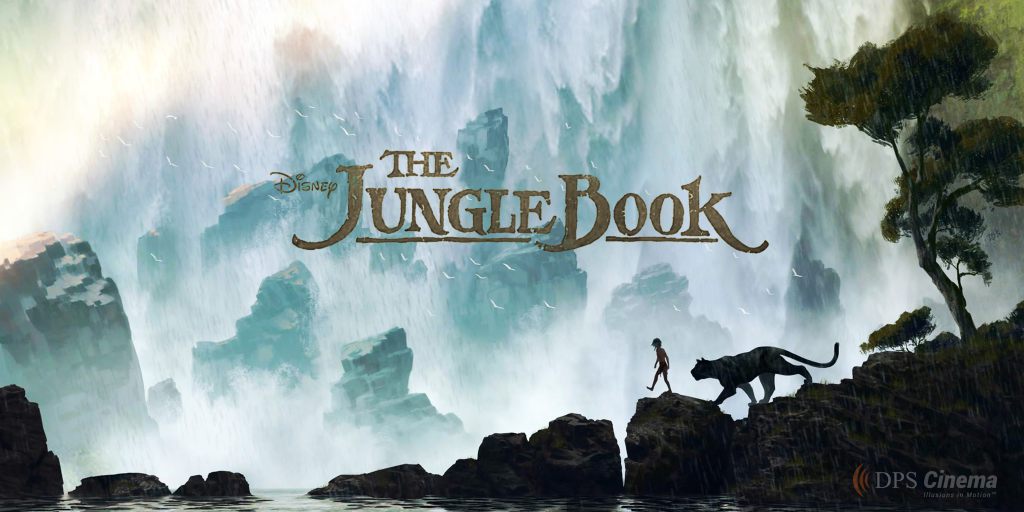
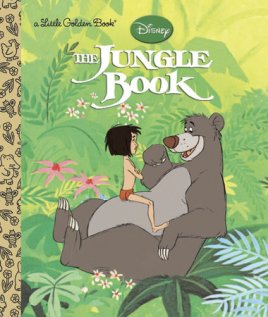 Given the authenticity of the storytelling aligned with the original context by Kipling and the performance of the characters studded with breathtaking scenes of nature so characteristic of Disney’s creative imaginativeness, it is a film worth of the spending your time on screen. It is a kind of film that stimulates your mind by inviting you to think about a meaning of our human life and existence and of our purpose of life. It will also thrill your heart with the adventures of Mowgli in the heart of the jungle and the stereoscopic views of the nature on screen created by a wonderful collaboration of our timeless human imaginations and 21st century feats of technological bona fides.

 Dr. Fleming’s finding of Penicillin was something of serendipity or more likely divine providence. Dr. Fleming, an erstwhile captain in the Royal Army Medical Corps during World War I, began researching antibacterial substances at St. Mary’s Hospital in London after witnessing so many deaths of soldiers due to rampant pervasiveness of infections even though the wounds were not seriously intractable. Then one day in August 1928, Dr. Fleming left his bacteria cultures stacked up on a bench before embarking on his family holiday. On his return in September, he found a mould growing in one of his sample cultures, destroying the bacteria. What’s more, the mould produced a substance that destroyed the bacteria responsible for scarlet fever, diphtheria, pneumonia, and meningitis. Dr. Fleming first named it “mould juices” in 1940. Then in 1940, two medical researchers from University of Oxford named Ernst Boris Chain and Howard Florey succeeded in mass-producing penicillin. The concerted collaboration of the three trailblazers of the first modern antibiotic awarded them with the Nobel Prize in Physiology in 1945. Indeed, the laborers were worthy of the rewards.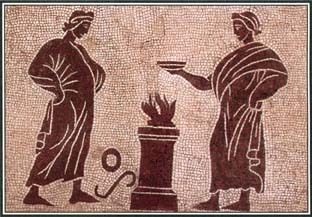


You must be logged in to post a comment.