RE: 8/26/2018 The Los Angeles Times article of “Long-lost wallet’s unlikely return”
For the times passed by, you can just look away and say, “they are gone away” because they are woven by your memories that you have collected through life, willed or unwilled. They become part of you, making you of spirit, fire, and dew, an unique star in a constellation of the universe. Hence nothing could be more pleasingly surprising than discovering that part of you or your beloved kept in photographic images or words of the frozen time, evocative of distant nostalgia that beckons you to reminisce about them, by a happy stroke of serendipity paired with benevolence of a stranger. Something like that happened to Ms. Sharon Moore, a daughter of one former army corporal Robert McCusker.
When Ms. Moore received a “Friend” request from a certain Frenchman named Patrick Caubet on her Facebook page, she deleted it. But then Mr. Caubet messaged her inquiring about the lost wallet of her father Mr. McCusker with the pictures and documents contained therein that he had accidentally found in a basement of his building presumably used as an America officers’ social club. This time she responded and verified that it was her father’s. Prior to Mr. Caubet’s contacting Ms. Moore, he had launched a campaign for locating the rightful owner of the wallet, which encompassed an aid of his English-speaking friend and inquiries to the Pentagon and the U.S. Embassy for help to no avail. Then the help came from a French military office in Paris that located the names of Mr. McCusker’s children in just days. Being a military man himself with a certain feeling of soldierly camaraderie, he was determined to succeed in his campaign, which ultimately came to fruition.
Thanks to this benevolent efforts of one French military man, Ms. Moore and her brother living in Dover, New Hampshire, could reminisce about the lost pages of his Korean War veteran father who had died in 1983. The wallet had pictures of their mother and aunt, military documents, Massachusett Driver’s License, and a Social Security Card, all of which were still kept in a mint condition. Ms. Moore said that since she had her father’s Purple Heart, her brother would be in possession of the wallet that their father had lost on his way from the Korean War to home. In return of her gratitude, Ms. Moore sent Mr. Caubet a lovely basket full of sweet jars of maple syrup she had made herself, some of the candy her father had enjoyed, and a New England Patriots Jerky. Thus, the wallet became their treasure of their beloved father’s memories that they had not known – the terra incognita of their father’s memories before they came to the world -. It became the part of their memories that bound them together to the legacy of their lineage, reminding themselves of their father’s valorous war efforts as a soldier and of his tender loving memories of their mother as a man.
Amid the news of endless politicking, peddling of social media that goes beyond reasonable measures, and a litany of social ills, this article stroke me as a bonanza of altruism that still thankfully kept alive in everyday life, a fresh breath of air that made me feel grateful and hopeful for our future in which so long as we don’t lose a thread of sanity and milk of human kindness, we can make constraints of our lives bearable with a lightheartedness. The kindness of the Frenchman speaks to us that no matter what language you speak, the feelings and emotions that you and I have can strike the chords of our humanness because the principles of reason and of sentiment are universal in all human creatures. The return of the lost wallet as the living record of Ms. Moore’s father attests to the truth.
 J. K. Rowling bewitches us again with her famed literary magic wand. Her fabulous creation of fantastic beasts, a young brilliant wizard, white witches with hearts of gold, an ominous black magician, and an amiable non-magician all coming vividly alive on the screen, will please your senses and touch your heart in no time with delightful feats of magic and boundless imaginativeness without interventions of boredom or cheesiness.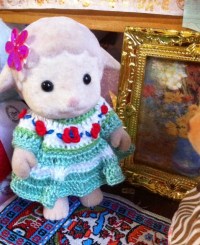
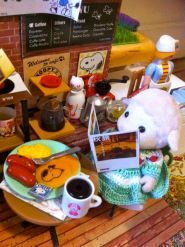
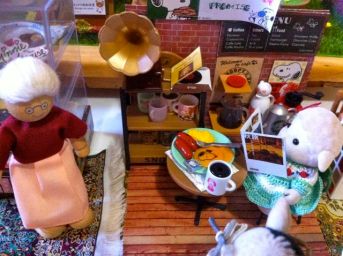 “Ms. Long, your hazelnut coffee is one of the best in the town, and I told it to all my friends and colleagues at work and suggested them they come by here.They are not hypochondriacs or bombastic health freaks at all. I mean what can coffee possibly do harm on people? The eminent Baroque composer Bach once said without a cup of hot coffee, he would be like a grilled goat. and as far as I am concerned, I have never heard of any one who has died from drinking too much coffee.” There was a flicker of smile flitting in the gracefully aged face that shinned with her incorruptible beauty from within. Ms. Long had never felt more comforted and warm than ever in her long life as a spinster. “Thank you, Sally, for your caring words. I will continue to make the best hazelnut coffee just for you.” There was in the air something that filled the whole of Hush Puppy’s at the moment. It was wonderfully conflated with the aroma of Sally’s hazelnut coffee that Ms. Long had just finished brewing. Sally’s spirit was flitting in the loveliness of the ambience, soaking herself in the moment of happiness coming from within. It sure was a pleasant morning for Sally.

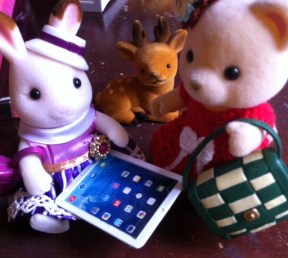 “Anything new in today’s newspaper, Seraphina?” asked inquisitive Patricia, who arrived at Cafe Jolie, her and Seraphina’s “third” place after their homes and workplaces. “Yes, there is very shocking news connected to our neighbors in Avonlea!” Seraphina was excited by this one-of-kind news involving her beloved town that was seldom covered by any major newspaper unless big wigs in corporate world or bureaucrats in political arena visited the town with no other reasons than canvassing for “likes” of the good people of Avonlea, all for their dominance of popularity over the populace. So what made her flushed with rare effervesce? Patricia was by all means curious about it and wanted to dig out the whys and wherefores.
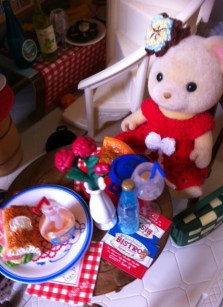 Patricia’s heart became laden with ebbs and flows of emotions, erratically setting in motion a convolution of sadness, indignation, ebullience, longing, benevolence, and then pathos with a detritus of the news about the unfortunate incident befalling Helen and George she had just heard from Seraphina. So much so that her eating at the cafe with Seraphina made her feel indulged in some sort of sybaritic activities with a phantasmagorical display of the scenes in which both the mother and the baby were frightened, taking a flight to their neighbors until the return of other family members played stereoscopically in her metal theater. While her friend Seraphina just matter-of-factly discoursed the news as if it had been one of those articles in a provincial bill posted on a public board in a park, Patricia took it to heart and decided to visit Helen and George at the Collies after the brunch. Just as the great Roman historian Pliny the Elder aided the refugees of the catastrophic eruption of Mount Vesuvius with all his might, Patricia was willing to offer consolation however small it might be to the mother and the baby.

You must be logged in to post a comment.