Tag: arts

  • ‘Phonecian Civilization: A History from Beginning to End’

    Phoenicians were more than smart ancient people who ruled the Mediterranean before the grandeur of Rome took over the world under the sandals. They were brilliant seafaring merchants, navigating the open waters with the direction of the Polaris, the occupants of Canaan, the biblical land of honey and milk, the high-end manufacturer of Tyrian purple, and the inventor of the alphabet. They were adventurous and impetuous, wild and civilized, just as Dido, the queen of Phoenician Carthage, was to Aeneas and General Hannibal to his Roman enemy force.

    As aforesaid, Phoenicians were Canaanite of Semite groups that shared the same cultural and linguistic roots with Jews. Interestingly, Phoenicia was not a single country but a confederate of city-states located along the eastern Mediterranean Sea, comprising modern-day Syria, Israel, and Lebanon about 3,000 B.C. Phoenicians sailed across unknown seas of antiquity, always bringing seeds of vine tree with them to sow them on foreign lands, propagating the bliss of wine everywhere they went. So they went to North Africa and established their city-state called Carthage, located in what is now known as Tunisia, and planted vine trees producing melliferous wine. Perhaps it’s the aura that the land of vine trees infatuated Aeneas, a Trojan prince, destined to become the founder of the Roman race, in the person of sultry queen Dido. Sure, Dido was a Baal worshipper. So was Hannibal because Phoenicians regarded Baal, the dignitary in the circles of hell, to Christians, as the god of fertility and weather, with El, the father of all gods, and Astarte, the progenitor of Greek Artemis and Aphrodite. Moreover, human sacrifices of children during natural disasters or wars were performed, while sacred prostitution to honor their gods Adonis and Astarte, just as Babylonian women did in the temple of Ishtar. It seems that except for the Jews, the ancient peoples from the Middle East, near the Middle East, and the Mediterranean seem to regard physical pleasure as the essential component of euphoria that accounted for sacred ecstasy in the worship of their deities.

    Such is my impression of ancient Phoenicians whom Alexander the Great couldn’t even dominate. Romans destroyed Phoenician city-state Carthage, after which it was said that a priest cursed Phoenicians, sprinkling grain of salt on the conquered land, lest they arise again, evermore. Whether it was true, the curse proved not as effective as the Romans wished because the Phoenician legacy continues in the form of cultural influence as aforesaid.

  • Fallen angel

    An angel is no angel any more
    When she begins to feel
    As a blue wind is blowing
    And knocking gently
    At the door to her heart
    With a sweet aeolian flute.

    The sorrow then enters
    With gossamer of longing
    She feels but knows not
    And the heart with the mist fills
    Like the nascent rain descending.

    The memories are betrayed,
    She keeps her wings still;
    Heaven is no home remembered,
    The world is an abode to be lived,
    Embracing hope for a new legend
    When she wakes up from the dream
    And shines brighter than ever.

  • Polaris

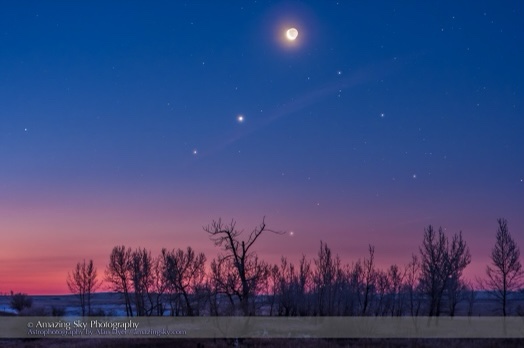
    Remember, when you see the North Star
    On a high cold night drifting away at sea,
    Your destiny isn’t doomed altogether
    Even the spell on your life fades away;
    Hope leads the path most brilliantly,
    Humor cheers a sailing most pleasingly,
    And tomorrow is always a new adventure;
    No fortune’s malice can cover the Polaris
    Nor can sorrow dim the diamond light
    With heart even for the fate unkind ever.

  • Birthday

    Today, whatever the Fates weave
    Shall still be worn with beauty by me;
    Today then don’t let you be told,
    How many chapters of life are turned;
    That you are old, and so I am indeed;
    Nor think dreams have waned with tears,
    And talk of the youth wasted with sighs.
    Tomorrow will always be tomorrow
    And nothing will change, even sorrow.
    But a thought from reason brings the truth
    An everlasting and brilliant truth,
    Which can, in spite of all smirks,
    Open your eyes and my ears
    To the evening star twinkling bright
    With sweet soft winds fluting in the twilight,
    Made of fire, spirit, and dew.

  • Rembrandt is Jacob and the angel

    There is something about Rembrandt’s (15 July 1606 – 4 October 1669) paintings that are fascinating, like Bach’s Baroque musical pieces that are profound and elegant. Rembrandt was Northern European art’s answer to Italian Renaissance art. Then there is more to this wonder of genius that touches humanity’s universal hearts and minds.

    What distinguished Rembrandt from his contemporaries was his choice of subjects that were both common and profound in the everyday setting, tinged with a religious theme. Although he was as Protestant as Bach and Handel in terms of his birth of origin being the proud Dutch, he had a Catholic cast of mind regarding the scale and ambiance of the biblical scenes he chose to express. His paintings are an exquisite admixture of sweet simplicity and magnificent sanctity communicated to the eyes then lingers in the heart. It is also realistically factual and mystically imaginative, producing a powerful pathos and awesomeness as though to play a great drama across the canvass in which the actions of the figures, even in still positions, give the impression that they are not suspended in the silence but caught in moments of action.

    To illustrate, one of Rembrandt’s most celebrated paintings, ‘ Jacob wrestling with the angel,’ epitomizes such fine moments of vigor and sereneness altogether, sensuously wrapped around in the forces of life of this world and the meaning thereof. Jacob represents our human life full of highs and lows, loaded with energies that fuel the muscles of desires and the heart of will. Jacob looks coarse, plebeian, and sturdy, simultaneously faulty and confused, whereas his angelic opponent is slender, patrician, and imperturbable. The angel of heaven is supra-meaning, the meaning of life, the refinement of life itself, the beauty of life that we strive to find through trials and foils. If Jacob is the Strength of the Human, the angel is the Spirit from within.

    Rembrandt is a kind of Artist who has the sense and sensibilities particular to Artist with heart, which matches the spirit of enlightenment that mind without humanity is not genuine intelligence that nourishes our mind. So Rembrandt deserves his constellation of stars shining bright in heaven’s dome in all brilliance.

  • Wanderlust

    For one hundred and twenty years
    Trapped in the maze of this mirage,
    Where I began, I can go back never;
    Here I stand and face the bare fate
    Or is it nothing but the illusion ever?

    As Aurora releases the first dewdrop,
    I go high over, down under
    From one end of the horizon to the other
    Across the five continents and six oceans
    Above the heavens, below the abyss
    Far into the milky ways and back to earth
    with the jewel of hope in beatitude.