My misery will be beatitude Smiling at grief, grim and gray Till I see two little birds afar, fly Tweeting in fugue of melodies unknown And sit on the back of my weak palm Frolicking with the beads of Rosary Wreathed by pearls of wishes porcelain, Bringing the message from the Queen Above to her votary sentenced in sadness Patience in Blue and Fortitude in Green.
I always feel guilty about leaving Toro alone when I go to work. It would be best to add another feline companion, but the existential circumstance prevents it. Hence the flying tenants moved in. The new parakeets are Sera (Blue) and Pippi (Green), who demonstrate that the phrase “eats like a bird” should be part of the Woke movement of removal. They are also unknowingly clever and perceptive that I wonder if they are secretly enchanted humans serving their time for misdeeds till the spell is cast off.
Toro, aka the Curious Cat, also seems to know that Sera and Pippi are a joint force to be reckoned with, so to speak, but nevertheless shows undeterred attention to every move the duo takes with feline discreetness. Timid but curious, Toro wants to touch the moving feathers of parakeets whenever they come out of the cage for sauntering. But the birds show no fear but irritation against the unwanted friendship from the lonely feline. Poor Toro. I console him after Sera pecks his little nose with her dainty beak in protest against his pawed touch. However, my original purpose of making the birds friends with Toro is still valid because both Sera and Pippi do not altogether repulse Toro with wild shrieks of danger.
I hope the birds will be warm to Toro as time goes by till we move to a bigger and better place to live so that I can bring another cat to the family.
Twinkle, emerald dreaming, Love flocks in blue and green, Curiosity stalks love’s gathering, Loneliness emboldens attempting touch of love fluttering in longing.
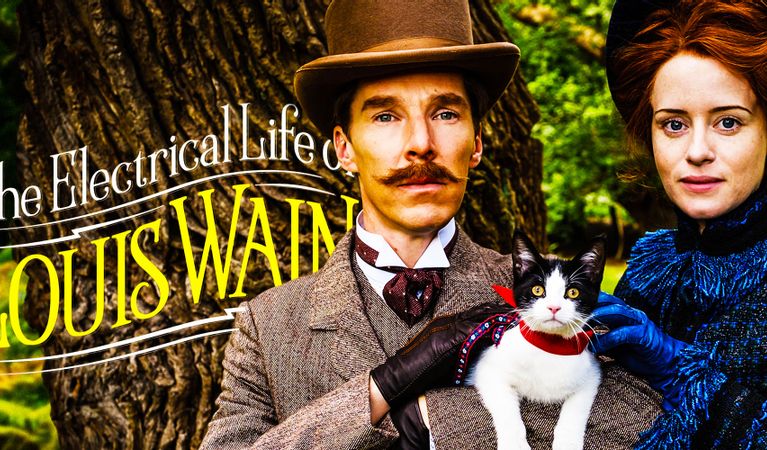
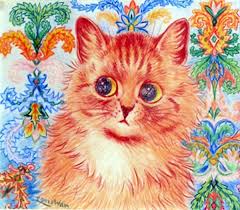
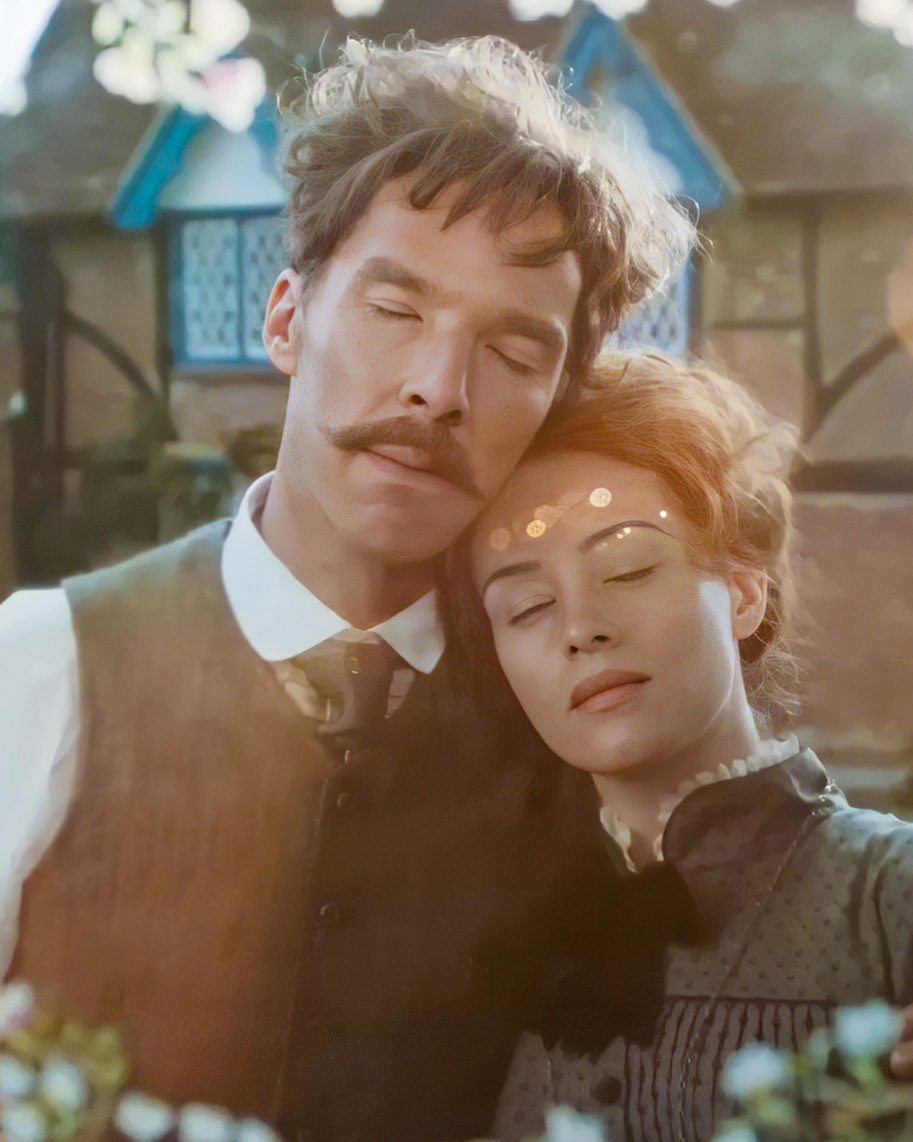
The Electrical Life of Louis Wain is joy and sadness, lightheartedness and seriousness, just like his paintings. It’s about love and art in the oddly beautiful vagaries of what it means to be a human (in the company of cats). Wain’s cats graced the epochs before Walt Disney’s Mickey Mouse (and Minnie) and His Gangs) debuted. But Wain was not Disney, and would he have even wished it? Perhaps, that is why Benedict Cumberbatch decided to give Wain a second chance to shine his name once more on earth in the magic of moving pictures that resurrected him from the lapse of time through the chapters of his story in this superbly narrative of the artist.
Louise Wain was a brilliant artist, a contemporary of French impressionist artists, such as Monet, Pissarro, Degas, and Renoir, and Dutch Vincent Van Gogh, all of whom were united in the brotherhood of independent spirits and resilient creativity. Yet Wain’s was a different sort, more existentially debauched in the provisional circulation of works, in the crossroads of the reality of being the only male figure in the parentless family led by the dominant matriarchal sister and of the ideal of ensconcing himself in the solitary niche. All artists are by nature sensitive, but Wain was extraordinarily sensitive, and the world was too much for someone like him to deal with. His wife, the light of his life, was the only happiness and love he felt and shared, but jealous God took her away from him and left him in the lurch of the familial duties and responsibilities in the somber household. This house eventually drove him and his younger sister into the oblivion of reason to the end. Yet, notwithstanding the personal tragedy, Wain’s unique visual world articulated with the sonar modulation of impulse that sparked his creative spirit yearning to soar up to the boundless ether on a par with constellations with stars.
Wain’s wife encouraged and supported him because she knew of his genius despite other people’s ignorance.
Benedict Cumberbatch, now universally recognized as the Sherlock thanks to the phenomenally successful BBC series, proved to be a superb character actor who became Louis Wain rather than merely playing the artist’s part. Ancient Greeks and Romans regarded actors as an equivalent of a spiritual medium whose body could be channeled into another spirit for a willful possession during a mysterious rite of sacred ceremony. If that was the case, as it were, that was how I felt watching Cumberbatch being Wain as if he had summoned the soul of the dead artist from the beyond and asked him how the artist’s life would be told. His naturally mild, gentle deliverance of character nuanced the inner fear, confusion, and frustration that Wain must have felt in dealing with the realities of everyday life as a reluctant and unlikely head of household. Yet, his passionate eyes and particular diction dictate that Wain was an artist of force, a man not of an age but for all seasons.
What if the present is not present but dreamt? What if the past is not past but future forecast? For all of this, I am living now is reenacted Of the previous life, I once lived forgotten But not erased in the paroxysm of sadness That my soul cannot bear without tears And the heart refuses to shield in reason Because the grief weighs against hope – The forced illusory vision to staged elysium – With every fate already weaved, cut, and shipped To Destiny from Departure to Arrival, and again Till the Moon orbits the Earth for 1000 years To live 1000 lives elsewhere in whatever forms, Each bearing pieces of cracked memories Reflecting the central fractures of the pasts In the circle of life, the wheel of lives. Alas, poor soul! I know her, dear reader! Pity her not with the condescension of charity! But give her a rope at the end of a life Not to fall into the cruel rat race of the rut Not now, not ever, once, and that’s all for good.
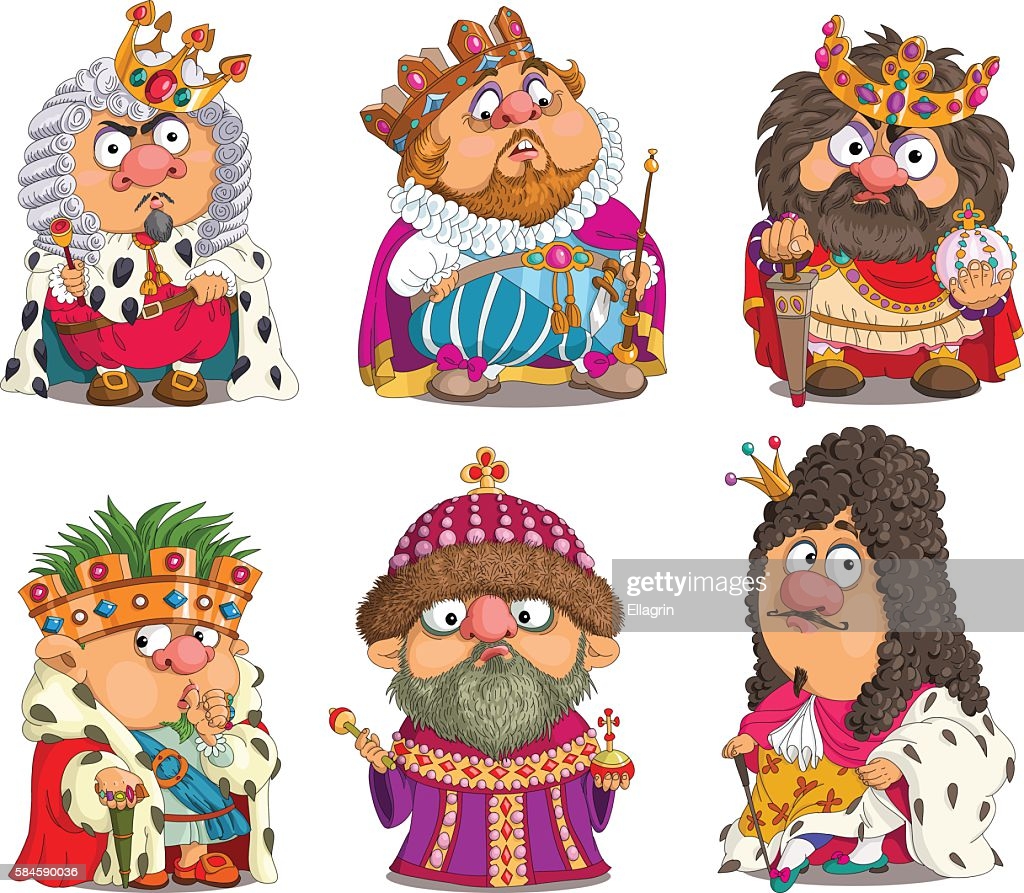
It always amazes me that some people can get away with their character flaws and faults under the aegis of social status and wealth, such as modern-day celebrities. The celebrities of the bygone days were kings and queens whose God-given authorities indemnified them from punishment. Their entitled strangeness swiveled my head in wonderment at the stupendousness of freakiness. Ironically, this anecdotal recounting of the cruel-to-be kind potentates reminds me of a tenet of Logotherapy, which explains that a healthy dose of suspense in life helps us escape boredom, resulting in excessive indulgence in perverted pleasure-seeking.
This book tells of the infamous kings and queens and some aristocrats. They are famous and lesser-known, mainly from Russia and Eastern Europe, which gives a somber ambiance to the tales of weirds born with silver spoons in their mouths. The most memorably horrible and ignoble characters that left indelible marks on my consciousness are as follows:
1. Elizabeth Bethany: This diabolically perverted Hungarian countess whose uncle was a king of Poland had a fixation on blood and pain in devotion to youth and beauty. Some say she was trained to be cruel, but I think it has to do with her connatural inclination for cruelty passed down in her lineage. Her aunt was a Satan-worshipping noblewoman who sought erotic pleasure in young girls, which Elizabeth also learned and practiced in her castle. She had her trusty three maids lured beautiful young girls, usually from poor families, under the pretext of training them for top-rated maids-in-waiting with generous munificence to the families. What happened next was all over but the shouting. Bethany tortured the girls in unthinkably cruel ways and bathed in their blood because she believed doing it would restore youth and beauty. She deserves no revisionist or appeals on the crime against the girls under her care. Nevertheless, modern-day feminists and the radical leftists are moved to portray her as a wrongfully accused Calvinist woman in a time when sectarian religious rivalry and antipathy were rampant. Her being charged by a Lutheran minister in the town does not ipso facto constitute Lutheran machination of destroying the Calvinist influence in the region. If the minister conspired to concoct any such plot, he would have targeted a man, not a woman whose social status was not entirely regarded as equally significant as a man even in high birth.
2. Vlad the Lad, aka the Impaler, aka Dracula: The proverbial bloodsucker ruler had a penchant for impaling men, women, and children for leisure and punishment. The point was to give them slow deaths to heighten the apex of pain till the last breath. The legend of Count Dracula is loosely based on this Romanian ruler who might have inspired an idea of shashlik, kebab. Or any skewed food. Thanks to the detailed accounts of how Vlad artistically mastered impaling, I swore off any such skewered food lest it should conjure up the vista of the impaled helpless.
3. Frederick I of Prussia: A stout and short, the king’s obsession with men in great height was his actualization of ideation. He had the tallest men in all the regions of Europe, especially from the North, to establish the royal military version of a freak company called “The Potsdam Giants.” The recruits, or in many cases, abductees, were consisted of a former woodsman, laborers, and farmers, allured by abundant compensations promising dazzling delights of secured lives. Yet it was an empty promise, beguiling the simple-minded low-class foreigners, who were subjected to mistreatments and even punishments should they attempt to escape. The king’s pastime was to call upon the guards at any time anywhere, including in his chamber at night, and watch them in full uniform, admiring their impossibly imposing physique that he coveted but could never have. Thank God that his son Frederick the Great disbanded the freakish guards no sooner than had he succeeded his father upon his death.
I wonder if these royal characters were due to in-breeding abnormalities, which were usually customary in European dynasties to preserve their noble royal lineage. It also testifies that keeping means in one’s life is a blessing because extreme wealth and poverty lead a soul astray due to listlessness and exasperation, resulting in amoral walking dead subsisting on the pain of the others. Robinson Crusoe’s sagacious father was right in saying that the best is the upper station of low life. Mel Brooks once uttered, “It’s good to be a king.” Unfortunately, it only applies to these afore-described weird and evil characters. A good king or queen doesn’t.
Stars sundry and allwhither Planets pompous and distant; But the Moon is only always Goddess excellently bright! Fairy Queen rides in her chariot, Ghosts rejoice in the moonlight Nature basks in moonbeams; I revel at sight wonderous Goddess excellently bright!






You must be logged in to post a comment.