Their love was sterling silver,
never to be stained with rust.
It’s all made of faith and duty;
It’s all made of sighs and smiles;
It’s all made of fantasy and reality.
He would for the crown of the palace
keep his faith and troth till the end.
Their love was sterling silver,
never to be stained with rust.
It’s all made of faith and duty;
It’s all made of sighs and smiles;
It’s all made of fantasy and reality.
He would for the crown of the palace
keep his faith and troth till the end.

The 3 gods preside over the Arts.
Pallas Athena sends out the rays
of visions into the memory temple;
Vulcan grasps the beams of light
and grows them into red hot fires;
Mars receives the divine artifices
and perfects them into treasures.
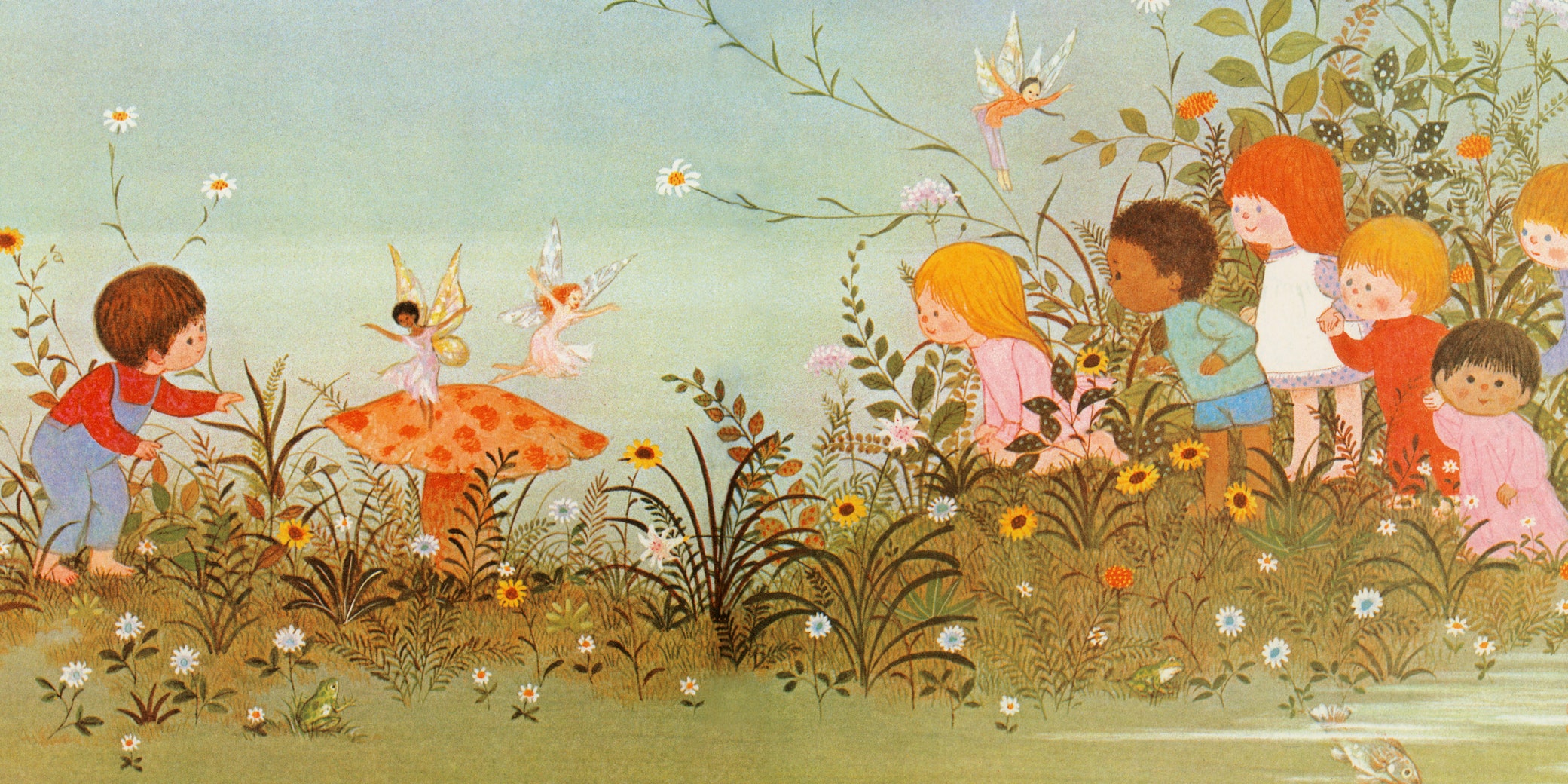
Thunder and lightning swirling
The palace of heaven tumbling
The Angels of Mutiny are falling
Falling below, downward, falling
into the sea and the earth.
While the light of Divine Grace
still flickers on the scraped wings,
They become the Good People
too vivacious to be in Hell.

Where the ocean sends forth
The breeze of the shrill west
Pegasus gallops over the waves
Neighing in wondrous force, full of pathos
Dolorous, vigorous, resembling
The great conch of Poseidon, resounding
Across a boundless reach of the sky.
 When I saw the movie poster of ‘Cat’s Eye’ (1985) on Amazon prime, I was at first hesitant to watch it because it showed the stereotypical association of the cat as a witch’s familiar or something to that nature of foregone horror repertoire. But perhaps I was more afraid of what I would see and reconcile to the stereotype that the cat could not be the dog. Despite all of the phantasmagorial display of the flights of thought, the cat of the poster’s uncanny resemblance to my seven-month-old tabby Toro won me over the resistance. I rented it for Saturday Afternoon Home Cinema with the expectation which was akin to curious Alice in Wonderland. Be it ever magical or bewitching in a softly purring way, the result is one big wonder conflated with doses of warmth and mirth, whimsically betraying the genre classification as horror and the writer’s Craft of Gothic Fantasy like you never knew.
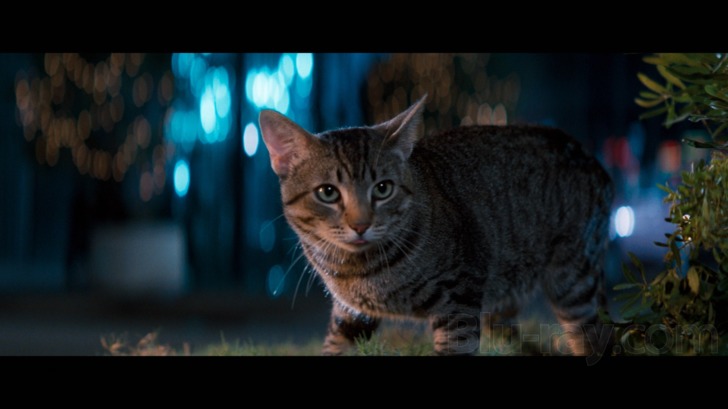
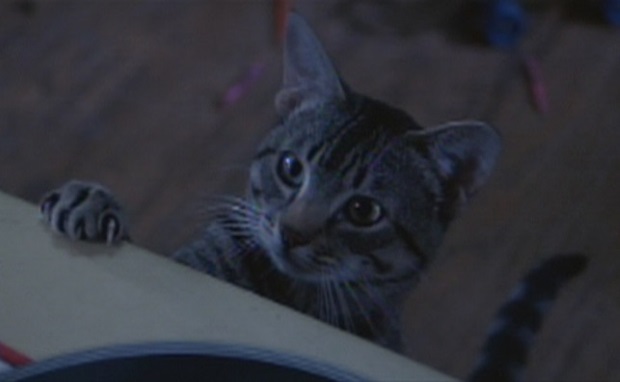
‘Cat’s Eye’ is a threefold anthology film based on Stephen King’s short stories, the first two from his “Night Shift.” King wrote the last story, especially for the movie. It tells a story of a traveling cat who comes upon three separate incidents during his search of the mission to save a life from danger, as annunciated by a spectral girl. In the first two stories, in which the cat takes an incidental role of witnessing human frailty and duality of evil and good, he goes by the names of “The Kitty” and “Sebastian,” showing the characters of the name doners per se. And who says that the cat is a harbinger of destruction as witch’s familiar? He is the judge of the character as if taking in the sun God Ra’s appearance, who was said to be meowing during what he was doing, representing the sun’s benefits for life on Earth in the Book of the Dead. Kitty and Sebastian do not directly intervene in the characters’ fates in the first two stories. It is the third story in which the cat takes charge of the narrative as the main actor with the name “General” on the stage.
Stephen King is known for his excellent story-telling skills combined with supernatural and psychological elements of lonely and misunderstood characters with wounded hearts dealing with their enemies in extraordinary situations. In the tradition of Washington Irving, Nathaniel Hawthorne, and Ernest Hemingway, King’s narratives are always free from a baroque figure of speech with florid adjectives and complex sentences that flaunt the ego of an unapproachable writer on the mighty throne of English Literature. That is why King’s stories are attractive and widely acclaimed because they deal with the ordinary lives that are not ordinary when seen in close-up. That alchemical ingredient gleams through this movie, showing how our lives are vicariously interrelated, weaved by multiple strands of contemporary life that we all live now through the cat’s eye. Herodotus, the father of western narrative history, knew the connectedness of separate human lives and combined them into one vast story of humanity employing parataxis, individual narrative accounts’ integrity. King’s “Cat’s Eye” follows Herodotus’s narrative trail.
The movie’s real star that brought the fiction into reality is undoubtedly the tabby, whose performance is so wonderfully natural and deeply impressive that it eclipses the human cast’s performance. And yet, there is no credit for the feline star without his real name and a shred of information. He is now long gone, but then I see my tabby Toro at home and wonder if the actor cat might have been his great-grandfather because of the striking physical resemblance and reflective demeanor. But then I think anyone who has a tabby may be delighted to feel that way because otherwise, King might not have written for this film charmingly, which is unusually lovely with high paws.


Invitation, Manifestation, and Escape are typical acts in horror movies from ‘The Exorcist’ to ‘The Changeling’ and to ‘The Others’, all of which are supreme ones of the genre, demonstrating the genuine scare is without a masked slasher on a killing spree that seems to revive forever like a Phoenix. But what about ‘The Boy’ (2016)? The movie is a lackluster flick, a smart apprentice of the masters mentioned above but without depth and breadth of knowledge of the essence of things, natural and supernatural.
It follows a young American woman with a past named Greta (very German or Grimm maybe?) hired by the overtly strange elderly couple as a nanny to their little son Brahms (possibly Bram Stoker?), a porcelain doll. As in Kubler-Ross’s Stages of Death, she shocks and denies, then accepts that she is a nanny to the doll. Of course, pretty Greta is not lonely because a young, good-looking grocer named Malcolm courts her as politely suavely as an English can be. Then Greta’s ex-lover Cole, who is the epitome of big, rough, and domineering man, suddenly manifesting from America in the English mansion, demanding she should leave for the states in the morning with him. And that’s not the end, for we are rudely introduced by a third character (or the same?), and the stupendousness of the story swivels in the flashes of screams, blood, tears, etc.
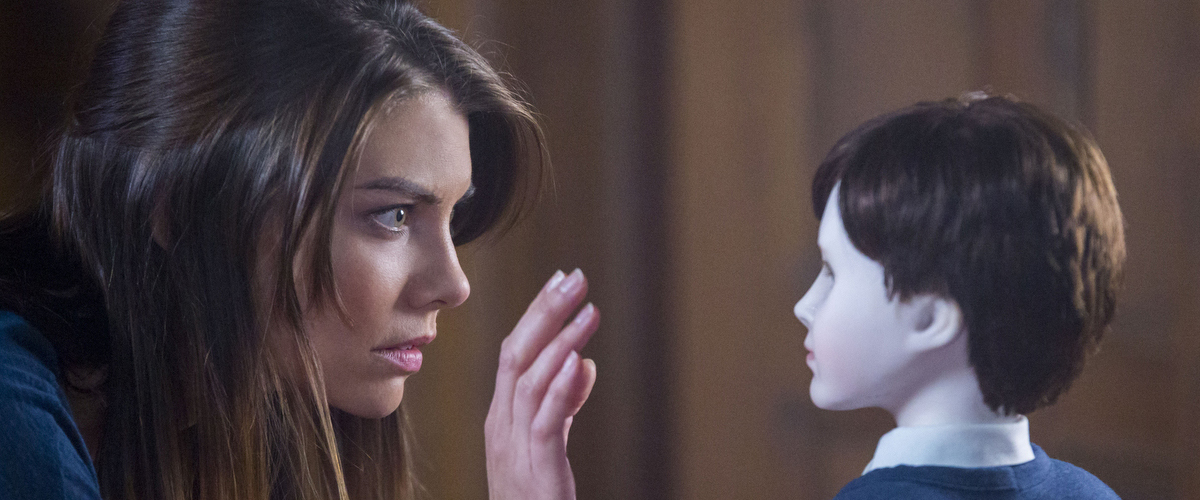
Watching this movie last night on Netflix made me think that the classic horrors of the 70s and 80s were indeed long gone and would not revive – at least for now. What begins as a classic supernatural story ends as a tepid escapade from one big mess. Greta’s coming to England is loosely explained, not to mention Cole’s sudden appearance in the English countryside manor is abruptly shoehorned into the story, breaking the thread of subplots, changing the atmosphere of the movie into a thriller that is not supernatural at all. Nevertheless, Lauren Cohan’s performance as Greta is commendable for her naturalness and arduousness in portraying her role that is the only gem of the movie that makes it watchable without turning it off.
Maybe I am either anachronistic or fastidious in selecting horror movies because of my propensity for subtle but incredible supernatural thematic elements without monsters, deformed humans, or amorous lovers. So be it. It’s all about how a story is intelligently and entertainingly told on the screen with minimum special effects, gore scenes, love scenes staging in either big swanky English country houses or big deserted mansions that are conveniently used as thematic elements. Reading the background information on this movie, I have noticed that there are quite a few production companies involved in making it. Would it be the reason for turning this otherwise excellent thematic element into a dull child’s play? Did all the companies know a thing about a movie not in monetary terms but art for art’s sake? I wonder.


You must be logged in to post a comment.