Tag: arts

  • In the temple of Ishtar

    tumblr_inline_p7h7p1ICiL1tnzgls_500
    The Babylonian Marriage Market by Edwin Long, 1875

    There she stands like a nameless flower

    Alone, away from a heap of roses in the garden

    of the temple of Ishtar, Goddess of love in armor

    and looks not with pride seen but with pain unseen


    Days have left, Years have passed;

    But the girl still roams around the temple

    Alone, apart from the beauty selected

    And consummated to a sacred couple.


    Alas, what is it not the thing called Pity

    When the wallflower unwanted, unsought

    Alone, as always, waits a cruel eternity

    Till she meets a beholder besotted sought?


    P.S. Ishtar is the Mesopotamian goddess of love, war, and fertility. It is said that in ancient Babylonia, every young female when reaching a certain age should go to the temple of Ishta and wait for a man who will approach and take her as a wife to home. The temple was used as an open market for marriage, which was considered a sacred means of attaining divine union between mortals in the presence of the goddess. However, as the unfortunate ones in love have always been the figures of lamentation throughout human civilization, the shy, unpopular girls had to wait in the temple for years to be selected. This poem is to feel the feeling of being unwanted and ignored in the meritocracy of beauty…



  • a league of their own

    2294848759_75990646f3_b

    Reading a section featuring a small, pleasant Q&A type of interview with a writer in The New York Times Book Review on restful weekends gives me a kind of voyeuristic fillip to be privy to the life of the writer; moreover, the usual question of whom to invite for dinner is the gist of such small pleasure. I’ve found it quite stimulating to think about my own list of people to have dinner with. Therefore, I have herein drawn up my own list of invitees to confabulate with. Here’s my list of guests:

    • Eleanor Roosevelt: The paragon of the First Lady of the United States with Intelligence that ministered to her moral character, she put her philosophy into action by actively participating in social services. Besides, Mrs. Roosevelt possessed a polished but common sense of humor and wits communicative to people of all social strata with her timeless adage: “No one can make you feel inferior without your consent.”
    • Joan of Arc: The Virgin of Lorraine, The Patron Saint of France… Such are the epithets of this patriotic French maiden who was burned alive on the counts of witchery and treason, which was of course conspiracy concocted by the French ecclesiastical dignitaries collaborating with the English against whom Joan of Arc fiercely and courageously fought to victory. She was neither a religious fanatic, nor a hallucinated mooncalf, nor a certifiable schizophrenic. She might be a simple peasant woman but a courageous, headstrong, and smart woman of faith who did not even protect her face during battles with the English amid the attacks of sharp arrows, axes, and lances. No wonder did Mark Twain praise the Virgin Knight forthwith: “Whatever thing men call great, look for it in Joan of Arc, and there you will find it.” Besides, her simplicity of faith excelled the pomposity of ecclesiastical knowledge by saying thus: “About Jesus Christ and the Church, I simply know they are just one thing, and we should not complicate the matter.” I can learn many things from Joan as a True Model Woman who embodied Intelligence, Femininity, Courage, and Faith.
    • Marilyn Monroe: Born as Norma Jean Baker, she was not a blonde bimbo whose physical attractiveness belied her ceaseless pursuit of knowledge concomitant with her pursuit of the meaning of life she desperately wanted to ascertain. Monroe enrolled in evening college courses in New York City when she had no schedules during the daytime. Behind her pretty persona of a movie star, there was a profound shadow of existentialist. Also, Monroe’s down-to-earth personality and kind nature would make her a lovely company striking up a convivial conversation at the table full of strangers.
    • Jane Birkin: Her bohemian look – that effortlessly sensual but charmingly delightful facade with simple French Chic style is always timeless and boundless, appealing to Womankind imbuing with a sense of emulation of the style. In fact, such qualities of Birkin had one time convinced me that she was French. She seems to wear sexuality like she’s wearing her favorite set of perfumes, which is never vulgar nor degrading. Once a shy English girl is now a sensuous cosmopolitan woman demonstrating admixture of art and individuality in the most fashionable way. She will be a delightful addition to my lunchtime table.

    In view of the above, my guests of honors are an eclectic company of women, past or present, surprisingly and strictly non-professional authors who make a living by writing only, although I did not intend it to be that way. Or maybe my preconception of professional authors – especially women – as highly volatile artists with inflated egos, dazzling intelligence, divine beauty, and impressive achievements might have played a vital role in excluding unconsciously any of them from my circle of companions. But so did Michelangelo; he was never befriended with his contemporary Leonardo Da Vinci, who in fact lambasted his untidiness as a sculptor in comparison with a baker. Nor did Michelangelo make friends with other famous artists. Instead,  he was a friend of some obscure artisan who helped around various artists by doing sorts of drudgery. It all boils down to the fact that having a good company of kindred spirits can do a favorable service to your soul, making you feel charitable and magnanimous, so much so that you can- to quote the swashbuckling Oscar Wilde- “forgive anybody, even one’s own relatives.”

    저장

  • Poesie – the moon

    They whisper lovers’ words

    In the soft sweet moonlight

    With the bright hues of 

    the Evening star quivering

    in a delight of a gentle caress

    of the commending nightly sky

    and its reflection in the waters 

    Beneath the visiting lunar beauty

    chaste and fair, excellently bright.

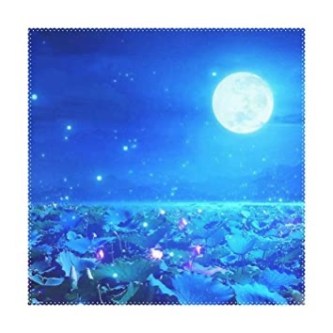
    P.S.: The moon has been an inspiration for many a writer, ranging from Ben Jonson, who revered it as a seat of chaste goddess Diana, to W.H. Auden, eulogizing it as the one and only lunar beauty. I took the liberty of joining Jonson and Auden by writing this with the image of the moon I have in mind. 

  • the five faces of a fool

    unnamed

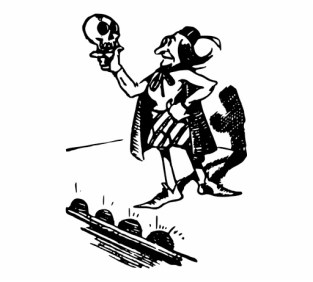
    The Five Faces of a Fool he pulls off proudly

    The prince whines and whimpers loudly;

    He defies the humility of heart as ever,

    He falls for the false praises to no ends,

    He mocks the wise counsels evermore,

    He denies the evil’s counterpart as always,

    He repeats easy starts and hard ends forever

    With his head buried in the sand to problems

    Till Sister of Charity helps him to stand up

    To his follies and repent his foolish refuses

    To face off the Five Faces of a fool once for all

    And walk forward to what lies ahead in light.

     P.S.: While I was watching an episode of my favorite old western drama ‘Laramie’, a character of a falsely convicted ex gunslinger uttered, “I am seven kinds of a fool, ain’t I?” As a lover of fanciful words, I was immediately piqued by the expression, and in the subsequent search of the meaning thereof, instead, I happened on the expression of “The Five Faces of a Fool,” because of its sheer witticism from the wise King Solomon. 

    It’s derived from Solomon’s fatherly advice to his spoiled crown prince son Rehobam, circa 930 BC. It’s a verse consisting of five-fold warning against the fall and the decline of the kingdom as a result of refusing steadfastly to listen to the wise and surrendering to God’s will out of audacious laziness in the guise of princely hubris. 

    Obviously, the prince son was not a model student of his father’s school of proverbs, but the readers beyond the boundaries of time and place have taken the advice to heart and applied it to where it is deemed fit. In writing this poem, I was wondering which face of a fool I might be wearing… How about you my dear reader? But take heart! For there’s always redemption thru hope and faith. 

  • portrait of Vincent Van Gogh


    vangoghmuseum-s0135V1962v-3840
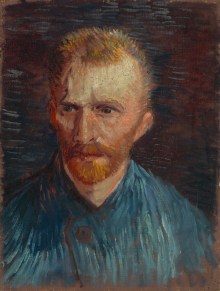
    Self-Portrait of Vincent Van Gogh

    A man without an ear had no friends

    To show him the face of compassion

    To lend him an ear to listen always

    To the cries of a soul grim and ashen

    Lost in the gallery of a dark house

    Where nature oppressed ruled the mind

    And commended it to suffer with the body. 

    The Studio of the South in tatters

    assailed a reservoir of dreams;

    The Southern Sun of Arles in shreds

    speared his soul with a shout of taunts

    And made his heart sink in the abyss

    Till it burst with an outcry evermore

    Of the man with the unseen voices

    That grew loud and grew louder

    As he was estranged from himself

    And left the world with a thunder

    Of fire, a fire of freedom from 

    The frights of the broken soul. 

    Thereby hangs a tale of a painter

    Breathed with poetic madness of arts. 

    P.S.: I have recently come across an article about the nature of Vincent Van Gogh’s mental illness that eventually resulted in his suicide in May 1889 with a pistol that punctured his heart in Saint-Paul-de-Mausole asylum in Sant Remy, France.

    It is said that Gogh had shown symptoms of disturbed mental states since he was 17 years old when his parents tried to get him committed. He was later seen eating coals while painting and told of hearing voices and seeing hallucinations. As a matter of fact, Gogh was from a family with a history of mental illness: his maternal aunt was epileptic, and two of his siblings died in asylums and two others by suicide. Surely, this doesn’t aver that mental illness is hereditary and therefore brings grist to the mill of eugenists.

    In my opinion, it seems more likely that Gogh’s tragic life story comes from a combination of Gogh’s disappointment with the failed reception of his works and frustration with his ability to deal with the existential reality interacting with the unfavorable circumstances surrounding his struggles to mark his existence through a medium of art, which deserves of recognition for its beauty of his highly innate artistic sensibilities that glow in the dark night of the soul. To me, whether Gogh was clinically insane is to miss the gift of the artist to humankind that always thrives in the beauty of arts. 

  • Afternoon lark

    ER4oDQvXUAEEChQ

    The sky’s blue and endless

    The sun’s high and bright

    The hill’s green and gorgeous

    The field’s vast and earthlight

    The bird’s happy and twittery

    My spirit’s pretty and sassy

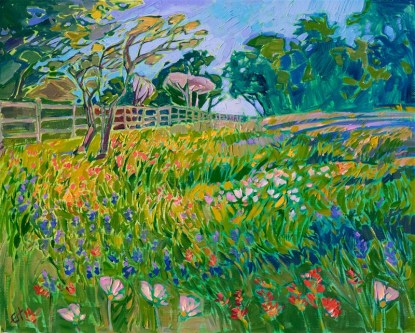
    In a scene of noonday play. 

    P.S; I was reading a book this afternoon and heard a bird singing from the bough of a tree outside the window; it was very pleasing and made my spirit flit in a mind’s garden. It was a beautiful Saturday afternoon, which resulted in this improvisational little poem.