Tag: arts

  • her epithet


    unnamed (1)

    Nature paints her portrait in colors of contrarieties:

    Quiet, Passionate, Ambitious, Acquiescent, Bold, Timid, Vivacious, Tenebrous, Temerarious, Solicitous, Pretty, Plain, Chaste, Covetous, Delicate, Wild, Conventional, Liberal, Fast in thoughts, Slow in words, Principled, Recalcitrant, Smart, Sophomoric, Young, Advanced, Equable, Volatile, Witty, Silly, Boring, Stimulating.

    The colors changing, blending, creating in spades

    Never dull her portrait of boundless varieties

    Simulating and dissimulating in shades of her heart.


    P.S.: I think to define a person’s character in black and white terms is unfair and erroneous in most of the times when you don’t know the person well enough to draw a picture of him or her. And I think it is from this immature understanding of a person that all kinds of personal conflict, ranging from racism to war, arise. 
  • on Shakespeare’s Birthday

    william-shakespeare-thumbnail

    Brilliant as the star that danced

    And sparkled in the Milky Way,

    The Wit that Nature crowned

    The Bard with a Laurel of Poetry

    Adorned him with Great Glory.


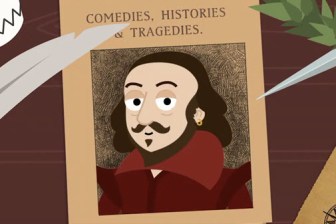
    P.S.: Today is Shakespeare’s birthday, and I feel somehow responsible for writing about it to commemorate it as a continuing Student of Art and Dabbler of Wordcraft. What I love about the Bard is that he wasn’t classically educated and that he was something of an autodidactic artist whose natural light of wit and way with words made him all the more attractive and approachable. The image of a gigantic literary figure that we usually associate with Will is a Victorian invention of the grandiose grandeur of English literature undefiled. If Geoffrey Chaucer prioritized the English language, Shakespeare popularized it. Hence my eternal Kudo to the Brilliant Bard. 

  • malibu drive


    The sun’s bright, the sky bluest,

    The air sweet, the breeze mildest, 

    The choir of nature gaily caroling

    The wonder of the world it bears.


    img_1537

    Addendum – Today in History

    • 245 years ago today, the American Revolutionary War began with the battles of Lexington and Concord.
    • 77 years ago today, Franklin Roosevelt proclaimed the abandonment of the Gold Standard and ordered the confiscation of privately owned gold coins.
    • 69 years ago today, Gen. Douglas MacArthur, relieved of his Far East command by President Harry Truman, bade farewell in an address to Congress with a quotation from a ballad: “Old soldiers never die; they just fade away.”
  • Thousand loves

    ofclnku1pbi65qd0ft3lgwpoc56rwcsrzkjyo0hnaasfvv6uhpcol6xx8tzkpuwz-

    Her love that has been, it is that which shall be;

    and there is no one love but a thousand loves:

    A gentleman and a foreman, a mister and a master,

    A soldier and a sailor, a wrangler and a rancher,

    A fighter and a keeper, a preacher and a paramour,

    A singer and an actor, a drifter and a deceiver –

    A Shapeshifter with a thousand faces of a lover

    changing and changing, round and round, forever

    all but his heart true blue to his mistress, dear.


    P.S.: This is my a priori adaptation of Shakespeare’s idea of the perfect better half or lover in “All’s Well That Ends Well”. She sees different aspects of her sweetness dear whose various characteristics promise her fresh delights and never bore her. 


  • they come to her at night

    Screenshot_54

    The night was a strange paradox of light and dark. It was too dark to invoke images of the bright beautiful things. It was too light to provoke imaginations of the blissful obliviousness. The night was a white heat of the sleepless senses that kept taking in all seen and heard even after the provocateurs were long gone out of sight. This was maddening and becoming madder and striking the notes of all madness. Iris couldn’t sleep as the night was getting deeper and darker, and it was consuming every part of her in a great white incandescent flame like a funeral pyre that once engulfed Dido’s forsaken body and unfortunate heart. The senses that kept her awake besieged her glass castle without mercy and started to screen the scenes of sadness and more sadness as an apparition of the past narrated the story buried in its tomb without an epitaph. She was wide awake at the bewitching hour, and she was helplessly defenseless against the force of the hour.

    Since she was a little girl, Iris has been going through the same nocturnal rituals of waking up at 3:00 AM on time, precisely, continuously, as always. Every single night was every single rite of this uncanny performance of sleeplessness – that is, exactly at 3:00 AM. When she wakes up, the electronic digits always show 3:00 AM with glows that seems to grow lighter the more she looks at it in fearful awe. Fearful because Iris has learned that it is the hour when the gates of the underworld, the netherworld, the world beyond are open, and the regions of faeries and wandering spirits roam the earth as witches fly to the devil’s banquets. Hokum it may be, but the bewitching hour also seems to include Iris as a coterie of the supernatural for what’s worth. This secret is hers and hers only in fear of being branded as a weirdo or a witch’s apprentice even. Yet, because Iris’s soft heart cannot bear a secret too long for its painfully tender fullness of emotions and feelings to keep it to herself, it now agonizes her sense and antagonizes her sensibility. And it was this night that got her to a paroxysm of inquisitiveness, inadmissibility, and ineffableness, enveloped in the mysterious veil of incredibility so enigmatically eerie that it almost felt infatuating with the unknown.

    The magical hour was now in possession of the waken Iris with wide eyes, and the effect was smeared into every part of her body without a miss like ink instantly and ferociously diffusing in a glass of clear water. She did not like it, but her opinion was useless under the power of the supernatural hour. Iris wanted to break the spell and doing so would require her of facing another unknown mysterious force. Her Catholicism would defy her magical assumption on the incredible symptom, but Iris knew that her religion itself entailed the magical qualities of belief and that it was only natural for her to connect the dots between the two belief systems as a solution to her ghostly malady. That’s it. She can’t take it anymore, she can’t have it any longer. Forget the religion, and think primal. Iris has made up her mind to start her investigation of the supernatural phenomenon that she has been going through to find whys and wherefores.

  • poesie – i dream myself alive

    cheret8

    Awake I know I dream not

    As the sense still alive

    Tells what is seen is not

    A fancy but a reality alive

    Of the wonder of the mind

    Working wonders of creation

    Of a fiction of the mind

    In a mind’s reservoir. 


    Awake I think when I dream

    As the pulses of sense weaken

    And the images seen past seem

    All but phantasmal panorama seen

    In a mind’s theater of illusion – 

    Fantastic beasts, wailing ghosts

    Enveloped in the cloud of dreams

    Lurking in the stupor of the sense. 


    Awake, awake, awake I become

    When the sense divorces fancies

    As the mind calls dreams hokum

    And claims a seat of imaginations

    Till it clears the clouds of ignorance

    Darkening the light of the mind wondrous

    Of creating the reality of its sovereign own

    With no assistance of chants and spells. 


    P.S.: Thomas Hobble (1588-1679), an English scientist and philosopher, excoriates in his essay “You and Your Dreams” the knavery of sham magicians and magical folk claiming to deal with supernatural beings to induce naive people to believe in superstitions and the power of magic for the promotion of their trades. Hobble enlightens readers that superstitions arise out of the ignorance of distinguishing imaginations, a second-hand reality, from dreams, a detritus of agitated part of the mind. The gist of his argument is that ghosts and haunted places ensue from an intractable combination of the images of the seen and the second-hand images that become distorted imaginations made look real.  In sum, Hobble’s theory of dream interpretation corresponds to the postmortem dream theories of Carl Jung. Hence this poem is my understanding of Hobble’s essay on the aforesaid subject.