Author’s Note: We all yearn for a haven, a niche, or a Shangri-La amid wrestling with the existential challenges that life presents to us. To dismiss such a yearning as a peevish repertory of a wastrel or an incompetent is a churlish disregard of the humanity and a supercilious judgment of individuality. William Butler Yeats saw the heart of the weary, and this is my tribute to his vision of the imagination in which I want to willingly waste my time.
When the Chariot of Apollo started racing at full speed thru the aerial hippodrome in the early morning, she decided to go out and watch the splendor of the golden racing that brightened up the earth after several Sundays’ absence of the spectacle.
So, she first sauntered at the park where K-9 school students were taking classes. Then she went to an arts and craft store to buy stuff to decorate her next year’s traveler’s notebooks in which she will write her reading notes and all sundry things. Thereafter, her ceremony of beautiful Sunday was served with delicious refreshments at a donut shop that she didn’t expect to find in the Wild West.
Apollo’s racing has long been finished with his twin sister Artemis taking over the celestial domain with stars and the Moon. She looks out the windows and realizes that this Sunday is fast approaching Monday tomorrow like a fashionable host. “Live a little, comfort a little, cheer thyself a little,” said the Bard. She thinks that life shouldn’t be complicated indeed.
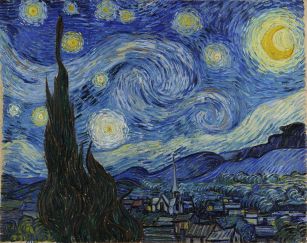
Author’s Note: Last night’s sky was studded with beautiful stars imbuing me with a new kind of hope and comfort that life is not such a formidable juggernaut to deal with. The beauty of nature did me good indeed. This is my mind’s imprint of the beauty.
It is the star above her that governs her conditions. Iris knows that the fault is not entirely in herself but mostly in the lucky star that does not seem to know where to find its beneficiary. The star was born when Libra and Capricorn were met in the house of Aquarius on the nineteenth hour of a blustery snowy wintry night. The star hangs on the vault of nightly celestial ballroom among the other stars twinkling merrily and boldly but alone in a corner of the limitless dome, twinkling ruefully and dutifully as if it were trying to signify its insignificant presence on the nocturnal cosmic stage. For this lone star has not found its beneficiary, the ascribed terrestrial hair of its power, and without it, the star cannot become a lucky star. Which is a tragedy for both Iris and her star.
In fact, Iris’s existential frustration or noogenic neurosis agrees to what Shakespeare was suspected of harboring in all his life. Surely, the Bard was a very successful playwright and poet who marched in a parade of famed hits in his time, but he was wrestling with a doubt whether it was Fate or Freedom of Will that governed human lives as conveyed in his works, such as “Julius Caesar”, “Othello”, and “Hamlet”. The characters of these plays fight for their causes as masters of their fates, but the consequences are not entirely fortuitous in bliss. That’s why the Greek soldier and historian Thucydides regarded vain hope imbued with a paroxysm of flattering confidence and blind devotion to the law of attraction as a dangerous hubris to one’s philosophy of life.
Hope plays its role as a morale booster when one sees it as a card of chance in awareness of odds in one’s favor. In this manner, one does not have to think about it but can fight with every hope of winning. This also relates to a principle of Logotheraphy: the less one cares, the more one can without stress for success. But alas, my dear reader, to pour lead into the wound, all the aforesaid needs luck as the Bard chips in thus: “There is a tide in the affairs of men, which taken at the flood, leads on to fortune.” A tide of the deep wide ocean of Life that arises from the heart of the ocean to surge in bounty of fortune to a weary wayfarer on the land is what Iris has been waiting for till now.
All this thought, all this doubt about her so-called life – the existential frustration- are vexing her mind and crippling her faculties of the mind like vermin, so much that she feels utterly disoriented and deserted in the crossroads of life. The faith she has begun to lose with reasons justifiable only to herself, meaning of life she still hasn’t found, Iris finds herself lost in the Labyrinth where the Minotaur is roaming around to find his prey. And she does not have the hero Theseus nor Ariadne for help. Iris must find the way out anyhow for her dear life. But one thing is certain my dear reader; that although fortune’s malice or absence might conspire to overthrow her state, her feisty and recalcitrant mind will eventually exceed the compass of her will of fortune with a triumphant laugh.
It’s gobsmacking to see how people misidentify humor with mockery or sarcasm in their misconception about laughter (the loud the better) as a product of a merry heart. Whereas humor should be appealing not only to the senses but also to Reason with a natural assistance of wit to discern the light side of life and to elevate it to wisdom of life it bears, people tend to derive funniness from faux-pas and gaucheness of targeted individuals as if they were Olympian gods and goddesses laughing at the sorrow and travail of mortals on earth. That being said, this aptly witty book by Paul Johnson is an intelligent receipt against the philistine understanding of humor drawn on his erudition and sharp witticism.
Johnson sees humor as a handmaid to hope in life that gives a jolt to a meaning of life, a mental and physical therapeutic means to make the strains of existential malaises bearable, and presents us a society of famous artists who shares the same views on the pristine essence of humor. Life is indeed a comedy in a long shot and a tragedy in close-up. If our human existential life is a tragedy at the core, it also has a periphery of comedy, which helps us to understand and embrace the attitude of “Amore Fati” Love of Fate, regardless of a boundary of classes, races, and genders. Accordingly, finding humor in human suffering is one of the manifest functions of arts in sublimating human emotions and thoughts into the aesthetically pleasing and intellectually satisfying artifacts.
From Johnson’s humorists, the persons of Charles Dickens and G. K. Chesterton strike me as scintillating artists of classless humor whose abilities to draw humor upon people of all walks of life and to look upon the bright side of existential life and kindly side of human nature, for human nature is the same in all professions as it is in water, not stone. Even madness does not look grim and dismal in the eyes of amiable Chesterton: “The mad man is the man who has lost everything except his reason.”
This is the fourth book by Paul Johnson I have read, and it never ceases to amaze me with his erudition and wit manifested across pages after pages at the expanse of his will to enlighten general readers in plain English accessible to all. If you think abrupt peals of boisterous laughter in disguise of hearty mirth in public places are none other than a sign of incivility and citizenship, then this is a fit read that you will enjoy to your quiet hear’s content.
On reading Mr. _______________ ‘s article on the instapoets, I was appalled at his dyspeptic raillery on the poems of the known poets and incandescent snark on the literary merit of the works by playing a role of agent provocateur following the instapoets just to mock their works with malice.
Just because one does not like another’s work doesn’t ipso facto endow the person with right to desecrate the work and to insult the author by putting him/her in the pillory and, thus dispiriting the mind and the heart that are indeed “noble” and respectful. As a hobbyist writer of my blog in English, I am now indeed in more sorrow than in anger that there might be agents provocateur or double agents in hides of followers intent upon deriding my amateurish but sincere writings.
The instapoets, bloggers, and anyone dabbling in the craft of writing are the cult of Knut Vonnegut’s maxim: “To practice any art, how well or badly, is to make your sol grow. So do it.” I hope the author and his likes will understand it with magnanimity of the learned literati who will not use their learning to reason against these noble spirits.
Author’s Note: This is my letter to the editor of a certain magazine that I subscribe. I couldn’t believe that such a historically famed magazine with reputation featured such an article publicly deriding the merits of poets on social media just because the style of writing and the subject matters do not meet the subjective standards of the journalist, who even became a follower of the poets to make fun of them behind the curtains… To think that he’s pleased with himself as a guardian of the English literature with a cruel intention! That’s why I had to send a letter to the editor even if it will not be featured in the magazine. Mind you that practicing art is not a prerogative of the privileged.






You must be logged in to post a comment.