Tag: blogging

  • ‘Hittites: A History From Beginning to End’ by Hourly History – book review

    Hittites: A History From Beginning to End by Hourly History
    My rating: 5 of 5 stars

    The name Uriah always fascinated me from British Rock band Uriah Heep to the biblical Uriah, whose beautiful wife led him ultimately to death, willy-nilly, by King David infatuated with her sensuousness. When I learned that the ancestor of Uriahs was the founder of the Hittites race, being the great-grandson of Noah, the biblical patriarch, I had a Eureka moment. Consequently, I picked up this concise but comprehensive book on the Hittites to know a little more about the people whose founder had the great name.

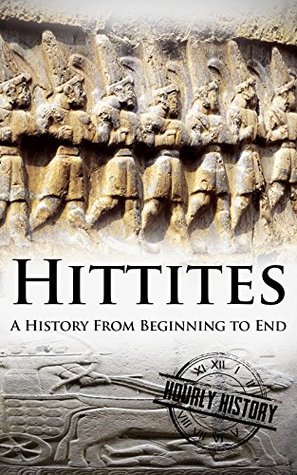
    Before the splendor of ancient Greek contributions to our human cultural progress as a collective enterprise, there was the forgotten but enduring legacy of the Hittites, the mysterious Indo-European trailblazers of civilizations at the crossroads of the East and the West in the vast plain of modern-day Turkey. The Hittites were an integral people to solve the mystery of mythological and biblical events anchored in the real world, thus dissolving fact and legend into one another like a genie from an empire that vanished into the dunes of time and comes alive in the calling. The calling of these mysteriously vanished people came first from British Reverends Archibald Henry Sayce and William Wright in the early 19th century. They discovered the artifacts and sites of the Hittites. Their discovery led to more remarkable discoveries. During the middle Bronze age and Iron age, the Hittites were the first to utilize iron from the region of present Armenia to craft tools and weapons. Also, the Hittites were deft at commerce, developing the city of Carchemish as an ancient mercantile hubbub in which they imported products from Phoenicia and exported them to Assyria (the North) and Babylon (the South) in Mesopotamia. In this fabulous ancient city, Israelites of the Old Testament acted as intermediaries in trade between Egyptians for exporting horses and chariots and the Hittites for importing them.

    Like all those famous entertainers who sparkled then lost the lusters, the Hittites as a collective empire fell from splendor gradually by outside forces: some pointed the fingers at the Sea People, while the others blamed a certain barbarous Kaska people. But, perhaps, such clandestine ending of the Hittites is what makes them formidably alluring and mysteriously fascinating, blurring the boundary of fact and legend. Suppose you are keen on the history of ancient civilizations other than Greece and Egypt. In that case, this elegant primer for the history of the Hittites will equip you with fundamental knowledge enough to whet your craving for more and more profound knowledge about the Hittites.


    View all my reviews

  • Song to Artemis

    Stars sundry and allwhither
    Planets pompous and distant;
    But the Moon is only always
    Goddess excellently bright!
    Fairy Queen rides in her chariot,
    Ghosts rejoice in the moonlight
    Nature basks in moonbeams;
    I revel at sight wonderous
    Goddess excellently bright!

  • Sister Wendy’s lovely ‘Speaking to the Heart: 100 Favorite Poems’ – book review

    Speaking to the Heart: 100 Favorite Poems by Wendy Beckett
    My rating: 5 of 5 stars

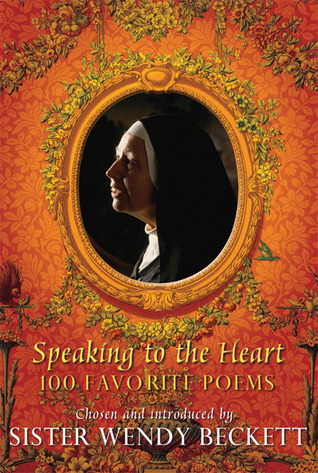
    Sister Wendy was an erudite and delightful cloistered art historian in a veil who knew that Poetry is a song of the heart from a mind spring of sense and sensitivity, not to be burdened with a weight of reason. The result is a lovely apple-picking of her favorite poems in her pretty poetic orchard to share the beauty with the universal reader whose heart intoxicated and the spirit exalted in ethereal ecstasy. Her selection of poems manifests the finer tissues of her heart and the higher octaves of her spirit. Reading the entire book creates empathy for the sensitive minds of the poets so physically poignant that the reader senses the pain and the longing of the poets vis-à-vis.

    Sister Wendy, also known for her long-time BBC documentaries on the history of art, speaks her heart through the poems of her choice colored in the spectrums of human emotions, ranging from longing to wonder, hope to sorrow, and anger to love. Even the subject of Faith becomes alluring due to Sister Wendy’s magical transformation of the matter into fairy-like ideation with sensually diaphanous wings as pagan as could be. Her interpretations speak on the poet’s behalf as an individual soul at the utter solitude, not as a literary artificer whose achievement merits the name in the canon of literature. In doing so, Sister Wendy brings out the poet’s true sentiment under a forage of words and shines her mystic perspectives on the poet’s reading in a splendid but straightforward way.

    The reader will find famous, not-so-famous, and obscure poems from Elizabethan England to 20th century America in this lovely book. Sister Wendy is both discriminating, and non-discriminating in the human emotions poured into the world of poetry. She is discriminating in the sense that she has a “Third Eye” that sees the poet’s soul and understands the sentiment nuanced in the poem, including wrath and despair, poisons to the mind. Non-discriminating in a way, she values poems spirited in the heroic but straightforward endurance of existential malaise in everyday life written in the plebian language. From Shakespeare’s ‘Fidele’ to John Harris’s ‘Feral’ and many more, the reader will feel ennobled to walk the gardens of the poetic Elysium with Sister Wendy introducing you to each of the poets’ greeting and smiling.


    View all my reviews

  • day stars

    The skies they are blue and boundless
    The stars they are serene and sightless
    The stars they are many and sightless;

    It is the day that invades the brilliance of the night
    With the glare of the fiery sun haughty downright;

    It is dreary with no menagerie of heaven’s beasts,
    Afloat in the abeyance of immemorial pasts

    It is gloomy with no festivals of ancient legends,
    Aglow in a heaven’s theater at their best acts.

  • meadow at dawn

    The first ray of light from heaven dispels
    The gray silence of night lost with lusters
    With pale hues of the sun in the soft sweetness
    Lingering in a lake of shimmering waters.

    Iris unfolds the wondrous seven colors
    Weaved into an arch of dreams and hopes
    Always new and fresh in never-ending grace
    That fills with pleasure the hearts of beholders.

    Aurora releases dewdrops from crystal buds
    Made of moonbeams, stardusts, and starlights
    Kept from a visiting moon and traveling stars
    Washing the faces of earth with heavenly pearls.

  • The Rambler – History

    As members of society and citizens of the world, we are one way or another connected to the past, present, and future. That is why history is a multidisciplinary study to understand human nature and learn lessons from the past. Listen to Winston Churchill: “Study history, study history. In history lies all the secrets of statecraft.”  Watching our nation’s leaders on T.V., dividing the country into splinters of dissenters instead of embracing them as one people of the nation, makes me urge the current political leaders of our country to read about what it means to be an intelligent and influential ruler who knows a thing about leadership.

    Roman emperor Hadrian was of history scholar, specialized in ancient Greek history and mythology. He was affectionately known as a “Greekling” and endeared and admired by the Greeks whose land he made in the Roman Empire. The Greeks’ love of the Roman Emperor was inscribed in the Arch of Hadrian built in AD 131, an archeological wonder with the 59 feet high structure made from marble from Mount Pentellicus used for the Parthenon, that read: “This is the city of Hadrian, and not of Theseus.” The Greek elation reached the pinnacle when their Roman ruler built the Temple of Olympian Zeus, Hadrian’s dedication to the king of Greek gods and goddesses’ splendor. He also made the legendary Library of Hadrian, containing 100 marble columns with halls with printed ceilings, alabaster walls, and great statues of the Olympians destroyed by the malice of fortune AD 267. Greek enthusiasm for their Roman emperor was no unreason for their willing submission to Rome’s rule, which they had once colonized. The site of the Temple of Olympian Zeus and the Arch of Hadrian in modern Athens

    The Temple of Olympian Zeus and the Arch of Hadrian

    Hadrian’s fascination with Greece developed from his learning under the tutelage of his cousin Trojan became a foundation of Pan-Hellenism to turn Athens into a new cosmopolitan cultural center for the Roman Empire. By way of acculturation, Hadrian hoped to stabilize the Roman Empire’s fractious eastern part and effectuate the colonials’ ruling. Hadrian followed what the antecedent Roman poet laureate Virgil in the Aeneid to solidify Greece and Rome’s cultural link. In this fashion, he succeeded in ruling the colony with glad acceptance by the governed, who even declared him a founder of new cosmopolitan Greece, intent on cutting ties with the mythical ancient past.

    Hadrian’s motto of Pan-Hellenism reminds me of Macedonian predecessor Alexander the Great’s Hellenism, both of which proved work in incorporating different cultures into a dominant culture with respect and benevolence. Both Alexander and Hadrian had an eye for beauty in arts embedded in cultures they annexed to the dominion and knew how to rule wisely and effectively. It was acculturation of the native cultures on both sides, the ruling and the ruled. Yet, Hadrian’s way of exercising sovereignty over Greece is more accommodating and welcoming, even if the intention was not free from political ambition. The ancient Athenian historian Thucydides confirmed that history is the ultimate record of the events by recognizing certain commonalities between the past and the present that transcends the subject of times and applying it to our present situation. If our current political leaders take a cue about social integration to the same vein’s present social conditions, it might help the country stratified by race and class.