Tag: blogging

  • The Rambler – Religion

    “To one who has faith, no explanation is necessary,” said Thomas More, who died for his relentless faith despite Henry VIII’s promise of honor he would confer on to his most trusted counsel in his cabinet. Samuel Johnson also confirmed that faith required no byzantine theories or philosophy for the validity of truth. Until I attended a public Sunday mass in a parking lot yesterday, I had not realized the power of faith, which I doubted I still had in my heart.

    The beautiful liturgy of the mass, which culminated in the Eucharist, was akin to a flowing of streams of life to the eyes of a seasick seaman and the thirst of a weary traveler. I had never expected such exaltation of the soul with faith disappearing into an abyss of despondency populated with a school of doubt, disbelief, and frustration nurtured in a reality of everyday life. But while listening to a priest’s sermon based on the reading of Matthew 25:31-46, which is about the importance of practicing faith into actions, especially by sharing milk of human kindness with people you feel least likable or unkindest.

    The priest further asked if we would counsel with God in making decisions in life or just about anything needful of help. No one answered yes because let’s face it, we regard such tendency to recourse to God as a derogatorily medieval way of living life in this Digital Age of Artificial Intelligence. We try to reason our faith with the validity of practical truth and willfully turn our heads from the Gospel with the usual facade of “Religion has nothing to do with it.” But then can you also prove that we are nothing but of a highly complex living organism made of accidental atoms, sans souls? What is the feeling that urges you to search for meaning in life, our sense of purpose? Can atoms do it?

    It is my wholly solipsistic reflection of hearing mass, but now I feel like finding Ariadne’s Thread in the labyrinth to find a way out on this last day of the church calendar. What a feeling. Peace to be with you, and God bless you all. 

  • Samuel Johnson Rambles on the practicality of knowledge – essay

    Ignorance is the timorous and indolent plight from fear because knowledge is considered to be remotely extensive and inscrutable to be comprehended. It retards the progress of the mind and numbs the sense. Samuel Johnson avers in his weekly essay ‘The Rambler, No. 137’ avers that one remains unenlightened unless he is diligent to search for the origin of wonder with a pause of reason, a sudden cessation of mental progress when confronting the unknown to him. The need for general knowledge, the knowledge that confers Citizenship of the World, is an essential element of human characteristics, and an easy task to fulfill in search of meaning in life.

    Johnson’s idea of knowledge is simplicity. It is jettisoned from a concatenation of needless abstrusely sophisticated theories and ideologies. It also chimes the bell with the Renaissance virtuoso Leonard da Vinci’s adage that simplicity is the ultimate sophistication in all principles. However intimidating or formidable the unknown is, the essential feature is simple to understand by way of ‘Divide and Conquer,” a principle that complication is a confederacy of the abstruse that can be broken into parts marked by the gradations from the first agent to the last consequence. The force that breaks the shackle of fear for conquering the unknown huddle is patient diligence armored in confidence. The labor of inquiry for wonder follows natural curiosity and confidence that eclipses the soul’s darkness. It comes to fruition by ceaseless efforts to ascertain the origin of the wonder in simple ways. The English philosopher who also advocated democratic pedagogy, John Locke, affirms that the surest way of thorough comprehension knowledge is to attempt little by way of repetition. For the widest excursions of the mind result from short flights of mental imagery and instant thoughts triggered by neurons fired in our cerebral cortex, which can be transformed into an organization of ideas firmly engraved in the mind.

    However, knowledge loses its purpose if it dissipates into the possessor’s cerebral ether or is locked in the mind’s cabinet. It becomes useful and purposeful when put into practice. That is why Johnson gives heed to those who pride themselves in the impressive educational backgrounds and belittle others whose mental capacities they arbitrarily judge ignorable or even ordinary. Knowledge is for share, and it is a duty of a scholar who has a wider variety of knowledge through years of academic endeavors for the common benefits of the world he lives in. As Francis Bacon fittingly concurs, books can never teach the use of books. Generally speaking, it is common for intellectuals, despite their ostensible calls for democracy and justice for all, to live out of touch with the practical realities of life and often regard such matters as trifles. But what is worthy of their glorious learning if it does not accommodate the purpose of life? Johnson criticizes such lofty arrogance of the rarified subset of the general population because they lose their days in unsocial silence and live in the crowd of life without a touch of humanity. It also reminds me of Bacon’s utterance of loneliness in a group as such: “Magna Civitas, Magna solitudo.” In this regard, George Orwell is together with Johnson because they saw the educated’s superciliousness, the intellectuals, who often conferred their knowledge to their honor in the voluntary seclusion.

    Upon reading Johnson’s essay, I could not help but wholeheartedly agree with the purpose of knowledge and the idea of sharing it with others for the world’s common good. I was also glad to learn that I was not the only one who thought that people with academic credentials were frequently dismissive of the opinions of what they regarded as the mortals of the ordinary among whom I am. Therefore, I hope that the reader who reads this essay of mine should not belittle the soul attempting to obtain the sunshine of the light of letters to understand the world in a perspicuous way to declare to the world that I also can think and express it cogently. That is my essay on knowledge for the purpose of life.

  • ‘Writers and Their Cats’ by Alison Nastasi – review

    Writers and Their Cats: (Gifts for Writers, Books for Writers, Books about Cats, Cat-Themed Gifts)Writers and Their Cats: by Alison Nastasi

    My rating: 4 of 5 stars

    If dogs are man’s best friends with their childlike artlessness and uninhibited affection, what are cats? Lucy Maud Montgomery, the author of Anne of Green Gables, answered thus: “Cats are so nice and selfish.” Writers and Their Cats by Alison Nastasi is a delightful illustration of such a relationship between writers and their cats with peek-a-boo glimpses of the celebrity authors’ unknown personal aspects behind the public façade.

    The fascination with the graceful demeanor and graceful capriciousness of cats is particularly intense among the volatile and imaginative writers as the muse of their lettered labyrinths. Edgar Allan Poe wished he could write as mysteriously good as his cat Catarina who liked to hover herself over Poe’s shoulders while he was writing. Mark Twain, whom I used to associate with something of a Dog Father, turns out to be a godfather of cats who rented cats to city dwellers during their holidays in the countryside. Twain also named his cats commensurate with his wicked sense of humor: Satan, Soapy Sal, Lazy, etc. Furthermore, Twain proclaimed that anyone who likes a cat is his friend. The imposing figure of rough and tough Ernest Hemingway may not match the delicate silhouettes of cats’ sophisticated society. Still, Papa Hemingway loved them with the tenderness he rarely showed even to his better halves.

    The book also introduces readers to various writers of our digital era whose love of cats takes them to the world outside their comfort zones in selective solitude. Patricia Highsmith, a high-strung, highly opinionated, no-nonsense author of The Talented Mr. Ripley, reveals her Tate-a-Tate moments by greeting her cat, “We are going to have a great day today.” Marion James, who wrote A Brief History of Seven Killings, met Tom the Cat at a café in Brooklyn, New York, who, like the writer, enjoyed being outside among people because both of them thrived on the liveliness of the world around them as a creative force. Then Peeti Shency, the Indian novelist and artist, writes about the experience of sharing a terrific story about her trip to the Kedar-Gouri Temple dedicated to the eponymous goddess with a particular fondness of cats, thus elevating them to the divine status of the immortals. Shency resurrects the legends of holy cats in the temple to our digitalized reality of the world and connects them to our need for their presence for nature’s mysteriousness.

    There are many other writers in the book whose love for their cats are touching. They all confess to their odes to cats that only cats can understand what they are and who they are. Whether or not cats have a supernatural sense of reading people’s minds, I have no intelligence. Still, I do know that a cat is good at observing your movement and facial expression from my observation of Toro, a 12-week old male brown tabby kitten, who likes to watch me what I am doing and where I am going. A cat is a curiously interesting beast, and it is this semblance of intelligence that makes a cat so attractive to the imaginative, high-strung writers. If you have a cat at home and a writer at heart, this book will present you with a delightful treat to your mind, packed full of beautiful pictures of writers and their cats not in grim portraiture but natural snapshots. Readers may tempt to show the writers’ photos with their cats to your cats.

    View all my reviews

  • Inveigle, Sundown, Chill

    Into the pale hues
    Of the passing day
    I see a butterfly
    Flapping its wings,
    Following the trails
    Of the golden chariot
    Shining with its glitters
    over the long shadows
    Of the day’s memories.

  • Let Children out of Politics.

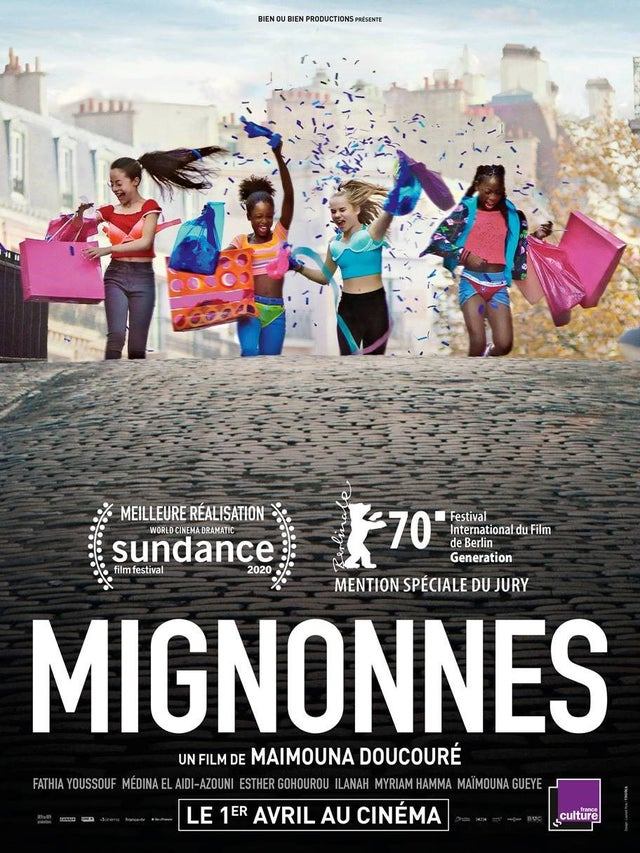
    There has been a vortex of fiery opinions on the controversial Netflix film “Cuties,” directed by French Senegalese Maimouna Maimouna Doucoure as her debut feature. I first heard of the movie while checking on Twitter feed filled with vehement subjective narratives divided -yet again-by the in-vogue trend of racially charged political views, which seems to blur the ambit of art for art’s sake appealing to the universal audience. But the unified viewpoint on the provocative representation of sexualized pre-adolescent girls weighs against the film’s thematic slogan of liberation from oppression, come what may.

    The movie has gained a cult status among self-professed progressive keyboard warriors, defenders of social inequality, when in fact, they are seldom in contact with the people they speak for or even get together in their daily lives. That said, the movie has become something of a visual manifesto of social activism, rather than a joy of cinematic experience that bestows a sensory pleasure and mental piquancy on viewers. No pornification and the misguided display of sexual oppression in children’s figures can be sublimated into art. Children are not a medium of political efficacy or a vehicle of personal ambition. The sexualization of children imitating adult acts is counter-productive in translating onto screen per se the socially disfranchised class consciousness in a highly secular society where the income level defines individuals’ worth. Little girls in skimpy attires, gyrating and eyeing in a way that makes them the cult of Ishtar at a Babylonian temple where girls offer their bodies to strange men for holy prostitution. Or shall I say it is a revisionist adaption of “Pretty Baby” or “Lolita” directed by a black woman whose directorial debut is undoubtedly impressive and provocative in the BLM wake?

    It amazes me to see people think themselves rational and reasonable when they are just self-professed egoists illustrated with their ostentatiously abstract view of social reality that seems to be out of touch with their own class. They regard “Cuties” as telltale cinematic radical feminism and socialism with a view to liberation by the parody of the reality. However, these intellectuals oversee or willfully ignore the truth about human nature: physical, rather than metaphysical; it is tactile rather than theoretical. Our faculty of mind is affected by the works of the senses and of the imaginations. To this effect, ‘Cuties” will adversely affect people’s judgment when their eyes direct toward the visual feast of perverted pleasure because the impulse, when arisen by stimuli, defeats Ego, voids the Superego, and commandeers false promise of liberation with rapacious sensuality.

  • Minor Earth, Major Sky

    As a hobbyist dilettante writer, I have been writing this and that on my beloved blog for four years. Despite English being my Second Language, I dare to write in it against criticism of solecism regarding all the prescriptive rules of the most popular language of the Indo-European linguistic superphyla. The reason I continue to and love to write is no more than the justice of my meek self, smothered under the mask of exoticness that has become my sole identity, and a written touchstone for the neural activities of the mind. I sometimes wonder affected by the progress of neurological or physiological maladies as I slowly walk toward the end of the mortal journey on earth. So, I want to leave the mark of my existence. Welcome to My Invisible World, the Minor Earth.

    The provenance of today’s post comes from my reading of a Saturday edition of the Guardian subscription on my Kindle two days ago. It featured a book review of Must I Go by Yiyun Li, exultantly described as a cracking read written by a Chinese-American woman writer deserving of the commendation. The article began with her illustrious academic background as an immunologist and a recipient of a prestigious MacArthur grant bestowed on geniuses. While such introductory curriculum vitae is undoubtedly relevant to denote her intellectual brilliance, I wonder if such a decorative prerequisite is necessary for the book’s worth. What if Li were just an obscure Chinese writer delving into English writing without the decoration? Such a hypothetical question might be regarded as nothing but an incoherent rambling of a jilted would-be writer. Yet, I have noticed that ordinariness is off-putting, unglamorous, and unworthy of recognition. Call it a groundless presumption or jealous subjectivism even, but it’s the truth. Charlotte’s Bronte’s author’s tenet of faithful allegiance to truth and nature seems to apply to the otherness of the Far-Eastern writers whose ordinariness is merely invisible and regardless. That is, they exist in an invisible habiliment of mysteriousness from Shangri-La.

    The review analyzes Li’s literary reality of uprooted sentimentality in the background against America’s wilderness, so to speak, in which her existential question of who she is based. Li also rides on the crest of the waves of cultural identity, as is the principal thematic element of most Far-Eastern writers. Rather than striking the chords with the universality of human life, they tend to focus on the egoistic litany of alienation with their selfsame egoist emphasis on otherness. In this regard, Far-Eastern writers themselves foster this strangeness, this otherness, these less-than-ordinary images based on their literary tenet they believe truthful and appealing to selective, not universal readers. That is why I, who is also from the far east tend to eschew their stories, void of the common ground of empathy, no other than the shared physical reality.

    Enter Kazuo Ishiguro, author of The Remains of the Day, whose literary world is not limited in his racial and cultural backgrounds. A good writer is capable of travel and metamorphosis beyond the existential terra, where the vision becomes a reality of its own. Ishiguro wants to be all that he can be away from his physical context to manifest his views on human nature, which aims to chime the bells of universal emotions. However, such transfiguration of physical reality into the universal realm of consciousness does not betray Ishiguro’s ascribed biological characteristics because creative force, in conjunction with desire for aesthetic values of literature, is mightier and higher than physical reality. In this sense, Ishiguro gloriously triumphs over racial barriers, and splendidly demonstrates that what you look like and where you are from cannot confine you who you want to become.

    I still write despite my imperfect command of English simply because I love the act of writing as a valve for opening myself dying for a fresh breath. My book has sold only five digits of a hand. I recently received a comment on one of my book reviews I posted three years ago on amazon with 32 likes that callously slighted my ability to write in general because of minor violations of grammar rules. Yes, I am an amateur writer of Far-Eastern backgrounds with an ordinary job as a legal assistant with a B.A. in English from a state university. Yes, my English is far from the perfection of English Undefiled. Yet, writing is no longer a prerogative of the academically privileged whose selfish seclusion of lettered cases is adulated. Writing is a democratic vehicle in which anyone can morph into whoever she or he wishes without restraints. Take Tolstoy, Charlotte and Emily Bronte, and Jane Austen, all of whom put their literary aspiration into reality despite their spelling weakness. No one shall bully my writing skills, nor belittle my volition to write for universal readership. Forget how I look and speak. It’s the heart’s passion and satisfaction of reason letting out of the cocooned physical reality that deserves manifestation. For this reason, I write with or without public recognition with a myriad of likes.

    P.S.: I don’t believe that you can follow my blog without liking what I have written. Also, even if you fulfill the requirement above, if you are regarded as a marketing puppet, then I will drive you away. Therefore, I will not treasure your subscription to my blog if you just press the button on caprice and whims. Certainly not for my blog.