Tag: blogs

  • Triumph of the Will

    Like Hecate, the goddess of underdogs, I have a soft spot for writers and thinkers who arose above personal hardships and triumphed in the will. If they have not experienced human highs and lows, how could they write and explain the meaning of life? Take the Russian writer Fyodor Dostoevsky whose near-death experience on the gallows and subsequent travails shaped how he viewed humanity, the purpose of God, and the dichotomy of good and evil. I compared the life of Dostoevsky with that of Victor E. Frankl, the father of Logotherapy, who survived five death camps during World War 2 because both men’s intellectual fervor saved them from self-destruction in the darkest hours of their lives.

    Dostoevsky (hereinafter “D”) was a political prisoner sentenced to death for reading banned books. But the most incredible feat of luck pulled him out of the gallows, and he was sent to a Siberian work camp. He forced himself to channel a danger of hopelessness and resignation in such a squalid environment into the world of imagination. His characters were his alter egos trapped in a cycle of solipsistic containment of morality, religiosity, and social justice. In these attitudinal and creative values as a way of relieving himself from the slough of despond, D finds a kindred spirit in Frankl (hereinafter “F”), whose spirit never succumb to the hopeless situations in death camps where life seemed to be a curse. Instead, f kept himself busy by constantly devising his school of thought, analyzing it, and structuralizing the concepts in his head and on any writable medium he could find discreetly. The result is Logotherapy, the third Viennese school of psychotherapy that encompasses philosophy, religion, neurology, and psychoanalysis, whose nature and method are common to all humans and applicable to all regardless of age, gender, race, and culture.

    So much so for the reading of the brief article, but the effect is magnanimous and resonant with a pellucid tenor of a victorious high human spirit with humor as a handmaid to intellect (wit), which would otherwise be grim and dreary subject to temperamental bouts of depression and pessimism. Both men in their prime of youth had their sovereign rights of individualities in tatters and shackles, but their willingness to live and achieve their goals exceeded the compass of the malicious fortune and triumphed in perennial glory. They are, as Ben Jonson in his humor might have concurred, men not of an age but for all time.

  • Letters on England by Voltaire

    Letters on England by Voltaire

    My rating: 4 of 5 stars

    Voltaire’s Letters from England, originally published in 1733, is a solipsistic treatise on political, religious, and cultural observation during his stay from 1726 to 1729 of the benign nation that welcomed the thinker with open arms when he fled from persecution in his native France.

    But the book is not a blinded paean to a rival country with a long sophisticated warring history with an intent to retribute his spites to his mother country as an expatriate. Instead, Voltaire takes a stance of a piqued paratactic storyteller in the fashion of Herodotus’s Histories or a trenchant journalist in the school of George Orwell’s Down and Out in Paris and London. In Voltaire’s eyes, that the English are practical folk with a propensity for realism: reflective, respectful of etiquette, cool-headed, and effusively proponent of scientific discoveries are conspicuous in the overview effect of France seen across from the other side of the Channel.

    From the manners of English Quakers to Isaac Newton’s (whom he admires as the brilliant sun of Halios) quantum physics and the law of the universe in great detail, the subjects of interest and the depth of knowledge demonstrate that Voltaire is more than a rebellious French enlightenment thinker. He is a true intellectual whose reason is constituted by the consilience of multidisciplinary subjects in depth. The book is a testament to a genius of a particular kind who embodies a man of letters in its truest sense.


    View all my reviews

  • Freya’s Chariot and Toro’s Aspiration

    Freya rides in her new celestial chariot driven by two Norwegian Forest cats named Bygul and Trjegu. The Norwegian forest cats came from a single-fathered family when their father felt unsure how to raise them after their mother left the family. So the father asked Thor for godly help. Thus Thor gave the kittens to Freya, thinking that they might be helpful to her as companions or messengers.

    But the intelligent and beautiful Freya has a better idea: they could drive her divine chariot to travel across the skies and seas, not to mention land given proper training and times of experience. So rather than smothering their natural agility, unfailing alertness, and admirable persistence, all of which are excellent traits for hunting prey, Freya finds the most brilliant way of a beautiful kind to let her cats drive the chariot. There’s no need to goading or hollering to spur Bygul and Trjegu because such application is unnecessary for performance when the cats love their roles with all their hearts, souls, and minds. When in doubt, read Old Possum’s Book of Practical Cats, and you will soon believe me. If you have cats, see for yourself, for they do when they like, not what you want them to.

    Toro, aka the Curious Tabby, is contemplating joining the team, imbued with high hope of running Freya’s chariot from sunrise and sunset, flying from one end of the horizon to the other, over the ruffling waves of the deep cobalt seas. As one year and three months old, Toro thinks he can apply for Freya’s training school, where Bygul and Trjegu are instructors. At the thought of it, euphoria envelopes his body in a vista of the magnificent chariot, and his spirit now soars up in the garden of ether, intoxicated with the weightless levity. No more boring days, no more need to call the attention of Judy, his human sister, to let him out to the living room, which is always and ever tiresome.

    It’s not that Judy lacks care and affection. Hardly so. It’s because of her cantankerous elderly mother, who doesn’t like him to roam around the living room where she usually stays, watching the repeats of talk shows on YouTube. Toro understands Judy’s dilemma between her willingness to let him out and her submission to her mother’s scolding because otherwise, she knows that the mother will discipline Toro with her walking stick. Toro loves Judy, but his curiosity doubles up with aspirations, whetting his desire for driving Freya’s chariot at least just for once. But then it would mean leaving poor Judy alone behind with the horrible old woman. Hence Toro is thinking hard again.

  • law of inertia

    According to Newton’s law of motion, inertia refers to a condition when a mass of an object determines a resistance to change. The bigger a thing is, the harder it is to be moved. What a splendid discovery when such truth has always existed! That is a difference between someone like Newton and other mortals who have seen it but cared more or less about it. The gist of my proposition is that inertia fits the state of my mind at present; the more I exert my cognitive facilities on articulating my thoughts, the harder they seem to operate the abilities with all their souls, with all their hearts, and with all their might.

    Today I looked into the statistics of my blog posts, realizing my literary fruits were turning sour with the leaves of the knowledge of tree desiccated in the arid land of pitiful ignorance. T.S. Eliot must have felt the same when he yeared for a benevolent pool of knowledge on the barren land of his mind, which is hardly likely to think about because – well, for what he is. No matter how much I try to use a craft of writing that I used to possess until three months ago, I realize the powers are gone with the wind to the ether and then to the blackest black hole in the universe. The words become weightless, and the images are as bleak as the Persian night. It’s like being in the middle of an adumbrating labyrinth with Ariadne’s ball thread missing or forfeited by whimsical divinity. Nothing scintillates, nothing promises, not even with a bluebird that used to guide me into avenues of hope. So whereas I still delve into reading voraciously, the words are flushed into a great abyss of darkness, a slough of despond, leaving me weeping and then crying alone. I wonder if this state of inertia can also be related to the dark night of the soul that St. John of the Cross experienced before his spiritual epiphany. Or I can identify the feeling to the sudden listlessness of Albert Speer, the mild-mannered, brilliant Hitler’s architect friend, during his long-term incarceration in the Spandau prison after the fall of the Third Reich.

    I have always professed to write for the sake of my sanity, the justice to myself with a tenacious grasp on a sense of purpose that I am not going to disappear without a trace of my existence on earth. Laura Ingalls Wilder, Jane Austen, Charlotte Bronte, and Lucy Maud Montgomery all endured the vicissitudes of life in dealing with the demands of daily life while cherishing their literary ambition and endeavoring to prove themselves as gorgeous writers whose credo was allegiance to truth and nature, using the ideal to make the real perfect and kind that God forgot to bestow upon them. They are my spiritual sisters whom I daresay can relate to due to my circumstances and kindred disposition.

    I write not to canvass celebrities for being a top-rated blogger. But then I want people to know that I write however imperfectly or abstrusely. I write because I like it, just as people like to take their selfies and post them on Instagram or make vlogs on YouTube. So while the cold receptions still vex me to my publishing of writing in my blog, my spirit resists giving it all up, which rebels against the law of inertia. Come to think of it, the witch in training Kiki in ‘Kiki’s Delivery Service’ laments about her suddenly losing the ability to fly her broomstick as she stumbled into a vertigo of existentialist distress, part of growing pain before blossoming into a wonderful full-pledged witch. Maybe I am going through the same thing, too. I like to think that way.

  • The princess fairy tale

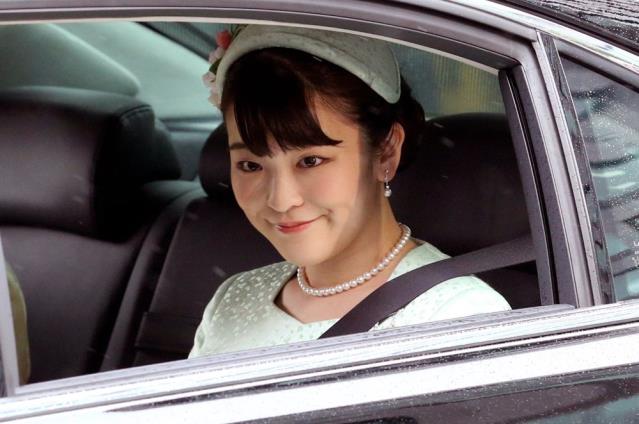
    First of all, let me clarify that I don’t believe in fairytales where beautiful poor girls achieve social escalations by marrying handsome princes and kings. Nor am I keen on the affairs of modern-day royalty whose lives are not even desirable. And yet, the news of Princess Mako’s marriage to her college sweetheart despite forced delays and oppositions is worth writing about because it is a fairytale of the most beautiful kind becoming a truth in reality. Would it be a bit of a stretch if I relate Mako’s heartaches and ordeals to Psyche’s Wanderings and Trials set by Aphrodite to separate her son Eros from the insolent mortal? It also shows that the crowned cannot escape from the intoxication of the heart that is worth denouncing the pomp and circumstances.

    Marrying a commoner is no new in modern-day history, starting from Edward VIII’s marriage to the American divorcee Wallis Simpson and his descendants Princes William and Harry. While those mentioned above British royal members married those outside the peerages, they were not the average commoners working nine-to-five or even more or fewer hours in ordinary situations where they had to depend on the whims and caprice of their employers for the secure livelihood. But Mako’s case stands most excellently because she was determined to give up the whole royal privilege to live as a commoner by marrying the one who is not from a wealthy, not even above average family. Moreover, Mako refused to receive a considerable amount of money as a gift from the royal family for marrying a commoner. On the contrary, Harry and Meghan are considerably wealthy, living without day-to-day financial insecurity about what might happen tomorrow. Their surrendering the titles publicly will not forfeit their assets as in the case of foreclosure that many struggling hard-working Americans are unfairly subject to. After all, why do they need to hold the titular positions to make more money outside the palace? People flock to the brave Meghan and her ever-supportive husband, but why do they do when their happiness illustrates no emblem of sacrifice without a sense of proverbial entitlement?

    I cannot help but compare Mako and Kei to the famously showcased ex-royal couple Prince Harry and Duchess Meghan. Besotted by the sensual charm of his renegade, free-spirited wife, Harry decided to move his young family to Los Angles, California, for good. He joined her Dissent Division to criticize his long-time family for being racist and cold-hearted. On the contrary, Princess Mako never decried her dissenting royal families against her marriage to a commoner, nor did she rebel loudly against the constitutional monarchy outside Japan. Instead, Mako kept all of her affairs of the heart discreetly, remaining true blue to her beloved Kei despite public uproar about his below-than-expected family background for being of a problematic single-mothered household. Forget the stereotypical Japanese politeness and the prejudice on the East Asian women’s submissiveness. Her graceful acts and decencies flow from her natural disposition and upbringing, which I have hardly seen in the famous royal family members.

    Watching Mako and Kei looking at each other with the eyes exchanging affection with radiant smiles in their serenely happy faces put me into a pleasant mood to make me wish for their long and happy life together. Mako is a brave princess who surrenders herself to the love of her choice, even if it means giving up her title and privilege that would make her married life comparatively comfortable to ordinary people. Mako’s decision to live the life of an ordinary wife seems anachronistic and incongruent. Still, not everyone wants to be an Amazon or Scythian warrior, nor does she want to climb up the career ladder to prove her abilities. Mako’s declaration of independence signifies an act of exercising her right to happiness by living with someone she loved dearly. What else could she do to prove her worth for love? It is a beautiful fairytale dissolving to the truth.

  • Beam Me Up, Scotty: Admiral Kirk’s onboard

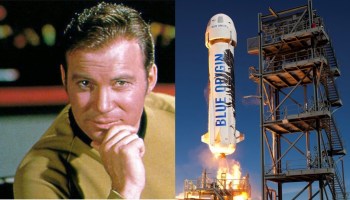
    The skies were clear blue, and the wind mild and agreeable. The day was ripe for the moment the star returned to the galactic heavens in rejuvenated buoyancy of jubilee that he would be out to the extraterrestrial world again. “Beam me up, Scotty,” the man said as he boarded on New Shepherd, treating it like his beloved ship USS Enterprise. It was art imitating life in the former captain’s bright eyes; it was life imitating art in the old star’s beady eyes. For William Shatner, aka Admiral Kirk of Star Trek, it was a one-of-a-kind experience, equivalent to an out-of-body experience in which you fly from your corporeal vessel and wander in all whither, floating weightless, groundless. It was his very Real McCoy galactic trip to outer space.

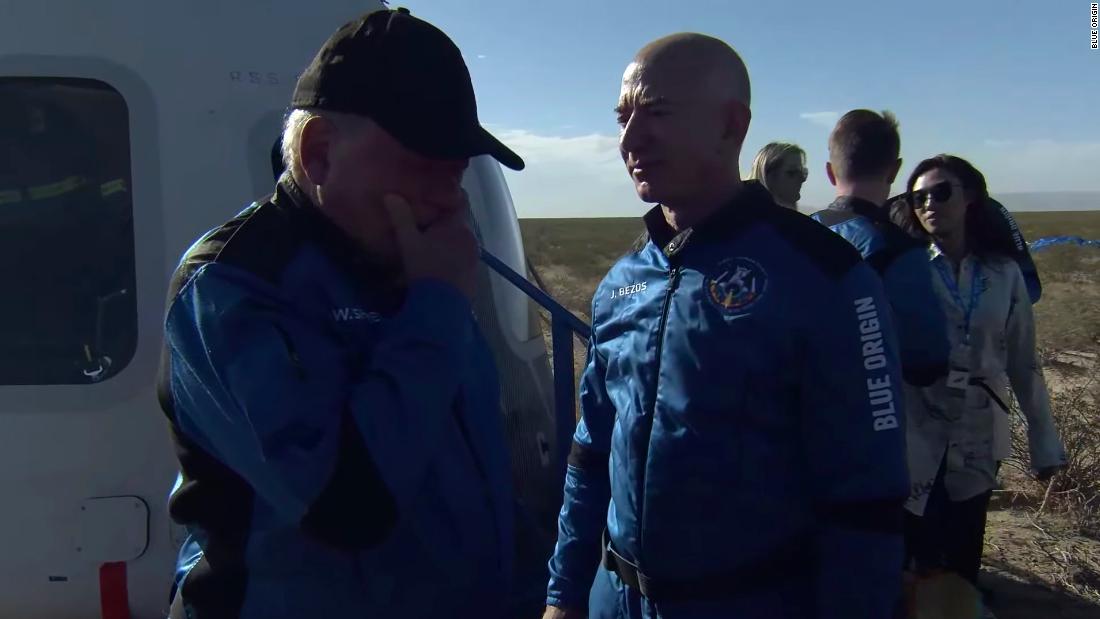
    On Wednesday, October 13th, Blue X, Amazon founder Jeff Bezos-owned spacecraft enterprise, took off from its launching site about 20 miles away from Rural Texas town of Van Horn with civilian passengers who paid astronomical sums for their space trip. But not Shatner, who spent nothing at the courtesy of Amazon founder Jeff Bezos said to be a long-time Trekkie and something of a billionaire with a flair for space cowboy. The motive for a publicity stunt to outshine Blue X over entrepreneur rivals, Elon Musk’s Space-A and Richard Branson’s Virgin Galactic Holdings Inc., is impossible to ignore, yet why not when it also produces positive effects of provoking the imaginary in the real? Shatner, at age 90, seemed no longer the dashing brilliant, just young Admiral Kirk any longer. Still, his spirit beamed up as he experienced overview effect outside the orbit, profoundly mesmerized with the deep fragility of Planet Earth, the Galaxy Blue. Shatner articulated the face of the Earth as so ethereal and impossibly gorgeous vis-à-vis the blackness of outer space that he had a eureka moment of what distinguished Light (Life-Earth) from Darkness (Death-Outer Space). Methinks that such pareidolia of the overview effect has something to do with his nonagenarian age, the last age in Seven Stages of Man, one foot closer in the grave. However, when I watched him in the news, overwhelmed by the ineffable emotions, Jeff Bezos removed his shades and embraced the old actor; all looked genuine, not an act staged for a post-trip publicity event. And even if it so, then it is a likable sort of entertainment that does viewers of all kinds good.

    Criticisms on the expensive space trip only the haves can afford are worldwide and understandable amid the unequal distribution of wealth makes earthlings live and die or live and suffer. Yet the veteran movie star reminds me of an old soldier who has lived through the vagaries of life. Overall, the 90-year-old Shatner’s space trip materializes the earthling voyage of the USS Enterprise, boldly searching for new life and new civilizations into the galaxies.

    Captain Kirk coming home
    Floating under a parachute
    Touching down on Mother Earth
    in a soft haze of excellent dust,
    Calling it home, Roger out.

    Welcome back to Earth, Admiral Kirk.