Tag: book review

  • ‘Essays of E.B. White,’ by E.B. White – review

    Essays of E. B. WhiteEssays of E. B. White by E B White

    My rating: 5 of 5 stars

    The essay as a respectful literary genre has not yet established its firm meritorious footing in American intellectual society where the novel, poetry, and journals featuring de rigueur social/political issues with gravitas, surrealistic individualism, or puritanical heroism that has recently morphed into a rags-to-riches memoir are the only select legitimate royalties worth being decorated with a laurel. Perhaps it has something to do with the level of American intellectualism being at its still developing stage in consideration of its relatively “youthful” history. For what is worth, despite its general cold reception from the literary hierarchy, E.B. White is nonetheless a quintessential American English writer and a very fine essayist of the twentieth century in the English language into the bargain. In this collection of his essays published in various magazines over the years (from 1920s to 1970s), Whites recorded the overtones of humanity, democracy, and social concerns in ordinary things and experiences described in elegant and crisp prose style that resembles none other than his, thus making him one of the central figures in the canon of American literature without dispute.

    Being an essayist means something of a modern day literary troubadour, an independently-minded man with childlike streaks of artless interest in all things worldly and unworldly and innocent belief that everything he thinks about and everything that befalls him is of general interest. In a way, he’s a likable egoist with venturesome effrontery and verve to write a very egoistic essay on his whims and caprice. However, Whites gently rebukes us for our general perception of the essay as an expression of exalted rootlessness without self-discipline and an intellectual basis; rather, it is a panoply of sensibilities, senses, and intelligence, all broken loose from the hidden private closet of the essayist. For this reason of being egoistically concerned in a panorama of contemporary daily that many serious writers of the other literary genres tend to downplay, an essayist should accept his self-imposed role of small-fry writing gentry in the class of scribe, advised White with a kind of avuncular manner. However, it is this estate of an essayist Whites feels exhilarated about; it provides him with a valve of the emotional influx and outflow, so that he can wield his pen across a page in an expense of his curiosity, conviction, observation, and self-discipline, producing a dazzling delight of literary pleasure in its simplicity of language and subject.

    To illustrate, White’s subjects of his essays vary from his experience of moving from New York City to Maine as in “Goodbye to forty-eighth street,” to the humorous political essay of “Bedfellow,” featuring his canine family member Fred, and from his keen and humane observation of a circus girl rehearsing her show in “The Ring of Time” to his youthful poetic experience of working as a waiter on a ship to Alaska in “The Years of Wonder.”All of the aforesaid deal with a cast of everyday character and contemporary daily life written in simple but perspicacious words to contextualize the inner realm of White. There’s no priggishness or pomposity in his prose style, which I find very appealing and endearing. For someone who’s as erudite and intelligent as White, such simplicity of writing betokens that he wears his knowledge lightly with a general reader in mind. In fact, White thinks it his duty as a writing man to record all items as though he would be held personally responsible if it were to be omitted. This idea of a writer as general secretary of humanity parallels the reasons of writing as posited by George Orwell: It serves as a platform of expressing our sheer egotism, aesthetic pleasure, political evidence, or historical record. A priori, both of the great essayist of the English languages strike the mutual writing chords in their hearts.

    At the heart of the essays lies White’s love of the world where he collected the flotsams and jetsam of what our contemporary human life could bring to us, which were washed up by the waves of time and memories. This collection of essay by White, I think, bestows in spades its sovereign royal heritage of its own on the American essay that merits its own section in nonfiction aisles across the country. That is, in a wide stretch of literary imaginations imbued with historical evidence, the book has made itself the founder of new royal blood in a way that reminds me of William the Conqueror’s  becoming the first Norman king of England by establishing a new royal bloodline in 1066. With a variety of topics, and the practicality of language, this book is a gem that holds the reader’s attention throughout the pages including the unforgettable cover featuring Fred and the author himself, which so fittingly and wittingly demonstrates the Element and Style of Essays of E.B. White. It’s a lovely read that warms your heart and piques your curiosity of the inner world of the writer whose thoughts and feelings chime the bells of ours own in one way or another because White is ageless in his writing and his writing timeless in his essays.

  • Eros and Psyche: Sweet Sublimation

    M-17-343x450

    His love was fixed but unsought
    By the ostentation of Eros’s Play,
    The casual making-love façade
    With no precondition of the soul;
    But that which it consummates
    Is a union of the two existences
    Of Body and Soul, the sovereign
    Surrender of the self to the beloved
    Becoming a whole, an ensemble
    metastasizing  “I” lovingly, willingly
    Directed toward “Thou” entirely
    In trust of one another wholeheartedly
    making him of her and her of him magically.

    P.S.: A short essay called “A Courtship of Twenty Years” by John Stuart Mill (1806-73) reveals his infatuation with his friend’s wife, who eventually became his wife. It’s a rhapsody of his admiration of everything about her, her moral character, intellectual gifts, and graceful beauty. This secret affair of the heart is not, however, tinged with a lascivious desire for his friend’s wife thanks to his elucidation of her virtues that benefited him to become wiser and more wholesome; his love for her is a sublimation of the ego, which was capable of integrating the sexuality of the id into the personality. Nowadays reductionism is responsible for interpreting love as a mere sublimation of sex and conscience merely in terms of the superego. But love is the precondition of sex, not the result of the sublimation thereof. What might have been his physical attraction to her at the inception of his love affair was elevated to the actuality of Love, the wholeness of Eros (Body) and Psyche (Soul), which is the essence of love between the lovers. 

  • Tarantism: St. Anthony’s Fire – review

    My-Neighbour-Totoro-5-940x460
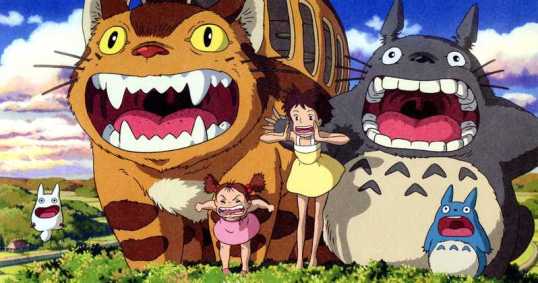
    This was exactly what it was like while I was waiting for my bus to work.

    The Kingdom of Rainfall, Dampness, Stuffiness, and Grimness reigns supreme all day long today without a ray of sunshine peering through the heavily downcast gray sky so lowly hung in the celestial ceiling of the Atlas that it almost looks like collapsing to earth. While basking myself in the typical Atlantic grayness of this somber weather, I could understand why the legendary lost Roanoke Colony was doomed to fail in the late 16th century; it was primarily due to this grim and damp weather condition only congenial to mosquitoes and other kinds of pest that thrived on the unpleasant sogginess. In the reign of the somber weather, to come upon an article in this month’s National Geographic History called “Killer in the Rye: St. Anthony’s fire,” which was also related to the gloominess of the weather seemed a tad pat.

    300px-Pieter_Bruegel_the_Elder_-_The_Cripples
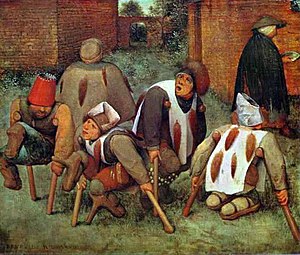
    “The Beggars” by Pieter Bruegel the Elder is said to have portrayed the victims of rye poisoning, most likely of St. Anthony’s Fire, as shown herein.

    Between the middle ages and the 17th century, inhabitants living in the proximity of the Rhine (Austria, Germany, and Flanders) where damp climate affected the crops adversely were frequently subject to a diabolical malady caused by a consumption of infected rye with symptoms of seizures, hallucinations, and infected limbs with excruciating agony that was said to be similar to the spiritual torment suffered by St. Anthony of Egypt. Hence the naming of the agricultural disease ensued. It all started with eating grain infected with a fungus called claviceps purpurea, black growths resembling a rooster’s spurs. This heinous fungus became ergot, toxic alkaloids cutting off the blood supply to the body’s extremities, which caused the hellishly burning sensations to the limbs. Since the cows were not immune from this fungus by dint of eating the infected crop as a staple diet, large parts of the population were exposed to the risk of contracting St. Anthony’s Fire.  In fact, this rye poisoning was multifariously diabolic in the saintly names, such as “St. John’s Dance” and “St. Vitus’s Dance”; the victims displayed tantrums of bodily movements – also known as tarantism – as if they were possessed by demons. Although the rye poisoning began to die out in the Western Europe as wheat replaced rye in the kitchen, the most recent cases of the rye-poisoning disease were seen in the early 20th Soviet Union and Ethiopia and India in the late 2oth century.

    My-Neighbor-Totoro-Rerelease-2018-30th-Anniversary
    Sun, Sun, Sun!

    Indeed, to happen on the article such as the aforesaid while I was sulking in the unpleasant conditions of damp weather gave it an extra fillip. Maybe I am being grumpy about one of those lousy weathers that may be beneficial to the others on the other hand, such as farmers needful of precipitations for their parched land or vendors and manufacturers of umbrellas and rain boots whose businesses hinge on the whims and caprice of Mother Nature.  But as the aforesaid historical records evidence, when dampness and cloudiness in partnership reigns supreme, it turns the world grim and dreary, listless and lethargic. And that is why the ancient civilizations began and prospered in the places where the gods of sun Ra, Apollo, and Helios claimed their sovereign powers among the dominant high gods and goddesses and retained their divine radiance.


  • ‘Proust and the Squid: The Story and Science of Reading Brain’, by Maryanne Wolf – review

    Proust and the Squid: The Story and Science of the Reading BrainProust and the Squid: The Story and Science of the Reading Brain by Maryanne Wolf

    My rating: 4 of 5 stars

    The act of reading is a noble achievement of mankind that has been developed through a succession of ages; it is a collective biological, cultural, and spiritual progress because human beings were never born to read according to Maryanne Wolf in Proust and the Squid. Wolf guides the reader in the capacity of a learned cicerone to the ancient worlds of Sumer, Egypt, and Greece to show us the cultural history and the neurological development of reading through a succession of ages. Wolf’s provocative theory that we were never meant to be natural readers corresponds to Darwinian evolutionary theory in terms of its illuminating reconstruction of fundamental beliefs in the reading brain that we take for granted in this book about the magic and mechanism of reading.

    As the title of the book indicates, Wolf’s analysis of the history and development of reading encompasses the two dimensions in the reading process. – biological/neuronal as symbolized by the squid with tentacles of each different function vis-a-vis cognitive/spiritual by Marcel Proust, a French visionary writer who sublimated a reading experience into a sovereign miracle of transcendence into a spiritual realm. These two complementary dimensions in reading process are a testament to evolutionary traits of our reading brain and our innate spiritual essence that is our prerogative. Wolf starts with explaining the neurons and the brain structure responsible for decoding letters and grasping their meanings in coherent linguistic arrangements. We come to understand the context of reading by dint of retinotopic organization of the eyes and capabilities of neural circuits until the received information reaches the frontal lobe, the control room of all our cognitive activities. What seems to happen in a blink of eye is the grand beginning of a wondrous phenomena of human psyche from the moment of perceiving letters to passing over to the world of the book itself and mind of the writer. In fact, this reading brain is an epigenetic manifestation, which explains a modification in our genes can upend the whole functions of neuroplasticity (the ability of the brain to rewire the connections between neurons) and neurogenesis (the ability of the brain to form a new neuron). The epigenetic revolution in the brain started with the invention of writing in the form of Sumerian cuneiform developed out of accounting necessities. Then came the Egyptian hieroglyphs, the Phoenician, Linear B Script of Crete, the Greek, and the modern day global lingua franca English, and what’s more fantastic is that the evolution still continues in our time.

    The leitmotif of this book is to know the history and development of our reading brain, which are a remarkable collective human biological, cultural, and cognitive progress, and to preserve it against the prohibitive surge of the Internet on which we mindlessly surf the on-screen letters for instant information. Wolf’s concerns about the increasing dependency on the Internet for easy information relate to Socrates’ disagreement to the encouragement of reading at the time when the ancient Greece was in transition from the oral tradition into the written culture. It was not that Socrates was a Greek version of luddite against reading, but that he distrusted the effects of the written words to become internalized knowledge itself in the minds of readers because by reading, readers would absorb the letters without wholly understanding the gist of the meanings. The mutual misgivings of Wolf and Socrates are understandable, but I opine that they stem from the unfamiliarity of the new modes of learning at their incipient development. Just as Socrates were unfamiliar with the power of the written words as an unlocking key to the inner dialogue with the mind of the other, Wolf seems to magnify the manifest and latent dysfunctions of the Internet that can be used as an effective educational tool for spreading knowledge under sagacious guidance. For instance, nowadays volumes of classic literature can be retrieved from the Internet, let alone be downloaded as e-books on Kindle. Books are books in whatever form they are fashioned. A book is merited by its content, not by its design or form. Moreover, it’s up to the reader’s ability to merit the content of the book and to reach the most profound realm of spiritual experience, which Wolf seems to disregard.

    Perhaps, Wolf should have considered the case of Maximilian Kolbe, the Polish Roman Catholic priest who volunteered to die instead of a married Polish man in a Nazi concentration camp; he was all for the advantages of modern technological inventions, such as films and radios, to use them for the benefits of mankind under wise discretion, instead of worrying about the presumed dysfunctions. All of the human inventions are neutral, and whether or not they are harmful to our human enterprise boils down to our own wisdom and guidance of how to use them to our advantage.

    Written in a kindly tone of an altruistic scholar trying to explain the modus operandi of the reading brain and process as easily as possible, the book is not entirely intended for the uninitiated without  basic knowledge of neurological terms and the brain structure in the background information on the ancient civilizations. Also, Wolf’s frequent dichotomy between the Chinese language and the English language in attempt to differentiate the neuronal and cognitive functions in the mechanism of the reading brain is less effectual than her assumed efficacy, for the syntaxes of the two languages are not totally apples and oranges. It could have been more apt for Wolf to pinpoint a language whose grammatical structure is wholly different – say, Japanese or Korean belonging to the Ural-Altaic lingual family that also includes Turkish, Finnish, and Hungarian – from English of the Indo-European lingual family.

    Notwithstanding the dissension as aforesaid, the book is an informative guide to the history of how our brain has been geared to read through the ages, which speaks to the wondrous capabilities of the brain and the infinite varieties of the human mind that is always in progress of evolution. All in all, the book transforms an act of reading to an act of magicking in the panoply of the biological, cognitive and spiritual dimensions that creates the wonders of connecting us to the minds of the others in solitude, uniting us with the souls of the book, and thus making us a citizen of the world. For this reason, we become what we read, and we are never the same ones we were before reading the books of our choice. And Wolf wants to make sure we know of this secret magic of reading. That is the beauty of this book.

  • ‘Goodbye to Forty-Eighth Street’, by E.B. White – review

    kikis-1459532413-726x388

    To come upon E.B White’s essay “Goodbye to Forty-Eighth Street” could not have been more opportune than at the time when I was in the middle of sorting out flotsam and jetsam of the paraphernalia that imperceptibly commandeered in my dilapidated apartment over the years. The logistics of moving from one place to another is, I think, really a Herculean task of clearing the famously filthy Augean stables; you have to decide which ones to discard or bring along with to your new habitat, which you would not find easier than you presumed. Then there comes the physical exertion of putting the stuff into boxes or thrash bags before movers come and have those lucky select items of yours shipped out to your new domicile. In peculiar synchronicity of literature, White’s musings on this task of dispensing the contents of  the apartment chimes the bells of my feelings and thoughts in tandem.

    I ditto to White’s witty comparison of a home to a “reservoir equipped with a check valve that permits influx but prevents outflux” on account of its being filled up with the detritus of the sundry things that have come to me and clung to me even though many of them escaped my radar of affection quite a long time ago. Maybe I don’t have the guts to throw it all away, but as those things now all of sudden show me a phantasmagorical display of the memories of how they came to me, it’s most likely that I will bring them with me to my new place.  I believe that whatever you have possessed for a long time or wherever you have lived for long, you have ingrained a vestige of your spirit, your inner part in them, willed or unwilled. It’s called “place memories,” imprinting part of you to the outside of your world. Thus you become part of that something, and that something part of you.  Come to think of it, wouldn’t these place memories also become ghosts themselves in haunted places?… Just a thought.

    The solitary process of upending the apartment would have been brutally lonely and cruelly vexing were it not for my fortuitous reading of the essay by Mr. Whites whose own moving experience strikes the chords with me. That’s the joy of reading: you get a fresh viewpoint of your own matters, making you feel you are not alone in it. With this uplifted encouragement, I shall complete the Aegean task of moving out before heading for my new sunshine destination in less than a month.

  • She bewitches Marc Anthony

    20120219-Antony_and_Cleopatra Lawrence_Alma-Tadema_

    All about her beggared all description,
    For she was none other than herself
    Femininity incarnate vested in erudition
    That no other woman could ever excel.

    Her beauty was a perfect federation of
    Sensuality and Intelligence dazzlingly
    Pleasingly enchanting all in the contact
    With the Last Hellenistic Queen of the Nile.

    One day, she rode in a gilded barge with sails
    Dressed as Venus with her entourage as cupids
    And nymphs to meet a Roman general who was
    Marc Anthony with untamed virility like Hercules.

    For her own person as Venus, the goddess of love
    And beauty, she bewitched the general and made
    Him her slave of love with all her charms spelled
    With the most delightful voice he had ever heard.

    AUTHOR’S NOTE: Last night, I read an anecdote of how Cleopatra encountered Marc Anthony for the first time as described by Plutarch in The Lives. The most interesting thing I learned about the proverbially seductive queen was that she was not exactly a gorgeous woman with a face that would launch a thousand ships. Rather it was her demonstration of all-around erudition, intelligence of speaking a variety of languages in such an euphonious voice, and her general demeanor, all of which curiously made her enchanting to anyone in contact with her.

    This irresistible charm of Cleopatra corresponds to the principles of aestheticism expounded by Thomas Aquinas, which are: (1) Element of being – her existence as a woman; (2) Actuality of Form –  her presence as a woman achieved a higher level of perfection in its form by being beautiful to the degree in which she perfectly attended to the form of femininity; and (3)  Actuality of Action – the manifestation of her intelligence contributed to the perfection of her beauty as regards the aforesaid principles by grounding beauty in whatever she did, thus making her being a beautiful person.

    I think Cleopatra was more beautiful and real femme fatale than Helen of Troy, who was said to have a face that launched a thousand ships. It seems to me that Cleopatra’s attractiveness will be no less appealing to the eyes of the modern men than those of the ancient men.