Tag: book review

  • Villain got heart too: review of Oliver Twist (1985 BBC TV adaptation)

    1330854631What distinguishes Charles Dickens from his contemporary writers is his belief in redemption, forgiveness, and benevolence of a human spirit triumphing over poverty, guilt, and death, the three cardinal ordeals of existential phenomena. For almost every character in his oeuvres, including villains, heroes/heroines, and even minor characters, has some shred of redeemable traits, if not goodness in the case of swindlers, pickpockets, or murderers. The question of morality in the Dickensian world is never proprietarily imposed upon the reader, and thereby leaves out harsh puritanical judgment of a character because humans are more sinned against than sinning. That’s the beauty of Dickensian reality set in the background of the stuffy Victorian reality. That’s why I can’t hate any of his characters, such as Bill Sikes, The Artful Dodger, and even Fagin from Oliver Twist in the parade of humanity.
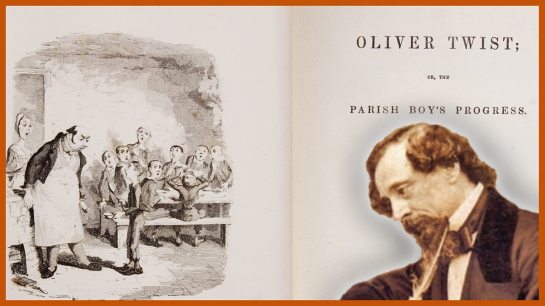
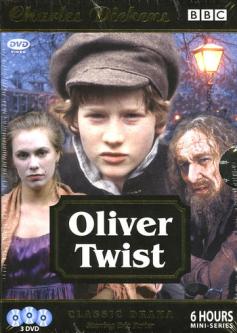
    The TV adaptation of the novel by BBC (1985) is truthful to the original context, capturing every moment of emotions and feelings as finely portrayed by a skillful cast of the characters. The story of an impoverished orphan child whose resilience and innocence got him through misadventures and ultimately rewarded him with a bounty of loving family and well-deserved munificent largess may look to be a typical rags-to-riches fable. But such a presumptuously precarious judgment of the story will deprive the reader of the beauty of Dickensian characters as aforementioned.

    Take Bill Sikes, a tall and lean professional burglar whose callous treatments of Nancy, his live-in girlfriend also a pickpocket, and his loyal mutt Bull’s eye are downright contemptible. It goes without saying that this Bill Sikes character is in no way likable or pitiable. Yet, such egregiousness that only invokes contempt is what makes Sykes a fortiori pathetic. After he killed his beautiful-hearted Nancy in a paroxysm of rage, Sikes shed a cascade of tears that looked to me more of guilt and regret than of any other reason I could think of. As a matter of fact, watching the Sikes character shedding tears perturbed my heart because I could glimpse at his heart hardened by his life of poverty that had led him to the life of crime.

    What about Fagin, a boss of juvenile pickpockets, who is driven half mad at the thought of his being hanged at Newgate? Maybe it’s because his character was visually manifested on screen, but he also won my sympathy over such madness, which made me wonder if his insurmountable surge of remorse for his crime made him mad. Also, the artful Dodger, the most skillful pickpocket of the gang captured and tried at the court, was the figure of pathos. Would he have fallen into the world of crime had he been born into a well-to-do family? Or if a divisory lot – that is, a play of chance given by goddess Fortuna – had been favorable to him, would he have found himself in where he was?

    Call it childlike credulousness or a feminine streak of maudlinness, but I don’t want to make draconian measures against these antagonistic characters by putting them into a Procrustean bed of morality one by one. For it is necessary without a gesture of condescension or insolent attitude masked in charity to get into the inside world of the characters to understand what made them choose the life they lived in the face of poverty, hopelessness, and loneliness. I cannot help thinking that a game of chance each of them tried to get was against him and scoffed at his attempt to make it right in his life. In that regard, this is the question that Dickens asks to us: what would you do if you would put yourself in their shoes?  Dickens tacitly implies that only the goodness of our heart that comes from our empathy can save the world. Come to think of it, it is no wonder why Catholics and Marxists alike wanted to claim Dickens to be one of their own in his era. For these reasons, his novels should not be confined in a genre of Victorian literature because the subjects are timeless, and the characters appealing with universal traits of humanity that know no cultural, linguistic, and social barriers.

    p053cm0l

  • The Jungle Book by Rudyard Kipling

    the-jungle-book-hero

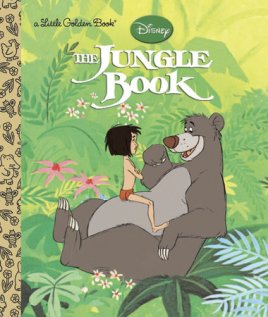
    It was my first moment of spiritual Eureka mixed with awesomeness and bewilderment in terra incognita when I first read The Jungle Book by Rudyard Kipling. It was a wonderful pictorial book painted with the scenes from the Disney’s classic animated film version. To the child’s eye, it was like a fiesta of vivid colors and vivacious characters set in motion in the heart of jungle I had never seen. What’s more, the animals were so humanlike and likable into the bargain that while reading the book, I almost forgot that they were beasts speaking their own language, which I was able to understand through the presence of Mowgli, who looked a lot like Tarzan in diminutive stature and size wearing only a loincloth and long dark hair. Mowgli’s knack of communicating with his beastly friends who were always there for him even compelled me to try talking to my domestic puppy Nena at that time by using a quaint conflation of the human alphabets and the doggie phonetics to a moderate success.

    Now I am pitchforked forward in 2018, but the childlike sensation of reading The Jungle Book still resonates strongly with me in defiance against the existential horrors of life that I deal with everyday. Amid the the detritus of daily chores and duties, I turned to Disney’s remake of The Jungle Book (2016), which I chose to watch on my Kindle Fire a few nights ago. At first blush, I had a certain indisposition to watch the highly-acclaimed film: although I am not altogether unreconstructed in terms of watching a film version of classic literature, I tend to shun adopted film versions of classic literature because of the gratuitous rendering of post modernist revisionist interpretations of the books they put on screen. But such misgiving was proved to be an unnecessary mental albatross.

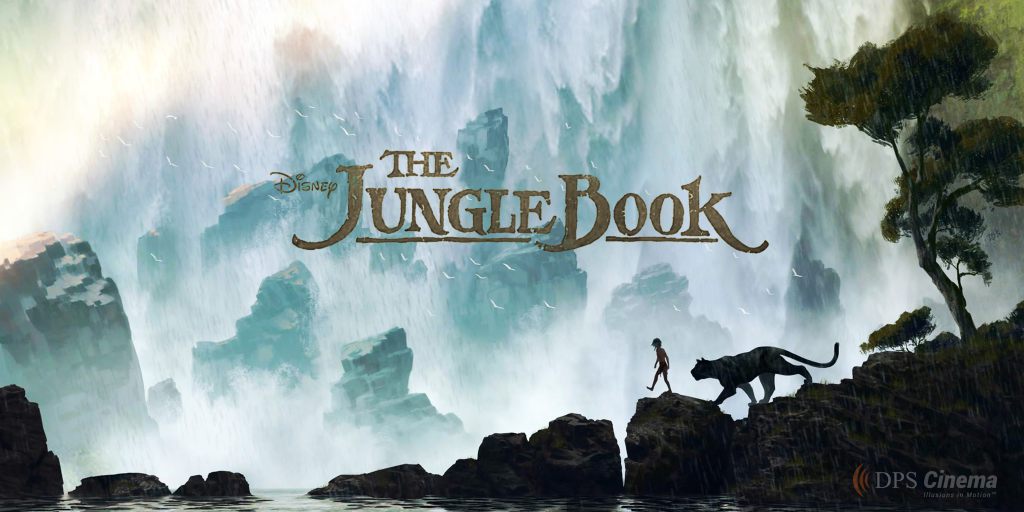
    The Jungle Book is a cinematic eye candy to children and adults with its stunning visual impacts and a spectacular scale of the story set in the background of a deep jungle somewhere in India populated with a cast of magnificent characters representing human characteristics in different forms. To classify this film as an anthropomorphic children’s film is to miss the essence of Kipling’s allegorical allusion of our human nature to multifarious animal forms: Sloth, Integrity, Conscience, Humor, Greed, and Vengeance, all of which is manifested in contact with the nature itself whose essence is of neutrality. It is in this background of nature, which is neither paradise nor hell where our human nature becomes conspicuous in its very essence, a primeval form. The manifestation of such human traits is a fortiori overcome by the figure of Mowgli, a feral child brought by a benevolent wolf family. Mowgli is an emblematic of resilience, independence, and courage against the gravitas of trepidation, death, and despondency.

    9780385389839Given the authenticity of the storytelling aligned with the original context by Kipling and the performance of the characters studded with breathtaking scenes of nature so characteristic of Disney’s creative imaginativeness, it is a film worth of the spending your time on screen. It is a kind of film that stimulates your mind by inviting you to think about a meaning of our human life and existence and of our purpose of life. It will also thrill your heart with the adventures of Mowgli in the heart of the jungle and the stereoscopic views of the nature on screen created by a wonderful collaboration of our timeless human imaginations and 21st century feats of technological bona fides.
  • Cry Wolf for Huck, Mariner, and Mowgli

    Fake news is not an unique thing of our social media era. As there is nothing new under the sun, ludicrously fake news dealing with fatalities, especially of the famous, irked the nerves of the victims of such falsity. Subsequently, the selling of the newspaper like hot cakes was all over but the shouting. The logic of the fake news is a priori simple:  sensationalism has always been a tacitly cardinal principle of journalism to bring the grist to the mill for instantly skyrocketing readership with consummate profits in no time. It’s all linked to mob psychology, often without moral and ethical culpability when the media rashly trumpets a premature death of a living person.

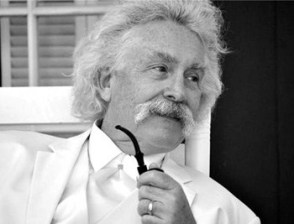
    mark-twain-350Let’s go back to the time when the great American humorist and writer Mark Twain (1835-1910) regularly featured in the nationwide newspapers with his trademark scintillating remarks on just about any subject that piqued him; but none other than reading articles about his own deaths twice in the New York Times would have perturbed his otherwise usual sanguine nature. After the first ignominy, the writer told the Times that it was an exaggeration. But after the second occasion, when the Times suggested that he had been the victim of a yachting accident, he thought he had it enough for such media farce and remonstrated to the Times with a public complaint that he would make a thorough investigation of the fallacious report. To think that a respectful newspaper such as The New York Times published such fake news of the famous writer of the time twice is something of a bitter pill to swallow, but it also shows that reputation isn’t necessarily likened to integrity or even probity.
    Samuel_Taylor_Coleridge

    It’s also interesting to see how a falsely presumably dead person reacted to the news of his own demise in the newspaper. Now I am going to pitchfork my reader to the early Victorian period to introduce you Samuel Taylor Coleridge (1772-1834), a great English poet and literary critic who wrote “The Rime of the Ancient Mariner.” In 1846, a man’s body was found hanging from a tree in London’s Hyde Park and was identified as the poet himself by the very name stitched into the jacket, which had been stolen from the alive-and-kicking poet. Upon our asking him about the fallaciousness of his printed death, Coleridge stoically, wittingly, and leniently piped up: “It is a most extraordinary thing that he should have hanged himself, be the subject of an inquest, and yet that he should at this moment be speaking to you.”

    1-kipling

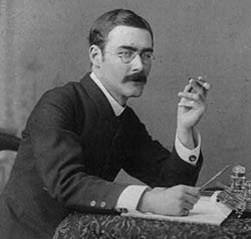
    Would all those famous people cope with their prematurely published obituaries as the aforesaid with magnanimity? Surely, Humanly No. Rudyard Kipling (1865-1936), who wrote the timelessly fascinating Jungle Book, was anything but human after the ignominy of reading his own obituary in the newspaper. Naturally, he resisted biting the dust and wrote the letter to the newspaper as thus: “I’ve just read that I am dead. Don’t forget to delete me from your list of subscribers.” How brilliantly he wielded his pen to vindicate such false killing of his life with intelligence and witticism! I wonder if any of our contemporaries responds or will ever respond to any fake news to this effect. Does this also mean that our reading brain that helps us to develop our cognitive abilities has been adversely affected by mindless decoding of the digital letters on the Internet as presented by Dr. Maryanne Wolf whose book Proust and the Squid I am reading at the moment?

    As the sudden surge of accusations of insensitivity to cultural, social, and personal traits is presently all the rage, it is helpful to retrospect to the precedents that might provide us with universal truths about life and how to respond to existential dealings in life that are not too much anachronistically different from ours in contemporary time. It is hardly likely that the social media will rein in their impulsive dissemination of sensational news on their platforms because it is a fortiori their modus operandi of generating profits as far as I know. And yet, we can learn from the way Twain, Coleridge, and Kipling reacted to their ludicrous false demises with intelligence, poise, and wit, let alone something about the sensational nature of journalism that is aimed at producing ever provocative – however false it is – news to the public.

  • Dogs and Psychospirituality

    RE: 9/3/2018 The Los Angeles Times article of “Convicts and canines get a new leash in life”

    No one is either excellently good or extremely evil. It’s this ambiguous nature that we must guard at all times lest we should give free reins to our defiant, recalcitrant horse in our soul which can prompt us to go beyond the pale of Reason and Judgment universal in human societies. Nevertheless, this does not mean that those who are sinned against the principles must be forever stigmatized by their wrongdoings in public and barred from turning over new leaves because by doing so, we not only estrange them from a sense of belonging to society but also oblige them to resort to their former errors. That is why every person deserves of a second chance without question to right the ship of the life with wise, practical, and altruistic supports from good folks.

    Janette Thomas, aged 53, strongly believes redemption of the souls of human and the lives of dogs from whatever predicaments they are put in either by will or against the will. Every human as well as every dog needs second chances. Out of her firm conviction in redeeming the lives of Nature comes in a form of 10-year-old organization named “Cell Dogs”. In fact, the program is for the benefit and behoof of both the inmates and the dogs. Throughout the year, the organization takes dogs from various shelters and brings them to correctional facilities where inmates put the dogs through 8-to-10-week training course. The course begets mutual munificence to both of the estranged spirits; inmate handlers gain new skills with confidence, patience, and responsibility that provision them with new career opportunities. Canine trainees go on to become companions to autistic children, veterans with post-traumatic disorders, and physically disabled individuals. In effect, the records show that there is a low rate of recidivism by inmates who participated in this program and that more than three hundreds dogs found their new homes upon completion of the program.

    This program is indeed all things to all people and our canine friends by giving both of them second chances to start their lives anew. The act of bonding between a human and a canine produces the very essence of trust, security and happiness in a psychospiritual way. An inmate who trained his canine partner attests to his noble ends of turning over a new leaf as corroborated by the following verse from the Gospel of Luke: “He who is faithful in a very little is also faithful in much.” For any possible criticism of cynics jeering at this beneficial and altruistic program and dismissive of bestowal of second chances to the neglected, it is perhaps high time that they should thumb through the bible and read the following Gospel of Matthew:

    “Then came Peter to him, and said, Lord, how oft shall my brother sin against me, and I forgive him? till seven times? Jesus saith unto him, I say not unto thee, Until seven times: but, Until seventy times seven.”

  • On “Fantastic Beasts and Where to Find Them”

    91NQY9pyARL._SL1500_J. K. Rowling bewitches us again with her famed literary magic wand. Her fabulous creation of fantastic beasts, a young brilliant wizard, white witches with hearts of gold, an ominous black magician, and an amiable non-magician all coming vividly alive on the screen, will please your senses and touch your heart in no time with delightful feats of magic and boundless imaginativeness without interventions of boredom or cheesiness.

    Set in the 1920s New York City, the film yields the verisimilitude to the story-line that anchors the world of imagination in reality where magic is smoothly laced with chores of everyday life without forcing you to accept the fictitious ludicrousness and cinematic anachronism. At the heart of the film lies the wonderful chemistry of the actors and actresses harmoniously manifested in their illustrious performance of the characters in their own roles, coupled with a dazzling technical employment of bewitching visual special effects.

    What’s more, this film will get to your heart, so after watching it, you do not want to leave the world of the fantastic beasts and remain with them even though you may be non-magicians. A feast to the eye, a festivity of the mind, this film will take you breathtakingly from the humdrum life to the world of magic, making you wonder if you could also find the fantastic beasts just as I did, for “There are more things in heaven and on earth than are dreamt of in your philosophy,” as Shakespeare believed too.

  • Who’s the Real Ripper of Whitechapel?

    My Review of  9/1/2018 BBC History Magazine article of “The Ripper of our Nightmare”

    It was a diabolical killing spree of the late 19th century that made the residents of Victorian capital shudder with visceral fear, and swivel their heads in incredulity. No one dared to venture the nightly labyrinthine streets of Whitechapel in London’s East End between August and November 1888 when five women were found dead and grotesquely mutilated with surgical precision in a ritualistic fashion. The unfortunate victims of this heinous crime were all prostitutes in the slums of the East End into the bargain. With the evasive killer still forever on the run in the wings of imaginations of many to this date, the stupendousness of the crime and its phantasmal committer still egg the inquisitive minds on coming up with zany theories as presented herein.

    The turpitude of the extraordinary epochal net murder case has gripped the minds of many with journalistic bent who often go to extremes in search of novelty in what is established now as its own field of study. They are called “Ripperologist,” the individuals, as it were, with mission to provide the most feasible cue on who-done-it. Naturally, these Ripperologists have often looked for their suspects in a group of outsiders in the time of the era who were regarded as misfits, introverts, loners with hints of eccentricity because they are easy to be gorged out of the melee without much strains of their cognitive faculties and mental exertions. Yet, out of a pile of idiosyncratic mugshots of their suspects come some profiles I think are worth the noting by sheer dint of ingenious entertainment .

    The Likely Suspects

    • Francis Thompson: A poet with radical religious views was posited as the killer on account of the fact that all of the crimes were committed on Catholic saints’ days. However, this theory is hamstrung by the fact that those days are the feast days of the particular martyrs in celebration of their sacrifice of their lives to the Faith.


    • A Mad Midwife: In 1939, a certain author named William Stewart posited that the killer was most likely a bloodthirsty deranged midwife. But then anterior to Mr. Stewart’s theory, Frederick Abberline, an inspector investigating the kills, had also suggested that it could also be a woman’s act of crime on account of a witness who had seen a female figure leaving one of the victims. Yet, the inspector later concluded that it’s more likely that the killer was a man dressed in a woman’s clothing as a way of quelling his potential victims.


    • Lewis Carroll: Of all other suspects, I think this eminent writer of Alice in Wonderland stands all alone in his prodigality of literary fame and notability. In 1996, an author named Richard Wallace suggested that the Ripper was, in fact, none other than this famous writer and Anglican deacon into the bargain on the ground of the anagrams in his novels which indicated the carnival of killings in 1888. Surely, positing Carroll as the Ripper may be regarded as ludicrous and beyond the pale and even defamatory. However, Wallace must have exerted himself on interpreting the anagrams to decode the messages that Carroll had left as an act of contrition for his mortal sin. Otherwise, he would not have published his theory, knowing that doing so without any factual grounds might have incriminated one of the most renowned English writers and his descendants.

    It is always interesting to see how people become fascinated with crimes and criminals of the most wicked and bestial beyond the pale. Maybe it’s because of the ignoble, recalcitrant horse that we have in the soul, always inclining to a raw, precarious stimuli to our senses, spurring the other noble, reasonable horse toward such pleasure. But why not so when our minds wonder when they spur our imaginations on devising brilliant theories such as the aforesaid? The theories will only remain possible in the domain of poetic justice and in the wings of our imaginations so long as no substantive facts surface out of the mists of the eerie past. And I defy any of the Ripperologists not to come up with any such ingenious theories to that end – all for the Truth of who-done-it in deference to the victims.