Royalty’s Strangest Characters: Extraordinary But True Tales of 2000 years of mad monarchs and raving rulers by Geoff Tibballs
My rating: 4 of 5 stars
It always amazes me that some people can get away with their character flaws and faults under the aegis of social status and wealth, such as modern-day celebrities. The celebrities of the bygone days were kings and queens whose God-given authorities indemnified them from punishment. Their entitled strangeness swiveled my head in wonderment at the stupendousness of freakiness. Ironically, this anecdotal recounting of the cruel-to-be kind potentates reminds me of a tenet of Logotherapy, which explains that a healthy dose of suspense in life helps us escape boredom, resulting in excessive indulgence in perverted pleasure-seeking.
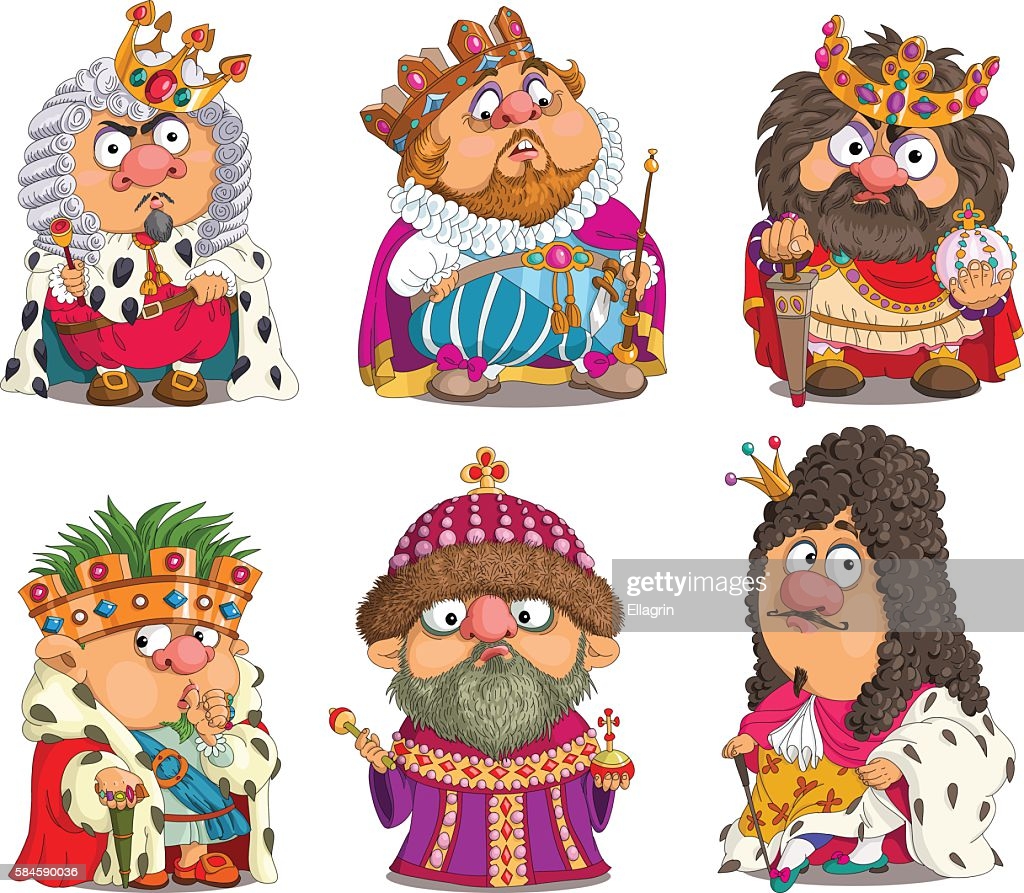
This book tells of the infamous kings and queens and some aristocrats. They are famous and lesser-known, mainly from Russia and Eastern Europe, which gives a somber ambiance to the tales of weirds born with silver spoons in their mouths. The most memorably horrible and ignoble characters that left indelible marks on my consciousness are as follows:
1. Elizabeth Bethany: This diabolically perverted Hungarian countess whose uncle was a king of Poland had a fixation on blood and pain in devotion to youth and beauty. Some say she was trained to be cruel, but I think it has to do with her connatural inclination for cruelty passed down in her lineage. Her aunt was a Satan-worshipping noblewoman who sought erotic pleasure in young girls, which Elizabeth also learned and practiced in her castle. She had her trusty three maids lured beautiful young girls, usually from poor families, under the pretext of training them for top-rated maids-in-waiting with generous munificence to the families. What happened next was all over but the shouting. Bethany tortured the girls in unthinkably cruel ways and bathed in their blood because she believed doing it would restore youth and beauty. She deserves no revisionist or appeals on the crime against the girls under her care. Nevertheless, modern-day feminists and the radical leftists are moved to portray her as a wrongfully accused Calvinist woman in a time when sectarian religious rivalry and antipathy were rampant. Her being charged by a Lutheran minister in the town does not ipso facto constitute Lutheran machination of destroying the Calvinist influence in the region. If the minister conspired to concoct any such plot, he would have targeted a man, not a woman whose social status was not entirely regarded as equally significant as a man even in high birth.
2. Vlad the Lad, aka the Impaler, aka Dracula: The proverbial bloodsucker ruler had a penchant for impaling men, women, and children for leisure and punishment. The point was to give them slow deaths to heighten the apex of pain till the last breath. The legend of Count Dracula is loosely based on this Romanian ruler who might have inspired an idea of shashlik, kebab. Or any skewed food. Thanks to the detailed accounts of how Vlad artistically mastered impaling, I swore off any such skewered food lest it should conjure up the vista of the impaled helpless.
3. Frederick I of Prussia: A stout and short, the king’s obsession with men in great height was his actualization of ideation. He had the tallest men in all the regions of Europe, especially from the North, to establish the royal military version of a freak company called “The Potsdam Giants.” The recruits, or in many cases, abductees, were consisted of a former woodsman, laborers, and farmers, allured by abundant compensations promising dazzling delights of secured lives. Yet it was an empty promise, beguiling the simple-minded low-class foreigners, who were subjected to mistreatments and even punishments should they attempt to escape. The king’s pastime was to call upon the guards at any time anywhere, including in his chamber at night, and watch them in full uniform, admiring their impossibly imposing physique that he coveted but could never have. Thank God that his son Frederick the Great disbanded the freakish guards no sooner than had he succeeded his father upon his death.
I wonder if these royal characters were due to in-breeding abnormalities, which were usually customary in European dynasties to preserve their noble royal lineage. It also testifies that keeping means in one’s life is a blessing because extreme wealth and poverty lead a soul astray due to listlessness and exasperation, resulting in amoral walking dead subsisting on the pain of the others. Robinson Crusoe’s sagacious father was right in saying that the best is the upper station of low life. Mel Brooks once uttered, “It’s good to be a king.” Unfortunately, it only applies to these afore-described weird and evil characters. A good king or queen doesn’t.
View all my reviews
Tag: book reviews
-
‘Royalty’s Strangest Characters: Extraordinary But True Tales of 2000 years of mad monarchs and raving rulers’ by Geoff Tibballs
-
Isaac Newton as he was
Isaac Newton: A Life From Beginning to End by Hourly History
My rating: 4 of 5 stars
I never particularly liked Newton despite his paramount discovery of the law of Universal Gravity from the fallen apple tree in his mother’s little garden. Maybe it was his somber, irate facial expression adorned with a long white wig. He was a reluctant spiritual godfather of physicists Albert Einstein, Stephen Hawking, Michio Kaku, whose theoretical findings are based on and upgraded from Newtonian laws of physics. However, being a keen observer of human characteristics, I am inclined to write the review about Newton’s personality traits, not a drab biological chronology and analyses of his laws of motion.
Isaac Newton was never the kind of chap whom you could be jovial with. If you caught Newton in a cafeteria or a coffeehouse and asked for an autograph, he would first give you a look with an exasperated grimacing and either reluctantly succumb to your request if he was in a good mood or curtly said, “I am busy.” His gaucheness in social interactions might be due to a deficiency in maternal affection and care. Newton’s mother willingly separated from her young and tender son when she married her second husband after the death of Newton’s father, whose name was also Isaac Newton. Although I object to profiling any kind and any person because it leads to a grave miscarriage of justice in many cases, Newton’s character profile doesn’t read favorably in any of his writings. To illustrate, Newton used to be harsh on his family servants, whom he often mistreated with corporeal measures and hit his younger sister. Nevertheless, his genius purchased indemnity for all his character flaws and beautified them as individual eccentricities endemic to the intellectual elites.
But the illustrated Godfather of Science was also a discreet practitioner of alchemy in search of the Philosopher’s Stone to turn it into gold. I wonder if all of the laws of motion Newton discovered were unexpected comeuppance of his private practice of alchemy. Not surprisingly, Newton kept his behind-the-façade business, and it was until the mid-18th century that the truth came to shine in his journal. Despite its occultist nature and nuance, Alchemy was also not too far from chemistry in studying metals according to three principles: Salt, Sulphur, and Mercury, based on four elements of air, earth, fire, and water. To this fascinating manipulation of heaven and earth, Aristotle added the 5th element of aether that was believed to fill the universe beyond the terrestrial sphere. The weightlessness due to the absence of gravity occurs in outer space full of invisible aether propagating light waves. As Newton’s principal muse to inspire his scientific musings, Aristotle is plausible to understand Newton’s fascination with alchemy. He treated it not as a magical practice but as a branch of chemistry that would have looked magical to the uninitiated.
Grumpy as he was, Newton was nonetheless a remarkable individual who devoted life to the pursuit of truth, a satisfaction of reason, in the temple of science, believing there are more than material bodies in this world, which became a foundation of quantum physics. With his head filled with the mystery of numbers and frail body subsisted on the nourishment on the mind, Newton was a lifetime bachelor without chivalric anecdotes or sybaritic tell-tales. Instead, he spurred his energy on his studies, wallowing in the delicacy of quiet and uneventful solitude. Newton influenced multidisciplinary studies including philosophy, and music, with his laws of motion, especially making the word “inertia” so democratically popular with the public that British pop band Blur made it a title song in their first Leisure album. You don’t have to like Newton to appreciate his contribution to the consilience of science and humanities. But it wouldn’t hurt you to learn what makes him enshrined in the Parthenon of civilization of humankind, even though he wasn’t a nice person to chat with.
View all my reviews -
‘The Kite Runner’ by Khaled Hosseini – book review
The Kite Runner by Khaled Hosseini
My rating: 5 of 5 stars
Writing is the most solipsistic and democratic means to make people discover your secret histories or inner world so that they can understand why you are what you are. That is what Khaled Hosseini does enchantingly in The Kite Runner. It is a bildungsroman story reminiscent of the Au revoir, Les Enfantes-Esque ambiance surrounding the narrative of a grown-up boy who wants to reconcile with the stupendousness of mistaken guilt becoming a malady of the heart. But that doesn’t mean it is all too surreal or stark grim to make an accidental reader think it is a wrong choice. On the contrary, Hosseini vividly conjures up the faces and scenes, resurrecting the spirits of the places and times, by putting together the tesserae of his memories in this rivetingly heartrending read.
The book incorporates the sociological theory of symbolic interactionist perspective focused on the relationships among individuals within a society and how political changes affect the lives of individuals and the sense of who we are and our relationships to others. The story’s narrator, a young Afghan boy of the upper-class named Amir Agha, gives the reader a ride to his childhood in Kabul to show the halcyon days of pre-soviet and Taliban reigned Afghanistan. First, you will see him and his best friend Hassan, a Hazara servant boy in his house, wallowing in reading stories and lost in kite flying. Then and thereafter, Hassan becomes a victim of the most horrific act committed by the half-German blue-eyed Afghan boy threatening him to win kite. Amir’s retrospective narrative becomes his public confession and ablation, all of which is a combined act of purging out the painful memories of the past and exorcising his demons tormenting him with the guilt of jealousy, ignorance, and cowardice. The whole narrative then becomes a plethora of pathos and empathy, resulting in a cornucopia of forgiveness and sympathy, drifting it all in a high-flying kite once and for all.
It is a fitting story in this particular time of Afghanistan history and Abdulrazak Gurnah’s winning of 2021 Nobel Prize in Literature for his achievement of universalizing human travails transcendent of racial, cultural, and geographical differences. Vivacious at times but dolorous at most, the Kite Runner is synthetic literature that wears habiliments of memoir and novel. There truth and fiction dissolve into one another anchored in real life with factual geographical and historical facts smoothly amalgamated in the individual narrative account, which reminds me of Herodotus’s “Histories.” Or it is an alluringly pioneering memoir-making that resembles Realistic Fiction. For whatever it is, the Kite Runner bestrides the aisles of contemporary literature sections, alluring the public with simple language that magically juxtaposed in beautiful prose style with lyrical quality, all soul and mind in the marks upon pages evocative of the spirits of the memories materializing.
View all my reviews -
‘Hittites: A History From Beginning to End’ by Hourly History – book review
Hittites: A History From Beginning to End by Hourly History
My rating: 5 of 5 stars
The name Uriah always fascinated me from British Rock band Uriah Heep to the biblical Uriah, whose beautiful wife led him ultimately to death, willy-nilly, by King David infatuated with her sensuousness. When I learned that the ancestor of Uriahs was the founder of the Hittites race, being the great-grandson of Noah, the biblical patriarch, I had a Eureka moment. Consequently, I picked up this concise but comprehensive book on the Hittites to know a little more about the people whose founder had the great name.
Before the splendor of ancient Greek contributions to our human cultural progress as a collective enterprise, there was the forgotten but enduring legacy of the Hittites, the mysterious Indo-European trailblazers of civilizations at the crossroads of the East and the West in the vast plain of modern-day Turkey. The Hittites were an integral people to solve the mystery of mythological and biblical events anchored in the real world, thus dissolving fact and legend into one another like a genie from an empire that vanished into the dunes of time and comes alive in the calling. The calling of these mysteriously vanished people came first from British Reverends Archibald Henry Sayce and William Wright in the early 19th century. They discovered the artifacts and sites of the Hittites. Their discovery led to more remarkable discoveries. During the middle Bronze age and Iron age, the Hittites were the first to utilize iron from the region of present Armenia to craft tools and weapons. Also, the Hittites were deft at commerce, developing the city of Carchemish as an ancient mercantile hubbub in which they imported products from Phoenicia and exported them to Assyria (the North) and Babylon (the South) in Mesopotamia. In this fabulous ancient city, Israelites of the Old Testament acted as intermediaries in trade between Egyptians for exporting horses and chariots and the Hittites for importing them.
Like all those famous entertainers who sparkled then lost the lusters, the Hittites as a collective empire fell from splendor gradually by outside forces: some pointed the fingers at the Sea People, while the others blamed a certain barbarous Kaska people. But, perhaps, such clandestine ending of the Hittites is what makes them formidably alluring and mysteriously fascinating, blurring the boundary of fact and legend. Suppose you are keen on the history of ancient civilizations other than Greece and Egypt. In that case, this elegant primer for the history of the Hittites will equip you with fundamental knowledge enough to whet your craving for more and more profound knowledge about the Hittites.
View all my reviews -
Sister Wendy’s lovely ‘Speaking to the Heart: 100 Favorite Poems’ – book review
Speaking to the Heart: 100 Favorite Poems by Wendy Beckett
My rating: 5 of 5 starsSister Wendy was an erudite and delightful cloistered art historian in a veil who knew that Poetry is a song of the heart from a mind spring of sense and sensitivity, not to be burdened with a weight of reason. The result is a lovely apple-picking of her favorite poems in her pretty poetic orchard to share the beauty with the universal reader whose heart intoxicated and the spirit exalted in ethereal ecstasy. Her selection of poems manifests the finer tissues of her heart and the higher octaves of her spirit. Reading the entire book creates empathy for the sensitive minds of the poets so physically poignant that the reader senses the pain and the longing of the poets vis-à-vis.
Sister Wendy, also known for her long-time BBC documentaries on the history of art, speaks her heart through the poems of her choice colored in the spectrums of human emotions, ranging from longing to wonder, hope to sorrow, and anger to love. Even the subject of Faith becomes alluring due to Sister Wendy’s magical transformation of the matter into fairy-like ideation with sensually diaphanous wings as pagan as could be. Her interpretations speak on the poet’s behalf as an individual soul at the utter solitude, not as a literary artificer whose achievement merits the name in the canon of literature. In doing so, Sister Wendy brings out the poet’s true sentiment under a forage of words and shines her mystic perspectives on the poet’s reading in a splendid but straightforward way.
The reader will find famous, not-so-famous, and obscure poems from Elizabethan England to 20th century America in this lovely book. Sister Wendy is both discriminating, and non-discriminating in the human emotions poured into the world of poetry. She is discriminating in the sense that she has a “Third Eye” that sees the poet’s soul and understands the sentiment nuanced in the poem, including wrath and despair, poisons to the mind. Non-discriminating in a way, she values poems spirited in the heroic but straightforward endurance of existential malaise in everyday life written in the plebian language. From Shakespeare’s ‘Fidele’ to John Harris’s ‘Feral’ and many more, the reader will feel ennobled to walk the gardens of the poetic Elysium with Sister Wendy introducing you to each of the poets’ greeting and smiling.
View all my reviews


You must be logged in to post a comment.