Tag: book reviews

  • On Philip Pullman’s Republic of Heaven

    A great writer of our time is Phillip Pullman in his moment of pleasure.

    Great writers are great because they know how to tell entertaining and enduring stories without religious and didactic overtones. Moreover, they are unafraid of speaking their minds without a qualm of conventional belief or sectarian principles. Yesterday, I read an essay called “The Republic of Heaven” from Demon Voices by Philip Pullman, a renowned British best-selling writer whose intelligently tongue in cheek styled narrative raises the dander of the Catholic Church for his acerbic view of the orthodox teaching. With my reading of Candide by Voltaire still fresh in mind, I find Pullman and his philosophy of free thought familiar with that of Voltaire and realize that true intellectuals think among people and live in social companions of public spirits for the good of humanity. Thus, here is my discursive impression of Pullman’s “The Republic of Heaven.”

    Pullman urges us to step aside from habit, a banal molded frame of life, to see the world outside the box, which will lead to an immense world of delight, the Republic of Heaven, for we are worthier than we think we know because we are such stuff made of wonder. Pullman’s heroine is Charlotte Bronte’s Jane Eyre, who has resisted against the magistrate of grim and gray puritanical ethos that decries an expression of feelings and emotions under religious disciplines. She remonstrates against the cold-hearted Mrs. Reed thus: “You think I have no feelings and that I can do without one bit of love or kindness, but I cannot live so.” Her demand for love stems from her need for it, which is an essential food for the soul that serves a purpose and pique for life. This sense of love so wanting in Jane cannot be quelled by false optimism that such distress is the best for the best of all possible world. On the contrary, it is an outcry of the soul desirous of warm and soft human touch that thrills the heart and invigorates the mind. Human beings cannot live by Reason alone, forced to utilize when the right of five senses is forfeited and bound by misconceived religious concepts and false moral measures.

    The founder of Logotherapy, the third Viennese school of psychotherapy, Viktor E. Frankl, witnessed a learned Jewish woman in his concentration camp killing herself despite daily recitation of wise sayings of the Torah supposedly being a consolation. Frankl affirms that we humans cannot live without the joy of life, that is, an appreciation of pleasure to the senses because otherwise, we will degenerate to a provisional being living day to day like prisoners of dreary dungeons in the darkness of hopelessness. Pullman agrees with Franklin the creative and experiential values of pleasure that keep a journey to live a purposeful and meaningful life.

    The creation and experience of art spark the joy of moments that can be synonymous with a meaning of happiness in life. Some find consolation in religion, but it does not give them whys to live for, nor kindness to show hows. Pullman’s concept of the Republic of Heaven comes to a head prominently when we are stranded in the chaos of existential vacuum, the kind of which the loyal and conscientious butler Stevens felt when he lost his faith in his idealized employer in Kazuo Ishiguro’s The Remains of the Day. However, if Stevens pursued his love for Miss Kenton and appreciated the pleasure of love he consciously denied, he would not have felt the sudden void in his life. The sense of delight in the physical world is the essence of the Republic of Heaven that he and we are conditioned to ignore. The point of Pullman’s philosophy is that we are too serious about the pleasure our physical world provides. And it’s not a chemical-induced euphoria for escape from the world but a new attitude toward our perspectives of it. Elenore Roosevelt also knew how to become a citizen of the Republic, thus: “Do one thing every day that scares you.” I should try that.

  • Philosopher, Poet, and Doctor

    Edgar Allan Poe’s tribute of “To the glory that was Greece” sprang from my mind when I received this month’s subscription to a British history magazine BBC History Revealed. It came in the magnificent package of ancient Greece Special, ranging from the Archaic to Hellenistic periods, from slaves to Socrates, and from Auspices to trepanation. I feel dutiful that writing about my thoughts from the reading serves a purpose of writing to achieve experiential value to gain refreshing knowledge about the famously glorious ancient Greece and creative value to record my thoughts about following impressive findings.

    Surprising Opponent of Democracy
    Socrates was the one who called upon Philosophy from celestial paradise into the world, took her to the villas and huts of mortals, and persuaded her to stay among them. He was indubitably the father of philosophy as Herodotus was of western narrative history. His submission to drinking fatal poison as execution for corrupting the Athenian youth by saying “Bad law is still law” is immortalized in works of art from painting to engraves, poems and plays. Woe betides anyone who would disbelieve that the most democratic thinker opposed democracy in his time. Yet don’t let sorrow turn into disappointment in betrayal because democracy in Socrates’s time was different from our modern concept and practice of republican democracy. Athenian democracy directly involved people of all classes in politics without representations for constituents. Any Athenian citizen- excluding women, slaves, and foreigners- could voice out and execute their wills however uncouth and unreasonable. This form of mob-style demagoguery without desires being reined by the judgment is what Socrates criticized, not freedom of human spirits. Naturally, having seen his venerable teacher killed by the will of demagogues, Plato was an even stronger opponent of Athenian democracy that ceased to reign in the early 4th century BC following the Greeks’ unsuccessful revolt against Macedonia rule.

    Nothing is better than the simple.
    Anyte of Tegea was a very popular poet of circa 3rd century BC. Anyte is considered one of the first poets to focus on the simplicity of beauty found in nature and life, which is different from most ancient Greek poetry eulogizing the mighty achievements of heroes and the majestic powers of gods. Her eloquently crafted poetry with comprehensively accessible use of simple language gorgeously manifests richly delicate emotional sensitivity that collapses the millenniums between her writing and our reading them. Although her popularity earned her the sobriquet of “Female Homer,” a comparison to nineteen-century American poet Henry Wadsworth Longfellow is deemed more apposite and understandable for both poets sublimated the ordinary to the sublime with the feeling of beauty and love for nature and life.

    A hole into the skull
    Trepanation was a medical technique that Hippocrates, the father of medicines and doctors, codified in circa 5th century BC. He believed that there were four humors in the human body: Blood – Air, Yellow bile – Fire, Black bile – Earth, and Phlegm – Water. The idea of humourism consisted of thus: if one of them was redundant or deficient, ailments of spiritual and physical kinds arose. Therefore, drilling a hole into the skull of the affected suffering from depression, headache, fractures, or other symptoms of a mystical condition, would relieve the patient of malady. The Inca civilization was indeed famous for successful cases of trepanation, more favorably effectuated than those of 19th century American Civil War experience. However, it was Hippocrates who contextualized the procedural and impacts of the prehistoric operation. Trepanation is still performed today in the name of craniotomy.

    The mists of the past seem strangely distant due to our conditioned sense of evolutionary scale in the continuum of prehistoric and modern times. However, history shows us in today’s world that the people who lived before us millenniums ago had emotions and concerns similar to ours and that human cultural progress is a collective enterprise without fully recognizing it within the circumferences of time and space. Just as Herodotus was gobsmacked by the sight of great pyramids built centuries before him, our descendants will be awe-struck to see the ancient ruins of the Statue of Liberty or the Empire State Building and the tires of the New York City or of Los Angeles. Time and culture are ephemeral, but cultural heritage and artifacts in the treasure of works of art and humanities passed down to posterity are eternal as long as the human race exists.

  • Hercules the first superhero – book review

    Hercules – The first superhero: by Philip Matyszak

    My rating: 5 of 5 stars


    The ancient Greek superhero Hercules always has a status of a modern-day Mount Hollywood celebrity with Paparazzi-conscious showmanship. He also reminds me of an advantaged individual who could get away with wrongdoings. Hercules was an impulsive egoist and an irascible aristocrat for what was worth the ancient Greek superhero, a paragon of masculine heroism with a view to celebrity. This uncommon biography about the superhero whose name still rings red herrings after millennium flows of time evolves around the legendary performance of the Twelve Labors, anchoring them to the historical events of a man with a colossal ego.

    With a wealth of knowledge on ancient Greek history and extensive research on the subject, Matyszak puts in the capacity of Hercules’s counsel per se in the tribunal between humanity and divinity, who searches for truth based upon factual findings. Matyszak’s defense for his now divine client Hercules is erudite and comprehensive, with exhibits drawn from classical Greek and Roman historians and writers whose wits and reasons were anything but those of Hercules. In addition, the author’s trademark storytelling narrative makes the story of the ancient Greek killer all the more vivid and engaging that each chapter holds the attention of the reader in the phantasmagorical display of images as depicted in Grecian urns or vases.

    Notwithstanding the attractiveness of the narrative and the narrator, there are reasons I disapprove of Hercules as a hero, an antithesis of the other half-god, half-man Jesus of Nazareth in millenniums later. The Labors resulted from his egotistical attempt to free himself from the guilt of killing his family in moments of passion. However, he was neither remorseful nor appropriately punished for killing his music teacher Linus whose head his recalcitrant prince pupil Hercules shattered with a lyre he was trying to teach him how to play the way it should. As a prince of Thebes, Hercules had no qualms of consciousness for killing his elderly music teacher whose social status was beneath him, and gods condoned it because he was a son of Zeus.

    His peremptory sense of entitlement knows no boundary because of his arrogance and hubris. For example, during his Fourth labor of capturing Erymanthian Boar, Hercules killed almost the entire race of centaurs, driving them to near extinction. But Hercules himself was the cause of the killing spree because he intimidated Pholus, a wise, kindly centaur, to open a jar of undiluted wine, a gift from Dionysus to centaurs, who became intoxicated and attacked Hercules out of stupor. Yet, his killing of the drunken centaurs was not even a subject of guilt and was regarded as collateral damage because centaurs were known as lustful creatures. But didn’t Hercules also sleep around with women – and only the beautiful – wherever he went to, and sire children, one of whom became the founder of the Scythians?

    To summarize, the story of Hercules boils down to a conclusion that Hercules was a representative figure of a human whose essence is both divine and mortal, always on a chariot race with two horses of desire and reason. Some revisionists claim Hercules was an ancient Greek psychopath who took pleasure in killing people, beasts, and demi-gods. To me, a psychopath loses either the shackle of the ego or the supervisor of the superego, running a mind chariot alone even it drives to a pit full of fire. Methinks, Hercules was a cossetted brat without disciplines that controlled his power of reason, which is apart from mental acuteness or ingenuity. Adler’s will to power embodies the figure of BC man-God hero without regard for compassion and charity. Hercules was anything but Samuel Johnson’s conception of a biographic figure who empathizes for the common characteristics of life in the principle of universal judgment and sentiments. I now know why Christianity has won favors from poor and ordinary people and become the subject of persecutions from emperors and kings because Jesus of Nazareth, begotten by God and born of Virgin Mary, is gentle yet strong, kind but firm, which seems simple but divine.


    View all my reviews

  • the golden apples

    Maidens of the Evening Star, Daughters of Atlas
    Goddesses of the Evening, Children of Nyx
    Live far away from here beyond glorious oceans
    On the boundary of the Night encircled by stars
    with pales hues of sunshine in the land of the Hesperides;


    Mirth and music spring from the land of the Hesperides
    Where they tend a garden of divine golden apples
    Guarded by the faithful dragon Ladon with mighty wings
    Swooping four winds, bellowing a crescendo of flames
    That envelope the circle of divine parameter against the mortals
    Till the impetuous half-man, half-god Hercules darts an arrow
    Dipped in the blood of Hydra piercing the heart that dies in sorrow
    shedding the tears for love for his goddesses, the Hesperides;


    They mourn for the death of their beloved Ladon, whose blood flows
    From the still warm heart and meets with tears from the diamond eyes;
    And the gods of Olympus bring the slain dragon among the stars
    And give him a house of his own named Draco where he can watch always
    Over the garden of golden apples in his beloved land of the Hesperides.

  • life by me

    The world is a battlefield, and you are at war

    On the frontline against the forces of despair;

    Life is a bivouac, wandering, searching always

    With the star above you following all ways;

    So keep hopes with a heart even for your fate.

  • Voltaire, the moral rebel – book review

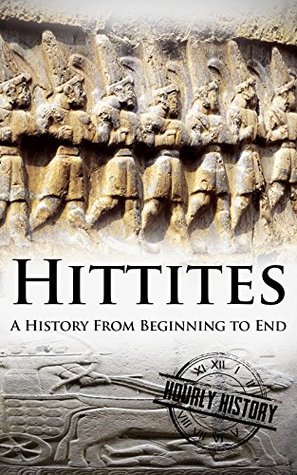
    Voltaire: A Life from Beginning to End by Hourly History

    My rating: 5 of 5 stars


    The role of intellectuals is to see the corrupt at the heart of society and stand furious with the mass and constantly monitor the conditions of ill-effects and actively work on the improvement of living conditions. For books can never teach the use of books. Otherwise, they are no more than armchair academics complacent with their impressive scholastic achievements and high social esteem as elites of society, proudly distanced themselves from the general. But Voltaire wasn’t, nor was he a demagogic writer grandstanding with the ire of the have-nots.

    Born as Francois-Marie Arouet on November 21, 1694, when the discovery of the New World and religious turmoil swept Europe, Voltaire was destined to become a cavalier of new thoughts, the Enlightenment of Thoughts, which the Catholic Church regarded as a dangerous school of ideas to the mass. Yet, Voltaire wasn’t hell-bent on destroying the Catholic Church as a freemason but pilloried the corruption of the ecclesiastical members and the duplicities of their teachings and acts in practice. Religion is also a social institution made and governed by people and therefore subject to corruption and dysfunction. Before the French Revolution, the Catholic Church controlled people’s ways of thinking and exerted its authority over political and cultural spheres. That was why Voltaire’s lifelong resistance against the Catholic Church arose, not from blindly malicious intention to sabotage belief of the religion.

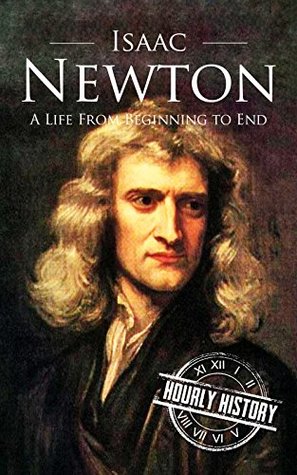
    Voltaire was very human with his volatile temper but also with passionate munificence. He was fluent in English and his years of stay in England, the country he regarded as a model country of liberty of thoughts and religions. During his visit, he met John Locke, Jonathan Swift, and Alexander Pope, to whom Voltaire was said to be very rude for reasons clandestine. Methinks that for a person as at once passionate and sensitive as Voltaire, the anecdotal vignette sounds true, but who can blame him for his temper and let it eclipse his wholesale brilliance as an unbridled thinker and writer unafraid of speaking against the social injustice against the unprivileged? Rousseau, a fellow freethinker, abandoned his child at an orphanage and berated the illiterate. Isaac Newton, whom Voltaire respected for his scientific findings and logical mind, mistreated his servants with whacks and beatings. But, on the contrary, Voltaire paid off all the tax debts of his tenants on his properties. Also, he published ‘Candide,’ which is an allegorical book about the absurdities of the teachings of the Church and a man’s search for a God in this world, in 1759 at a meager price accessible to poor readers yearning for a taste of Enlightenment.

    The absence of God’s presence in the deeds of the clergy and religious people and the presence of injustice in the name of elusive God were the questions Voltaire had in mind, and yet he wasn’t blasphemous about the God they believed. On the contrary, Voltaire’s belief was ecumenical in the principle of syncretism founded on a universal belief system according to Natural Law, a conscience. He was liberal in ideas but responsible in acts by accommodating his knowledge to practice for ordinary life. Samuel Johnson’s definition of an imperiously sullen scholar who loses his days in unsocial silence and lives in the crowd of life without a companion was the opposite of Voltaire. Indeed, Voltaire had no morals, yet he was a very moral person for sure.


    View all my reviews