Tag: books

  • Jaws (1975) – film essay

    unnamed

    Often, we find an answer to an existential dilemma in a situation that defenestrates us to an ocean of choices. How to respond to a challenge may change the compass of the fortune’s wheel. Patience and fortitude conquer all things in the mastery of fear in defense of the sovereignty of life against inconveniences and losses in existential selfhood. In this regard, “Jaws” (1975), directed by Steven Spielberg, shows how Man fights against the Leviathan of Life with will and courage.

    1_0HJNIQoYXxy53pQsUJ3BOw

    “Jaws” is a cinematic feast of horror and adventure that brilliantly blurs the genre of the movie fashioned in minimalist realism as regards to the storyline, characters, and leitmotif. Only the thematic lynchpin is larger- than- life: a hybrid of sea monsters, ranging from Johan’s Big Fish to Herman Melville’s Moby Dick and to Ernest Hemingway’s Mako that loves to swim around by the teeming shore in New York. In fact, the peaceful resort seaboard of Amity in New York betrays our idea of a Great White Shark as a dweller of the Pacific Ocean where tall palm trees and suntanned surfers are part of the landscape. Also, the appearance and roles of the characters in the movie do not carry Hollywood glamour. Police chief Martin Brody (played by Roy Schneider) is a mild-mannered family man who has recently moved from New York City but has aquaphobia due to childhood trauma. Oceanographer Matt Hooper (played by Richard Dreyfuss) is a wealthy neurotic scientist who is determined to get the formidable man-eater. Seasoned fisherman Quint (played by Robert Shaw) has all the characteristics of the choicest seaman with bravado sealed in unhealed fear. The ad-hocish triumvirate team formed mutual allegiance to defeat the predator that not only threatens the lives of people in the water but also agitates their fears buried in the waves of minds’ mains. Jaws is the contender of life’s challenge that the three characters must face and fight.

    JawsR-lead

    Spielberg is ingenious in using music as a leitmotif in expressing the intensity of emotions in scenes that produces suspense held in abeyance of impending danger that tantalizes our ready expectation of sequential segments of the story. He uses a recurring theme without the grandiose scale of orchestral tunes, signaling the menacing presence of the predator lurking in the uneasy equanimity of ordinary leisure. Spielberg also defies casting high-billed actors and actresses to create the verisimilitude of reality. The result produces relatability of the characters placed in situations where the ordinary people might have behaved in such extraordinary circumstances, asking us what we would do if we were in the position.

    EB20000820REVIEWS088200301AR

    The stupendousness of the big predatory fish and the nuanced emotions of trepidation is akin to reading Hemingway’s The Old Man and the Sea, where the seasoned fisherman Santiago’s serenity amid the battle against the man-eater in the ocean alone testifies to the steadfastness of human will and courage. Jaws is a film version of it that says, “Man can be destroyed but cannot be conquered.” “Jaws” is a masterpiece cinema that has become a classic in the history of cinema with its legacy. Now I know why people love to watch it anew and again across the oceans.

    62e3d18b55aa1d84a75e4021e85035be

  • ‘Major Dundee’ (1965) – film essay

    download

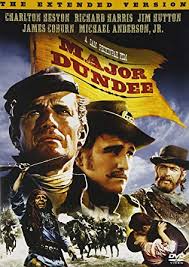
    Ambition, made of sterner stuff, is the solder’s virtue that chooses gain, which darkens him. Bravery, comprised of nobler spirit, is the solder’s honor that elevates the soldier’s merit to the echelon of Homeric virtue of arete, the excellence of man leading to achieving a supernatural feat of heroism. An excellent soldier with arete knows no boundary of political, religious, social, or racial division and transcends the subjectivity of time. Major Dundee (1965), an American western film directed by Sam Peckinpah, cogently translates a balanced, objective equilibrium to test the validity of the soldiers’ virtues on the continuum of the Homeric arete in the background setting of the American Civil War.

    images

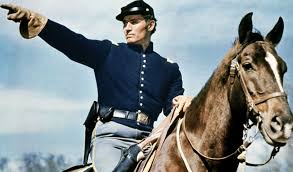
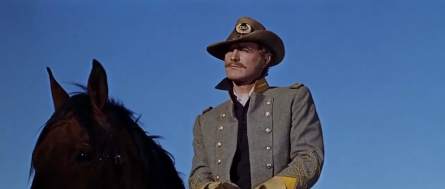
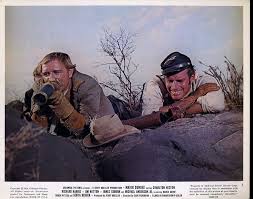
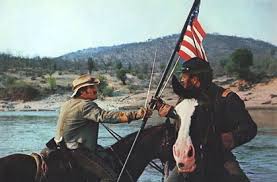
    Major Amos Charles Dundee of the Union Army (played by Charlton Heston) is a man of primitive ambition of glory sent to head a squalid prisoner-of-war camp in the New Mexico Territory. There he meets his former friend turned foe Confederate Captain Benjamin Tyreen (played by Richard Harris), who bears a grudge against Major Dundee for his betrayal of friendship. The notable tension between the two always remains even after their uneasy but necessary collaboration. Still, the esprit de corps consisting of unlikely but able-bodied characters sets to take out the Apache War Party in the new territories. Major Dundee sets out for the campaign not of pure divine patriotism but his glory despite his contentions with Captain Tyreen, who is more morally honorable and culturally sophisticated than himself.

    960full-major-dundee-screenshot

    It is Captain Tyreen, the renegade leader of the southern rebels who embodies the model of the arete, combined with moral integrity and soldierly fitness fabulously demonstrated in his effortlessly stylish habiliment. He is a dandy gentleman with decency and learning and an exemplary soldier and leader with justice and bravery. The refinement of civility as incarnate in the figure of Captain Tyreen is vividly contrasted with the rough intransigence of Major Dundee through the exterior appearances and actions of the two opposite characters. Even Captain Tyreen’s attitude toward the colored Union soldiers surpasses Major Dundee’s languid attitude toward his colored soldiers fighting for the same cause.

    images

    “Major Dundee” is a new type of western that abandons its common thematic elements consisting of noble savages, self-righteous lone gunslingers, the arch-villains, and beautiful women in pursuit. It is a new type of western that begins to be aware of the societal changes in the reflection of the nature of humanity with bold actions of likable bravado and admiring characters that are not circumscribed in the extreme ambit of norms and conventions with an artistic touch of vivid realism. Despite the rather unsatisfying commercial success of the film when it first came out, I find this film both entertaining and thoughtful in the historical background of the Civil War, showing true bravery equipped with respectful integrity of a person, friend or foe. There is no better sign of excellence in man than the bare demonstration of the act.

    download

  • ‘Planet of the Apes (1968)’ – film essay

    71oadYuBx+L._AC_SY879_

    Imagine this. You are the only person marooned somewhere far away from your world. You have all heard the dystopian chimes of every brave new world from George Orwell’s totalitarian society of 1984 to William Golding’s terrifying Lord of Flies and Aldous Huxley’s eponymously prophetic Brave New World. Yet, you have not realized how it would be like until you enter such a world alone. The world you face now is the amalgamation of all the worlds described above that exist in the selfishness of lettered cases. What would be your impulsive action toward the stupendousness of the incredible event? Besides, what if your best work a la your reason and hope as good as your pride and hubris can present turns out to be a grand Faux pas?

    planet-of-the-apes-soldiers-pose

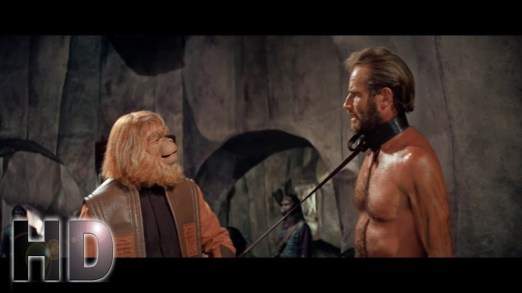
    Planet of the Apes (1968), directed by Franklin J. Schaffner, is a crackling Sci-Fi movie that translates the dystopian thematic of a world in a phantasmagorical display of primal humans and intelligent primates that upends the existing hierarchy of creations and reconstructs the fundamental doctrines of the Origin of Species. It is an advanced society of chimpanzees and orangutans that talk smart, which the 20th-century American astronaut George Taylor (played by Charlton Heston) is hard to stomach with human pride. He then becomes a deformed kind of human slave of the apes in this new brave world where from their God to a prison guard, the apes are the master of the humans. What a wonder this brave new world, that has such apes in it.

    maxresdefault

    The movie is a visually compelling Juvenalian satire that mercilessly but humorously mocks the targeted human hubris that brings about its destruction in an attempt to replace the role of God. The thinking, talking, and even kissing apes mirror the social behaviors that are no more particular to humans who fail to preserve humankind’s prerogatives by the self-destruction of humanity from catastrophic nuclear war. Taylor embodies the hubris in the optimistic veneer of audacious hope that he will find a way home, to his kinds. It is this hubris that causes the downfall of humankind and himself. He hunts desire and hopes together in the constant resistance against the apes despite the impossibility of returning to earth with the defunct spaceship. His faith is nothing but a waking dream, haughty defiance against the reality, dreaming an awareness of odds in his favor.

    charltonhestonplanetoftheapesgeorgetaylor

    The figure of Taylor is one oddly fascinating mixture of panache and wit, sarcasm, and heart, wrapped in the likeliness of Shakespeare’s Macbeth. Talyor represents dramas of human characters wonderfully packed in the imposing physique, towering the apes as if to manifest the sovereignty of man over the apes. The pathos of Taylor in the climactic denouement of the movie reveals his frailty in recognization of the collapsed grand narratives of hope, disillusioned wishes, and shattered dreams as uttered by Macbeth: “Life is but a walking shadow, a poor player that struts and frets his hour upon the stage. And then is heard no more. It is a tale told by an idiot, full of sound and fury, signifying nothing.” Will this be an empty outcry of failed civilization, echoing the collective pathos of the human consciousness for the corrupt world at its heart?

    planet-apes-ending

  • Euphoria

    EeD0smwU4AE7XUt

    I ride on the wings of the wind

    Flying high o’er the mountains

    Across the deep, vast oceans

    Touching the lovely fluffy clouds

    Breasting the pure sea breeze

    In the soft sweet hues of sunset

    Lingering in the dazzling twilight

    And find my star shining bright.

  • About ‘Ben-Hur’ (1959)

    img_1989

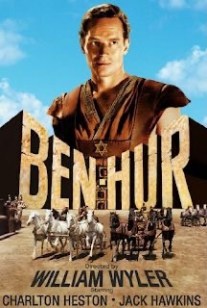
    A great film with a sincere message about life and human nature transcends a divide of time and a boundary of the territory. I believe that a good movie has a lasting sensory impact on the viewer and cultivates the mind with a visual efficacy of precipitation. In this regard, the epic historical drama ‘Ben-Hur’ (1959), directed by William Wyler, is an epitome of masterpiece cinema not for a time but all seasons. The remarkable triumvirate of the outstanding screenplay, the excellent performance of the cast, the fascinating cinematography produces supreme one of art that resonates with spiritual elements of humanity in the witchcraft of motion picture.

    ben-hur

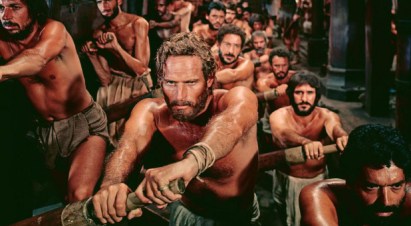
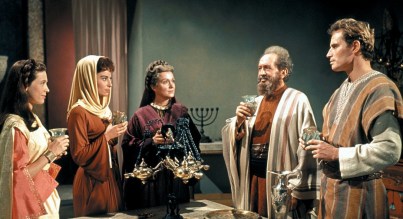
    The film follows a history of Judah Ben-Hur, a young Jewish prince whose life is forfeited by a betrayal of trust and corruption of friendship. From the height of his prime to the fall, then to redemption, it is heroic acts of high human drama wonderfully conjoined with a tale of Christ whom Ben-Hur encounters by Providence. His wrath is untamed, and anger is the roaring of a lion. Ben-Hur chooses vengeance as a will to live in the march of death in the desert and the prison galleys on the Ionian Sea. He feeds on ire and utters curse every day until he intends to execute vengeance upon the perpetrator with recourse to the old retributory law of an eye for an eye, tooth for a tooth. Who can calm the turbulent vortex of the soul in despair and save him from the night of the soul?

    download

    The film revolves around Christ, and Ben-Hur is another disciple of his teachings through conversion into faith, charity, and hope. The figure of Christ is the central theme of the film, but his face is unseen, and his voice unheard. We can only see his rear, but it is the mysteriousness of the person of Christ that elevates the story of Ben-Hur to the sphere of hagiography. The providential encounters with Christ in the climactic moments of his life lead him to the way of Christ, which mirrors the process of Ben-Hur’s redemption from Wrath to Grace, from Desolation to Hope.benhur-christ-a

    Whether or not you believe in Christianity is not a prerequisite to appreciating this excellent epic drama because it would be a loss to any lover of arts to forego the spectacular beauty of the cinematography, not to mention the spiritual thematic of one man’s redemption from hopelessness. The grand epic scale of cinematography that depicts the tale of Ben-Hur in the trail of Christ from the Nativity to the Crucifixion is akin to watching Michelangelo’s remarkable frescoes of the Sistine Chapel that illustrate the story of humanity from the Genesis to the Last Judgment under God’s mysterious plan for mankind. In conclusion, ‘Ben-Hur’ is not a movie about a hero but about a triumph of hope over the desolation that saves a man’s soul from self-destruction, resonating with ‘Dum spiro, Spero,’ meaning ‘while I breathe, there is hope.’

    ben hur 3

  • Beautiful Santa Barbara


    To see the pretty summer sky is poetry breathing life. The world outside books provide the optical pleasure that sparks up otherwise monotonous landscapes of everyday life. Indeed, it was such a beautiful morning that would make you forgive your persona non-grate with the love of mankind. It was a kind of jolly morning that made the whole world seem kin.  So Tuco took a lovely jaunt in the beautiful historic Santa Barbara County Courthouse this morning. He went there alone in the bliss of solitude that always flashed upon his inward eye for creative inspiration. One casual glimpse at Tuco might give you an impression of an ordinary guy with beer-belly spending his evening time and Sundays in front of a TV set. Contrary to his embonpoint, avuncular physiognomy, Tuco is an artist, a poet, a thinker. He is, what Edgar Allam Poe would call without hesitation, an intellect with passion.


    Tuco chose the Santa Barbara Country because its Spanish colonial architectural style reminds him of the familiar civic landscapes of his childhood hometown. The Courthouse, located at 1100 Anacapa Street, in downtown Santa Barbara, California, is famous for the Spanish Colonial Revival Style building designed by Charles Willard Moore and completed in 1929. It was designated a National Historic Landmark in 2005 for its beautifully distinctive colonial-style respective of the Spanish cultural heritage harmoniously attributing to the aesthetic character and history of California.

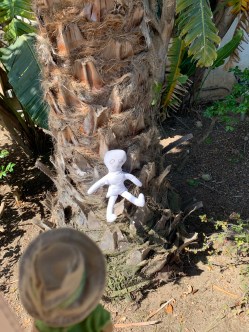
    img_1982While strolling around the Courthouse, Tuco’s eyes were suddenly fixed on a white doll attached to the palm tree. It was a tawdry but scary-looking doll that gave him the creep down on his spine. ‘Did someone who had a beef with the court’s decision put this voodoo doll here as a curse to the Courthouse?’ Trepidation for the unknown terror began to spring from his tactile sensory organs, making him momentarily delirious. He was becoming unsure of whether it was a wise decision to take a picture of the evil doll or even to come to the Courthouse. Was it an omen? ‘Oh, come on. Are you kidding me? It’s just a doll, more or less. No need to waste your energy on contriving meaning to the ugly voodoo doll.’ With this sudden forceful exercise of affirmation, Tuco wended his way toward the beautiful scenes of the earth, the sky, and the view of the world.


    Tuco exclaimed, “How hard it is to hide the sparks of nature!” The sky was high and blue, the lawn was full and green, and his eyes filled with pleasure. Today was the end of his vacation, and he lamented about returning to work for livelihood. However, the beauty of the scenery made his otherwise grim and dreary Sunday lovely, and Tuco thought life was not supposed to be all that hard and unbearable.